
Medical Product Overview
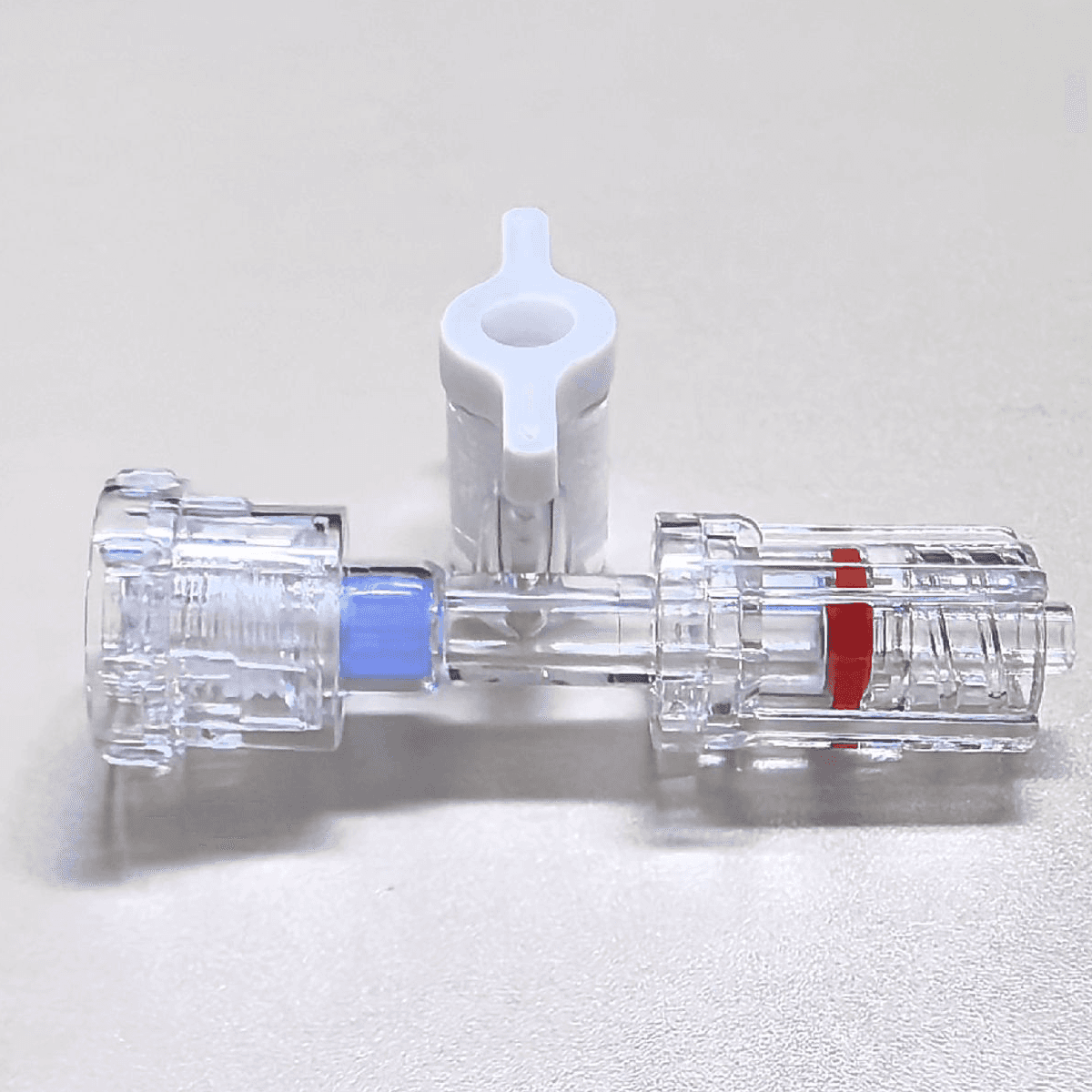
The Test connector shown here is a small transparent plastic fluid-control component used to split, divert, or regulate flow in narrow tubing systems. For buyers working in medical, laboratory, or pharmaceutical assembly, the main problem it addresses is simple: a compact, visible way to manage liquid paths without adding bulky hardware. The clear body makes it easier to inspect fluid movement, check line priming, and confirm orientation in a busy setup.
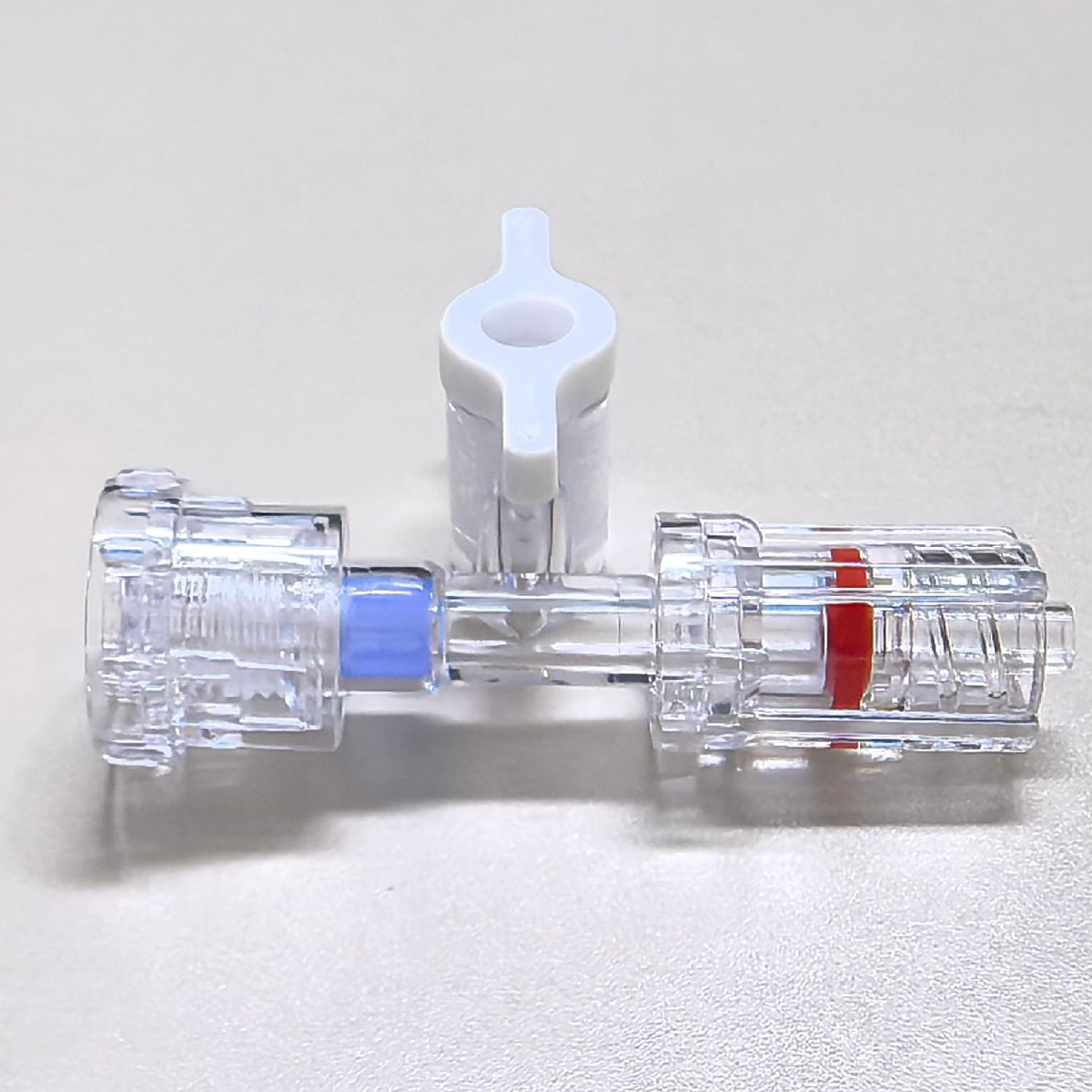
Visually, the part appears to have a compact three-port or Y-shaped configuration with cylindrical connection ends and an angled side branch. Internal colored indicators, including blue and red sections, help distinguish the flow path or structural orientation. Because only visible features are available, specifications such as pressure rating, connector standard, and sterilization status should be confirmed directly before purchase.
Product Structure and Functional Role
This type of connector is typically used in tubing assemblies where flow needs to be rerouted, divided, sampled, or accessed from a secondary port. In practice, that can mean connecting an infusion line, adding an injection point, directing a sample stream, or supporting a lab test rig that requires controlled branching. The transparent housing is a practical advantage because operators can see whether the line contains liquid, air, or residue.
The repeated identical layout in the image suggests batch production, which is useful for buyers sourcing consistent components for assembly work. A compact footprint also matters in confined equipment layouts, where tubing bends and connector spacing can affect routing efficiency.
Key Capabilities and Visible Specifications
Visible design features
The most verifiable characteristics are the clear rigid body, smooth glossy surface, molded ports, and three-way geometry. No metal parts are visible. The part appears designed for small-bore fluid systems rather than large industrial pipelines.
Practical capabilities
From the visible configuration, the connector likely supports flow redirection and line access. It may be suitable for situations where a technician needs to isolate a branch, introduce a fluid, or observe the path of a small volume transfer. Its transparency supports visual monitoring, which is valuable during setup, priming, troubleshooting, and routine inspection.
Materials and Finish Options
The product appears to be made from a clear rigid polymer formed by injection molding. That process is common for precision plastic fluid components because it produces repeatable shapes with clean edges and stable dimensions. The exact resin cannot be identified from the image, so buyers should request material documentation if compatibility with solvents, drugs, or aggressive reagents is important.
The finish is smooth and glossy, with a molded appearance that may help reduce surface buildup and make handling easier. The colored internal sections are likely intended for identification rather than decoration, giving the part a functional visual cue during assembly or inspection.
Manufacturing Process and Consistency
Injection molding is the most likely manufacturing method based on the geometry and surface quality. This process supports high repeatability, which is important for connectors that must fit into tubing assemblies with consistent orientation. For procurement teams, consistency matters just as much as geometry because a small variation can affect line assembly and sealing behavior.
If you are evaluating this Test component for production use, ask for dimensional drawings, resin identification, and any available compatibility notes. Those documents are especially important when the part will be used in fluid handling systems where cleanliness and fit are non-negotiable.
Application Scenarios
This style of connector may be used in infusion sets, sample handling lines, irrigation assemblies, laboratory test rigs, and pharmaceutical transfer setups. It is especially relevant where a secondary port is needed for access or diversion. In labs, it can support controlled transfer between containers or instruments. In medical supply chains, it may fit into disposable line assemblies where visibility and compactness are priorities.
Buyers often choose this type of part when they need a simple in-line branching element rather than a complex valve system. Its value is in layout flexibility, not mechanical complexity.
Quality Control Considerations
For a part like this, quality review usually focuses on mold consistency, port geometry, surface cleanliness, and visual clarity. Buyers should check for flash, discoloration, cracks, or blocked passages. If the component is intended for regulated or sterile use, confirm the actual qualification documents rather than relying on appearance alone.
When sourcing in volume, it is also useful to verify batch uniformity, because tubing connectors are often assembled by hand and need predictable fit from one piece to the next.
Customization Guidance
Before ordering, define the tubing size, connection style, flow direction requirements, and whether the side branch needs to act as an access port, drain point, or branch line. If your assembly depends on color coding, confirm whether blue and red indicators are fixed features or options. For OEM projects, request samples, drawings, and material declarations early in the process.
Buyer Decision Factors
When comparing a Test connector with alternative fluid-handling parts, focus on fit, visibility, material compatibility, and assembly simplicity. Transparent components are useful when operators need to confirm flow visually. Compact geometry helps where space is limited. The right choice depends on the fluid, the tubing interface, and whether the line is disposable or part of a reusable setup.
Request More Information
If you are reviewing this component for procurement or integration, ask for technical drawings, material details, and connection specifications before committing to a production order. Clear requirements at the quotation stage reduce fit issues later and help ensure the connector matches your tubing system.