What Does an Industrial Mold Manufacturer Need to Prove?
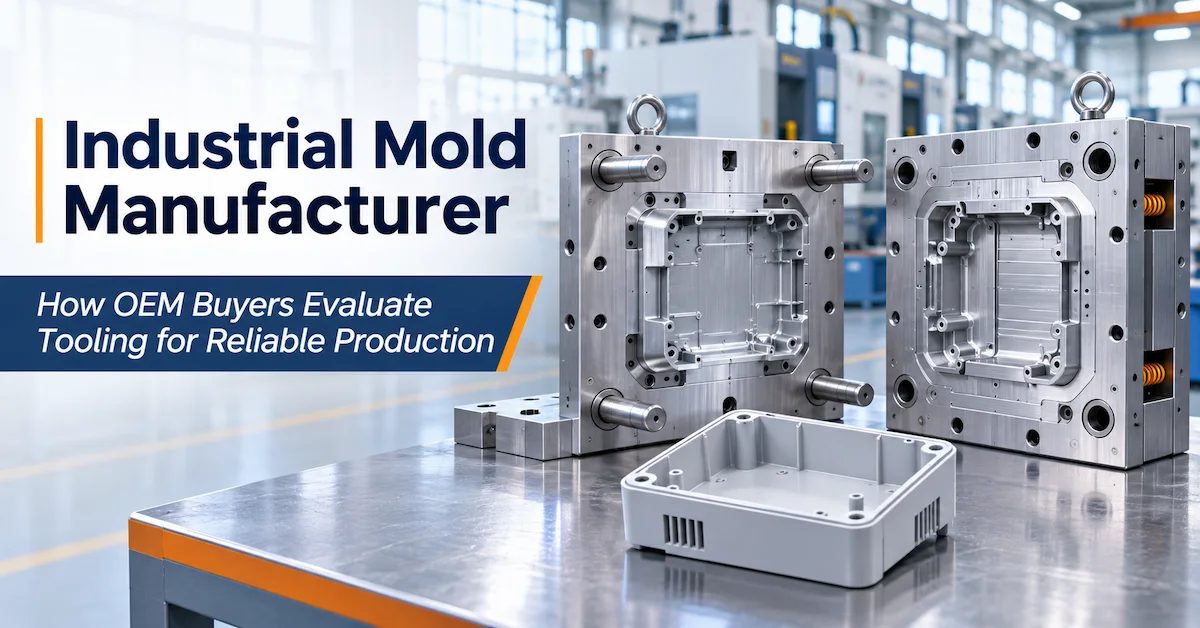
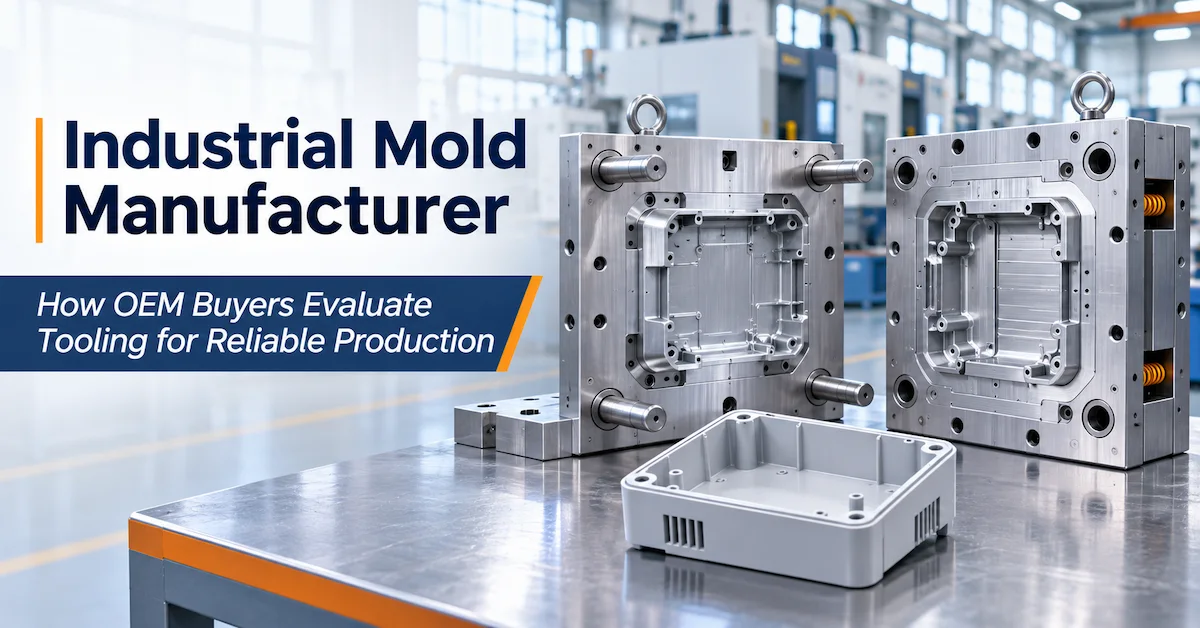
An industrial mold manufacturer must prove that its tooling can form a functional part repeatedly, hold the product requirements that matter in the assembly, and remain maintainable after the first approved samples. For industrial OEMs, the decision is rarely based only on whether a supplier can machine a cavity. The more important questions are whether the supplier understands the load path, resin, wear environment, tolerance stack-up, production volume, inspection method, and future change plan.
Industrial parts may look less cosmetic than consumer products, but they often carry more functional risk. A molded housing may protect electronics. A bracket may locate a subassembly. A connector body may control alignment. A gear, valve body, guide, cover, or structural insert may need repeatable dimensions over many production cycles. A small sink mark may be acceptable on a hidden surface while a small shift at a mounting datum can stop assembly. The industrial mold manufacturer therefore has to connect mold design decisions to the product's actual use.
This guide is for industrial OEM engineers, product developers, procurement teams, quality managers, and contract manufacturers comparing tooling partners. It explains how to assess engineering review, mold construction, steel selection, CNC and EDM work, cooling, ejection, trials, inspection, maintenance, and commercial scope. DX Molding's public website describes industrial components among its application areas and lists plastic injection mold design, DFM, precision CNC and EDM machining, trial molding, inspection, production, packaging, and delivery support. Those are published capability statements, not a universal promise of mold life, capacity, tolerance, price, or delivery. The final requirements must be confirmed for the specific project.
Which Industrial Projects Need a Specialized Tooling Review?
The phrase industrial mold manufacturer covers a wide range of projects. A small internal cover, a glass-filled structural housing, and a high-volume technical connector can all be injection molded, but they do not create the same tooling decisions. Before asking for a quotation, describe the part's job and the production environment. The same CAD geometry may be feasible with a simple tool for a low-volume pilot and require a different mold structure for a long production program.
Typical industrial part requirements
- Functional interfaces: mounting bosses, locating pins, bearing seats, seals, snap fits, cable paths, connector interfaces, and threaded features.
- Structural performance: ribs, load-bearing walls, clips, supports, housings, brackets, guards, and frames that must retain shape during use.
- Material exposure: engineering plastics, glass-filled resins, flame-retardant compounds, temperature variation, chemicals, humidity, abrasion, or repeated assembly.
- Repeatability: cavity-to-cavity consistency, stable dimensions, controlled flash, predictable shrinkage, and a documented inspection method.
- Production continuity: spare inserts, wear-part access, cleaning, lubrication, corrosion protection, change control, and a plan for future tool transfer.
These requirements change what should be discussed in the RFQ. A supplier that responds only with cavity count and a mold price has not yet shown how it will protect the part's function. Ask for a risk review that identifies the critical surfaces, the likely steel interfaces, the material assumptions, and the evidence required before production release.
When a general supplier page is not enough
A general manufacturer-selection article can help a new buyer understand DFM, machining, and sampling. Industrial procurement needs a narrower comparison. The buyer has to test whether the supplier can translate product requirements into a controlled mold and a repeatable process. This includes questions about draft and ejection, wear at slides or lifters, cooling near thick sections, gate location relative to functional surfaces, material-specific shrinkage, inspection datum strategy, and maintenance access.
For that reason, an industrial mold manufacturer should be evaluated as a project partner rather than as a machining vendor. The supplier may be responsible for some or all of the mold design, mold flow review, steel selection, machining, assembly, trial molding, dimensional inspection, modification, and production support. Define the responsibility boundary before comparing quotes. Otherwise, a low tooling price may exclude the engineering and validation work needed to achieve a usable part.
How Should Buyers Compare an Industrial Mold Manufacturer?
A practical supplier comparison should follow the product's risk path: requirement, design, mold structure, machining, trial, inspection, release, and maintenance. Every supplier does not need to offer the same internal method, but every supplier should be able to explain the decisions that affect the final part. The table below can be used in a technical review meeting or RFQ scoring sheet.
| Evaluation area | Question for the supplier | Evidence to request |
|---|---|---|
| Engineering input | Will the supplier review the part function, material, tolerance, draft, assembly, and production quantity before tooling? | DFM comments, marked CAD, risk list, and open-decision register. |
| Mold architecture | How will the parting line, gates, runners, cooling, ejection, slides, lifters, and inserts support the product? | Preliminary mold layout, sections, movement study, and cooling or ejection concept. |
| Machining and fitting | How will deep, narrow, tight-tolerance, or wear-sensitive details be produced and checked? | Machining route, EDM or CNC plan, fitting criteria, and inspection points. |
| Material and steel | Are the resin, fillers, surface, volume, corrosion environment, and expected maintenance cycle reflected in the steel choice? | Material assumptions, steel proposal, treatment or hardness requirements, and project confirmation list. |
| Validation | What will T0, T1, and final approval demonstrate? | Trial plan, sample records, dimensional report, appearance criteria, and modification plan. |
| Production support | How will the tool be cleaned, lubricated, repaired, modified, packed, and transferred? | Maintenance notes, spare-part list, change-control method, and handover documents. |
DX Molding's published OEM/ODM service workflow separates file review, DFM and manufacturing risk assessment, quotation and production-plan confirmation, mold design and machining, trial molding and inspection, sample approval, and production, packaging, and delivery. Buyers can use that sequence as a discussion framework, while confirming which activities and reports are included in their own quotation.
What Should the DFM Review Cover for Industrial Parts?
DFM is the point where an industrial mold manufacturer should connect the part's function to the mold's release direction and the molding process. The purpose is not to make every wall uniform or remove every rib. The purpose is to identify which geometry, material, tolerance, and surface requirements can create a manufacturing or assembly risk.
Functional datums and tolerance zones
Start with the surfaces that locate or constrain another component. Mark mounting faces, hole centers, bearing or seal locations, connector interfaces, and assembly datums. Then separate them from cosmetic or non-critical surfaces. This allows the tooling team to prioritize steel support, gate placement, cooling, ejection, and inspection where variation matters most.
A drawing tolerance does not automatically describe the process capability required. If a molded hole controls a shaft or connector, review the hole's shrinkage, draft, core support, ejection load, and inspection direction. If two bosses must align across a housing, review the mold parting, cooling balance, and warpage direction together. An industrial mold manufacturer should be able to explain whether a dimension will be controlled by steel, process conditions, secondary machining, or a combination of these.
Wall thickness, ribs, and bosses
Industrial housings often need thick mounting bosses, deep ribs, and local reinforcements. These features can cause sink, voids, uneven cooling, or restricted filling if their thickness is not connected to the surrounding wall. The design review should consider coring, rib-to-wall relationships, draft, radius, gate location, and ejection support. A functional boss may need a steel insert or a different cooling arrangement if it is also a critical assembly surface.
Undercuts, shutoffs, and ejection
Side holes, hooks, reverse-facing ribs, internal snaps, and connector locks can require slides, lifters, inserts, or a revised parting strategy. Industrial parts often contain many functional features in a small envelope, so the mechanism must be reviewed in the context of steel strength, maintenance, cooling, and part release. The question is not only whether the feature can be molded once. It is whether the mechanism will remain aligned and serviceable across the expected production program.
Ejection should also be tied to function. Ejector marks may be acceptable on a hidden surface but unacceptable near a seal or an optical interface. A lifter may solve an internal undercut but create a witness mark or local deformation. A supplier should show the ejection concept and explain the acceptance criteria before steel is cut. DX Molding's published DFM support describes review of draft, wall thickness, radii, undercut or side-core feasibility, assembly interference, shrinkage, and warpage risks; the actual recommendation remains project-specific.
How Do Material and Mold Steel Affect Industrial Tooling?
Material selection and steel selection should be discussed together. The resin affects shrinkage, flow, cooling, wear, corrosion, surface replication, and the required process window. The tooling material affects polishing, texturing, repair, corrosion resistance, wear resistance, and the expected maintenance strategy. A low-cost steel choice may be reasonable for a low-volume prototype and unsuitable for a long-run industrial mold.
Resin questions to resolve before quoting
- What exact resin family and grade will be molded, and can the grade change after tooling?
- Does the material contain glass, mineral, flame-retardant, or other abrasive or corrosive additives?
- What shrinkage data, temperature range, mechanical load, chemical exposure, and surface requirement apply?
- Are recycled content, colorant, regrind, or supplier changes controlled?
- Which dimensions are measured at what conditioning state and with which mating parts?
The official DX Molding support information lists material consultation for examples including ABS, PC, PP, PA66, medical-grade and food-grade materials, and notes that shrinkage, temperature resistance, flame rating, certification information, and alternative-material cost comparison may be considered. That does not confirm a specific resin grade, brand, lot traceability, or compliance file for every project. Include the exact material and required documents in the RFQ.
Steel selection as a project decision
DX Molding's published mold-design information references steel options or recommendations including S136, NAK80, P20, and 718H. Those names should be treated as a starting point for technical discussion, not as a default grade for every industrial mold. The appropriate selection depends on volume, resin, corrosion, surface, wear, repair method, and budget.
| Steel decision factor | Why it matters in industrial tooling | What to confirm |
|---|---|---|
| Production volume | Higher or longer production demand can increase the importance of wear resistance, repair strategy, and replaceable details. | Forecast, expected program duration, maintenance intervals, and replacement-part plan. |
| Resin and additives | Glass-filled, mineral-filled, flame-retardant, or corrosive materials can change wear and corrosion risk. | Exact grade, filler, drying, processing assumptions, and steel or treatment proposal. |
| Surface and appearance | Polished, textured, etched, or optical surfaces require suitable machining, finishing, and repair control. | Texture standard, gloss or appearance limit, polishing direction, and repair acceptance. |
| Tool geometry | Thin shutoffs, slides, lifters, deep cavities, and small inserts may need different support and maintenance choices. | Tool sections, replaceable insert locations, hardness or treatment, and fitting plan. |
| Corrosion environment | Moisture, corrosive resin, storage, and shipping conditions can affect the mold after manufacture. | Protection method, storage instructions, anti-rust scope, and service responsibility. |
What Manufacturing Capability Should an Industrial Mold Manufacturer Show?
Industrial tooling quality depends on the relationship between design intent and physical execution. A supplier should explain how it will machine, inspect, fit, and finish the mold, especially at interfaces that control the molded part. CNC and EDM are not quality claims by themselves. The buyer needs to know how the process route will protect the geometry.
CNC, EDM, grinding, and fitting
CNC machining can establish the main cavity, core, inserts, and mold-base features. EDM may be appropriate for deep narrow details, sharp internal geometry, ribs, slots, or hard-to-reach regions. Precision grinding can support flatness, shutoff conditions, and repeatable insert fits. Polishing or texture finishing then has to preserve the required dimensions and appearance.
Ask the supplier to identify the details that will be produced by CNC, EDM, wire EDM, grinding, hand fitting, or polishing. This is especially important for industrial parts with multiple inserts, connector cavities, sealing surfaces, and wear points. The process plan should explain how critical dimensions will be measured before assembly and how any correction will be recorded.
Cooling and cycle stability
Cooling is part of dimensional control, not only cycle-time reduction. Thick bosses, ribs, inserts, slides, and uneven wall sections can create local heat differences that influence shrinkage and warpage. Industrial parts with mounting interfaces or flatness requirements need cooling considered alongside gate location, material, ejection, and process settings.
Runner, gate, and venting decisions
Gate location influences weld lines, filling pressure, packing, fiber orientation, appearance, and the dimensions of functional features. Runner selection affects material waste, balancing, hot-runner maintenance, and the suitability of the tool for the production volume. Venting affects air traps, burn marks, short shots, and local surface defects.
The industrial mold manufacturer should connect these decisions to the resin and part function. If a gate must be placed near a mounting feature, explain the possible effect on strength or appearance. If a weld line crosses a load-bearing area, consider a flow review or a design change before steel cutting. DX Molding's public support information describes filling, packing, cooling, and warpage simulation as part of its mold-flow-related capability; request the project-specific analysis scope and report format rather than assuming a full simulation is included.
How Should Industrial Mold Trials and Quality Validation Be Defined?
Trial molding is the point where the proposed mold, resin, machine, process, and product requirements meet. A first sample can show that the cavity fills, but it cannot by itself prove that the tool is ready for a long industrial production program. The validation plan should define what the buyer will inspect, what the supplier will record, and which conditions must be repeated.
T0, T1, and final approval
- T0: the first meaningful trial used to reveal filling, release, flash, short shot, sink, warpage, weld-line, mechanism, and appearance risks.
- T1: a corrected or refined trial used to evaluate the modification result, key dimensions, assembly fit, and remaining open issues.
- Final or production approval: the agreed point at which the mold, samples, process assumptions, inspection results, documents, and open actions satisfy the project release criteria.
The exact naming may vary by supplier, so define the acceptance logic rather than relying only on the label. A critical industrial part may require a dimensional report, functional assembly, material certificate, visual criteria, cavity identification, process record, and a review of the tool's return position or shutoff condition. DX Molding states that it supports T0/T1/T2 mold trial reports, CMM dimensional data, modification plans, progress tracking, and injection-parameter records. The buyer should confirm which records are included in the quotation.
Inspection evidence that matters
Use the product drawing and assembly to define the inspection plan. Measure critical datums first, then dimensions that affect fit, function, sealing, movement, or load. A report should identify the sample revision, cavity, material, conditioning, measurement method, and result. For a multi-cavity tool, show whether the same dimension is consistent across cavities.
DX Molding's published quality process lists incoming material inspection, mold inspection, first article inspection, in-process quality control, final inspection, and packaging inspection. It also describes support for critical-dimension CPK capability analysis and outgoing AQL sampling, while noting that the rules and reports must be confirmed for the project. These controls are useful only when the buyer defines the characteristic, sample size, acceptance limit, and record format.
How Do You Compare Prototype, Bridge, and Production-Intent Industrial Molds?
Not every industrial program needs the same tooling route. A prototype or bridge tool may be appropriate when the product design is still being validated, the volume is limited, or the team needs functional samples before committing to a long-life mold. A production-intent tool may be appropriate when the material, interfaces, volume, and manufacturing location are stable. The correct route depends on the cost of learning early versus the cost of changing a production tool later.
| Tooling route | Useful when | Risks to define before ordering |
|---|---|---|
| Prototype tooling | Product geometry, assembly, or material still needs learning. | Sample-to-production similarity, tool life, surface limitations, and whether the design can transfer. |
| Bridge tooling | A pilot or early production demand exists before the final supply chain is ready. | Expected quantity, maintenance, replacement plan, delivery of spare inserts, and transition to the production tool. |
| Production-intent tooling | Product, resin, volume, inspection, and manufacturing location are sufficiently frozen. | Steel, cavity balance, cooling, cycle assumptions, trials, process window, ownership, and long-term service. |
| Transfer-ready tooling | The mold may be installed at another plant or used by another molding partner. | Machine interface, drawings, spare parts, process records, inspection baseline, and handover responsibility. |
DX Molding's plastic injection mold product page describes OEM/ODM molds for stable, precise, and long-term plastic part production, including complex geometries and tight tolerances. Use that published positioning as a starting point, then request project-specific confirmation of mold structure, steel, life expectation, validation scope, and transfer conditions.
What Should Industrial Tooling Cost and Lead Time Discussions Include?
Industrial mold quotations should be compared by scope, not by price or a single calendar number. Cost and lead time are affected by part size, geometry, cavity count, material, steel, surface, runner, mechanisms, cooling, inspection, modifications, and delivery.
Cost variables to show in the quotation
- Part and mold complexity, including slides, lifters, inserts, threads, and tight shutoffs.
- Number of cavities, expected volume, balance requirement, and runner system.
- Steel proposal, heat treatment or surface treatment, polishing, texture, and replaceable components.
- DFM, mold-flow analysis, design approval, mold assembly, trial molding, inspection, and modification scope.
- Spare parts, maintenance documentation, packaging, export protection, shipping, and mold transfer requirements.
- Whether production parts, material, color matching, assembly, and final inspection are included or quoted separately.
Lead-time milestones to define
Ask for a schedule that distinguishes RFQ review, design approval, steel cutting, machining, assembly, dry cycle, T0, modification, T1, inspection, customer approval, and delivery. Confirm the assumptions for customer feedback, material availability, texture approval, mating-part availability, and any outsourced operation. The time from deposit to first trial is not the same as the time to an approved production-ready mold.
The official website FAQ includes a reference range of 25 to 35 days to T1 samples for some standard mold projects and states that complexity and size affect the timing. It also mentions rush service for urgent projects. This should not be copied into an industrial RFQ as a guarantee. Ask for a schedule based on the actual part, steel, cavity plan, mechanisms, trial scope, and approval route.
For production parts, DX Molding's custom plastic molding service provides a separate commercial route from the mold itself. Clarify whether the supplier is quoting tooling only, tooling plus sampling, or tooling plus ongoing molding. This distinction affects material ownership, process responsibility, MOQ, packaging, inspection, and the point at which the buyer accepts the tool.
What Information Should You Send an Industrial Mold Manufacturer?
A complete RFQ makes the first technical response more useful and reduces late assumptions. Send enough information for the supplier to understand the product, production plan, and approval evidence. If a field is not decided, mark it as open rather than allowing the supplier to guess.
| RFQ input | Why the industrial mold manufacturer needs it | Typical evidence or file |
|---|---|---|
| Controlled CAD | Defines geometry, revision, units, interfaces, and the current design baseline. | STEP or native 3D file with revision and change history. |
| Drawing or MBD | Identifies datums, tolerances, critical dimensions, surface requirements, and notes. | 2D drawing or model-based definition with marked critical features. |
| Material | Controls shrinkage, flow, wear, drying, temperature, chemical exposure, and compliance documents. | Exact grade if known, resin data sheet, color, filler, and certificate requirement. |
| Volume and forecast | Influences cavity count, steel, runner, maintenance, cycle, and production economics. | Pilot quantity, annual forecast, peak demand, and program duration. |
| Assembly and use | Shows which surfaces, holes, seals, loads, and interfaces are function-critical. | Mating parts, fasteners, inserts, gaskets, test method, and use environment. |
| Quality plan | Defines what must be measured, how samples are approved, and which records are required. | Inspection standard, sample size, acceptance criteria, CMM or CPK needs, and appearance limits. |
| Commercial scope | Separates mold ownership, production responsibility, delivery, packaging, and transfer duties. | Tooling-only or tooling-plus-parts request, destination, packaging, and handover requirements. |
For an early concept, send the current design and list the unresolved decisions. A good industrial mold manufacturer can return a risk-based review instead of silently filling the gaps. For a mature design, provide the approved revision and change-control rules. The supplier should then identify which changes are still possible before steel cutting and which changes would require a quotation or schedule revision.
DX Molding's published service inputs include CAD files, 2D drawings, STEP/STL files, physical samples, material requirements, target quantity, finish, color, and tolerance. This list is a practical minimum for a project review. For a technical discussion, use the quality and manufacturing support information to identify the inspection, trial, material, maintenance, and after-sales questions that need to appear in the scope.
What Warning Signs Suggest a Supplier Is Not Ready for Industrial Tooling?
Warning signs are usually visible in the way a supplier handles uncertainty. A supplier may have good machining capability and still be a poor fit for an industrial project if it avoids responsibility for product function or cannot explain how defects will be closed.
- The quote includes a mold price but no controlled product revision, material assumption, cavity count, or trial endpoint.
- The supplier promises a fixed life, tolerance, or delivery date without reviewing the part, resin, volume, steel, or acceptance plan.
- The DFM report lists generic rules but does not identify the part's critical datums, assembly interfaces, or release risks.
- The supplier cannot show how slides, lifters, inserts, ejection, cooling, and shutoffs will move and remain supported.
- T0 is described as the final approval, with no allowance for dimensional inspection, functional assembly, or corrective work.
- Inspection reports do not identify the sample revision, cavity, material, measurement method, or disposition of failed dimensions.
- Maintenance, spare parts, corrosion protection, and tool transfer are excluded or left undefined.
- Material and compliance statements are broad, but the supplier will not confirm the exact grade, certificate, or lot information required by the project.
These signs do not prove that a supplier cannot make the mold. They show that the buyer needs more evidence before awarding the work. Request a revised scope, a sectioned tool concept, a sample validation plan, and a responsibility matrix. A supplier that responds clearly to these requests is easier to manage when the first trial exposes a real engineering issue.
Frequently Asked Questions About Industrial Mold Manufacturers
What is an industrial mold manufacturer?
An industrial mold manufacturer designs and builds injection tooling for functional parts used in equipment, machinery, electronics, industrial systems, and other OEM products. The defining requirement is not the word industrial on the quotation. It is the supplier's ability to connect mold design, material, machining, inspection, and production support to the part's functional and lifecycle requirements.
How is an industrial mold manufacturer different from a general mold supplier?
The difference should be evaluated through project evidence, not a label. An industrial-focused supplier should discuss load-bearing features, engineering plastics, dimensional stability, wear, maintenance, inspection datums, production volume, and change control.
Which mold steel is best for an industrial mold?
There is no universal best steel. The choice depends on resin, filler, corrosion, volume, surface, geometry, expected maintenance, and budget. DX Molding's published information references S136, NAK80, P20, and 718H as mold-steel options or recommendations. The final grade, treatment, hardness, and insert strategy should be confirmed for the actual project.
Should industrial molds use hot runners?
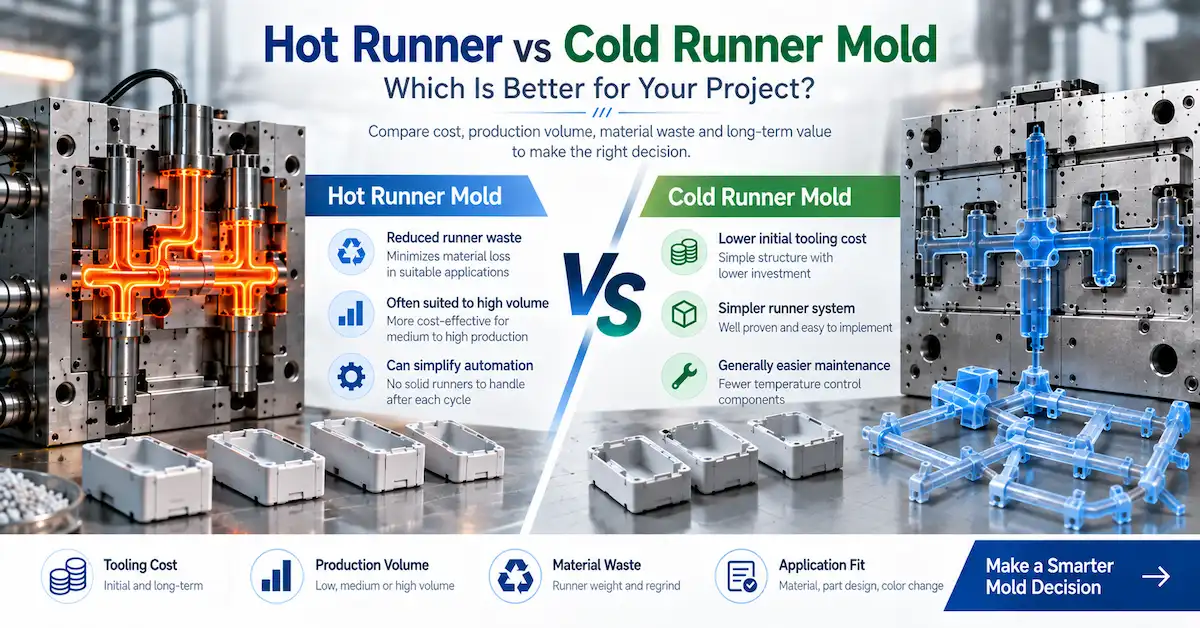
Hot runners can be useful in some higher-volume or multi-cavity projects, but they add cost, temperature-control, maintenance, and troubleshooting considerations. Compare material waste, balance, gate requirements, cycle, maintenance, and the production plan before selecting a runner system.
What should an industrial mold trial prove?
A trial should prove more than cavity filling. It should evaluate release, flash, sink, warpage, weld lines, appearance, functional dimensions, cavity consistency, assembly fit, and the behavior of slides, lifters, inserts, and ejection. The agreed trial record should identify material, machine, sample revision, process assumptions, inspection results, and open corrective actions.
Can an industrial mold manufacturer also produce the molded parts?
Some suppliers provide both tooling and plastic molding, but the scope must be separated in the quotation. Confirm whether material, process development, MOQ, inspection, packaging, assembly, and ongoing production are included. DX Molding publicly describes both plastic injection mold and custom plastic molding services, but the exact responsibility and commercial boundary are project-specific.
What is a reasonable lead time for an industrial injection mold?
Lead time depends on part size, geometry, steel, cavity count, mechanisms, surface, runner, inspection, feedback, and whether T1 corrections are included. A reference schedule for a standard mold cannot be applied automatically to a complex industrial tool. Ask the supplier to separate design approval, steel cutting, assembly, T0, modification, T1, final inspection, and delivery.
What documents should be included when the mold is transferred?
Confirm the mold assembly or component drawings, steel and material records, spare-part list, maintenance instructions, trial and inspection reports, approved sample definition, process assumptions, machine interface, change history, and packaging or anti-rust instructions. The exact handover package should be written into the purchase order or tooling agreement.
How can an OEM reduce industrial mold development risk?
Freeze the product revision and resin early, identify critical datums and interfaces, request a specific DFM review, approve the mold concept before steel cutting, define T0/T1 evidence, inspect functional dimensions, and document maintenance and ownership. A staged prototype or bridge-tooling plan may be appropriate when key product risks are still open.
Conclusion
Choosing an industrial mold manufacturer is a decision about repeatable product performance, not only about machining capacity or the lowest initial quotation. Compare how each supplier handles functional datums, resin and shrinkage, mold steel, gates, cooling, ejection, mechanisms, wear, inspection, trials, maintenance, and transfer. Require the supplier to show what is included, what remains uncertain, and which evidence will release the tool for production.
DX Molding's public information describes Shenzhen-based plastic and silicone molding services, custom plastic injection mold design and manufacturing, CNC and EDM precision processing, DFM and mold-flow-related support, trial molding, inspection, production, packaging, and delivery. These capabilities provide a basis for a technical conversation, while the final steel, tolerance, volume, lead time, inspection scope, and acceptance criteria must be confirmed against the industrial part and its production plan.
Planning an industrial tooling project? Send the controlled CAD file, drawing, resin or material requirement, annual quantity, critical dimensions, mating parts, surface expectations, and target milestone through the DX Molding project contact page. A project-specific review can then define the feasible mold route, quotation assumptions, trial evidence, and production support required for the application.