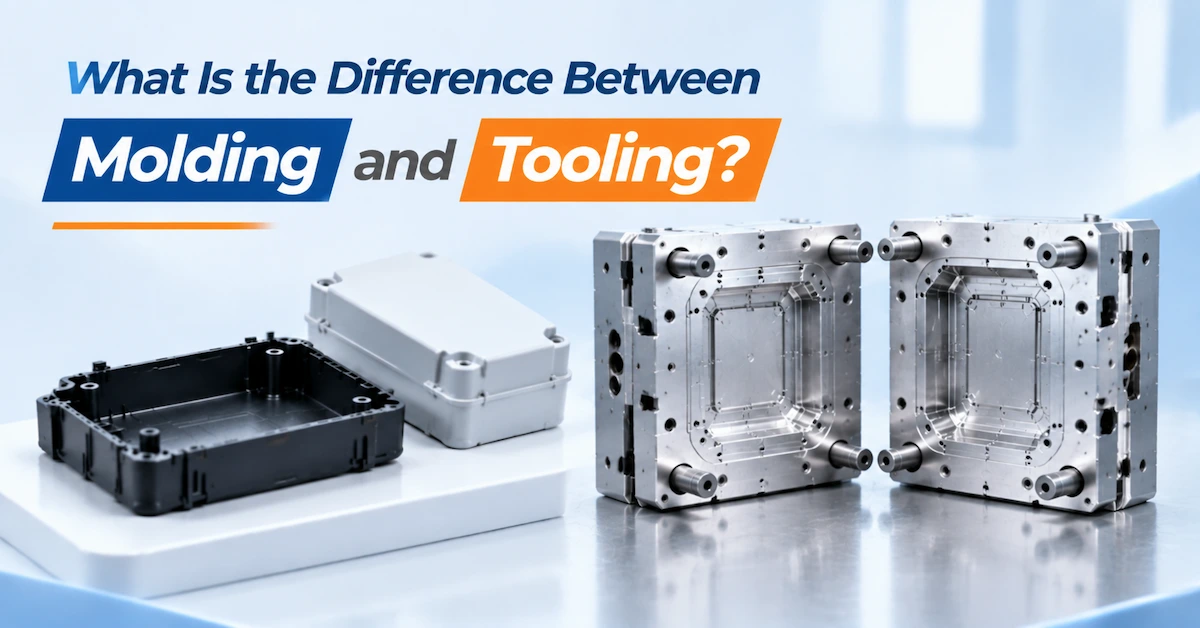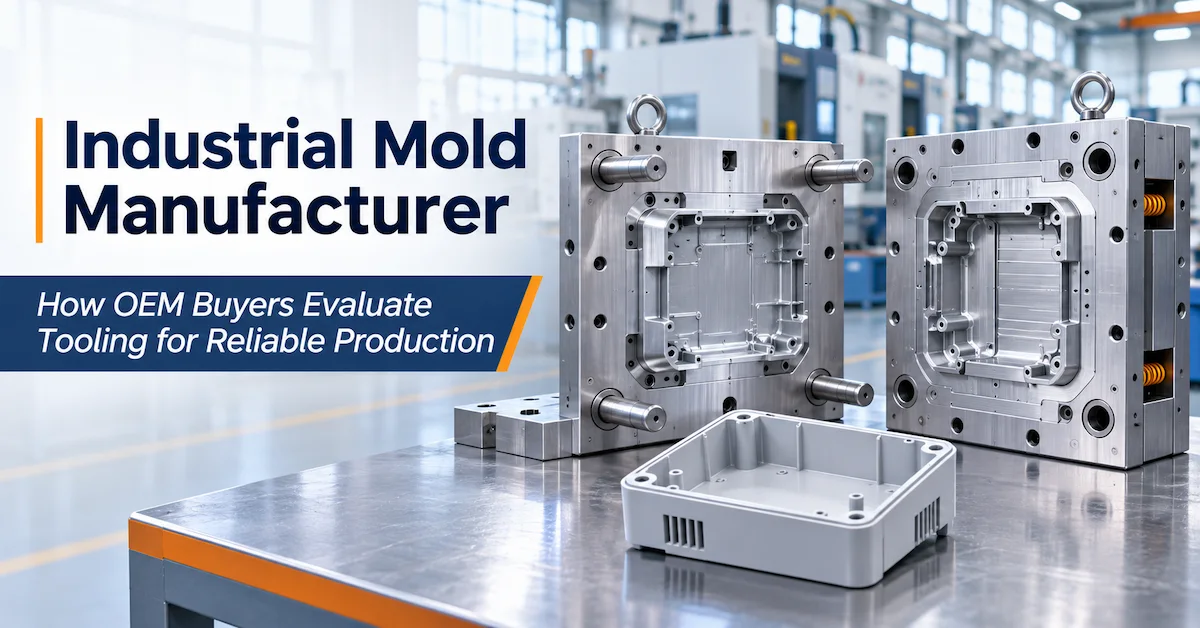
There is no universal cavity count for an injection mold. The right number is the lowest cavity count that can meet the required output, machine limits, part-quality targets, investment budget, and future production plan without creating unacceptable balance, maintenance, or validation risk. A single-cavity mold may be the most responsible choice for uncertain demand or a complex part. A multi-cavity mold may be justified when volume, delivery rate, and unit economics support the added tooling and quality-control burden.
To decide how many cavities should an injection mold have, start with annual demand and required delivery quantity, then check cycle time, available machine hours, mold size, shot capacity, clamping force, runner design, cooling, cavity balance, inspection, and the cost of a failed or underused tool. Do not choose four, eight, sixteen, or more cavities simply because a supplier offers that configuration.

The Basic Rule for Choosing Mold Cavities
A useful starting point is to calculate the number of cavities required by output, then reduce or adjust the result after checking technical and commercial constraints. The output calculation is only a screening tool. It cannot decide whether the cavities will fill evenly, fit the machine, cool consistently, meet the inspection plan, or justify the tooling investment.
| Decision input | Why it affects cavity count | Evidence to request |
|---|---|---|
| Required output | More cavities can produce more parts per cycle, but demand must justify the added tool complexity. | Annual forecast, peak demand, launch quantity, order pattern, and delivery requirement. |
| Cycle time | Output depends on cycles per hour, not cavity count alone. | Estimated injection, packing, cooling, opening, and ejection sequence. |
| Machine fit | More cavities increase shot size, runner volume, mold footprint, and possibly clamping demand. | Machine model, clamping force, shot capacity, platen, tie-bar, mold-height, and ejector data. |
| Part quality | Cavity balance, cooling balance, gate location, and process variation affect cavity-to-cavity consistency. | Flow concept, runner balance, cooling plan, critical dimensions, and cavity-level inspection plan. |
| Program economics | More cavities can lower part allocation at volume but increase initial tooling and correction exposure. | Tooling quote, unit-cost model, forecast confidence, maintenance scope, and change assumptions. |
The correct answer is therefore a range to be evaluated, not a number selected from a generic chart. Ask the supplier to compare at least two realistic concepts, such as one cavity versus two cavities or four cavities versus eight cavities, using the same part definition and production assumptions.
How to Calculate a First Cavity-Count Estimate
The simplest output relationship is:
Parts per hour = cavities × 3600 ÷ cycle time in seconds
Or, for a planning period:
Required cavities = required parts ÷ (available cycles × acceptable output per cycle)
For example, suppose a program needs 480,000 acceptable parts per year, the planned molding schedule provides 2,000 production hours, the estimated cycle is 30 seconds, and the planning factor for downtime and yield is 85 percent. The available cycles are 2,000 × 3,600 ÷ 30, or 240,000 cycles. At 85 percent effective output, one cavity would produce about 204,000 acceptable parts in the planning period. The arithmetic points toward at least three cavities, but a four-cavity concept may be compared if the buyer needs reserve capacity, balanced scheduling, or a lower part cost. It is not a final engineering answer.
The calculation must use acceptable parts rather than theoretical shots. Planned maintenance, mold cleaning, material changes, setup, quality holds, machine availability, scrap, trial time, holidays, and demand peaks reduce the output that can actually be shipped. A supplier who calculates from 100 percent uptime may produce an attractive but fragile capacity promise.
Inputs that must be defined
- Annual demand and expected growth, not only the first order.
- Peak monthly or weekly demand and required delivery window.
- Working hours, shifts, machine availability, and planned maintenance.
- Target cycle time and what evidence supports it.
- Acceptable scrap, rework, startup loss, and inspection hold rate.
- Whether all cavities must run together or whether the tool may run partially loaded.
- Whether the buyer needs one tool, a backup tool, or capacity across multiple machines.
Use the formula to identify the production problem. Then use mold design and manufacturing evidence to decide whether the proposed cavity count can solve it reliably.
How Annual Demand Changes the Decision
Annual demand is usually the strongest commercial input, but it should be treated as a forecast with a confidence level. A new product may have a large market estimate and a small confirmed launch order. A mature product may have stable demand and a clear replacement or service requirement. Those programs should not automatically receive the same cavity strategy.
Low or uncertain demand
A single-cavity or two-cavity mold may reduce initial exposure when the product is still being tested, the design may change, or the volume forecast is uncertain. Fewer cavities can simplify first corrections and make it easier to identify the relationship between a tool change and a part result. The trade-off may be a higher part cost or longer machine time, so compare total program cost rather than tooling price alone.
Stable medium demand
Two or four cavities may be reasonable candidates when the product has repeat demand but the buyer does not need maximum output. The decision should consider delivery windows, machine loading, material usage, inspection time, future variants, and the cost of maintaining multiple cavity sets. A moderate cavity count can provide useful capacity without making the tool unnecessarily difficult to balance or correct.
High or predictable demand
Higher cavity counts may make sense when demand is proven, the part is suitable for balanced filling, the machine plan is available, and the unit-cost benefit is meaningful. The buyer should confirm cavity-to-cavity consistency, runner and cooling balance, maintenance access, cavity identification, spare parts, and the acceptance plan. High output is valuable only if the tool can repeatedly produce acceptable parts.
| Demand condition | Cavity concepts to compare | Main benefit | Main risk |
|---|---|---|---|
| Prototype, pilot, or uncertain forecast | Single cavity, two cavities, or a flexible insert strategy. | Lower initial exposure and simpler learning or correction. | Higher part cost, longer machine time, and limited peak capacity. |
| Stable but moderate demand | Two or four cavities. | Balanced compromise between output, investment, and control. | Capacity may be insufficient if demand grows faster than forecast. |
| High predictable demand | Four, eight, or a higher project-specific count. | More parts per cycle and potential recurring-cost efficiency. | Higher tool cost, cavity variation, machine demand, and maintenance burden. |
| Multiple related part variants | Separate tools, interchangeable inserts, or family-mold concept. | Shared investment or production flexibility where technically suitable. | Variant balance, changeover, approval, and mixed-part scheduling complexity. |
A strong RFQ should ask the supplier to show the volume threshold at which the next cavity count becomes economically justified. That threshold depends on the tooling delta, part price difference, cycle, yield, maintenance, and forecast period. It should not be presented as a universal industry rule.
Machine Capacity Can Limit the Number of Cavities
The mold must fit and run on the intended injection machine. Each additional cavity increases the volume of material injected into the part and runner system. It may also increase the projected area that determines clamping-force demand, mold width, mold height, cooling connections, ejection load, and the total mass of the mold.
Machine checks before approving cavity count
- Clamping force based on projected part and runner area, material, and process conditions.
- Injection capacity and shot size, including runner and startup material.
- Plasticizing rate and recovery time relative to the planned cycle.
- Platen size, tie-bar spacing, mold height, daylight, and mold-opening stroke.
- Ejector position, stroke, force, and connection compatibility.
- Available hot-runner controls, hydraulic or pneumatic utilities, and cooling circuits.
- Machine availability across the actual production site, not only the supplier's sample machine.
A cavity count that fits a supplier's machine may not fit the buyer's nominated production machine. If the mold will be transferred, record the machine interface and process assumptions in the tooling specification. The buyer should also ask whether the tool can run fewer cavities temporarily if demand or machine availability changes.
Machine fit is especially important for large housings, panels, deep parts, filled resins, and tools with substantial runners. The supplier should show the proposed mold footprint, part layout, runner concept, and machine assumptions before steel is cut.
Because cavity count affects DFM, filling, cooling, ejection, and inspection together, include it in the early engineering discussion. DX Molding's mold development and DFM services provide a relevant route for discussing the CAD model, forecast, material, machine assumptions, and cavity alternatives before tooling is finalized.
Part Size, Geometry, and Material Affect Cavity Count
Two parts with the same annual demand may require different cavity strategies because their geometry and material create different tooling risks. A small, simple, easily balanced part may suit a higher cavity count. A large cosmetic housing, thin-wall cover, precision connector, deep industrial part, or feature-rich enclosure may need fewer cavities to maintain control.
Part size and mold layout
Large parts consume more mold area and machine projection area. Multiple large cavities may require a very large mold, wider runner paths, longer flow lengths, more cooling circuits, and a higher machine class. The number of cavities also affects the location of the sprue, runner branches, gates, ejectors, slides, lifting points, and maintenance access.
Geometry and filling
Thin walls, long flow paths, deep ribs, bosses, varying wall thickness, inserts, undercuts, and cosmetic surfaces can make cavity balance difficult. A balanced runner layout does not guarantee identical filling if the part geometry or gate condition differs. Use DFM and, where justified, Mold Flow analysis to review filling, packing, cooling, weld lines, air traps, sink, and warpage before selecting a high cavity count.
Material and wear
Material shrinkage, viscosity, filler, drying requirement, temperature, corrosion tendency, and abrasiveness affect the tool and process. Glass-filled or mineral-filled materials may increase wear. Corrosive or flame-retardant materials may influence steel and surface decisions. Materials with significant shrinkage or warpage sensitivity may make cavity-to-cavity control more demanding.
The exact material grade should be frozen early enough for the cavity and runner review. If the buyer is comparing alternative resins, the supplier should show whether the cavity count, gate, runner, cooling, steel, and process assumptions change with each grade.
Single-Cavity, Multi-Cavity, and Family Molds
Cavity count is not only a choice between one and many identical cavities. Buyers may also consider a family mold, interchangeable inserts, or separate tools for related parts. Each option changes output, balance, flexibility, approval, and production scheduling.
| Mold concept | Suitable when | Advantages | Risks to review |
|---|---|---|---|
| Single cavity | Demand is low or uncertain, the part is large or complex, or early changes are likely. | Simpler correction, inspection, process learning, and cavity traceability. | Lower output and potentially higher part cost. |
| Multi-cavity identical parts | Demand is stable and the part, machine, and process support repeatable balanced output. | More parts per cycle and potential unit-cost efficiency. | Cavity balance, cooling variation, inspection workload, and higher correction exposure. |
| Family mold | Related parts can be filled, packed, cooled, and ejected with acceptable balance. | One tool can produce several components in a coordinated cycle. | Different part volumes, flow lengths, weights, quality criteria, and production demand may conflict. |
| Interchangeable inserts | Variants share a base structure but require controlled feature changes. | May support variants or future revisions without duplicating the entire mold base. | Insert fit, changeover, alignment, approval, storage, and wear must be controlled. |
| Separate molds | Parts have different demand, materials, machines, or quality and schedule requirements. | Independent optimization and production flexibility. | Higher tooling investment, more maintenance, and more purchase orders. |
A family mold is not automatically cheaper. If one part reaches fill or pack pressure before another, or if the parts require different process conditions, the shared tool may produce unstable results. The supplier should show the flow and production logic, not only place several silhouettes in one mold layout.
Runner and Gate Balance in Multi-Cavity Molds
When identical cavities are filled from a common runner system, the layout must deliver material with acceptable timing, pressure, and temperature differences. A naturally balanced runner may use equal flow lengths and comparable branch geometry. An engineered balance may compensate for part layout or processing requirements. Neither concept should be accepted only from a top-view drawing.
Questions about cavity balance
- Are the runner branches balanced by geometry, flow analysis, or both?
- Are gate locations and gate sizes equivalent across cavities?
- Will cavities fill and pack within an acceptable process window?
- Can pressure, temperature, and fill-time differences be measured or reviewed?
- How will weld lines, air traps, burn, sink, and gate vestige compare between cavities?
- Can a blocked or restricted gate be detected before mixed-quality parts ship?
- Will the runner system support the intended resin, color changes, cycle, and maintenance plan?
Hot runners may reduce cold-runner waste and support certain high-output arrangements, but they add heated components, controls, maintenance, and troubleshooting requirements. Cold runners may suit simpler or lower-volume projects but can add runner waste and degating work. The runner decision should be evaluated together with cavity count, part appearance, material, volume, and total ownership cost.
Cooling and Ejection Must Scale With Cavity Count
Adding cavities adds more than copies of the part shape. It adds cooling demand, ejection points, venting needs, possible slides or inserts, and more opportunities for wear or contamination. A multi-cavity mold is only useful when each cavity can be cooled, filled, packed, released, and inspected consistently.
Cooling questions
- Are the cooling circuits identified for each cavity and major insert?
- Do cavity positions have comparable cooling conditions?
- Are hot spots near bosses, ribs, thick sections, slides, or deep cores addressed?
- Can the circuits be connected, balanced, cleaned, and measured at the production site?
- Will the cooling layout leave enough steel support around gates, shutoffs, and wear surfaces?
Ejection questions
- Does each cavity have sufficient ejection area and balanced force?
- Could one cavity release earlier or later than another?
- Are ejector marks located within the approved cosmetic and functional zones?
- Can the ejection system be maintained without dismantling unrelated cavities?
- Will slides, lifters, inserts, or undercuts affect the common ejection sequence?
Uneven cooling or ejection can appear as cavity-to-cavity dimensional variation, warpage, drag, whitening, cracks, or different cycle behavior. These risks should be included in the DFM review and trial plan before a high cavity count is approved.
How Cavity Count Changes Cost and Return on Tooling
More cavities usually increase initial mold cost because the tool needs more cavity steel, runner length, cooling circuits, ejector components, inserts, machining, fitting, inspection, and sometimes a larger mold base or runner system. The part price may fall because more parts are made in each cycle, but the benefit depends on material usage, cycle time, downtime, yield, labor, inspection, and forecast volume.
Use a total-cost comparison rather than a simple “more cavities means cheaper parts” assumption. A two-cavity tool may cost more than a single-cavity tool but save enough machine time to recover the difference. An eight-cavity tool may have a lower theoretical part cost but require a more expensive machine, more inspection, higher maintenance, or more correction time. If demand never reaches the forecast, the extra cavities remain unused capital.
| Economic factor | Effect of adding cavities | Buyer calculation |
|---|---|---|
| Tooling investment | Usually increases with cavity steel, machining, fitting, cooling, ejection, and inspection. | Incremental tool cost versus expected production period and volume. |
| Machine time | More parts per cycle can lower machine hours per part if the cycle does not increase materially. | Effective output per hour, including setup, downtime, and quality loss. |
| Material | Part material multiplies with cavities; runner material may also change. | Part weight, runner weight, regrind policy, scrap, and resin price. |
| Inspection | More cavities require more traceability and cavity-level checks. | Measurement time, sample quantity, equipment, and release frequency. |
| Maintenance | More gates, cooling paths, ejectors, and wear items may require more service. | Planned maintenance, spare parts, downtime, and repair access. |
| Risk cost | A cavity defect can affect a fraction or all of the tool output and may require correction. | Correction lead time, containment, sorting, lost production, and customer impact. |
Ask suppliers to show the break-even logic using your actual forecast, not a generic volume claim. The analysis should identify the assumptions that would change the result, such as cycle time, annual hours, material price, scrap rate, machine rate, tool maintenance, and the price of a second tool.
Quality and Validation Requirements for Multi-Cavity Tools
A multi-cavity tool requires cavity-level evidence. One good sample from one cavity cannot prove that the other cavities fill, cool, eject, and measure the same way. The quality plan should identify every cavity and connect samples to the tool position, material batch, machine, process condition, and measurement method.
What to verify at T0
- All cavities are present, identified, and free from obvious assembly or machining defects.
- Runner, gate, vent, cooling, ejection, and moving components operate as designed.
- The tool opens, closes, locks, and returns without collision or abnormal force.
- Each cavity produces a complete part or the reason for incomplete filling is recorded.
- Flash, short shot, burn, sink, weld line, warp, drag, and gate vestige are recorded by cavity.
What to verify at T1 or approval trial
- Critical dimensions are measured by cavity using the approved datum and method.
- Appearance is compared cavity by cavity under the defined inspection conditions.
- Parts fit mating components and meet functional or assembly requirements.
- Part weight, cycle, process settings, and material condition are recorded.
- Open cavity-specific corrections have an owner, action, and closure criterion.
For critical programs, the buyer may also need capability or sampling analysis. Whether CMM, CPK, AQL, functional testing, or another method applies depends on the drawing and quality agreement. Do not use a quality acronym as a substitute for a defined sample size, measurement method, tolerance, and acceptance rule.
Buyers comparing a higher-output concept can also review the supporting multi-cavity mold manufacturer guide before requesting a project quotation. The commercial decision should still be based on the actual volume forecast, machine plan, quality requirements, and validation scope.
When a Higher Cavity Count Is a Poor Choice
A high cavity count can be the wrong answer even when the production forecast looks large. Consider reducing the count or using separate tools when the product design is changing, the material is not frozen, demand is uncertain, the part is difficult to balance, the customer requires extensive cavity-level validation, or the production site cannot support the machine and maintenance requirements.
- Unstable product design: a correction may need to be repeated across many cavities, increasing cost and comparison effort.
- Uncertain demand: unused cavities increase capital without improving shipped output.
- Large or complex part: mold size, machine limits, cooling, and ejection may dominate the decision.
- High appearance sensitivity: cavity-to-cavity flow, gate, texture, and polish differences may be difficult to control.
- Very tight functional dimensions: the inspection and correction plan may become more demanding than the unit-cost benefit.
- Different part variants: a family mold may force incompatible process or demand conditions into one tool.
- Limited machine availability: the planned tool may create a bottleneck if only one machine can run it.
- Transfer or regional production: a larger tool may be harder to move, install, qualify, and maintain.
The best design can be a staged strategy: begin with fewer cavities, confirm the product and process, then add capacity through a second tool or a later tool revision. That approach is not always the lowest initial unit price, but it may reduce the risk of committing to capacity before the product and demand are proven.
How to Ask a Supplier for a Cavity-Count Comparison
Do not ask only, “How many cavities do you recommend?” Give the supplier the information needed to make a defensible comparison. Ask for the assumptions and the evidence behind each option.
| Buyer request | Why it matters | Expected response |
|---|---|---|
| Compare two or three cavity concepts. | Shows the trade-off instead of hiding the decision in one quotation. | Single, two, four, or other realistic concepts with scope differences. |
| State annual and peak output assumptions. | Connects cavity count to the demand the tool must serve. | Capacity calculation with cycle, hours, yield, downtime, and reserve assumptions. |
| Show machine fit. | Prevents a tool that cannot run at the intended production site. | Machine, clamping, shot, mold footprint, ejector, utility, and interface checks. |
| Explain balance and cooling. | Identifies cavity-to-cavity quality risk before steel cutting. | Runner concept, gate plan, cooling layout, flow review, and risk notes. |
| Define validation by cavity. | Prevents one good sample from representing the whole tool. | Cavity identification, dimensional sampling, appearance review, and approval criteria. |
| Separate one-time and recurring cost. | Allows the buyer to compare total program economics. | Tool price, trial scope, unit price, maintenance, spare parts, and change assumptions. |
DX Molding's published services workflow describes requirements review, DFM and manufacturing-risk assessment, quotation and production-plan confirmation, mold design and machining, trial molding and inspection, sample approval, production, packaging, and delivery. For a cavity-count review, send the part CAD, drawing, material grade, forecast, target quantity, machine or plant information, critical dimensions, appearance requirements, and required delivery milestones.
Frequently Asked Questions
How many cavities should an injection mold have?
The right cavity count depends on required output, cycle time, machine capacity, part size, material, quality risk, tooling budget, and forecast confidence. Start with a capacity calculation, then compare single-cavity and multi-cavity concepts using machine fit, runner and cooling balance, inspection, maintenance, and total program cost.
Is a higher cavity count always better?
No. More cavities can increase output and lower the allocated machine cost per part, but they also increase tool investment, balance risk, cavity-level inspection, maintenance, and correction exposure. A higher count is useful only when demand and the production system can support it.
How do I calculate the required number of cavities?
Use required acceptable parts divided by effective cycles in the planning period. Effective cycles must account for cycle time, operating hours, downtime, maintenance, startup loss, scrap, and yield. The result is a planning estimate, not a final mold design.
What is the best cavity count for low-volume production?
A single-cavity or two-cavity mold may be appropriate when demand is low or uncertain, the part is complex, or the product may change. The best option depends on the tooling budget, part price, delivery requirement, and future volume. Confirm the total program cost instead of choosing only by mold price.
When should I choose a multi-cavity mold?
Consider a multi-cavity mold when demand is stable, the required output justifies the investment, the part can be balanced, the machine can run the tool, and the buyer can validate and maintain each cavity. The supplier should provide a cavity-level quality and production plan.
How does cavity count affect injection mold cost?
More cavities generally add cavity steel, machining, fitting, runner, cooling, ejection, inspection, and maintenance cost. They may reduce recurring machine time and part cost at sufficient volume. Compare incremental tool cost, output, yield, material, inspection, maintenance, and forecast period.
Can a family mold replace a multi-cavity mold?
Sometimes, but only when the different parts can be filled, packed, cooled, ejected, inspected, and scheduled together. Different part weights, flow lengths, materials, quality limits, or demand patterns can make a family mold unstable or commercially inefficient.
Does cavity count affect mold lead time?
It can. More cavities may require more steel, machining, fitting, runner and cooling work, inspection, and correction. The actual schedule depends on part geometry, material, surface, mechanisms, supplier workflow, trial scope, and customer feedback. Ask whether the quoted endpoint is T0, T1, approval, or delivery.
How should multi-cavity parts be inspected?
Identify parts by cavity and measure critical features using the approved datum and method. Compare cavity-level results, appearance, weight, assembly, and process records instead of pooling all parts into one average. The exact sample size and acceptance limits should be defined in the quality agreement.
Should all cavities run if one cavity has a problem?
Not automatically. The decision depends on the defect, cavity isolation, customer requirements, containment method, and risk of mixing conforming and nonconforming parts. The supplier and buyer should define cavity identification, stop criteria, rework, sorting, and release rules before production.
Can a multi-cavity mold run on a different machine later?
Possibly, but machine fit and process qualification must be checked. Review clamping force, shot size, mold dimensions, ejector and utility connections, controller requirements, cooling, and process response. A transfer should not rely only on the fact that the mold physically fits.
Conclusion
How many cavities should an injection mold have? Choose the lowest count that meets the required output and total program objectives while preserving machine fit, cavity balance, cooling, ejection, inspection, maintenance, and future flexibility. Single-cavity tooling may suit uncertain or complex programs. Multi-cavity tooling may suit stable, high-volume production, but only when the added investment and cavity-level control are justified.
Before approving the tooling concept, ask for a comparison of realistic cavity counts, including the output calculation, cycle assumptions, machine check, runner and gate plan, cooling layout, material and steel assumptions, validation scope, maintenance requirements, ownership, and total cost. The right answer should be traceable to your part and production plan, not copied from a generic cavity chart.
For a project-specific cavity-count review, send your CAD files, drawing, material grade, annual forecast, target quantity, machine information, critical dimensions, and delivery requirements to DX Molding. The team can help compare a tool-only, multi-cavity, or combined mold-and-production route based on the actual project scope.