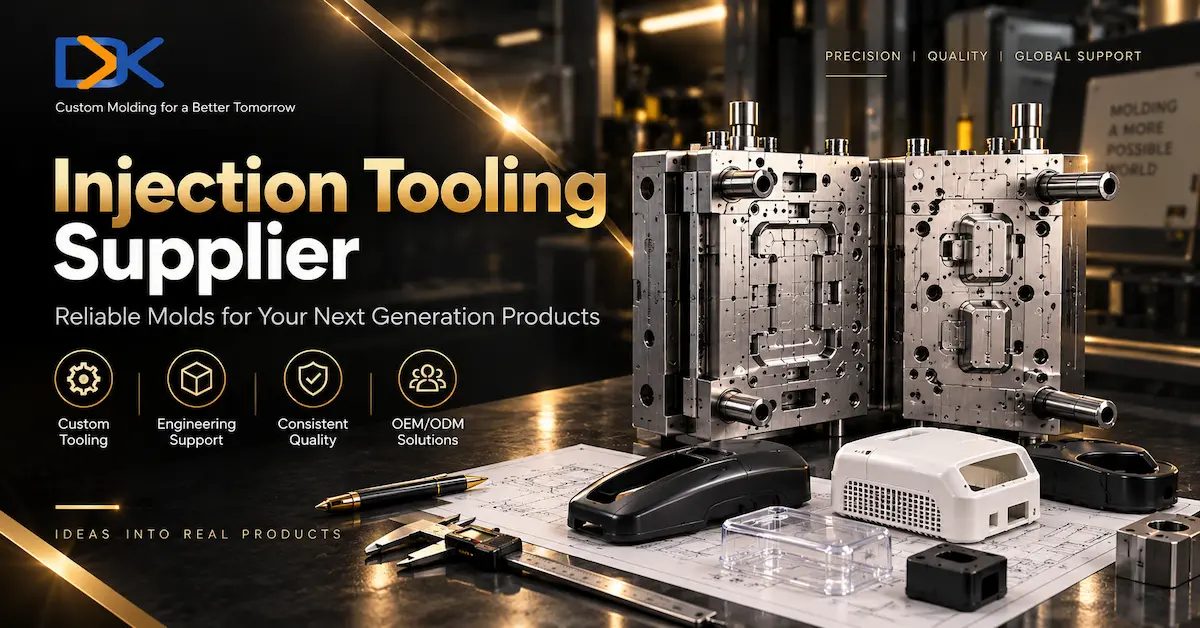
What Should an Injection Tooling Supplier Deliver for Mold Transfer?
Before approving an injection tooling supplier, decide what evidence will allow your production team to accept the mold—not simply what will allow the supplier to ship it. Consider an illustrative handover: sample parts fit correctly, yet the receiving factory has no approved cooling diagram, cannot identify the spare inserts and has not reviewed the controller connections. Sample approval has answered one question while leaving the transfer unfinished. This guide focuses on thermoplastic injection tooling for OEMs and contract molders that need a workable handover. Use two separate decisions in the project plan: approval of the parts and tooling performance, followed by authorization to ship the documented mold package. Neither should be hidden inside a general statement that the tool is “finished.”
Decide Where the Mold Will Run Before Choosing a Supplier
A manufacturer purchasing an export mold needs its production team involved while the tooling is being specified. A brand outsourcing both tooling and parts needs a different arrangement, including production inspection and repeat-order requirements. A development team with unresolved geometry may need prototypes before committing to a production tool. DX Molding, Shenzhen DongXin Technology Co., Ltd., was founded in 2007 and supports custom plastic molds, molded components and OEM/ODM development. Clarify whether your project calls for a tool-only delivery or a combined manufacturing program. An injection tooling supplier should evaluate the intended arrangement rather than assume that every customer owns suitable molding equipment.
Translate the Application into an Acceptance Requirement
An electronics housing, an appliance cover and an industrial mounting component may all require injection tooling, but their approval priorities need not be identical. As illustrative briefs, ask for the housing to be checked against its mating enclosure, the cover against an agreed appearance reference, and the mounting component against its functional assembly. Describe working temperature, cleaning exposure and mechanical loading where relevant, then identify the tests your product team requires. These are inputs for engineering review, not automatic claims about material suitability. Bring the receiving molder into that discussion: which features will be measured, which fixtures are needed, and who supplies mating components? That conversation turns an application label into an inspection plan.
Write a Transfer-Focused Injection Tooling Specification
Issue one revision-controlled request for quotation, or RFQ, to each shortlisted injection tooling supplier. The following specification checklist is a buyer-defined project template, not a list of standard mold dimensions or guaranteed performance values. Complete it with the product engineer and receiving factory before comparing prices.
| Specification Area | Information to Confirm | Required Project Record |
|---|---|---|
| Part definition | Current 3D model, 2D drawing, revision and mating components | Agreed design-release package |
| Production resin | Exact grade, color, additives and approved alternatives | Material specification |
| Quality requirements | Functional dimensions, appearance and assembly criteria | Inspection and acceptance plan |
| Production target | Release quantities, annual forecast and planned service life | Tooling assumptions |
| Mold construction | Steel, cavity count, inserts, runner and gate proposal | Approved mold specification |
| Receiving equipment | Machine model, mold envelope, interfaces and auxiliary equipment | Compatibility review |
| Trial arrangement | Resin, machine, sampling, measurements and correction scope | Trial plan |
| Purchased components | Specified makes, part numbers and approved substitutions | Bill of materials |
| Handover scope | Drawings, settings, maintenance information and spares | Document and packing register |
| Startup support | Technical contact, support method and responsibility boundaries | Agreed support scope |
Mark unresolved requirements rather than substituting assumed values. In particular, distinguish the expected date of first samples from the date of an approved, transferable mold. DX Molding accepts drawings, samples and project requirements for evaluation; submit your tooling brief with the production location and any missing equipment information clearly identified.
Choose Steel and Replacement Components for the Actual Program
P20, H13 and S136 are among the steels listed for DX Molding’s custom plastic injection molds, alongside single- and multi-cavity options and custom finishes. A steel name alone is not a complete purchase specification. Ask which grade is proposed for the core, cavity and wear components, what material documentation is included, and how the selection relates to the resin, expected output and finish requirement. Make quoted mold life equally specific: distinguish design expectations from agreed guarantees and identify maintenance assumptions. For a mold that will move overseas, request identifiable replacement components and confirm which drawings or supplier references will be supplied. Knowing that an insert is replaceable is less useful than knowing how the receiving factory can order the correct replacement.
Review Machine Compatibility and Manufacturing Control
Have the Receiving Factory Approve the Interfaces
Send the actual machine information to the injection tooling supplier before approving the mold layout. Request a joint check of mold dimensions, tie-bar clearance, mold thickness, opening travel, ejection interface, locating ring, cooling connections and applicable electrical requirements. Include the intended part-removal equipment rather than checking only whether the mold physically fits. DX Molding’s three-plate tooling guide highlights the importance of opening travel and interface planning for export molds. Use a signed compatibility sheet for your own project, with each unresolved interface assigned to a named person. “Suitable for our machine” should refer to a reviewed machine specification, not merely a nominal clamping-force category.
Follow the Drawing Through Machining and Assembly
Start with the design-for-manufacturing (DFM) review: which wall transitions, undercuts, gates or ejection details need agreement before machining? During the manufacturing review, choose one critical feature and ask the supplier to show its route from the approved drawing through machining, inspection and assembly. Identify who authorizes revisions and how externally processed components are checked. DX Molding’s factory audit guide explains why CNC machining and electrical discharge machining (EDM) should be assessed together with fitting, assembly and inspection controls. Ask to see the relevant records rather than a machine photograph alone. For an export project, include the receiving maintenance team’s questions while corrections are still possible at the toolmaker’s workshop.
Compare Tooling Configurations Against Transfer Requirements
This comparison covers custom tooling configurations, not catalog models. A two-plate mold describes an opening architecture; a hot runner describes a feed system, so the two are not mutually exclusive. The two-plate mold selection guide explains how cold- and hot-runner versions differ. Have your injection tooling supplier justify the proposed configuration against the part, forecast and receiving plant’s capabilities.
| Configuration | Potential Value | Trade-Off to Evaluate | Transfer Requirement |
|---|---|---|---|
| Two-plate cold-runner mold | Relatively straightforward architecture where gating permits | Runner handling, gate removal and material usage | Confirm ejection and runner-removal arrangements |
| Three-plate cold-runner mold | Additional cold-runner gate-placement and separation options | More opening movements and components | Verify opening sequence, available travel and maintenance access |
| Hot-runner-equipped mold | Reduced cold-runner material in suitable applications | Added control equipment, maintenance and investment | Identify the controller, connections and replacement components |
| Multi-cavity version of a suitable design | Several parts produced per molding cycle | Greater attention to balance, machine capacity and cavity consistency | Require cavity identification and inspection of every active cavity |
Treat these choices as design decisions that can overlap, not a progression from “basic” to “best.” A multi-cavity tool can use different opening architectures and runner systems. Request the production assumptions behind the recommendation, including required output and how the proposed setup will be validated. Extra cavities or additional equipment should solve a defined requirement, not simply make the quotation look more sophisticated.
Approve the Trial Evidence, Not the Trial Label
Connect Each Sample to a Controlled Trial Record
T0, T1 and later trial labels are not substitutes for agreed acceptance criteria. Ask what was tested at each stage and which issues remain open. The injection tooling supplier should connect submitted samples to the relevant drawing revision, material, machine, processing record and cavity where applicable. DX Molding’s trial and inspection support includes trial reporting, dimensional inspection and parameter records; confirm the specific deliverables in your quotation. Review appearance, dimensions and assembly separately, and record whether any approval is conditional. A note accepting color should not accidentally authorize an unresolved fit requirement.
Check Repeatability Before Authorizing Shipment
Agree a production-representative trial with a defined run length, collection method and inspection scope. For an illustrative four-cavity mold, measurements from one cavity do not establish acceptance of the other three. Include evidence from every active cavity and record interruptions or adjustments during the agreed run. Mold accuracy also does not guarantee finished-part dimensions by itself: material behavior, cooling and process conditions contribute to the result, as explained in DX Molding’s precision mold guide. Treat trial settings as a documented starting reference for destination validation, not a reason to skip it. Where a certificate or test report is required, confirm its issuer, scope, validity and relevance to the actual project before approval.
Tie Tooling Lead Time to Milestones and Available Resources
Ask for a schedule covering design release, material and component procurement, machining, assembly, first trial, corrections, approval and shipment. Include your own review time and the receiving factory’s availability. A useful injection tooling supplier schedule identifies the activity holding up the next stage and who must resolve it. For capacity, request confirmation of the engineering, machining, trial-machine and inspection resources allocated to your project rather than relying on a monthly mold-count claim. DX Molding’s molding project workflow moves through requirements review, DFM, quotation planning, manufacture, trials and production. Use those stages as discussion points, with dates confirmed for your specific mold rather than copied from another project.
Compare Injection Tooling Supplier Quotes Through Startup
Build the comparison around the same deliverables: engineering, mold manufacture, purchased components, trials, inspection, agreed corrections, spares, packing and startup support. Ask whether the controller used during a hot-runner trial belongs to the supplier or forms part of your purchase. Clarify who supplies trial resin and mating components, and whether inspection fixtures travel with the mold. These questions reveal scope differences without assuming that a lower quotation means inferior workmanship. As an illustrative budgeting exercise, a $24,000 tool quote excluding $3,500 of required equipment and documentation totals $27,500 before any other costs; a $27,000 offer including those same items is lower on that matched scope. These are hypothetical figures, not DX Molding prices. Evaluate freight, duties, taxes and destination startup separately where applicable, and agree how new customer changes differ from corrections required to meet the approved specification.
Define OEM, ODM and Handover Responsibilities in Writing
For OEM tooling, identify the controlled product design and the supplier changes requiring approval. For ODM development, add responsibility for concept, structure, prototype and design release. Before shipment, propose a handover register that lists each required drawing, component reference, trial record, maintenance instruction, spare and packing item, with its revision and delivery status. Assign an owner to every exception and obtain explicit agreement on anything supplied later. Also clarify confidentiality, mold ownership, engineering-data delivery, storage and transfer arrangements in the purchasing documents; do not assume they are all covered by the tooling price. For customers keeping production with DX Molding, the plastic molding service provides a separate basis for discussing finished-part supply. For exported tools, confirm the scope of destination troubleshooting and distinguish remote assistance from any separately arranged on-site work.
Send DX Molding a Tooling Brief That Includes the Destination
To discuss custom injection tooling, provide the part drawing, resin requirement, initial and annual quantities, critical acceptance points and intended production location. Add the receiving machine details where available and identify the planned handover documents. For an existing mold transfer, include its available drawings, condition information, approved samples and the problem you need reviewed; feasibility should be assessed before assuming that transfer or modification will solve it. Request an injection tooling project review and state whether you need a new export mold, a replacement tool or tooling combined with molded-part production.
Frequently Asked Questions
1. What Should an Injection Tooling Supplier Include in Its Quotation?
Request an itemized mold specification, engineering scope, trial arrangement, inspection package, correction terms and delivery contents. Identify optional spares, equipment and startup support separately. The quotation should state what you are buying and which assumptions still require approval.
2. Can DX Molding Build Tooling and Produce the Plastic Parts?
Yes. DX Molding offers both custom injection molds and molded plastic components. Specify whether the mold will remain for production or be shipped to another factory, because the manufacturing, documentation and handover requirements differ between those arrangements.
3. What Files Are Needed for a Tooling Review?
Provide the current 3D model, revision-controlled 2D drawing, material requirements, expected volume and critical quality requirements. Include the receiving machine specification for an export mold. Sketches or samples can support an initial discussion, but unresolved design details must remain clearly identified.
4. Can a Mold Be Transferred to Any Injection Molding Machine?
Do not assume universal compatibility. Have the toolmaker and receiving molder review the specific mold envelope, opening and ejection arrangements, material-processing requirements and auxiliary interfaces. Finalize the intended equipment before approving a transfer-ready tooling design.
5. Should We Choose Hot-Runner or Cold-Runner Tooling?
Compare gating needs, resin use, production volume, equipment and local maintenance support. Include runner handling in the cold-runner assessment and controller and spare-component requirements in the hot-runner assessment. Neither system should be selected from initial mold price alone.
6. Does a Successful T1 Trial Mean the Tool Is Ready to Ship?
Not automatically. Review what the trial demonstrated, which corrections remain, and whether the required documents and spares are complete. Approve shipment against the agreed handover criteria rather than the trial number or a photograph of selected samples.
7. How Long Does Custom Injection Tooling Take?
Request a project-specific schedule after the drawing, mold configuration and purchased components have been reviewed. Separate first-trial timing from final approval and shipment. Ask how design changes, additional testing or delayed customer feedback will affect the schedule.
8. How Should Mold Life Be Specified?
Discuss the intended production quantity, resin, mold construction, operating conditions and maintenance plan. State whether a figure is a design target or an agreed guarantee, and define exclusions and wear-part replacement. Avoid converting a general website range into an automatic project commitment.
9. Who Owns the Mold Drawings and Spare-Part Data?
Agree those deliverables and rights in the purchasing documents. List the required file formats, revisions and component information rather than assuming they accompany ownership of the physical mold. Resolve proprietary-component documentation before approving the purchase.
10. What Support Should We Arrange After the Mold Arrives?
Agree technical contacts with your injection tooling supplier, identify the records needed for troubleshooting and agree how issues will be investigated. Distinguish remote guidance, replacement parts, modification work and any on-site service. Confirm scope, response arrangements and charges before the mold is dispatched.
Conclusion
Selecting an injection tooling supplier is a decision about how the mold will be approved, transferred and supported at its intended production site. Review machine compatibility, tooling construction and trial evidence together, then confirm the documentation, spares and responsibility boundaries before shipment. A handover should leave your production team with an identifiable tool, a usable technical record and a clear route for resolving open issues. Send DX Molding your drawings and tooling requirements with the mold destination, material, expected quantity and acceptance requirements to begin a project-specific review.