What Should a Consumer Product Mold Supplier Deliver?
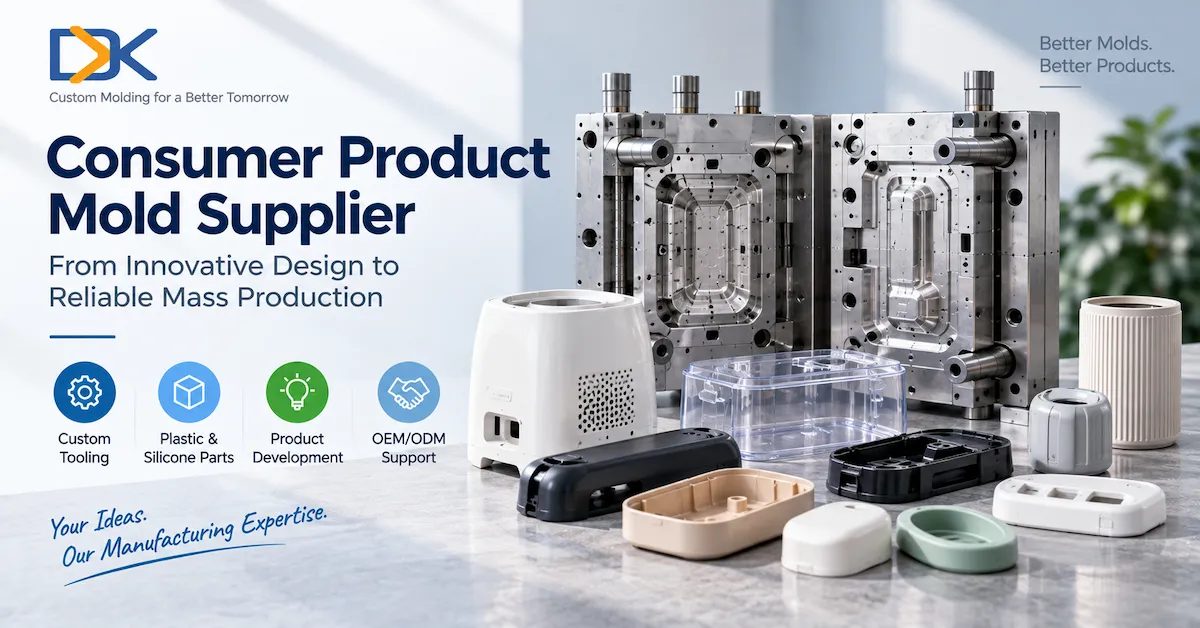
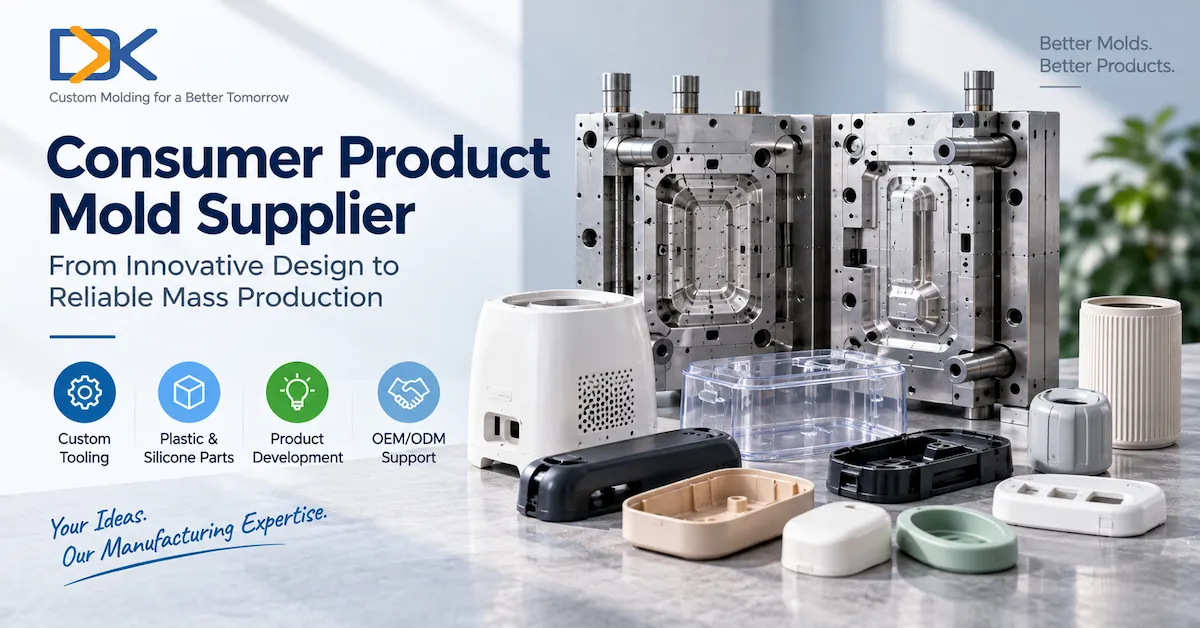
Choose a consumer product mold supplier by how it manages three decisions: the design released for tooling, the sample approved for production, and the specification used for repeat orders. For a consumer brand, an attractive sample is not the entire buying objective. The next shipment must also meet the agreed appearance, assembly and packaging requirements. Separate a tool-only purchase from a mold-and-parts program at the outset: the former needs a defined tooling handover, while the latter also needs production and reorder controls. DX Molding, founded in 2007 as Shenzhen DongXin Technology Co., Ltd., provides custom plastic and silicone tooling, molded components, and OEM/ODM development support. Define which of those services your project actually needs.
Which Buyers Benefit from Custom Consumer Product Tooling?
This guide is for OEM brands developing their own housings, household accessories or functional components; private-label businesses moving beyond an existing catalog design; and sourcing teams preparing repeat production. Match the engagement to the project stage. A development team with unresolved dimensions needs engineering review before a production commitment. A brand with released drawings needs a comparable quotation and an approval plan. A factory buying a transferable mold needs equipment compatibility and handover documentation. Custom tooling is not automatically the right first purchase for a display model, a one-off prototype or a product whose basic function is still changing. Before selecting a consumer product mold supplier, identify what is ready to manufacture and what still needs testing.
Turn Everyday Use into Specific Product Requirements
Use the following as illustrative project briefs, not examples of completed DX Molding orders. For a handheld consumer-device housing, identify the grip areas, visible seams, button openings and internal mounting points; specify the intended drop or operating tests rather than writing “durable.” For a storage lid, define the mating container, closing action, cleaning conditions and whether sealing is actually required. For a silicone pad or protective cover, describe the supporting surface, retention method, exposure conditions and required softness. Keep the complete product in view: a lid should be approved against its container, not inspected only on a flat table. These briefs give a consumer product mold supplier something more useful than a category name: a description of how the customer will handle and judge the product.
Build a Specification Sheet Before Requesting a Quote
A request for quotation, or RFQ, should distinguish confirmed requirements from items open to engineering review. The table below is a specification checklist for a custom project, not a set of standard DX Molding product specifications. Include a revision number and date on the package so competing suppliers quote the same design.
| Specification Item | Information to Define | Decision It Supports |
|---|---|---|
| Product and assembly | 3D model, 2D drawing, part number and mating components | What must be manufactured and fit together |
| Material | Proposed grade, additives and permitted substitutions | Material review and comparable pricing |
| Critical dimensions | Functional tolerances, measurement references and inspection method | Acceptance of fit, alignment and operation |
| Cosmetic surfaces | Visible areas, finish reference and acceptable manufacturing marks | Appearance approval |
| Product variants | Colors, logos, local geometry changes and quantities by variant | Tooling and production planning |
| Tool construction | Proposed steel, cavity count, runner type and mold-life assumptions | Expected output, maintenance and investment |
| Demand | Initial release, reorder size and realistic annual forecast | Cavity and scheduling decisions |
| Working conditions | Temperature, cleaning, contact media and mechanical use | Required material and product validation |
| Secondary operations | Trimming, printing, assembly or other required work | Responsibility and quote inclusions |
| Quality documents | Required sample, material and inspection records | Evidence needed before release |
| Tooling and delivery | Production location, machine details, packing and handover scope | Transfer or finished-parts delivery |
Keep unknown fields visible. “Material grade awaiting review” is clearer than a guessed resin specification. Include a forecast by product variant, not just a combined annual total, and identify which operations are outside the mold supplier’s scope. Submit that package when requesting a consumer product mold quotation.
Select Materials and Finishes as Part of the Product Design
Plastic Components: Name the Grade and the Required Result
DX Molding’s custom plastic molding services include materials such as ABS, PP, PC, PE and nylon, with custom colors and glossy, matte or textured finishes. Treat those material families as options for review, not interchangeable approvals. In the specification, identify the proposed grade and describe the required appearance, operating environment and functional performance. Include any planned resin substitution in the approval process. For color matching, retain an agreed physical reference and define how comparisons will be made; a color name alone is too ambiguous for acceptance. Likewise, write “matte finish matching approved sample” rather than “premium texture.”
Silicone Components: Define Their Function Within the Assembly
The liquid and solid silicone parts range supports custom shape, hardness and color requirements. For a seal, pad or flexible cover, discuss the contact surfaces, required deformation and assembly method before choosing a molding route. Where plastic and silicone meet, identify whether the proposal calls for separate assembled parts or another joining approach requiring engineering review. Do not treat the ability to manufacture both materials as approval of every material combination. Give the consumer product mold supplier the assembly drawing and the proposed functional test, not only separate component sketches.
Review Mold Design Before Approving Steel Cutting
Make Cosmetic Risk Visible in the DFM Review
Design for manufacturing, or DFM, should connect the product drawing to a proposed molding approach. Review wall transitions, ribs, screw bosses, draft, gates, parting lines and ejection locations together. Thick sections behind visible faces can contribute to sink marks, while draft and texture need to be considered together for release from the mold. For a consumer product, require the review to identify where these effects could be visible or interfere with handling. DX Molding’s plastic enclosure design guide explains these relationships in more detail. Approve locations and design changes on marked drawings, not through an unrecorded conversation.
Separate Mold Accuracy from Finished-Part Acceptance
Mold machining accuracy is not a blanket guarantee for every finished-part dimension. Material shrinkage, cooling and processing conditions also affect the molded result. Mark the dimensions controlling closure, alignment, sealing or assembly, then agree how they will be checked. For a snap-fit component, include the mating part and required assembly behavior in validation. DX Molding’s precision molding guide addresses this distinction. Require the tooling proposal to explain the selected steel, inserts, moving mechanisms and maintenance access; do not choose a configuration only because its headline tolerance is smaller.
Approve Function, Appearance and Production Evidence Separately
Use three distinct approval records: dimensional and assembly results, appearance acceptance, and the production conditions associated with the submitted samples. A comment such as “sample approved” should identify exactly what has passed and what remains open. Ask your consumer product mold supplier for sample identification, material grade, drawing revision, cavity identification where applicable, measured results and a correction list. DX Molding’s support scope includes trial reports, dimensional inspection and molding-parameter records; confirm the deliverables included in your project. For repeat orders, propose an approval register linking each variant to its drawing, material, finish reference and packaging requirement. Review certification documents just as carefully: confirm their issuer, scope and relevance to the particular component or product, rather than approving a supplier from certificate logos alone.
Plan Lead Time Around Approvals and Repeat Releases
Build the schedule around decisions, not a single promise of “fast delivery.” Request separate dates for design approval, tooling manufacture, first samples, corrections, final approval and shipment. Identify the time your own team needs for assembly checks and product testing. Then discuss repeat releases: which variants will run together, what order quantities apply to each color, and what happens when demand differs from the forecast? Ask for capacity based on the proposed equipment, usable cavities and trial-supported cycle assumptions, with allowances for setup and inspection. A consumer product mold supplier should make those assumptions visible. In an illustrative three-color launch, do not assume that a combined annual forecast justifies the same plan as one large uninterrupted production run.
Compare Tooling Plans for Your Product Variants
Because these are custom programs, the comparison below covers tooling configurations rather than catalog model numbers. It is a discussion framework, not a ranking or a promise that every option fits your design. DX Molding lists single- and multi-cavity options, steels such as P20, H13 and S136, and polished or textured finishes within its plastic injection mold services.
| Tooling Configuration | Potential Benefit | Main Limitation to Review | Suitable Discussion Point |
|---|---|---|---|
| Single-cavity tool | One cavity to qualify and monitor | Output must meet the release schedule | Uncertain demand or modest production batches |
| Multi-cavity tool for identical parts | Multiple components produced per shot | Cavity balance, machine fit and cavity-specific inspection | Established repeat demand |
| Tool with replaceable variant inserts | May accommodate localized logo or geometry changes | Feasibility, insert interfaces, changeover and renewed approval | Variants sharing most of their geometry |
| Separate tools for different variants | Independent geometry and production scheduling | Additional tooling, maintenance and storage commitments | Variants with substantially different requirements |
Prepare a variant map before asking the supplier to recommend a configuration. Separate a color-only change from a different logo, a revised opening or a new product size. For an insert-based proposal, ask which changes the insert actually covers and whether it introduces a visible line. Have the consumer product mold supplier show the proposal on the mold design rather than promise that future changes will be “easy.”
Compare Consumer Product Mold Cost at the Same Scope
Compare quotations at the level of an approved component or complete set, whichever you are buying. Separate tooling and development charges from molded-part pricing, then identify sampling, corrections, inspection, secondary operations, packaging and delivery inclusions. Ask how the price changes at your likely release quantities, not just the largest forecast. Here is a hypothetical budgeting example, not DX Molding pricing: allocating an $18,000 tool across 60,000 accepted parts gives $0.30 per part; allocating that same tool across 20,000 accepted parts gives $0.90. The difference comes from the volume assumption, not a change in tool price. Use this calculation to test your forecast, while recognizing that the tooling payment may be due before those units sell. Separately agree what constitutes a supplier correction versus a customer-requested design change, and how each affects cost and timing.
Define OEM, ODM and Reorder Responsibilities
For an OEM project, establish the released drawing and which supplier-proposed changes require approval. For an ODM project, identify who signs off on appearance, mechanical design, prototypes and production release. DX Molding’s OEM and ODM development services cover concept review, engineering, prototyping, tooling and manufacturing support. Agree the actual deliverables rather than assuming that an integrated service includes every task. For ongoing supply, assign an owner to the approved drawing and sample register. Record the version used for each order, the authorization needed for material changes, and the procedure for revised components. Discuss confidentiality, mold ownership, maintenance, storage and transfer arrangements separately in the commercial agreement. When an existing product changes, require a documented assessment of the affected parts and the approval work needed before the next release.
Start with a Project Brief That Identifies the Open Questions
Send your consumer product mold supplier the current drawings or reference samples, intended function, preferred material, initial quantity, forecast by variant and target launch milestone. Include your most important concern: an uneven seam, an unresolved closure, a particular finish or uncertainty about future demand. State whether you need a mold delivered to another factory or finished components supplied by DX Molding. Early-stage projects can begin with sketches or sample information, provided the unresolved decisions are identified. Request a consumer product tooling review with that brief so the discussion can focus on the design, manufacturing route and information needed for a quotation.
Frequently Asked Questions
1. What Does a Consumer Product Mold Supplier Provide?
The scope can range from custom tooling alone to development, sampling and molded-part production. Define the required deliverable in the RFQ. A mold, a batch of components and a fully assembled retail product are different purchasing scopes; do not assume they are included in the same offer.
2. Can DX Molding Supply Both the Mold and Finished Plastic Parts?
Yes. DX Molding offers custom injection molds and molded plastic components. Confirm whether the arrangement includes ongoing production, secondary operations, assembly or packaging, and list those items separately in the quotation. The plastic molding service page outlines the available customization scope.
3. What Is the Minimum Order Quantity for Custom Consumer Products?
Request a project-specific minimum for each component, color and release rather than assuming one number applies to an entire product family. Provide both your launch quantity and expected reorders so the proposed tooling and production arrangement can be assessed against your actual buying pattern.
4. Can Several Colors or Logos Use the Same Mold?
Separate material or color changes from changes to molded geometry. Ask whether the proposed tool can serve each variant and whether a logo requires an insert or another operation. Confirm changeover, sample approval and identification requirements; do not assume all variations share one setup or price.
5. Which Plastic Is Best for a Consumer Product?
Start with the required function, appearance and environment, then evaluate specific grades. Avoid choosing from a polymer name alone. Ask the supplier to document the proposed material, permitted alternatives and validation plan, particularly when your product has demanding exposure or contact requirements.
6. How Can We Reduce Differences Between Samples and Repeat Orders?
Agree a controlled approval package covering drawings, material, color, finish, inspection and packaging. Identify the reference samples and who can authorize changes. At reorder, confirm that the supplier is working to that same package or to a specifically approved revision.
7. Can We Start Before Our CAD Design Is Finished?
Yes. DX Molding accepts early ideas, sketches and physical samples for initial review. Specify which dimensions, functions or materials remain unresolved. Use that stage to define the development work, rather than treating an initial feasibility discussion as authorization to manufacture the final mold.
8. Does a Good First Sample Mean the Mold Is Ready for Production?
Treat it as evidence to review, not automatic production approval. Require the agreed dimensional, appearance and assembly checks, resolve open issues, and confirm the production conditions represented by the sample. Ask what additional run or inspection is needed before release.
9. Who Owns the Mold, and Can It Be Transferred Later?
Agree ownership, storage, maintenance, access and transfer conditions in writing before ordering. Request the receiving-factory requirements and documentation scope at the same time. A tooling payment should not be used as a substitute for clearly documented commercial arrangements.
10. What Happens When We Change the Product After Tooling Starts?
Issue a controlled drawing revision and request an assessment before authorizing work. Confirm the affected tool features, existing inventory, cost, schedule and required reapproval. DX Molding’s mold modification support includes feasibility evaluation and modification follow-up; project terms remain subject to agreement.
Conclusion
The right consumer product mold supplier should help you define a repeatable product, not merely produce an attractive first sample. For OEM brands, that means agreeing on finish and fit, planning product variants realistically, and keeping drawing revisions, sample approvals and reorder requirements connected. Compare proposals against those requirements before committing to a tooling price. To discuss a new launch or an existing component, send DX Molding your drawings and consumer product requirements, including the intended material, quantities by variant and the issue you need to resolve first.