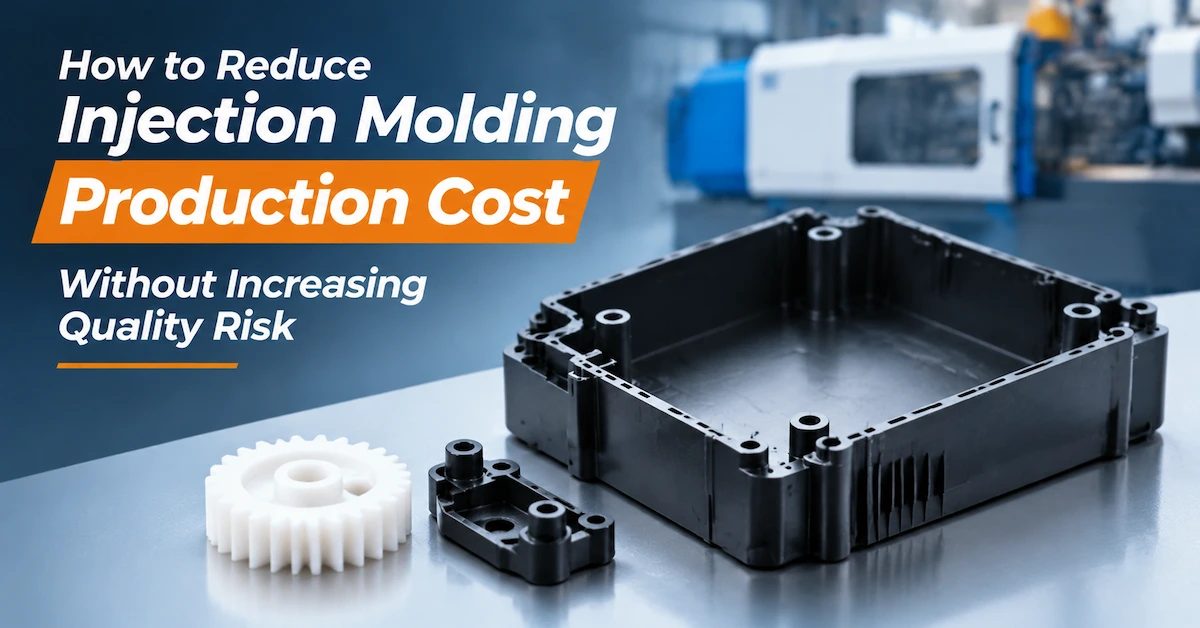
What Is the Most Reliable Way to Reduce Injection Molding Production Cost?
The most reliable way to reduce injection molding production cost is to lower the cost per accepted part, not simply the initial mold price or resin price. Cost per accepted part includes material, machine time, labor, cycle time, scrap, inspection, secondary operations, packaging, maintenance, tooling recovery, and the cost of delayed or rejected production. A design change that saves material but creates warpage can increase the final cost. A higher initial mold investment can be commercially sensible when it reduces cycle time, runner waste, manual work, or repeated quality problems.
For OEM and ODM teams, cost reduction should begin before the tool is released. Product geometry, resin grade, cavity count, gate and runner strategy, cooling, ejection, inspection, and packaging all influence the production economics. The correct question is not “Can the supplier make this part cheaper?” It is “Which approved changes reduce recurring cost without weakening function, appearance, delivery reliability, or quality evidence?”
This guide provides a practical framework for evaluating injection molding cost reduction. It separates one-time tooling cost from recurring part cost, identifies the cost drivers that buyers can actually change, and shows what information to include in an RFQ. The examples are engineering decision frameworks, not guaranteed savings or standard DX Molding pricing. For a project requiring molded plastic parts, the relevant commercial starting point is DX Molding's custom plastic molding service, with the final material, tooling, cycle, inspection, and production scope confirmed for the specific program.
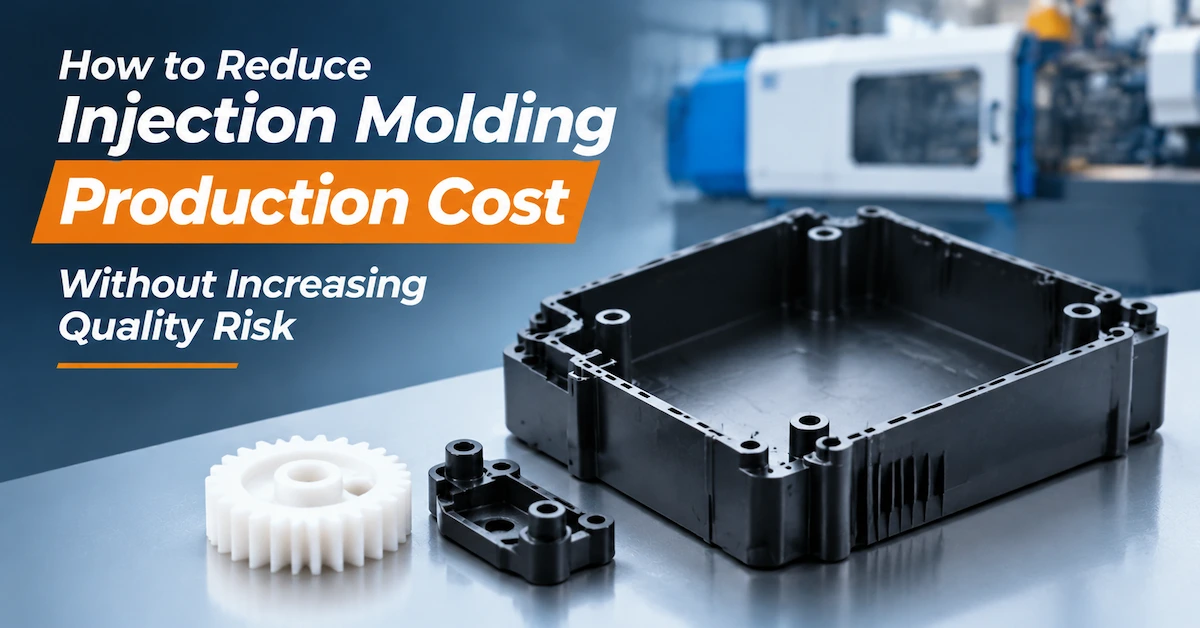
Calculate Cost Per Accepted Part Before Asking for a Lower Price
A lower unit quotation is not automatically a lower production cost. To compare two proposals, separate the cost categories and calculate them under the same production assumptions. A practical model is:
Cost per accepted part = material cost + machine time + labor and handling + secondary operations + inspection + packaging + maintenance allocation + tooling allocation + scrap and rework cost.
This does not need to be a perfect accounting model at the quotation stage. It needs to reveal which assumptions can change the result. A proposal with a lower mold price but a longer cycle or higher scrap rate may lose its advantage after production begins. A multi-cavity mold may reduce machine cost per part but increase the initial tool investment, validation effort, cavity-balance risk, and maintenance exposure.
| Cost category | Main production driver | Cost-reduction lever | Risk to check |
|---|---|---|---|
| Material | Part weight, runner weight, resin price, colorant, purge, and scrap. | Reduce unnecessary mass, optimize runner, standardize grade, and control start-up waste. | Thin walls, short shots, strength loss, color variation, or rejected appearance. |
| Machine time | Cycle time, machine size, utilization, and output per shot. | Improve cooling, cavity count, filling balance, and ejection stability. | Warpage, sticking, incomplete cooling, or machine incompatibility. |
| Tooling | Mold complexity, steel, cavities, runners, mechanisms, and validation scope. | Remove unnecessary features, use the right cavity plan, and localize premium components. | Short tool life, difficult maintenance, or late corrections. |
| Quality | Scrap, rework, inspection time, sorting, and customer returns. | Control critical dimensions and defects at the source. | Over-relaxed inspection or an unverified process window. |
| Operations | Manual degating, trimming, assembly, handling, and packaging. | Design for automatic separation, stable handling, and right-sized packaging. | Part damage, labor variation, or added equipment cost. |
| Supply risk | Downtime, urgent repair, late approval, and change orders. | Use clear scope, spare parts, maintenance records, and controlled revisions. | False savings caused by an incomplete quotation. |
Use at least two volume scenarios when demand is uncertain. A low-volume launch may favor a simpler single-cavity or cold-runner tool. A stable repeat program may justify more cavities, a different runner system, better cooling, or replaceable wear inserts. The best answer can change as the forecast changes.
How to Reduce Injection Molding Production Cost at the Product-Design Stage
Product design is usually the highest-leverage place to reduce recurring cost because geometry influences every later stage. It affects material weight, filling, cooling, ejection, tooling complexity, assembly, inspection, and packaging. A small change made before mold design may be inexpensive; the same change after steel cutting can require a modification, a new trial, or a new product approval.
Remove material that does not add function
Part weight is not the only material cost, but it is a direct one. Review thick walls, solid bosses, heavy corners, deep pads, and local material accumulation. The objective is not to make every wall as thin as possible. The objective is to keep material where it carries load, supports assembly, seals, locates another part, or controls appearance, while coring out regions that only add mass and cooling time.
A lighter part can still cost more if it requires a difficult mold, narrow process window, more rejects, or a high-cost engineering resin. Evaluate weight together with strength, stiffness, impact, heat, chemical exposure, dimensional stability, and assembly requirements. The result should be validated against function, not selected by weight alone.
Use ribs and bosses without creating sink and cycle penalties
Ribs and bosses can replace thick solid sections, but they introduce their own risks. A boss behind a cosmetic wall may create sink. A rib that is too thick can extend cooling time. A cluster of bosses may restrict flow or create local shrinkage. A better DFM review compares the structural benefit with the material mass, visible-surface risk, ejection load, and inspection requirement.
Control draft, undercuts, and parting-line complexity
Insufficient draft can create drag, whitening, scuffing, and higher ejection force. Undercuts may require slides, lifters, inserts, or a more complex parting strategy. Each additional mechanism can increase machining, fitting, maintenance, and trial work. If a feature is not function-critical, redesign it for straight release. If it is essential, keep it and specify the mechanism rather than hiding the complexity in the quotation.
DX Molding's published engineering and custom molding workflow places requirements review and DFM before tooling. The services page lists CAD, samples, material requirements, target quantity, finish, color, and tolerance as useful project inputs. Providing these details early helps the supplier optimize the part and tooling around the real cost objective.
Define cosmetic surfaces before moving the gate
A gate placed on a hidden face may reduce visible-defect risk but increase runner length or filling pressure. A gate placed near a thick feature may shorten flow but create sink or a visible vestige. Cost reduction should not treat appearance as an afterthought. Identify A-surfaces, functional surfaces, sealing lands, and hidden faces so the gate and parting decisions are made against the actual product priority.
Choose Material for Total Production Cost, Not Resin Price Alone
Resin price is visible in a quotation, but material choice affects much more than the price per kilogram. It can change part weight, cycle time, mold wear, shrinkage, warpage, appearance, scrap, assembly performance, and the documentation needed for the application.
Compare candidate materials against the application
For an electronics housing, the relevant criteria may include stiffness, impact, dimensional stability, surface finish, flame-retardant requirements, and connector fit. For an appliance component, temperature, chemical exposure, appearance, and repeated assembly may matter more. For an industrial part, wear, strength, environment, and long-term dimensional behavior can dominate. The lowest-priced resin is only a cost reduction if it still meets the product requirement.
DX Molding's published plastic molding information lists material families such as ABS, PP, PE, PVC, nylon, PC, and custom engineering plastics. The support page also describes material consultation around application, shrinkage, temperature resistance, flame-retardant grade, certification introduction, and alternative-material cost comparison. These are useful starting points, but the exact grade, supplier, color, additive, COA, and compliance documents should be confirmed for each project.
Evaluate recycled content and color requirements carefully
Recycled content, regrind, colorant, and special effects can change flow, appearance, strength, shrinkage, and batch consistency. A material change that looks inexpensive on paper may require a new process window or new approval samples. If recycled content is part of the cost plan, define the permitted percentage, source, lot control, visual standard, and performance test rather than leaving “recycled resin” as an informal instruction.
Separate material substitution from process change
Changing from one resin family to another can affect tool temperature, gate freeze, cooling, ejection, shrinkage, and dimensional compensation. Treat the change as an engineering change, not a purchasing substitution. Record the old grade, new grade, reason, affected dimensions, appearance risks, validation plan, and approval owner.
Buyer rule: Request a material comparison that includes part weight, cycle assumption, mold wear, appearance, critical dimensions, and required validation. A resin price table alone does not show the production cost.
Use Cavity Planning to Lower Unit Cost Without Overbuilding
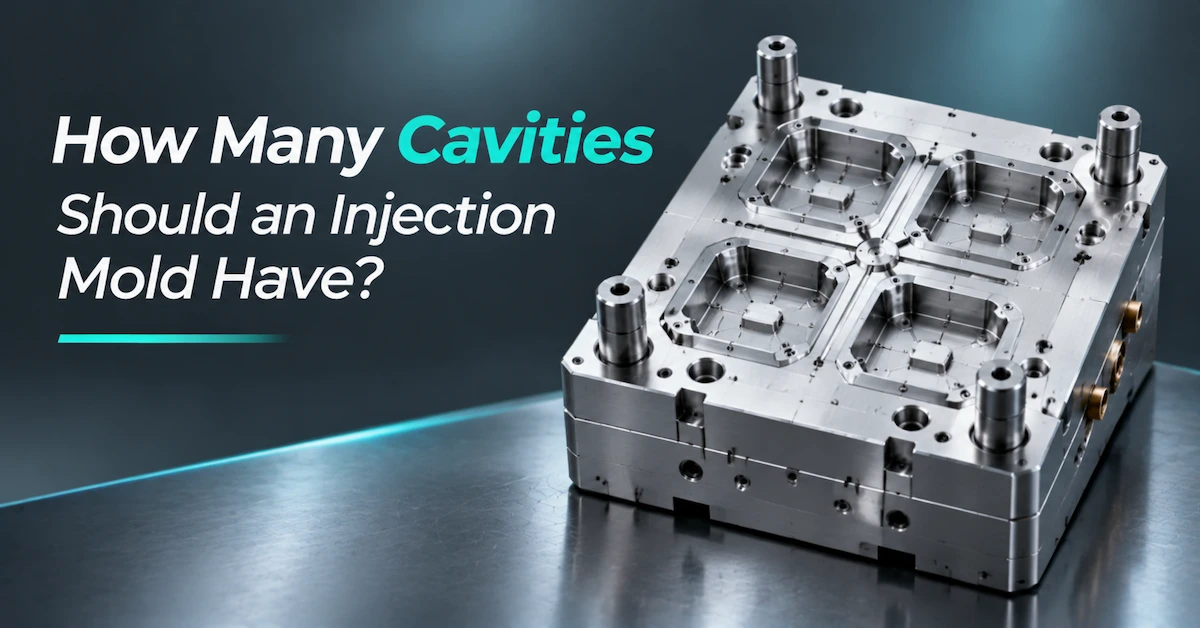
Cavity count is one of the most important choices in an injection molding cost model. More cavities can produce more parts per shot and reduce machine time per part, but they also increase mold size, cavity-balance requirements, inspection work, maintenance, and initial tooling investment. The right question is not “What is the maximum number of cavities?” It is “Which cavity plan meets realistic demand with acceptable production and quality risk?”
| Tooling route | Potential cost advantage | Cost or quality risk | Best discussion point |
|---|---|---|---|
| Single cavity | Lower initial tooling and simpler qualification. | Higher machine time per part and less output per shot. | Prototype, uncertain demand, or modest launch volume. |
| Two or four cavities | Higher output with a manageable increase in tooling scope. | Balance, cavity-to-cavity variation, and more inspection. | Established demand that does not justify the largest tool. |
| Higher-cavity tool | Lower machine time per accepted part when output is fully used. | Higher investment, larger machine requirements, balance, maintenance, and validation. | Stable demand and a production plan that can use the capacity. |
| Multiple identical tools | Production redundancy and scheduling flexibility. | More tooling investment and duplicate qualification. | Continuity or capacity risk is more important than minimum initial cost. |
Run a simple break-even comparison. Include mold investment, cycle time, machine rate, labor, material waste, inspection, maintenance, and expected utilization. A high-cavity mold that runs below its planned output may never recover its additional investment. A single-cavity mold may become expensive when demand grows and every order requires more machine hours.
For multi-cavity tooling, do not approve the tool based on the best cavity. Inspect cavity identification, fill balance, dimensions, appearance, cooling behavior, and assembly by cavity. A cheap unit price is not useful if one cavity creates regular sorting or rework.
DX Molding's plastic injection mold page lists single- and multi-cavity options and describes hot- and cold-runner configurations. These are project options, not a default recommendation. The cavity plan should be selected with annual demand, machine availability, production location, validation scope, and maintenance capability.
Reduce Runner Waste and Gate-Related Production Cost
Runner design affects material use, cycle behavior, gate trimming, appearance, balance, maintenance, and the feasibility of automation. A cold runner may be a practical choice for a low-volume or simpler project, while a hot runner may reduce recurring runner waste in a suitable repeat-production program. The comparison must include both tooling and production economics.
Cold runner considerations
A cold runner generally creates runner material that may need to be separated, recycled, disposed of, or packed with the part. It can still be commercially appropriate where volumes are modest, the runner is small, the tool must remain simple, or the resin and product requirements favor it. Review runner weight against part weight rather than assuming the runner is insignificant.
Hot runner considerations
A hot runner can reduce cold-runner material and may support higher-output production, but it adds components, temperature control, maintenance, start-up procedures, and troubleshooting requirements. The total cost model should include the hot-runner system, controller, spare parts, service access, downtime exposure, and the effect on gate quality.
Gate location and secondary operations
A gate that requires manual trimming can add labor to every part. A gate that reduces trimming but leaves an unacceptable vestige may create cosmetic sorting. A tunnel or submarine gate can support automatic separation in some designs, but it may require careful steel strength, angle, and maintenance review. The best gate is the one that satisfies filling, packing, appearance, release, and handling requirements at an acceptable recurring cost.
Do not reduce runner cost by moving the gate into a functional or cosmetic area without validating the consequences. A shorter runner is not a saving if it increases weld lines, burn marks, sink, warpage, or customer rejection.
Improve Cooling and Cycle Time Before Chasing Machine Price
Cycle time is a recurring cost driver because the same machine, labor arrangement, and tool can produce more accepted parts when the cycle is stable and appropriately short. Cooling often controls the time required before ejection, especially around thick sections, bosses, deep cores, slides, and inserts. Cutting cooling time without checking part temperature, flatness, shrinkage, and ejection can increase scrap instead of lowering cost.
Find the real cycle-time constraint
Separate filling, packing, cooling, mold opening, ejection, part handling, and any manual operation. The longest step may not be cooling. A slow slide, a manual degating operation, a difficult inspection, or an unstable ejection sequence can also limit output. Measure the actual sequence before changing the mold.
Design cooling around heat concentration
Cooling should be reviewed around local mass, thick bosses, ribs, deep cores, inserts, and large cosmetic surfaces. A channel layout that looks dense in a 3D view may still leave a hot spot. Section views should show channel position, remaining steel, interference with ejectors and mechanisms, and access for cleaning and connection.
DX Molding's support information lists cooling optimization and mold-flow-related analysis covering filling, packing, cooling, and warpage. The analysis depth and deliverable should be confirmed for the project. A simulation or layout review supports the decision but does not replace a measured trial and stable production check.
Protect quality while reducing cycle time
Use a controlled trial to compare cycle changes. Record part temperature or release condition where relevant, flatness, critical dimensions, appearance, ejection marks, and post-molding movement. A shorter cycle that creates delayed warpage or assembly failure is not a production saving. The accepted-part rate must remain part of the calculation.
Reduce Scrap, Rework, and Inspection Cost at the Source
Scrap is often more expensive than the material inside the rejected part. It also consumes machine time, labor, inspection capacity, packaging, and delivery flexibility. The cost-reduction plan should focus on the defect causes that occur repeatedly, not on sorting more efficiently after the defect has already been created.
| Recurring problem | Possible source | Cost-control response |
|---|---|---|
| Short shot | Flow length, gate restriction, venting, material, temperature, or geometry. | Review part and gate design, venting, material, and process window before adding inspection labor. |
| Sink mark | Local mass, boss or rib geometry, packing, or cooling. | Core out the feature, adjust geometry, improve cooling, and validate the cosmetic limit. |
| Warpage | Uneven wall, shrinkage, gate, cooling, packing, fiber orientation, or ejection. | Separate geometry, tooling, and process causes; measure shape under a defined method. |
| Flash | Shutoff wear, mismatch, alignment, contamination, pressure, or weak support. | Inspect the tool and process root cause before increasing trimming or sorting. |
| Drag or whitening | Draft, texture, undercut, release force, or ejection imbalance. | Fix release geometry or ejection support instead of accepting recurring damage. |
| Assembly failure | Part dimension, material change, mating variation, or tolerance stack. | Validate the complete assembly and identify critical-to-function dimensions. |
Inspection should be proportional to risk. Measuring every non-functional feature with the same method may increase cost without improving the product. Instead, identify critical-to-quality characteristics: sealing, alignment, movement, safety, connector position, PCB location, snap engagement, or appearance. Use a clear control plan and retain evidence that the selected inspection level is connected to function.
DX Molding's support page describes first-article inspection, dimensional and appearance records, CMM data where applicable, CPK capability analysis support, AQL sampling, and final inspection. These published support items can be included in a project quality plan, but the exact report format, sampling level, and measurement scope must be agreed before production.
How to Reduce Injection Molding Production Cost Through Tooling Scope
A large portion of production cost is created by decisions made before the first batch. An unclear mold quotation can lead to added trials, missing spare components, redesign charges, or a tool that is inexpensive to build but expensive to maintain. A controlled scope is a cost-reduction tool because it prevents unplanned work.
Separate one-time and recurring decisions
One-time tooling decisions include cavity count, mold base, steel, runner system, mechanisms, inserts, polishing, texture, and documentation. Recurring decisions include cycle time, part weight, runner waste, scrap, inspection, labor, maintenance, and packaging. Do not optimize one category without checking the other.
Define correction versus buyer change
A supplier correction is work needed because the mold does not meet the approved requirement. A buyer design change modifies the product or requirement after approval. These events can have different cost and schedule consequences. Define them in the quotation and change-control process so a genuine correction is not treated as an unexpected surcharge, and a late product change is not mistaken for a tooling defect.
Request an itemized scope
- DFM and design-review scope.
- Mold design, steel, cavity count, runner, gates, cooling, and ejection.
- Machining, EDM, polishing, texture, assembly, and component fitting.
- T0/T1/T2 trial definition, sample quantity, inspection, and correction boundaries.
- Spare pins, inserts, wear parts, hot-runner components, and maintenance documents.
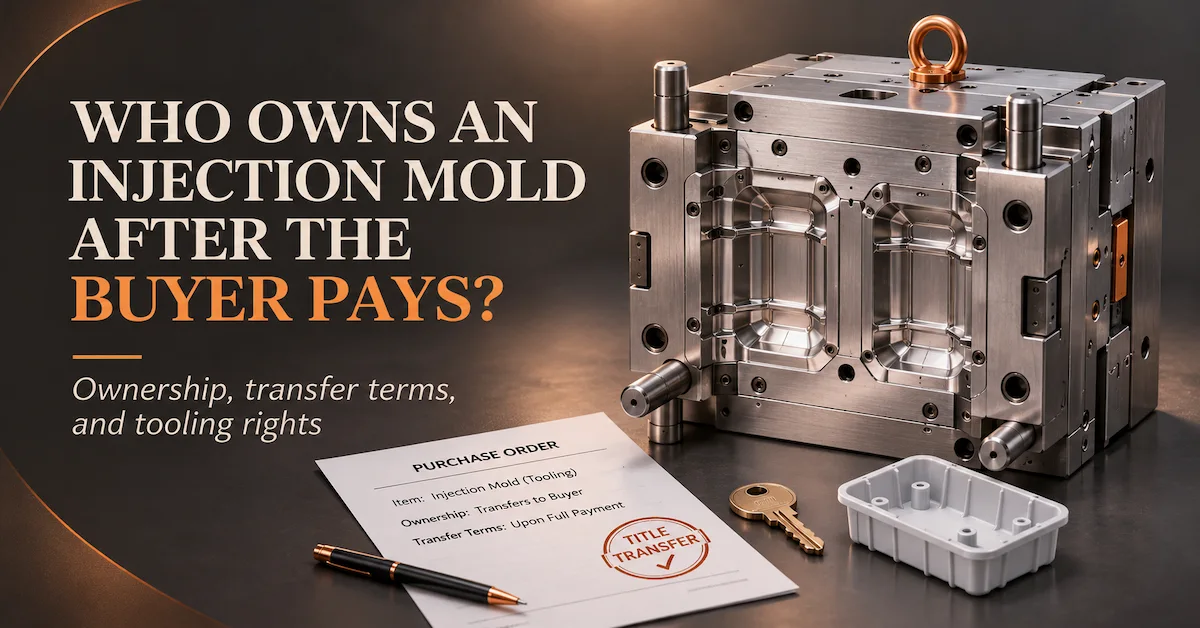
- Packaging, transfer files, ownership, storage, and production-support responsibilities.
The lowest quotation is only useful when its scope is technically comparable. DX Molding's engineering and quality support information describes DFM, mold design, trial reporting, inspection, process records, maintenance, and modification support. Use those published capabilities as a checklist for the project scope, not as proof that every item is automatically included in every order.
Use Packaging and Handling to Lower Delivered Cost
Packaging is often treated as a logistics detail, but it can affect part damage, assembly contamination, storage space, labor, and the number of rejected parts received by the customer. A cost-reduction plan should compare packaging cost with the cost of damage, sorting, repacking, and delayed assembly.
Define whether parts need individual bags, trays, separators, bulk packing, protective film, moisture control, or orientation control. For cosmetic parts, prevent rubbing and stacking marks. For parts with clips, thin walls, or sealing lips, prevent deformation during transport and storage. For export tooling, define anti-rust preservation and the required packaging for the mold itself.
DX Molding's public support information references packaging guidance, anti-rust packaging, fumigated wooden cases, sea-freight reinforcement, and final packaging inspection. Confirm the actual packaging design, materials, dimensions, labeling, and approval sample for the project. A smaller carton is not a saving if it causes damaged parts or more manual inspection.
How to Compare Cost-Reduction Proposals From Suppliers
Ask suppliers to propose options against the same part and volume. A useful comparison should show what changes, what it saves, what new risk it creates, and how the risk will be verified.
| Proposal | Potential saving | New question to answer | Required evidence |
|---|---|---|---|
| Reduce cavity count | Lower initial tool investment. | Will machine time and unit cost remain acceptable? | Volume model with tooling, cycle, and capacity assumptions. |
| Use a cold runner | Lower hot-runner investment and simpler maintenance. | Will runner waste and degating cost be acceptable? | Runner-to-part ratio and handling plan. |
| Use a lower-cost steel option | Lower material or machining investment. | Will wear, polish, corrosion, and expected life still meet the program? | Steel map, treatment, life assumption, and maintenance plan. |
| Relax non-critical tolerances | Lower machining and inspection effort. | Will assembly, sealing, movement, and appearance remain stable? | Functional tolerance review and assembly check. |
| Change resin or filler | Lower material price or improved availability. | Will strength, shrinkage, appearance, tool wear, and approvals change? | Material comparison and validation plan. |
| Shorten cycle time | More output per machine hour. | Will parts remain dimensionally stable after ejection and storage? | Trial data for dimensions, flatness, appearance, and accepted-part rate. |
This structure helps procurement distinguish a genuine engineering improvement from scope removal. It also creates a useful record when several suppliers make different recommendations. The best proposal may not have the largest apparent saving; it may have the lowest risk-adjusted cost over the program.
What to Send With a Cost-Reduction RFQ
A supplier cannot recommend credible savings from a part image alone. Send enough information to show the product, the production objective, the quality boundary, and the cost concern.
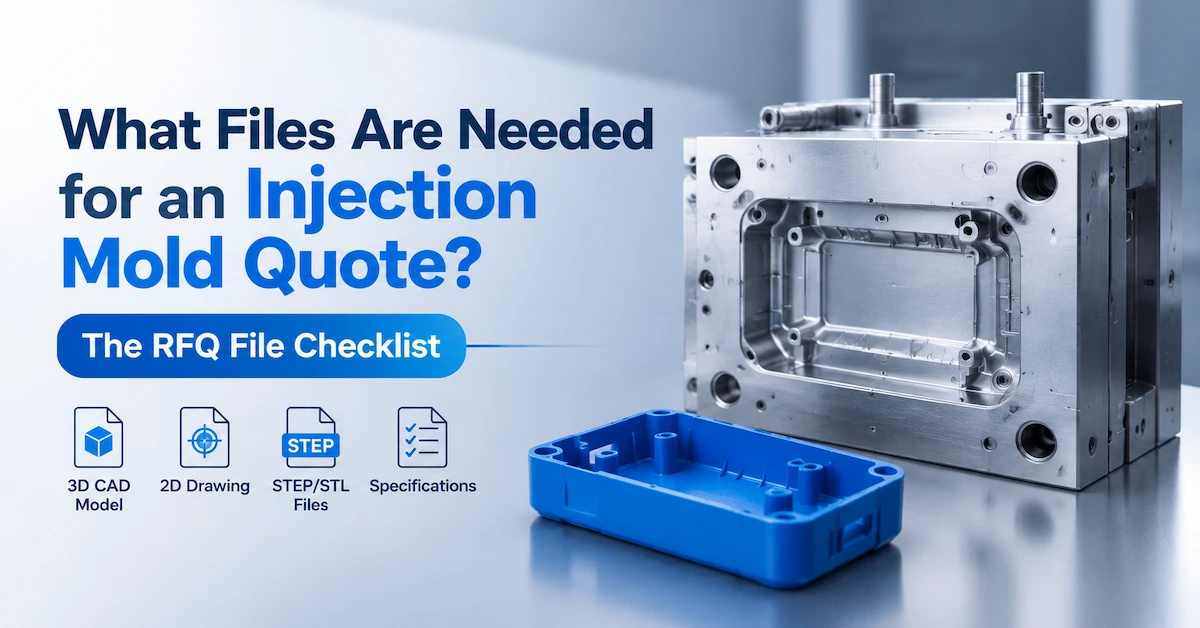
- Current 3D CAD and controlled 2D drawing, including revision and units.
- Exact resin grade or a defined candidate list, with filler, color, flame-retardant, recycled-content, or certification requirements.
- Part weight if known, annual volume, launch quantity, reorder quantity, and forecast confidence.
- Critical dimensions, datums, mating parts, assembly method, sealing surfaces, and functional tests.
- Cosmetic map showing visible faces, texture, polish, gate restrictions, and acceptable marks.
- Target cycle or output requirement, intended production location, machine information where available, and automation assumptions.
- Required DFM, trial, inspection, CMM, CPK, AQL, material, packaging, and production documents.
- The specific cost priority: part weight, cycle time, tool investment, runner waste, labor, scrap, packaging, or total program cost.
When you send files through the DX Molding contact page, identify which requirements are fixed and which are open for engineering alternatives. A supplier can reduce cost more intelligently when the team knows whether function, appearance, launch date, volume, or initial investment has priority.
Frequently Asked Questions About Injection Molding Cost Reduction
How can I reduce injection molding production cost without lowering quality?
To reduce injection molding production cost without lowering quality, start with cost per accepted part rather than the lowest mold or resin price. Review part geometry, material, cavity count, runner, cooling, cycle time, scrap, inspection, labor, packaging, and maintenance. Keep critical dimensions, appearance, assembly, and material requirements fixed while identifying non-critical areas where engineering changes are acceptable.
Is reducing part weight always the best way to lower cost?
No. Lower weight can reduce resin use and cooling time, but an overly thin or unstable design may increase short shots, warpage, stress, defects, or assembly failure. Optimize weight with strength, stiffness, flow, cooling, ejection, and acceptance requirements together.
Does a multi-cavity mold always reduce production cost?
No. More cavities can reduce machine time per part when the demand is high enough to use the capacity, but they increase initial investment, balancing, inspection, maintenance, and validation. Compare realistic volume scenarios instead of assuming that more cavities automatically means lower total cost.
Can changing to a cheaper plastic reduce injection molding cost?
Sometimes, but only when the alternative meets the product's mechanical, thermal, chemical, appearance, dimensional, and regulatory requirements. A material change can also alter shrinkage, warpage, cycle time, mold wear, and approvals. Validate the complete application before treating it as a saving.
Is a cold runner cheaper than a hot runner?
A cold runner may have a lower initial tooling cost, while a hot runner may reduce recurring runner waste in a suitable repeat-production program. Compare tooling, controller, maintenance, resin waste, cycle, gate quality, troubleshooting, and expected volume. Neither system is universally cheaper.
How much can cycle-time reduction save?
The answer depends on machine rate, cavity count, annual output, utilization, labor, and accepted-part rate. A shorter cycle is valuable only when parts remain stable and the reduction does not create warpage, sink, sticking, or post-molding deformation. Use trial data and a production model instead of assuming a fixed saving.
Should I reduce mold steel quality to lower production cost?
Steel should be matched to resin, volume, surface, wear, corrosion, thermal conditions, and maintenance. Lower-cost steel can be appropriate for some programs, but under-specifying a high-wear or high-polish area may increase replacement, downtime, and quality cost. Ask for a component-level steel proposal and life assumption.
How can better DFM reduce injection molding production cost?
DFM can identify unnecessary undercuts, heavy sections, difficult draft, sink-risk bosses, uneven walls, poor gate locations, cooling conflicts, and assembly interference before tooling. Resolving these issues early can reduce mold complexity, trial corrections, scrap, and production instability. It does not guarantee a defect-free process, so trial and inspection remain necessary.
What is the difference between tooling cost and production cost?
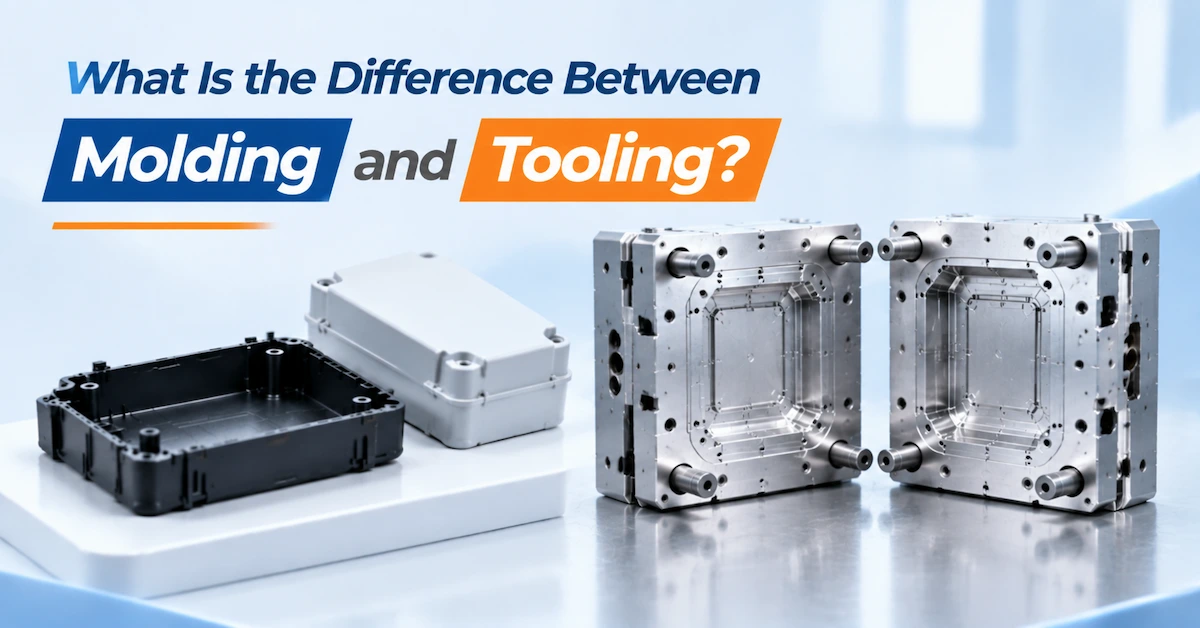
Tooling cost is the one-time investment in engineering, mold materials, machining, assembly, and validation. Production cost recurs through resin, machine time, labor, scrap, inspection, packaging, maintenance, and logistics. A higher tooling investment can reduce recurring production cost, but only if the added capability is used by the actual program.
What information is needed for a cost-reduction quotation?
Send CAD and drawings, resin, volume, critical dimensions, cosmetic requirements, mating parts, target cycle or output, production location, validation needs, and the exact cost priority. Mark fixed requirements and open alternatives. This lets the supplier compare design, tooling, process, and production options on the same basis.
Conclusion
How to reduce injection molding production cost is not a single material, mold, or machine decision. The strongest savings usually come from coordinating product design, resin selection, cavity planning, runner strategy, cooling, cycle time, scrap prevention, inspection, packaging, and supplier scope. Measure the cost per accepted part and separate one-time tooling investment from recurring production cost before approving a change.
For a defensible cost-reduction plan, define what cannot change, identify the cost driver that matters, compare at least two technical routes, record the new risk, and require evidence through DFM, trials, dimensional checks, assembly tests, and production monitoring. This keeps “low cost” from becoming a hidden quality or delivery problem.
Looking for a project-specific way to reduce molded-part cost? Contact DX Molding with your CAD files, resin requirements, annual volume, critical dimensions, and cost priority for an engineering review covering tooling, plastic molding, validation, and production planning.