How to Choose an Automotive Plastic Injection Mold Supplier for OEM Projects
Automotive plastic components require much more than basic injection molding capability. They must meet strict requirements for dimensional stability, durability, appearance, assembly accuracy, and long-term production consistency.
A qualified automotive plastic injection mold supplier should understand not only mold manufacturing but also the specific challenges of automotive applications, including:
- Complex part geometry
- Engineering plastic materials
- Tight dimensional requirements
- Cosmetic surface standards
- High production volume
- Long tooling life expectations
- Continuous product updates
For automotive OEMs and Tier suppliers, the right mold partner should provide a complete development process:
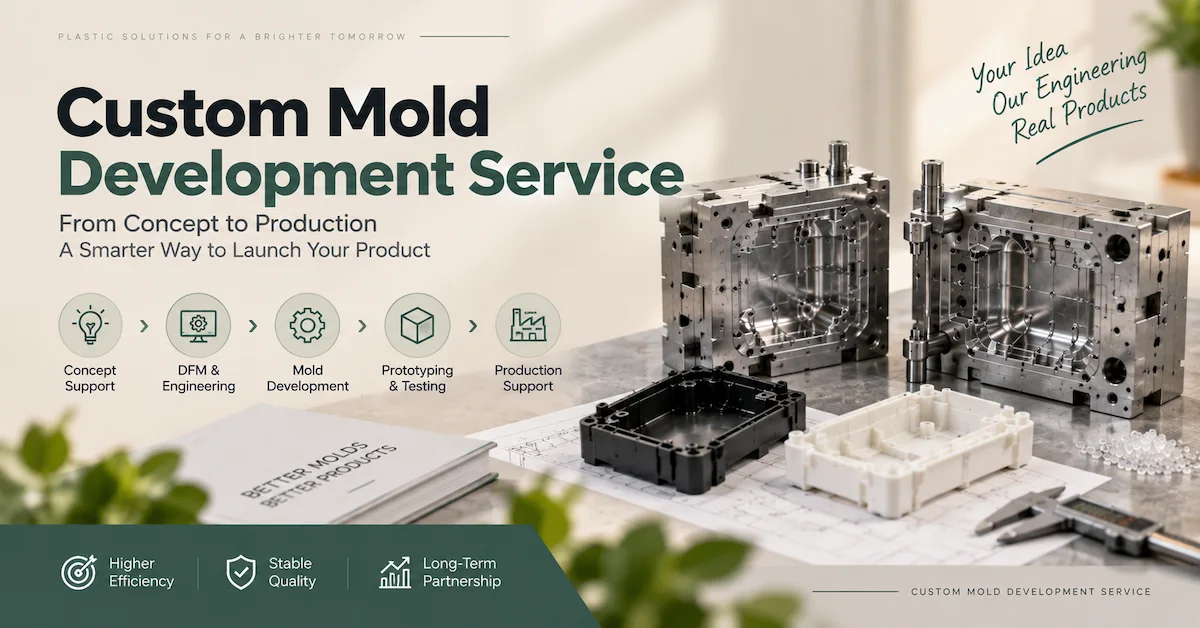
Product Review → DFM Analysis → Mold Design → Precision Machining → Trial Validation → Production Support
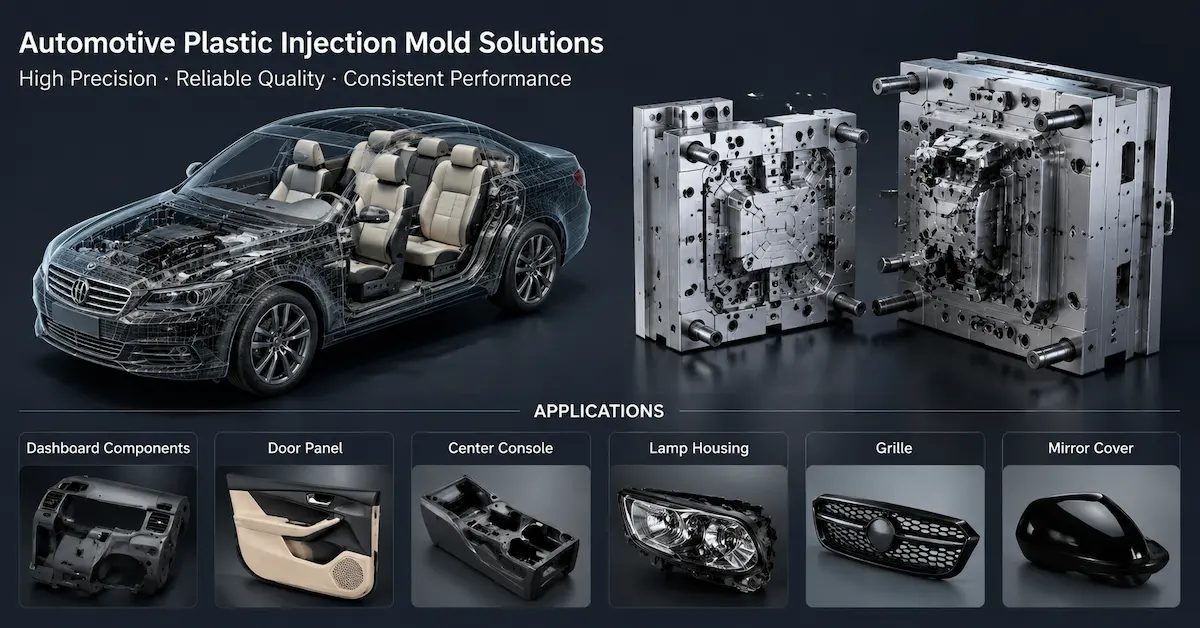
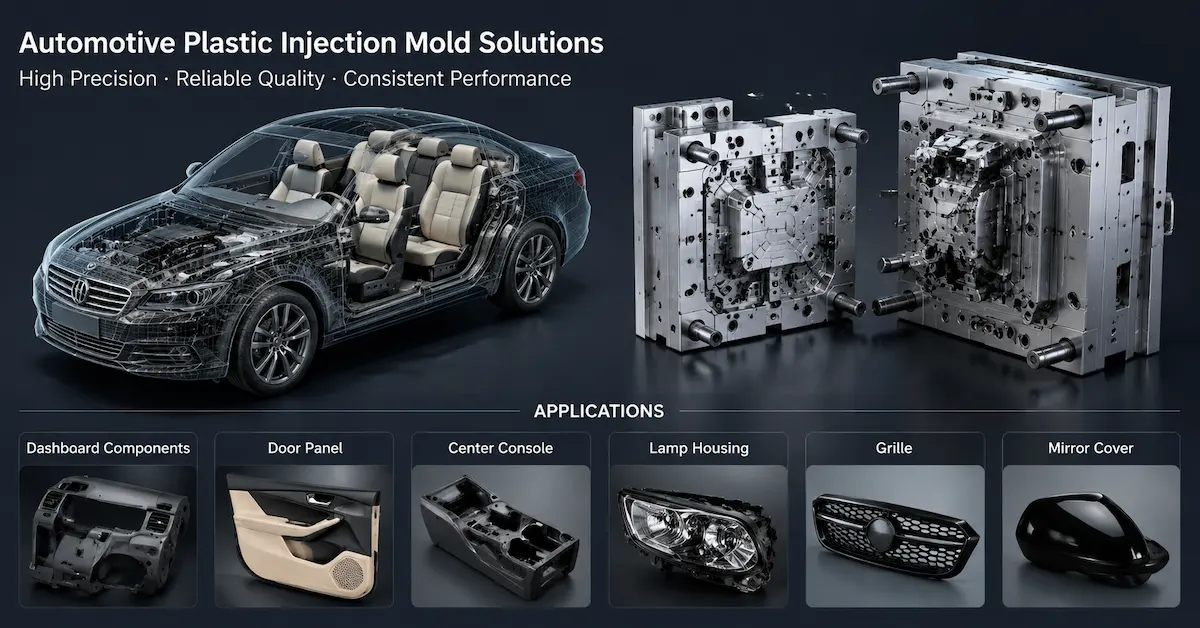
DongXin provides automotive plastic injection mold solutions with support covering mold engineering, CNC machining, EDM processing, trial molding and OEM/ODM manufacturing projects.
Why Automotive Buyers Need Specialized Injection Mold Suppliers
Automotive plastic parts are different from many general consumer products.
A small dimensional variation in an automotive component may affect:
- Assembly accuracy
- Noise and vibration performance
- Sealing performance
- Interior appearance
- Functional reliability
- Production efficiency
Therefore, automotive buyers usually require suppliers that understand the relationship between:
Part Design → Mold Structure → Material Behavior → Injection Process → Final Assembly
A supplier experienced only in simple plastic housings may not have enough experience with automotive-grade requirements.
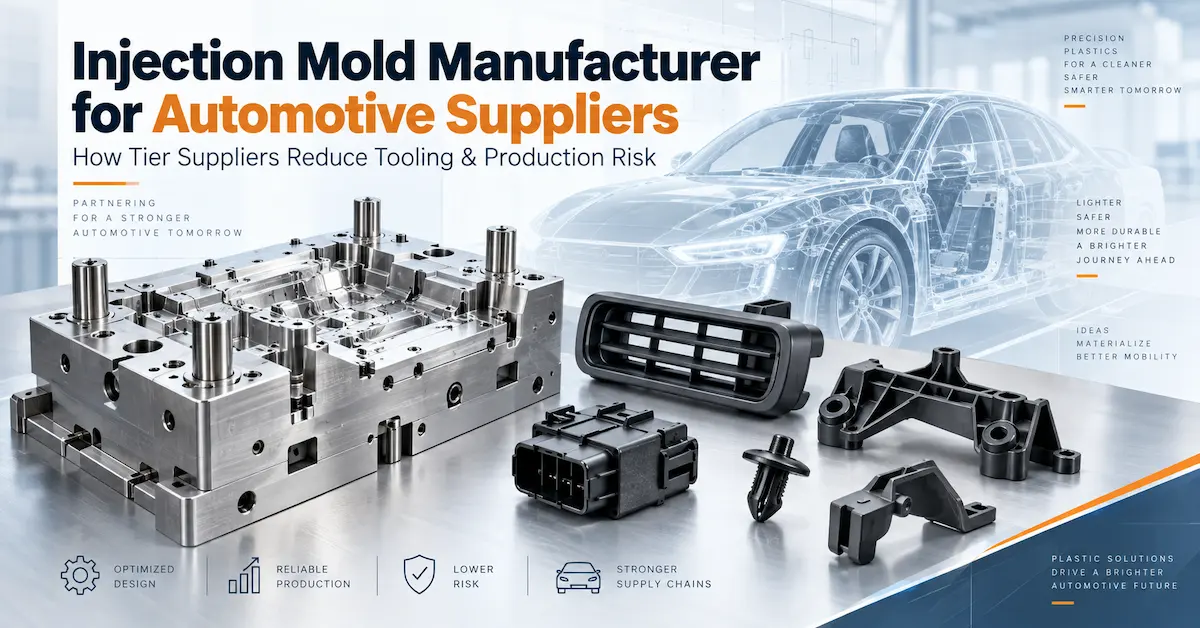
Common Automotive Plastic Parts Requiring Custom Injection Molds
An experienced automotive plastic injection mold supplier may support different vehicle applications.
Interior Automotive Components
Examples include:
- Dashboard components
- Door panels
- Center console parts
- Trim panels
- Switch housings
- Decorative components
These parts often require attention to:
- Surface appearance
- Texture consistency
- Color matching
- Visible parting lines
- Assembly gaps
Exterior Automotive Plastic Parts
Examples include:
- Mirror covers
- Grilles
- Exterior trims
- Lamp housings
- Protective covers
Exterior parts may require:
- Weather resistance
- Dimensional stability
- UV-resistant materials
- Large-area molding capability
Functional Automotive Components
Examples include:
- Brackets
- Clips
- Mounting parts
- Structural plastic components
- Connector housings
These applications usually focus more on:
- Mechanical strength
- Assembly precision
- Load requirements
- Long-term reliability
What Should Automotive Buyers Evaluate in a Mold Supplier?
Selecting an automotive mold supplier requires evaluating more than equipment lists.
The key areas include:
| Evaluation Area | Automotive Buyer Concern |
|---|---|
| Engineering | Can the supplier identify design risks? |
| Mold design | Can the tool meet automotive requirements? |
| Material knowledge | Does the supplier understand engineering plastics? |
| Machining | Can critical dimensions be controlled? |
| Trial molding | Can issues be analyzed and corrected? |
| Quality control | Are inspection processes documented? |
| Production support | Can the supplier support long-term programs? |
A reliable supplier should provide evidence of capability through engineering processes, project experience and quality documentation.
Automotive DFM Analysis Before Mold Manufacturing
For automotive components, Design for Manufacturing (DFM) is one of the most important steps before tooling begins.
A professional automotive plastic injection mold supplier should review:
- Wall thickness
- Draft angles
- Rib design
- Boss structure
- Undercuts
- Parting line
- Gate location
- Ejection method
- Cooling design
- Warpage risks
DongXin's DFM support focuses on identifying manufacturing risks before mold production, including draft analysis, thickness optimization, undercut evaluation, assembly considerations and potential deformation risks.
Why DFM Reduces Automotive Tooling Risk
Without proper DFM, problems may appear after mold manufacturing:
- Difficult demolding
- Visible weld lines
- Sink marks
- Warped parts
- Assembly mismatch
- Additional tooling modification
For automotive projects, solving these issues before machining can significantly reduce development time.
Automotive Plastic Materials and Mold Requirements
Automotive plastic parts use different materials depending on function and environment.
Common materials may include:
ABS
Used for:
- Interior panels
- Decorative components
- Electronic housings
Important considerations:
- Surface quality
- Dimensional stability
- Appearance consistency
PC/ABS
Common for automotive interior and structural applications requiring:
- Impact resistance
- Heat resistance
- Better mechanical performance
PP
Often used for:
- Interior components
- Lightweight structural parts
- Large molded parts
Important considerations:
- Shrinkage control
- Warpage prevention
- Flow balance
PA and Engineering Plastics
Used for demanding applications requiring:
- Strength
- Heat resistance
- Chemical resistance
A professional supplier should evaluate the relationship between material properties and mold design before selecting tooling specifications.
Automotive Mold Design Considerations
Automotive injection molds often require more detailed engineering compared with standard plastic molds.
Multi-Cavity Mold Design
For high-volume automotive programs, multi-cavity molds may improve production efficiency.
However, suppliers must balance:
- Mold complexity
- Filling balance
- Cooling performance
- Maintenance requirements
- Production volume
More cavities do not always mean better results.
The correct design depends on production demand and part requirements.
Cooling System Optimization
Cooling directly affects:
- Cycle time
- Dimensional consistency
- Warpage control
- Production stability
Large automotive plastic parts often require carefully designed cooling systems to maintain uniform temperature distribution.
Ejection System Design
Automotive components may include:
- Large surfaces
- Thin walls
- Cosmetic areas
The mold must provide reliable ejection without damaging:
- Appearance
- Assembly areas
- Functional surfaces
Precision Machining Capability for Automotive Tooling
Automotive molds require high machining accuracy because many components must fit precisely during assembly.
A capable supplier should control processes including:
- CNC machining
- EDM machining
- Wire cutting
- Grinding
- Polishing
- Mold fitting
DongXin integrates CNC and EDM processes within its mold manufacturing workflow to support complex tooling structures.
CNC Machining
Used for:
- Mold plates
- Core components
- Cavities
- Inserts
- Structural parts
EDM Machining
Used for:
- Complex cavity details
- Deep features
- Precision corners
- Difficult machining areas
The key evaluation point is not only whether the supplier owns equipment.
It is whether the supplier can control:
- Accuracy
- Process parameters
- Inspection
- Revision management
Automotive Mold Trial and Validation Process
A mold is not production-ready immediately after machining.
Automotive projects usually require systematic trial validation.
Trial stages may evaluate:
- Filling performance
- Appearance
- Dimensions
- Assembly
- Ejection
- Mold operation
- Process stability
A structured trial process should include:
| Trial Stage | Purpose |
|---|---|
| Initial trial | Verify mold operation |
| Adjustment trial | Correct defects |
| Validation trial | Confirm requirements |
| Approval | Release for production |
DongXin's tooling workflow includes mold trials, sample inspection, optimization and production preparation.
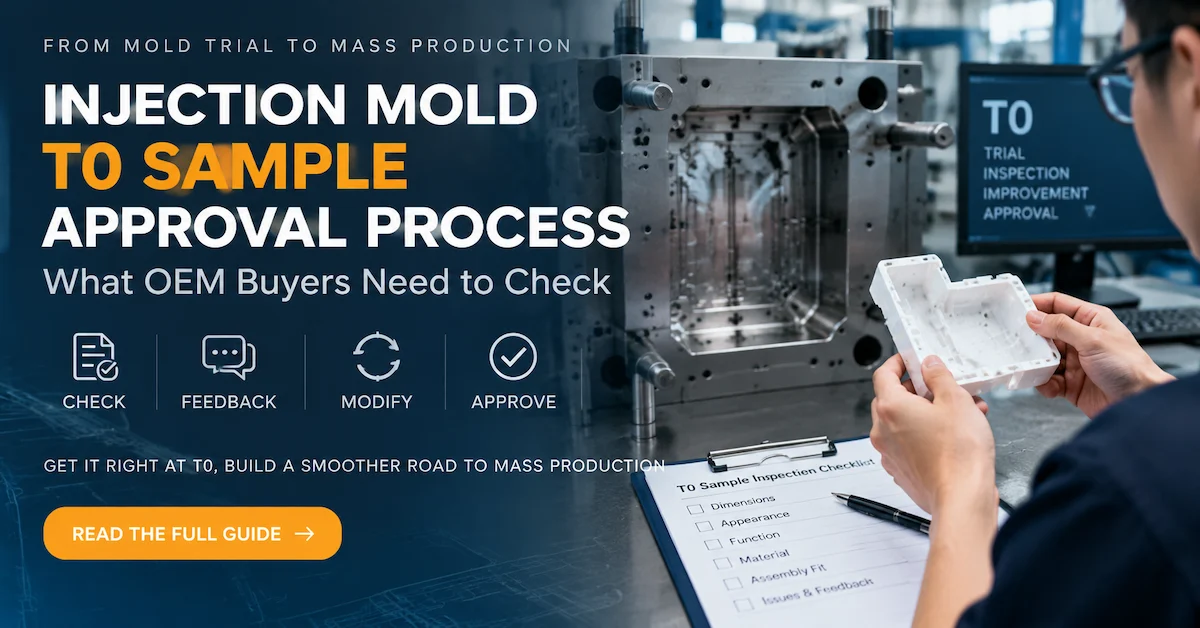
Automotive Sample Approval Should Include
Depending on project requirements:
- Dimensional inspection
- Appearance evaluation
- Assembly testing
- Functional verification
- Customer approval
The objective is not only to create a sample.
It is to confirm repeatable production capability.
Quality Control Requirements for Automotive Mold Suppliers
Automotive customers usually require stronger process control because programs may continue for years.
A supplier should control:
Incoming Materials
Including:
- Mold steel
- Standard components
- Purchased parts
Mold Manufacturing
Including:
- Machining inspection
- Component verification
- Assembly checks
Mold Validation
Including:
- Trial reports
- Dimensional inspection
- Corrective actions
Production Support
Including:
- Process consistency
- Mold maintenance
- Continuous improvement
Quality management systems such as ISO 9001 provide a framework for controlled manufacturing processes and continual improvement.
However, automotive buyers should evaluate actual project practices rather than relying only on certification claims.
How Automotive OEM Buyers Audit a Mold Supplier
Before starting cooperation, buyers should review:
Engineering Capability
Check:
- Engineering team experience
- DFM process
- Mold design workflow
- Technical communication
Manufacturing Capability
Check:
- CNC equipment
- EDM capability
- Assembly process
- Inspection equipment
Project Management
Check:
- Schedule control
- Change management
- Documentation
- Communication process
Production Capability
Check:
- Injection molding support
- Quality control
- Long-term supply capability
A factory visit or remote audit should focus on actual processes rather than only promotional materials.
Choosing Between Automotive Mold Only and Mold + Production Services
Automotive buyers may have different sourcing models.
Export Mold Model
Suitable for companies that:
- Own molding facilities
- Have internal production teams
- Need tooling transferred overseas
Mold + Production Model
Suitable for companies that need:
- One responsible supplier
- Tooling development
- Injection molding
- Inspection
- Delivery support
DongXin supports both custom mold manufacturing and plastic molding services for OEM customers.
The best model depends on:
- Production location
- Internal capabilities
- Quality responsibility
- Supply chain strategy
FAQ About Automotive Plastic Injection Mold Suppliers
What makes an automotive plastic injection mold supplier different from a general mold supplier?
Automotive mold suppliers usually need stronger experience with engineering plastics, dimensional control, complex part structures, long-term production requirements and automotive quality expectations.
What information should I provide when requesting an automotive mold quotation?
Provide 3D CAD files, drawings, material requirements, production volume, surface requirements, tolerances, assembly information and expected production schedule.
How long does automotive injection mold development take?
Lead time depends on part complexity, mold structure, material availability, design approval speed and trial results. A reliable supplier should provide a project schedule based on actual requirements.
Why is DFM important for automotive plastic parts?
DFM helps identify risks related to part geometry, mold structure, filling, cooling, ejection and assembly before tooling begins.
Can one supplier provide both automotive molds and molded parts?
Yes. Some manufacturers provide complete tooling and molding services, allowing closer control between mold development and production.
What should I check during automotive mold supplier evaluation?
Evaluate engineering capability, tooling experience, machining accuracy, trial process, inspection methods, quality systems and long-term support.
Are multi-cavity molds always better for automotive production?
Not always. Cavity numbers should match production volume, part size, machine capability and cost requirements.
How can automotive buyers ensure mold quality before mass production?
Use structured mold trials, dimensional inspection, sample approval procedures and documented corrective actions before production release.
Conclusion
Choosing the right automotive plastic injection mold supplier is essential for developing reliable vehicle components.
A qualified supplier should provide more than mold manufacturing capability.
The ideal partner should support:
- Automotive part engineering
- DFM optimization
- Material selection
- Mold design
- Precision machining
- Trial validation
- Quality control
- Long-term production support
For automotive OEM buyers, the best supplier is the one that can transform product requirements into stable manufacturing results.
DongXin provides custom plastic injection molds, silicone tooling and plastic molding solutions for OEM projects, supporting customers from initial engineering review through production assistance.
If you are developing automotive plastic components, you can contact DongXin to discuss mold requirements, materials, production volume and tooling solutions.