What Is an Electronic Mold Manufacturer?
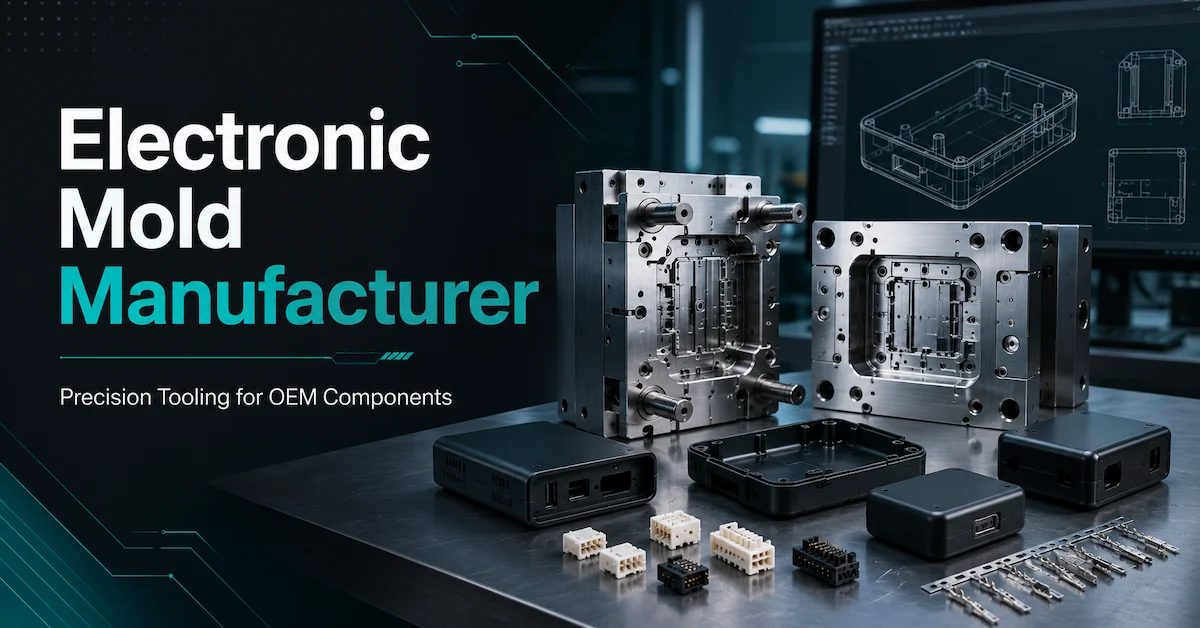
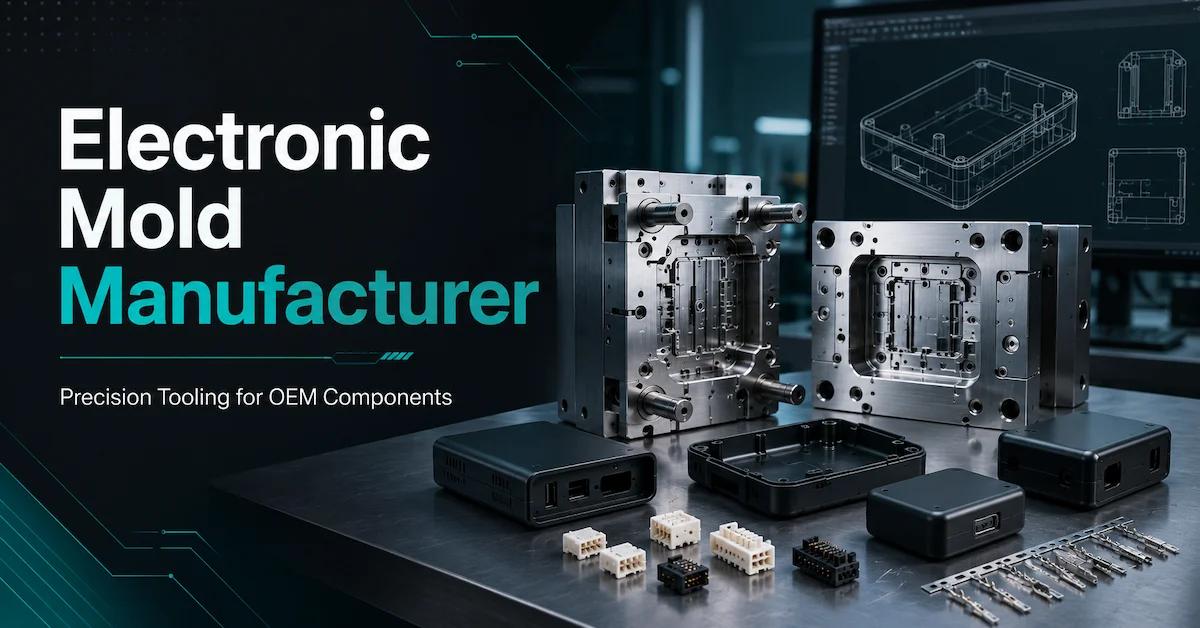
An electronic mold manufacturer specializes in designing and producing injection molds used to manufacture plastic components for electronic products.
These molds are typically developed for parts that require:
- Accurate dimensions
- Stable assembly performance
- Good surface appearance
- Tight tolerance control
- Consistent mass production
Unlike simple plastic products, electronic components often need to fit with:
- Circuit boards
- Connectors
- Sensors
- Displays
- Internal mechanical structures
- Metal inserts
A small dimensional difference can affect the entire assembly process.
For this reason, an electronic mold manufacturer must understand not only mold manufacturing but also the relationship between:
Electronic Product Design → Plastic Part Design → Mold Structure → Injection Process → Final Assembly
A qualified supplier helps customers reduce manufacturing risks before production begins.
DXMolding provides custom plastic injection mold solutions for OEM projects requiring precision tooling and stable production.
Why Do Electronics Companies Need Specialized Mold Manufacturers?
Electronic products are usually designed around compact structures and functional requirements.
Compared with general plastic parts, electronic components often have higher requirements for:
- Dimensional accuracy
- Surface finish
- Assembly compatibility
- Cosmetic appearance
- Material performance
Typical electronic mold applications include:
- Device housings
- Battery covers
- Controller shells
- Sensor housings
- Connector components
- Plastic frames
- Protective covers
- Internal structural parts
A supplier experienced in electronics molding understands that a successful part is not only visually acceptable.
It must also:
- Assemble correctly
- Maintain protection performance
- Support electrical components
- Remain stable during repeated production
Electronic Mold Manufacturer vs General Plastic Mold Supplier
Not every mold supplier has the same capability.
| Capability | General Plastic Mold Supplier | Electronic Mold Manufacturer |
|---|---|---|
| Basic injection mold | Yes | Yes |
| Precision components | Limited | Strong |
| Tight tolerance control | Depends | Required |
| Cosmetic surface management | Basic | Advanced |
| Assembly consideration | Limited | Important |
| Material recommendation | Basic | Application-focused |
| DFM support | Sometimes | Usually required |
| Mass production support | Depends | Expected |
For electronic products, choosing a supplier only based on mold price can create problems later.
A mold that is inexpensive to build but unstable in production can increase total manufacturing cost.
Key Requirements for Electronic Injection Molds
Precision Dimensional Control
Electronic components often connect with other parts.
Examples include:
- PCB boards
- Screws
- Connectors
- Displays
- Sensors
Critical dimensions may include:
- Hole positions
- Mounting points
- Snap-fit locations
- Connector openings
- Assembly gaps
A professional electronic mold manufacturer should understand which dimensions affect product function.
Not every dimension requires the same tolerance level.
The important question is:
Which dimensions control assembly performance?
Surface Appearance Control
Many electronic products are visible to end users.
Appearance requirements may include:
- Smooth surfaces
- Texture consistency
- No flow marks
- No sink marks
- Controlled weld lines
- Consistent color appearance
The mold design influences appearance through:
- Gate position
- Cooling design
- Venting
- Polishing
- Texture processing
Complex Geometry Management
Electronic parts often include:
- Thin walls
- Ribs
- Bosses
- Clips
- Snap structures
- Internal supports
These features create manufacturing challenges.
Poor design may cause:
- Warpage
- Short shots
- Sink marks
- Difficult ejection
- Assembly problems
Material Selection Capability
The material used for electronic components depends on performance requirements.
Common materials include:
| Material | Typical Application |
|---|---|
| ABS | Consumer electronic housings |
| PC | Impact-resistant covers |
| PC/ABS | Electronic enclosures |
| PA | Structural components |
| POM | Precision moving parts |
| TPE | Flexible protective parts |
Material selection affects:
- Strength
- Heat resistance
- Chemical resistance
- Surface appearance
- Shrinkage behavior
A good supplier should discuss:
“What performance does the component need?”
rather than only:
“What plastic material do you want?”
Electronic Mold Design Considerations
Gate Location
Gate design affects:
- Filling quality
- Weld lines
- Appearance
- Packing
- Warpage
For visible electronic housings, gate location is especially important.
A poor gate position may create:
- Visible marks
- Uneven filling
- Cosmetic defects
Cooling System
Electronic components often require dimensional stability.
Cooling affects:
- Shrinkage
- Cycle time
- Flatness
- Assembly accuracy
A well-designed cooling system helps maintain repeatable production.
Ejection Design
Electronic parts often contain delicate features.
Improper ejection may damage:
- Thin walls
- Snap structures
- Cosmetic surfaces
The mold design should consider:
- Ejector position
- Part strength
- Visible areas
- Assembly requirements
Mold Steel Selection
Electronic molds may require different steel strategies depending on production volume.
Factors include:
- Expected lifetime
- Surface requirements
- Material abrasiveness
- Production quantity
The cheapest steel is not always the lowest-cost solution.
For high-volume electronic products, longer mold life may reduce total production risk.
Electronic Mold Manufacturing Process
Step 1: Product and Drawing Review
Before mold design, engineers review:
- 3D model
- 2D drawing
- Material requirement
- Assembly conditions
- Appearance requirements
Step 2: DFM Analysis
The supplier evaluates:
- Parting line
- Draft
- Wall thickness
- Gate location
- Cooling
- Ejection
The purpose is to prevent problems before machining starts.
Step 3: Mold Design
Engineers develop:
- Core and cavity
- Runner system
- Cooling channels
- Ejection structure
- Mold mechanism
Step 4: Precision Machining
Manufacturing may include:
- CNC machining
- EDM
- Grinding
- Polishing
- Wire cutting
Step 5: Mold Assembly and Testing
The mold is checked for:
- Movement
- Alignment
- Component fitting
- Mold closing
Step 6: Trial Production
The first samples are evaluated for:
- Appearance
- Dimensions
- Assembly
- Function
Step 7: Mass Production Support
After approval,production focuses on:
- Process stability
- Quality consistency
- Delivery reliability
Common Electronic Mold Applications
Consumer Electronics
Examples:
- Smart devices
- Controllers
- Accessories
- Electronic housings
Industrial Electronics
Examples:
- Control panels
- Instrument enclosures
- Sensor housings
- Equipment covers
Automotive Electronics
Examples:
- Sensor brackets
- Electronic modules
- Protective housings
- Connector components
Communication Equipment
Examples:
- Network equipment covers
- Plastic frames
- Internal structures
How to Choose an Electronic Mold Manufacturer?
1. Check Engineering Capability
A reliable supplier should provide:
- DFM feedback
- Mold structure recommendations
- Material suggestions
- Production risk analysis
2.Review Similar Project Experience
Ask about experience with:
- Electronic housings
- Precision plastic parts
- Small tolerance components
- Appearance-sensitive products
3.Evaluate Quality Control
Quality control should cover:
Mold Inspection
Check:
- Dimensions
- Mold components
- Assembly accuracy
Sample Inspection
Evaluate:
- Appearance
- Function
- Assembly
Production Inspection
Monitor:
- Part consistency
- Process stability
- Defect rate
4.Understand Production Capability
Ask about:
- Injection machines
- Production capacity
- Inspection equipment
- Engineering team
5.Evaluate Communication
A strong supplier should:
- Ask technical questions
- Explain risks
- Confirm assumptions
- Provide clear updates
Electronic Mold Cost Factors
The cost of an electronic mold depends on:
| Factor | Impact |
|---|---|
| Part complexity | More mechanisms increase cost |
| Precision requirements | Higher accuracy increases machining requirements |
| Surface finish | Texture and polishing affect cost |
| Material | Influences mold design |
| Cavity number | Changes tooling complexity |
| Mold lifetime | Determines steel selection |
| Production volume | Influences tooling strategy |
A low mold quotation may exclude important requirements.
Always compare:
Tooling Cost + Production Stability + Maintenance Risk
instead of only comparing initial price.
Common Mistakes When Selecting an Electronic Mold Supplier
Choosing Only the Lowest Price
Low initial cost may lead to:
- More modifications
- Longer approval time
- Production instability
Ignoring Product Assembly
A plastic component may look perfect but fail during assembly.
Always evaluate:
- Fit
- Function
- Connection points
Not Discussing Future Production
A prototype mold and a mass-production mold require different strategies.
Consider:
- Expected volume
- Product lifetime
- Future demand
Skipping DFM Review
Many production problems start before mold manufacturing.
Early engineering review can prevent:
- Tool changes
- Delays
- Increased cost
Electronic Mold RFQ Checklist
Before contacting an electronic mold manufacturer,prepare:
| Information | Purpose |
|---|---|
| 3D CAD file | Product structure |
| 2D drawing | Critical dimensions |
| Material requirement | Performance needs |
| Annual volume | Mold strategy |
| Surface finish | Appearance control |
| Assembly requirement | Functional evaluation |
| Color requirement | Production planning |
| Tolerance requirement | Quality control |
A complete RFQ helps suppliers provide more accurate solutions.
Why Choose DXMolding as Your Electronic Mold Partner?
Electronic molding projects require coordination between:
- Product engineering
- Mold design
- Tool manufacturing
- Injection molding
- Quality control
DXMolding supports OEM customers through:
- Mold development
- Engineering review
- Precision tooling
- Injection molding production
- Quality management
Explore:
FAQ About Electronic Mold Manufacturers
What does an electronic mold manufacturer produce?
An electronic mold manufacturer produces precision injection molds for plastic electronic components such as housings, covers, connectors, and structural parts.
What makes electronic molds different from standard plastic molds?
Electronic molds usually require higher dimensional control, better surface quality, and stronger assembly compatibility because electronic components often connect with internal parts.
What materials are commonly used for electronic plastic parts?
Common materials include ABS, PC, PC/ABS, PA, POM, and TPE depending on strength, heat resistance, appearance, and functional requirements.
How do I choose an electronic mold manufacturer?
Evaluate engineering capability, mold experience, precision control, quality systems, production capacity, and communication ability.
Can an electronic mold manufacturer help improve product design?
Yes. Experienced suppliers can provide DFM suggestions to improve manufacturability and reduce tooling risks.
How long does an electronic mold take to manufacture?
Lead time depends on mold complexity, part requirements, material, testing requirements, and engineering changes.
Should I choose a local mold supplier or overseas manufacturer?
The best choice depends on project requirements, communication needs, cost objectives, and production plans.
Can DXMolding provide both molds and molded electronic parts?
Yes.DXMolding supports custom tooling development and plastic molding production for OEM electronic component projects.