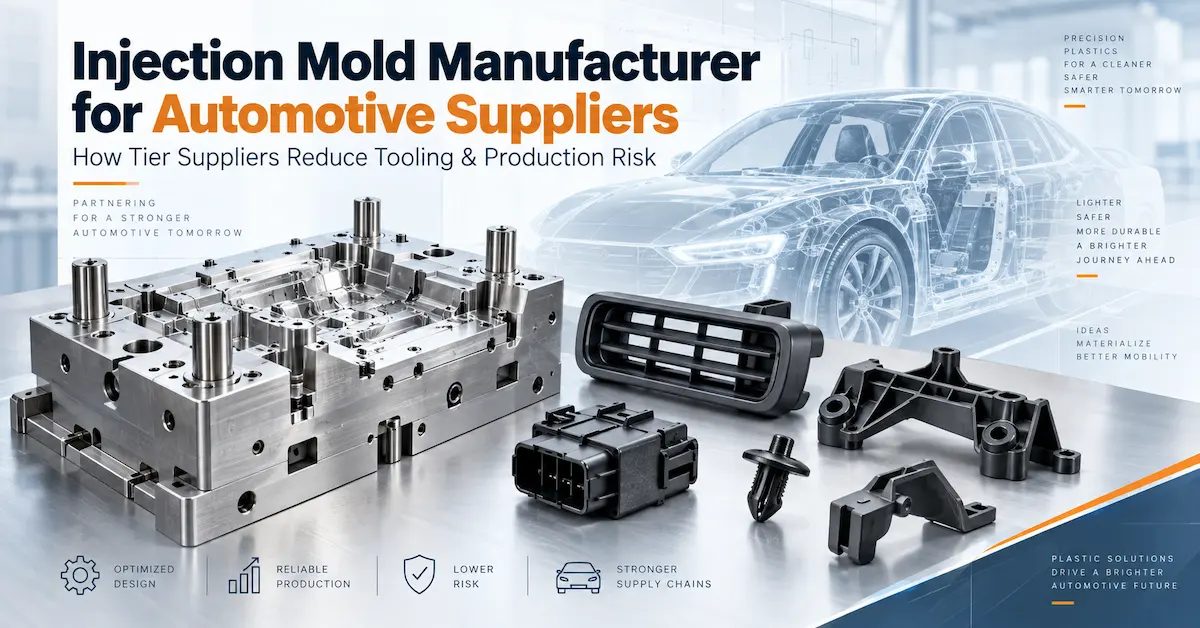
What Should Automotive Suppliers Expect From an Injection Mold Manufacturer?
Choosing an automotive injection mold manufacturer requires Tier suppliers to evaluate more than tooling price. DFM quality, mold life, dimensional validation, production stability, and transfer readiness can all affect long-term program risk.
Automotive supplier programs often combine tight assembly requirements, visible surfaces, functional interfaces, engineering changes, long production cycles, and repeat-order expectations. A tooling problem can therefore affect more than the mold itself. It may influence part fit, downstream assembly, production stability, delivery schedules, and total program cost.
For Tier suppliers, the best mold partner is not simply a factory that can machine a cavity.
The supplier should connect:
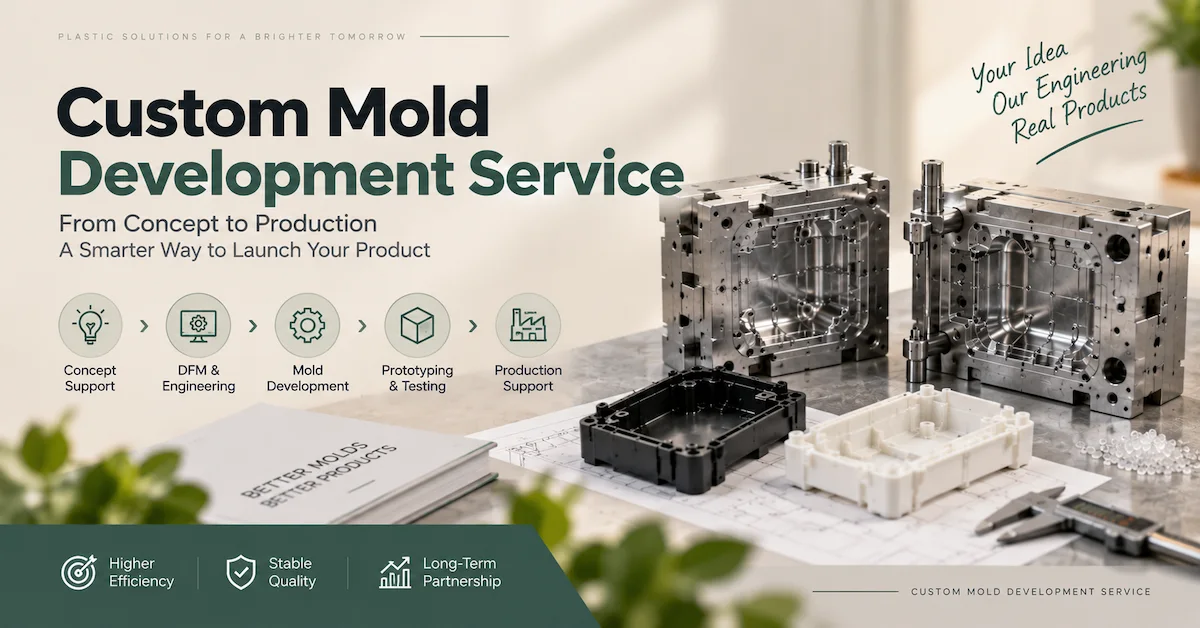
Product Requirements → DFM → Mold Engineering → Tool Manufacturing → Trial Validation → Production Readiness → Long-Term Tool Support
DX Molding supports custom automotive tooling through its plastic injection mold manufacturing services and broader engineering and custom manufacturing services.
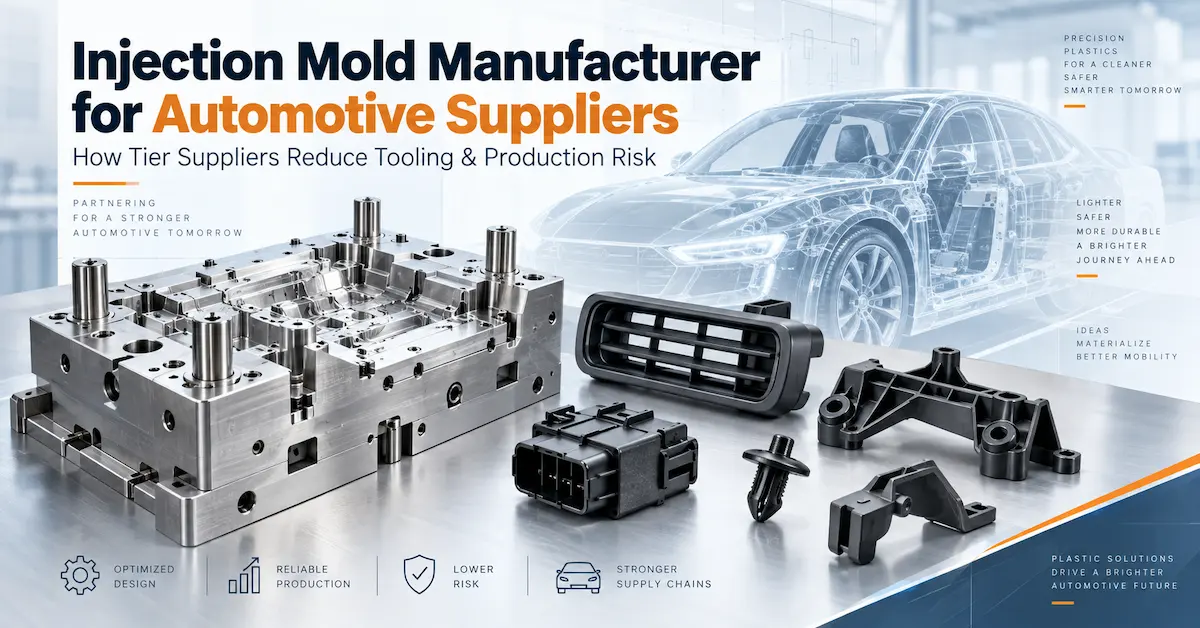
Why Automotive Supplier Projects Need a Different Tooling Strategy
Automotive plastic components may look similar to other injection-molded parts, but production requirements are often more demanding.
A mold must not only produce an acceptable first sample. It must support repeatable production while maintaining dimensional, cosmetic, and assembly consistency.
Assembly Performance Matters as Much as Individual Dimensions
A plastic component can pass its standalone dimensional report and still fail during vehicle or module assembly.
Critical interfaces may include:
-
Clips
-
Tabs
-
Snap features
-
Screw bosses
-
Sealing surfaces
-
Connector locations
-
Datum points
-
Mounting holes
-
Trim interfaces
-
Mating plastic or metal parts
For this reason, automotive tooling should identify critical-to-function dimensions before mold manufacturing begins.
Appearance Requirements Can Influence Mold Design
Automotive interior and exterior components may require control over:
-
Parting-line position
-
Gate location
-
Weld-line visibility
-
Texture consistency
-
Gloss level
-
Ejector marks
-
Sink marks
-
Flow marks
-
Surface distortion
When a component includes customer-visible surfaces, cosmetic requirements should influence mold design from the beginning.
Long Production Programs Increase Tooling Risk
A mold may produce acceptable parts during early trials and still develop problems during long-term production.
Automotive suppliers therefore need to evaluate:
-
Mold steel
-
Wear areas
-
Replaceable inserts
-
Cooling efficiency
-
Slide and lifter durability
-
Ejection stability
-
Maintenance access
-
Spare components
-
Expected production volume
Tool construction should match the real production program rather than an arbitrary mold-life number.
Which Automotive Suppliers Need Specialized Injection Mold Support?
The term “automotive supplier” includes several buyer types, and their tooling priorities are different.
Tier 1 Automotive Suppliers
Tier 1 suppliers may provide modules, assemblies, or systems directly into vehicle programs.
Their concerns often include:
-
Project timing
-
Engineering-change control
-
Assembly consistency
-
Documentation
-
Quality responsibilities
-
Production continuity
-
Long-term supply stability
For these programs, structured engineering communication can be as important as machining capability.
Tier 2 Component Suppliers
Tier 2 suppliers often focus more closely on component manufacturing.
Common priorities include:
-
Tooling cost
-
Repeatability
-
Material processing
-
Cycle time
-
Dimensional consistency
-
Mold maintenance
-
Production efficiency
Automotive Aftermarket Suppliers
Aftermarket projects may have different economics from OEM programs.
Important considerations may include:
-
Replacement-part fit
-
Variable annual volume
-
Tooling investment
-
Product variants
-
Flexible batch sizes
-
Mold ownership
The mold specification should reflect the actual sales and production model.
Start With Part Requirements, Not Mold Price
A reliable tooling quotation depends on understanding what the molded component must achieve.
Before comparing suppliers, connect each product requirement to its tooling consequence.
| Part Requirement | Possible Tooling Impact |
|---|---|
| Tight assembly dimensions | Machining, cooling, shrinkage and validation |
| Visible surface | Gate, parting line, polish, texture and ejection |
| High annual volume | Mold steel, cavity count and wear planning |
| Deep undercuts | Slides, lifters or product redesign |
| Large plastic part | Mold size, cooling, machine requirements |
| Engineering resin | Steel, venting and processing strategy |
| Multiple mating parts | Datum strategy and dimensional control |
| Long production program | Maintenance and replaceable components |
This relationship between part requirement and tooling decision is one of the clearest indicators of supplier engineering capability.
What Should Be Reviewed Before Mold Design?
Automotive tooling should not move directly from RFQ to steel cutting.
The first stage should reduce uncertainty.
Product Application
The supplier should understand:
-
Where the part is installed
-
Whether it is visible
-
What components it interfaces with
-
Whether it carries mechanical load
-
Whether sealing is required
-
Whether dimensional variation affects assembly
-
Whether temperature or environmental exposure matters
This context helps distinguish cosmetic dimensions from function-critical features.
CAD and Drawing Consistency
Before mold design, verify:
-
3D CAD revision
-
2D drawing revision
-
Material specification
-
Critical tolerances
-
Surface requirements
-
Datums
-
Mating interfaces
-
Open engineering questions
Using the wrong CAD revision can create costly modifications after machining has already started.
DFM Analysis
A useful automotive DFM review should consider:
-
Draft angle
-
Wall thickness
-
Ribs
-
Bosses
-
Undercuts
-
Parting lines
-
Gate position
-
Ejection
-
Shrinkage
-
Sink-mark risk
-
Warpage
-
Assembly interference
DX Molding includes these types of manufacturing-risk reviews within its technical support and DFM process.
Which Mold Design Decisions Matter Most?
The mold should be designed for the intended production strategy rather than only for first-sample approval.
Cavity Strategy
Additional cavities can improve output, but they can also increase:
-
Tooling investment
-
Mold size
-
Runner complexity
-
Filling-balance requirements
-
Cooling complexity
-
Validation effort
-
Maintenance
For automotive suppliers, cavity count should be based on:
-
Annual demand
-
Cycle time
-
Part size
-
Resin
-
Machine availability
-
Program duration
-
Production strategy
A higher cavity count is not automatically the lowest-cost solution.
Hot Runner vs Cold Runner
Hot-runner systems can be useful when:
-
Runner waste is significant
-
Production volume is high
-
Cycle efficiency matters
-
Part geometry supports the system
However, they also increase:
-
Tooling complexity
-
Maintenance
-
Controls
-
Spare-component requirements
Cold runners may remain more practical for some lower-volume or simpler automotive programs.
The supplier should explain the commercial and technical trade-off.
Slides and Lifters
Automotive parts often contain side features, clips, locking structures, or undercuts.
These can require:
-
Slides
-
Lifters
-
Inserts
-
Complex shut-offs
Each mechanism adds potential wear, alignment, maintenance, and long-term stability considerations.
A capable mold manufacturer should explain why each mechanism is necessary.
Cooling Design
Cooling directly affects:
-
Cycle time
-
Warpage
-
Dimensional repeatability
-
Surface quality
-
Production consistency
A tool that fills correctly but cools unevenly can still produce unstable parts.
Cooling should therefore be treated as a core engineering system.
Ejection Design
Automotive plastic parts may include:
-
Deep ribs
-
Thin walls
-
Clips
-
Textured surfaces
-
Cosmetic zones
Poor ejection design can lead to:
-
Deformation
-
Drag marks
-
Stress whitening
-
Surface damage
-
Part sticking
Ejection strategy should be reviewed together with draft and product geometry.
How Should Automotive Mold Life Be Specified?
“Mold life” should not be treated as a standalone marketing number.
A realistic discussion should consider:
-
Annual volume
-
Program duration
-
Resin
-
Glass fiber or fillers
-
Mold steel
-
Sliding mechanisms
-
Surface treatment
-
Wear areas
-
Maintenance
-
Replaceable components
DX Molding's tooling support covers different mold-steel and tool-life approaches based on project requirements.
Ask About Construction, Not Only Shot Count
Instead of asking only:
Can this mold run one million shots?
Ask:
-
Which steel is proposed?
-
Which areas will wear first?
-
Are inserts replaceable?
-
How are slides guided?
-
Which spare parts are recommended?
-
What preventive maintenance is required?
-
Which components should be inspected regularly?
These questions provide more practical information about long-term tooling risk.
What Should Automotive Mold Validation Include?
A successful first trial does not automatically mean the mold is ready for production.
Validation should determine whether the mold can repeatedly produce acceptable parts under controlled processing conditions.
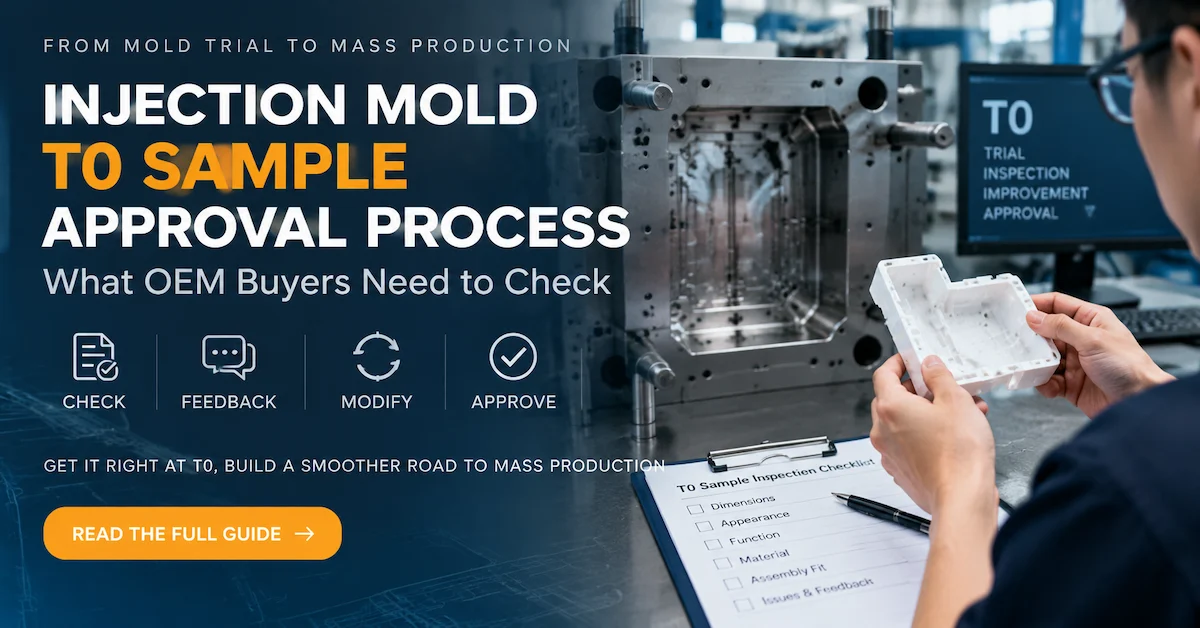
T0: Initial Tool Function
Initial trials may focus on:
-
Filling
-
Mold operation
-
Ejection
-
Flash
-
Short shot
-
Major appearance issues
-
Key dimensions
The purpose is usually to identify major tooling problems.
T1: Engineering Corrections
After initial modifications, the next trial may focus more closely on:
-
Dimensions
-
Appearance
-
Assembly
-
Warpage
-
Process stability
-
Remaining engineering issues
T2 and Further Validation
Additional trials may be necessary when:
-
Critical dimensions remain unstable
-
Product geometry has changed
-
Mold components were modified
-
Appearance requirements remain unresolved
-
Process conditions need further optimization
The number of trial stages should reflect the actual project condition rather than a fixed template.
DX Molding includes T0/T1/T2 trial support and dimensional verification within its tooling support workflow.
Which Dimensions Should Be Controlled Most Closely?
Not every dimension has the same production importance.
Automotive suppliers should identify dimensions that influence:
-
Vehicle assembly
-
Component alignment
-
Sealing
-
Connector positioning
-
Snap engagement
-
Moving interfaces
-
Gap and flush
-
Functional clearance
Inspection methods such as CMM can then focus on dimensions that directly influence part performance.
If a customer requires capability data, special control plans, or customer-specific quality documentation, those requirements should be defined during the RFQ stage rather than assumed later.
How Should Buyers Evaluate Production Consistency?
A mold only creates long-term value if it supports repeatable manufacturing.
Automotive buyers should evaluate how approved tooling transitions into production.
Important questions include:
-
Are molding parameters recorded?
-
Is material controlled?
-
Are critical dimensions monitored?
-
How are nonconforming parts handled?
-
Is first-article inspection performed?
-
How are tooling modifications documented?
-
Are maintenance records retained?
-
How are repeat orders controlled?
DX Molding also provides custom plastic injection molding for projects that continue from tooling into molded-part production.
Automotive Tooling Supplier Evaluation Checklist
Price should be only one part of supplier qualification.
| Evaluation Area | What to Verify | Risk if Ignored |
|---|---|---|
| Application understanding | Part function and interfaces | Wrong engineering priorities |
| DFM | Clear manufacturability analysis | Late design changes |
| Mold design | Gate, cooling, ejection, mechanisms | Production instability |
| Tool steel | Construction suited to volume | Premature wear |
| Machining | CNC, EDM, fitting, finishing | Dimensional inconsistency |
| Validation | Structured trials and inspection | False production readiness |
| Change control | Revision and approval process | Wrong-version tooling |
| Production support | Parameters and QC | Unstable repeat production |
| Mold transfer | Machine compatibility | Startup problems |
| Maintenance | Spare parts and service | Long-term downtime |
A supplier does not need to be the largest factory.
It needs engineering and project controls appropriate for the program.
Warning Signs When Qualifying an Automotive Mold Manufacturer
Certain supplier behaviors deserve closer review.
A Final Quote Arrives Before Engineering Questions
A supplier that provides a detailed final quotation without asking about:
-
Material
-
Volume
-
Critical tolerances
-
Appearance
-
Mold destination
-
Assembly requirements
may be pricing assumptions instead of the actual program.
DFM Only Shows Parting Lines
A useful DFM report should identify manufacturing risk and explain why changes are recommended.
Several screenshots alone do not necessarily demonstrate a complete DFM process.
Mold Life Is Promised Without Construction Details
Tool life depends on steel, structure, resin, wear, maintenance, and production conditions.
A large shot-count promise does not prove long-term durability.
Trial Acceptance Is Undefined
If “sample approved” has no measurable criteria, buyer and supplier may interpret approval differently.
Mold Transfer Is Discussed Too Late
If the tool will run in another factory, machine and interface requirements should be established before mold design approval.
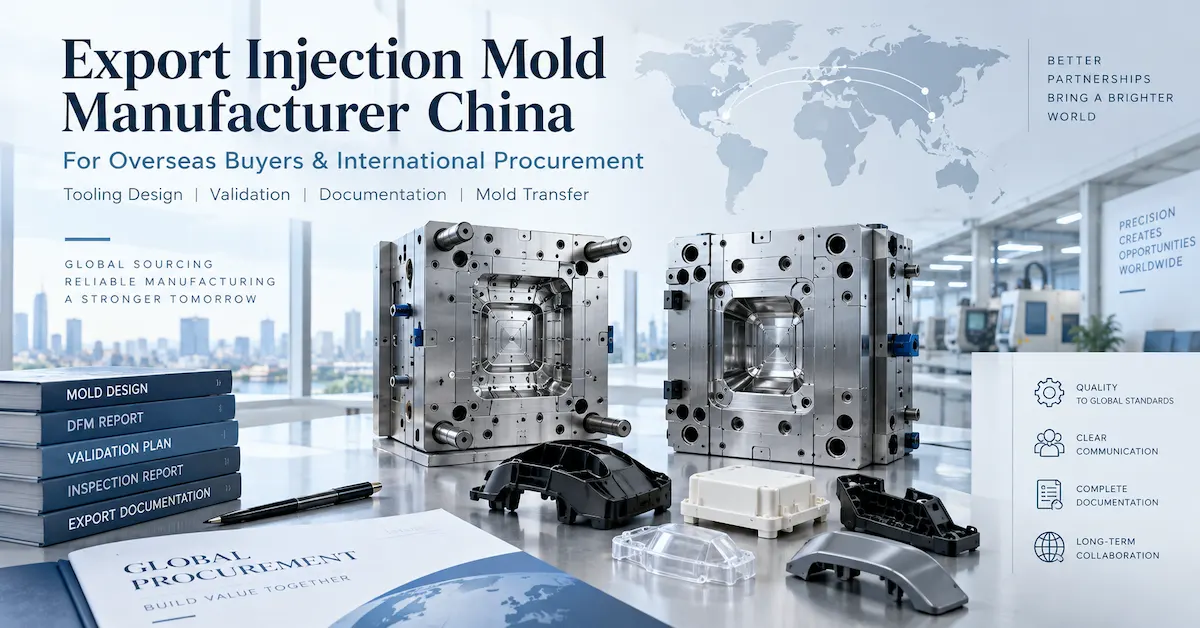
Tooling at the Supplier or Mold Transfer?
Automotive suppliers commonly use two different manufacturing models.
Tooling and Production at the Same Supplier
This can simplify:
-
Trial-to-production transition
-
Process parameter control
-
Tool maintenance
-
Engineering communication
-
Repeat production
This approach may be suitable when the buyer wants a single manufacturing partner.
Mold Manufacturing Followed by Transfer
Other buyers may build the tool in China and run production at:
-
Their own factory
-
A Tier supplier plant
-
A nominated molding facility
-
A regional manufacturing partner
In these cases, define:
-
Mold dimensions
-
Machine platen requirements
-
Clamping
-
Cooling connections
-
Electrical interfaces
-
Hot-runner controls
-
Lifting points
-
Spare parts
-
Documentation
-
Export packaging
Buyers planning a transfer project can review DX Molding's injection tooling transfer guide.
How Should Automotive Suppliers Compare Mold Quotations?
Comparing only total price can hide major specification differences.
Two suppliers may quote different:
-
Tool steels
-
Mold bases
-
Runner systems
-
Spare-part quantities
-
Trial scopes
-
Inspection scopes
-
Documentation
-
Mold-life assumptions
Before comparing price, normalize the technical specification.
Compare the Same Items
At minimum, compare:
-
Cavity count
-
Mold steel
-
Mold base
-
Hot or cold runner
-
Standard components
-
Expected mold life
-
Trial scope
-
Sample quantity
-
Inspection scope
-
Spare parts
-
Documentation
-
Mold transfer requirements
-
Packaging
-
After-sales support
The lowest quotation may become the highest total cost if critical requirements were excluded.
What Information Should Be Included in an Automotive Mold RFQ?
Better project information generally produces a more useful quotation.
Product Data
Provide:
-
3D CAD
-
2D drawing
-
Current revision
-
Material
-
Color
-
Surface requirements
Engineering Requirements
Include:
-
Critical dimensions
-
Assembly interfaces
-
Cosmetic zones
-
Texture
-
Functional requirements
-
Environmental requirements
-
Inspection expectations
Production Information
Specify:
-
Annual volume
-
Program life
-
Target cycle time if applicable
-
Expected production location
-
Preferred machine if relevant
-
Forecast ramp-up
Tooling Requirements
Clarify:
-
Cavity requirements
-
Mold-life target
-
Preferred steel
-
Hot or cold runner
-
Mold standards
-
Spare parts
-
Mold ownership
-
Transfer requirements
Quality and Documentation Requirements
Where applicable, define:
-
Dimensional report
-
CMM report
-
Material documentation
-
Trial report
-
Process parameters
-
Capability data
-
Customer-specific records
Unstated requirements cannot be priced or engineered accurately.
How DX Molding Supports Automotive Injection Mold Projects
DX Molding supports automotive and other OEM projects through:
-
Product review
-
DFM
-
Mold design
-
CNC machining
-
EDM
-
Trial molding
-
Dimensional inspection
-
Injection molding production
-
Mold maintenance
-
Tool modification
-
Mold transfer support
Buyers can review the company's plastic injection mold capabilities and engineering support process when evaluating project fit.
For projects that continue into molded-part supply, DX Molding also provides plastic injection molding services.
Automotive Injection Mold RFQ Checklist
Before sending a tooling inquiry, confirm whether you can provide or identify:
-
Current 3D CAD revision
-
2D drawing
-
Resin specification
-
Annual quantity
-
Program duration
-
Critical dimensions
-
Mating components
-
Surface requirements
-
Cosmetic zones
-
Texture requirements
-
Expected mold life
-
Mold destination
-
Machine requirements if known
-
Validation expectations
-
Required documentation
-
Production launch target
If some information remains open, identify it clearly.
A documented open question is safer than an assumption hidden inside the quotation.
Frequently Asked Questions
What Makes an Automotive Injection Mold Manufacturer Different From a General Mold Supplier?
Automotive tooling often requires stronger control over assembly interfaces, cosmetic surfaces, long-term production stability, engineering changes, dimensional validation, and repeat production.
What Information Should Automotive Suppliers Send for a Mold Quote?
Start with 3D CAD, 2D drawings, resin, annual quantity, critical tolerances, surface requirements, assembly information, mold-life expectations, production location, and validation requirements.
How Should Mold Life Be Defined?
Mold life should be connected to volume, program duration, resin, steel, wear mechanisms, maintenance, and replaceable components rather than treated as an isolated shot-count promise.
Do All Automotive Molds Need Hot Runners?
No. Hot-runner suitability depends on part geometry, resin, volume, cycle requirements, runner waste, maintenance capability, and project economics.
Are Multi-Cavity Molds Always Better?
No. Additional cavities can increase output but also raise tooling cost, mold size, cooling complexity, balancing requirements, and maintenance.
When Should Mold Flow Analysis Be Considered?
It can be useful when filling, weld lines, air traps, gate strategy, packing, or warpage create meaningful production risk.
What Should Be Checked During Automotive Mold Trials?
Trials should evaluate mold operation, filling, ejection, appearance, flash, sink, warpage, critical dimensions, assembly, and process stability.
Can an Automotive Mold Be Built in China and Run Overseas?
Yes. Machine compatibility, cooling, electrical interfaces, hot-runner controls, documentation, spare parts, and export preparation should be defined before tooling is completed.
Should the Mold Manufacturer Also Produce the Parts?
It depends on the supply strategy. Keeping tooling and molding together can simplify process transfer, while other buyers prefer to move the approved mold to their own nominated facility.
How Can Automotive Suppliers Start a Project With DX Molding?
Prepare your CAD, drawings, resin specification, annual volume, critical dimensions, surface requirements, mold-life target, destination, and validation requirements, then submit the project through the DX Molding contact page.
Conclusion
Choosing the right automotive injection mold manufacturer should focus on DFM quality, tooling structure, mold life, validation, change control, and production stability—not mold price alone.
For a project-specific tooling review, prepare your CAD, resin, annual volume, critical tolerances, surface requirements, mold destination, and validation needs, then contact DX Molding for an automotive mold project evaluation.