How Should OEM Buyers Choose a Plastic Injection Mold Manufacturer?
Choosing a plastic injection mold manufacturer is not simply a sourcing exercise.
For an OEM project, the supplier you select may influence product manufacturability, tooling investment, sample approval, launch timing, part consistency, mold maintenance, and production continuity for years after the purchase order is placed.
This makes supplier selection fundamentally different from buying a standard component.
With a standard product, buyers can often compare defined specifications and unit prices. With custom tooling, part of the final specification is created during the supplier's engineering process.
A weak supplier may manufacture exactly what is shown in the original CAD file even when the design creates unnecessary molding risk.
A stronger supplier should identify those risks before steel cutting, explain the consequences, recommend practical alternatives, and maintain traceability as the project moves from DFM through mold trials and production.
For OEM buyers evaluating custom plastic injection mold manufacturing, the central question should therefore be:
Which supplier can convert our product requirements into a reliable production tool with the lowest manageable lifecycle risk?
That is a much more useful question than:
Which supplier has the lowest mold price?
What Should OEM Buyers Look for in an Injection Mold Manufacturer?
The initial supplier screen should focus on several purchasing criteria.
These criteria help determine whether a manufacturer deserves deeper technical evaluation.
| Selection Criterion | What the Buyer Should Determine |
|---|---|
| Engineering capability | Can the supplier identify manufacturability risks before tooling? |
| DFM quality | Are recommendations explained technically rather than presented as generic comments? |
| Mold design capability | Can the supplier justify gate, cooling, ejection, runner, and mechanism choices? |
| Manufacturing control | Are CNC, EDM, fitting, assembly, and inspection managed systematically? |
| Validation process | Is there a clear path from first trial to approved production tool? |
| Quality evidence | Can the supplier demonstrate how critical dimensions are measured and controlled? |
| Commercial transparency | Does the quotation clearly define steel, cavities, runner, trials, and deliverables? |
| Change control | Are CAD revisions, tooling changes, and approvals traceable? |
| Lifecycle support | Can the supplier support maintenance, modification, spare parts, or mold transfer? |
| Communication | Are engineering questions answered clearly and consistently? |
These criteria should be used as a screening framework.
The next step is to verify whether the supplier can actually demonstrate each capability.
Step 1: Define the OEM Project Before Comparing Suppliers
Supplier comparison becomes unreliable when different factories are quoting different assumptions.
Before requesting a final quotation, define as much of the project as possible.
Product Information
Provide:
- Current 3D CAD
- Controlled 2D drawing
- Product application
- Mating components
- Material or candidate resin
- Surface requirements
- Cosmetic areas
Production Information
Define:
- Initial quantity
- Annual volume
- Program duration
- Target launch date
- Intended production location
Tooling Information
Where known, define:
- Required cavity count
- Mold-life expectation
- Preferred runner system
- Tooling standard
- Mold destination
- Machine restrictions
Quality Information
Identify:
- Critical dimensions
- Assembly requirements
- Appearance requirements
- Inspection requirements
- Required reports
The goal is not to make every engineering decision before contacting a mold supplier.
Some decisions should be developed jointly.
However, the buyer should clearly distinguish between:
Confirmed requirements
and
Open engineering questions.
This prevents suppliers from silently using different assumptions to create quotations that appear comparable but are not.
Step 2: Compare Engineering Response Before Comparing Price
One of the strongest early indicators of supplier capability is the quality of the questions the supplier asks.
A manufacturer should normally want to understand:
- What the product does
- Why particular tolerances matter
- Where cosmetic surfaces are located
- Which features interact with mating parts
- What annual quantity is expected
- Where the mold will eventually run
A supplier that produces a final-looking quotation immediately after receiving a STEP file may be using assumptions that have not been discussed.
That does not automatically mean the supplier is unqualified, but the buyer should identify those assumptions before comparing the quote with others.
Look for Cause-and-Effect Thinking
A useful engineering response might say:
The current boss geometry may create sink risk on the external wall. We recommend reducing local material concentration while preserving screw engagement.
This is more valuable than:
Boss needs modification.
The first response shows:
Observation → Manufacturing Risk → Proposed Solution → Functional Constraint
That logic matters throughout an OEM tooling project.
Step 3: Evaluate DFM as a Supplier Qualification Tool
DFM is particularly valuable during supplier selection because it reveals how a mold manufacturer thinks before receiving the tooling order.
A useful DFM review may address:
- Draft
- Wall thickness
- Ribs and bosses
- Undercuts
- Mold opening direction
- Parting line
- Gate options
- Ejection
- Sink risk
- Warpage risk
- Assembly interference
OEM buyers should not evaluate DFM based on the number of pages in a PDF.
Evaluate whether the analysis helps make decisions.
Separate Mandatory Changes From Recommendations
Not every DFM comment carries the same level of risk.
A professional supplier should distinguish among:
Tooling Feasibility Issues
The current geometry cannot be produced using the proposed mold structure without a change or additional mechanism.
Strong Manufacturing Recommendations
The part may be moldable, but the current geometry increases defect, maintenance, or dimensional risk.
Optional Optimizations
A change may simplify the mold or improve economics but is not required to manufacture the product.
This distinction prevents buyers from approving unnecessary changes simply because they appeared in a DFM report.
Ask What Happens If the Design Is Not Changed
This is one of the most useful questions an OEM engineering team can ask.
A supplier should be able to explain whether retaining the original geometry could affect:
- Mold cost
- Part appearance
- Tool complexity
- Cycle time
- Production stability
- Maintenance
DFM becomes commercially useful when it connects design choices to manufacturing consequences.
Step 4: Review the Proposed Mold Specification on the Same Basis
After DFM, supplier comparison should move from general capability to the actual proposed tool.
Two quotations with similar prices may describe very different molds.
Likewise, two quotations with very different prices may become much closer after specifications are normalized.
Compare at least the following.
Mold Steel
Ask:
- Which steel is proposed?
- Which components use that steel?
- Why does it fit the production volume and resin?
- Are wear areas treated differently?
The most expensive steel is not automatically the best choice.
Tool steel should match:
- Resin
- Fillers
- Wear
- Corrosion
- Surface requirement
- Program volume
Cavity Count
A higher cavity count can increase output, but it may also increase:
- Mold size
- Initial investment
- Filling-balance complexity
- Cooling requirements
- Validation work
The supplier should justify cavity count using the production requirement.
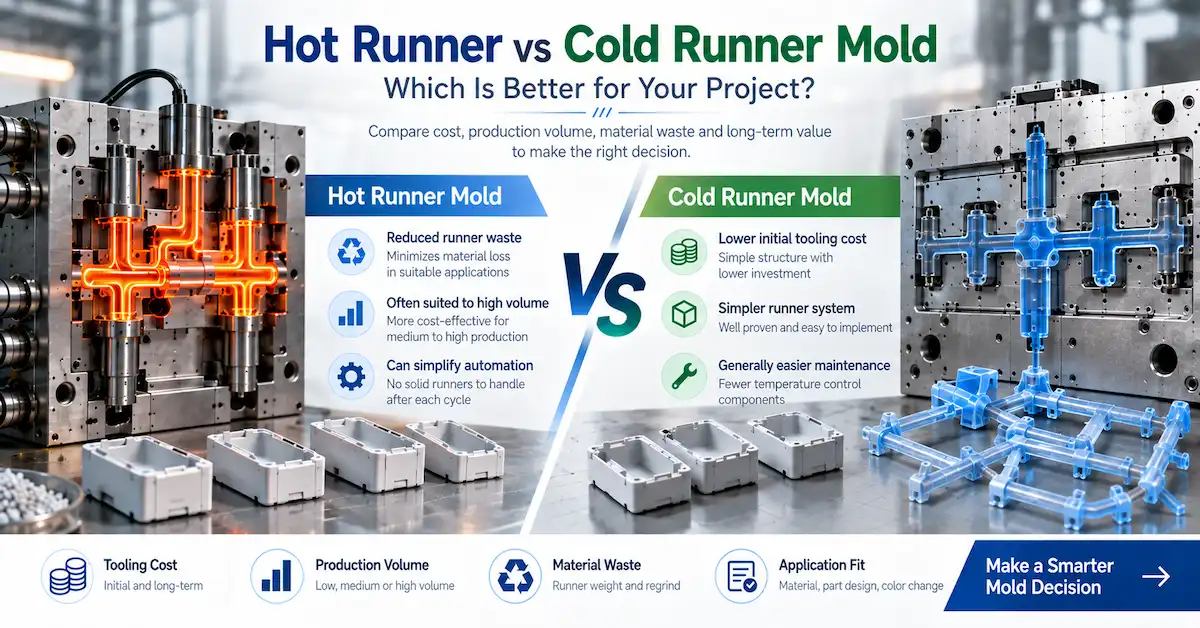
Runner System
Confirm whether the quotation uses:
- Cold runner
- Hot runner
- Specific hot-runner configuration
If two suppliers propose different systems, their mold prices should not be compared without considering long-term production economics.
Mold Base and Components
Review:
- Mold-base standard
- Guide components
- Ejection components
- Slides
- Lifters
- Standard components
- Spare parts
These decisions influence maintainability.
Trial Scope
Confirm whether the quote includes:
- Initial trial
- Follow-up trials
- Sample quantities
- Material
- Dimensional inspection
- Modification scope
A low mold price with limited validation can create additional cost later.
Step 5: Verify Mold Design Capability With Evidence
The previous sections define what a buyer should look for.
This section answers a different question:
How do you prove the supplier actually has the capability?
Do not rely only on statements such as:
We have 20 years of mold experience.
Ask to review how the supplier approaches a real tooling design.
Gate and Runner Review
Ask the supplier to explain:
- Proposed gate location
- Gate type
- Runner configuration
- Expected gate vestige
- Potential weld-line concerns
A useful explanation should connect the gate decision with actual product requirements.
Cooling Review
Ask:
- Where are the main hot spots?
- How are deep cores cooled?
- Could uneven cooling influence warpage?
- Is cooling accessible for maintenance?
Cooling quality strongly affects long-term mold performance.
Ejection Review
Ask how the part will be released.
Look for consideration of:
- Draft
- Deep ribs
- Cosmetic areas
- Ejector location
- Release force
- Potential deformation
Slides and Lifters
If moving mechanisms are required, ask:
- Why are they necessary?
- Could the product be simplified?
- How will the mechanism be guided?
- Which surfaces are expected to wear?
- Are critical components replaceable?
The objective is not to force suppliers to disclose every proprietary design detail during quotation.
It is to confirm that tooling choices result from engineering logic.
Step 6: Verify Manufacturing Capability Beyond the Equipment List
Supplier websites frequently emphasize CNC and EDM equipment.
Those machines are important, but they do not independently prove that a factory can build a reliable production mold.
OEM buyers should ask how manufacturing processes are controlled.
CNC Machining
Verify how the supplier handles:
- Core machining
- Cavity machining
- Inserts
- Mold plates
- Critical interfaces
EDM
Understand how EDM is used for:
- Deep features
- Narrow ribs
- Complex geometry
- Detailed cavity areas
Fitting
Ask how the supplier verifies:
- Parting surfaces
- Shut-offs
- Slide movement
- Insert fit
- Core/cavity alignment
Assembly
The final mold combines many components.
Weak assembly can create:
- Flash
- Movement problems
- Ejection issues
- Premature wear
A supplier should have a controlled process from machining through final assembly rather than treating each process as an isolated workshop activity.
Step 7: Evaluate How the Supplier Validates the Mold
A mold should not be approved because several attractive samples were produced.
OEM buyers need evidence that the tool is moving toward stable production.
What Should the First Trial Prove?
An early trial may reveal:
- Whether the mold operates correctly
- Whether the cavities fill
- Whether parts eject properly
- Major appearance defects
- Major dimensional problems
The first trial should be treated as an engineering checkpoint.
What Should Later Trials Prove?
Following corrective action, later trials should demonstrate improvement in areas such as:
- Critical dimensions
- Warpage
- Appearance
- Assembly
- Ejection
- Process stability
Define Approval Before Samples Arrive
Buyer and supplier should understand what final approval requires.
Depending on the project, this may include:
- Controlled drawing revision
- Correct resin
- Critical dimension report
- Appearance approval
- Assembly confirmation
- Functional testing
- Agreed process condition
A vague standard such as “sample looks good” is insufficient for many OEM programs.
Step 8: Evaluate Quality Evidence, Not Generic Quality Claims
Most mold suppliers claim to provide high quality.
Buyers need evidence that quality is defined and measured.
Critical Dimensions
Ask how the supplier identifies dimensions that directly affect:
- Assembly
- Sealing
- Alignment
- Movement
- Product function
These dimensions may require stronger inspection controls than general geometry.
Dimensional Reports
A useful dimensional report should make it possible to understand:
- What was measured
- Which sample was measured
- What specification applied
- Whether the result passed
Cavity Identification
For multi-cavity molds, samples should be traceable by cavity where dimensional variation matters.
Otherwise, good results from one cavity may hide problems in another.
Measurement Method
For important dimensions, confirm:
- Datum
- Fixture
- Instrument
- Part conditioning
- Measurement timing where relevant
The presence of a CMM does not by itself guarantee meaningful inspection.
Step 9: Compare Quotations Using Total Project Risk
Price remains important.
The mistake is allowing it to dominate before technical scope is normalized.
A useful quotation comparison might look like this:
| Item | Supplier A | Supplier B | Supplier C |
|---|---|---|---|
| Mold steel | Defined | Defined | Unclear |
| Cavities | 2 | 2 | 2 |
| Runner | Cold | Cold | Cold |
| DFM | Included | Included | Limited |
| Mold design review | Included | Included | Unclear |
| Trials | T0/T1 | Multiple as needed | T0 only |
| Dimensional report | Included | Included | Extra |
| Spare parts | Defined | Defined | Not listed |
| Modification scope | Defined | Defined | Unclear |
| Mold transfer support | Available | Available | Unclear |
This type of table frequently reveals why quotations differ.
Calculate the Cost of an Unclear Scope
If a cheaper supplier excludes:
- Extra trials
- Mold modifications
- Inspection
- Spare components
- Documentation
the final project cost may exceed the original savings.
OEM purchasing teams should therefore separate:
Quoted Tool Price
from:
Probable Total Tooling Cost
Step 10: Check Change-Control Discipline
OEM products often evolve during development.
A product may receive:
- Updated dimensions
- Revised clips
- New assembly features
- Cosmetic modifications
- Material changes
Without revision control, tooling may be built from the wrong geometry.
Ask how the supplier manages:
- CAD revisions
- Drawing revisions
- DFM approvals
- Mold-design revisions
- Steel changes
- Trial modifications
A simple project log can prevent expensive confusion.
Design Freeze Is Especially Important
Before major steel cutting, confirm:
- Product revision
- Material
- Major DFM decisions
- Critical dimensions
- Cosmetic requirements
- Tool specification
Changes can still happen later.
The purpose of design freeze is not to prohibit them.
It creates a known baseline so schedule and cost impacts can be evaluated properly.
Step 11: Evaluate Production Strategy Before Tool Approval
Some OEM buyers only purchase the tool.
Others want the same supplier to manufacture the molded parts.
This decision changes what should be evaluated.
Tooling-Only Projects
Prioritize:
- Mold transfer compatibility
- Machine interface
- Cooling connections
- Documentation
- Spare parts
- Trial parameters
Tooling Plus Part Production
Also evaluate:
- Resin control
- Molding process
- In-process inspection
- Repeat production
- Packaging
- Supply continuity
For projects that continue into custom plastic parts manufacturing, keeping mold development and molding under one manufacturing workflow can simplify feedback between tooling and production teams.
That does not automatically make one-supplier production the best strategy.
The buyer should choose based on:
- Regional supply chain
- Shipping
- Existing molding capacity
- Quality management
- Program economics
Step 12: Evaluate the Company Behind the Quotation
Supplier evaluation should include organizational stability and communication, not only tooling technology.
Review:
- Company history
- Manufacturing focus
- Engineering organization
- Quality process
- Export support
- Communication responsiveness
OEM projects involve repeated technical decisions.
A supplier can have strong equipment but still create project risk if engineering communication is inconsistent.
DX Molding's manufacturing background and company capabilities provide context for buyers assessing whether the company profile fits their project requirements.
The purpose of reviewing an About page is not to accept every marketing claim.
It is to identify information that can then be verified during technical and commercial discussions.
Supplier Red Flags OEM Buyers Should Investigate
No single warning sign automatically disqualifies a supplier.
However, several patterns deserve closer review.
A Final Price Is Given Before Requirements Are Understood
A fast budget quote can be useful.
A final engineering quotation should normally reflect:
- Material
- Volume
- Critical dimensions
- Mold specification
- Surface requirements
Every Customer Design Is “No Problem”
Experienced mold engineers normally identify trade-offs.
A supplier that never challenges product geometry may not be performing meaningful DFM.
The Supplier Cannot Explain Its Mold Design
You do not need every CAD detail before awarding a project.
However, the supplier should be able to explain the intended:
- Gate
- Runner
- Cooling
- Ejection
- Major mechanisms
Tool Life Is Promised Without Discussing Construction
A shot-count promise has little value without discussing:
- Steel
- Resin
- Fillers
- Wear mechanisms
- Maintenance
No Clear Trial Acceptance Process Exists
If buyer and supplier do not agree on what constitutes approval, commercial disputes can arise later.
Mold Ownership and Transfer Terms Are Vague
Clarify:
- Ownership
- Storage
- Transfer
- Documentation
- Spare parts
before placing the tooling order.
Practical OEM Supplier Evaluation Scorecard
Procurement teams can use a weighted score instead of choosing on price alone.
| Evaluation Area | Suggested Weight |
|---|---|
| Engineering and DFM | 20% |
| Mold design | 15% |
| Manufacturing capability | 15% |
| Quality and validation | 15% |
| Commercial transparency | 10% |
| Project communication | 10% |
| Lifecycle support | 10% |
| Price competitiveness | 5% |
The weighting can be adjusted.
For example, a simple low-volume part may justify more emphasis on cost.
A long-life automotive program may place much greater weight on:
- Repeatability
- Documentation
- Maintenance
- Tool life
The important point is that price should be one factor inside a structured decision.
Questions to Ask Before Awarding an Injection Mold Project
Before supplier approval, ask questions that reveal how the project will actually be managed.
Engineering
- What DFM review is included?
- Who performs the review?
- How are product changes approved?
- Which risks do you currently see?
Tooling
- What mold steel is proposed?
- Why is this cavity count recommended?
- Which runner system is proposed?
- Are slides or lifters required?
- Which components are expected to wear?
Manufacturing
- Which processes are controlled internally?
- How are critical mold dimensions inspected?
- How is mold fitting managed?
Validation
- What is the planned trial sequence?
- What reports are supplied?
- Who pays for modifications caused by tooling issues?
- What defines final approval?
Commercial
- Who owns the mold?
- What documentation is delivered?
- Can the tool be transferred?
- What spare parts are included?
- What support is available after shipment?
A supplier that can answer these questions precisely gives the buyer a much clearer basis for comparison.
What Should an OEM Mold RFQ Include?
A structured RFQ improves both quotation quality and supplier evaluation.
Files
Provide:
- STEP or other usable 3D CAD
- 2D drawing
- Mating-part data where relevant
Product Requirements
Define:
- Resin
- Color
- Texture
- Cosmetic surfaces
- Critical dimensions
- Functional requirements
Production Requirements
Provide:
- Annual volume
- Program life
- Launch target
- Production location
Tooling Requirements
Where applicable, specify:
- Cavity target
- Runner preference
- Mold life
- Preferred standards
- Mold destination
Quality Requirements
Define:
- Sample approval
- Dimensional reports
- Required testing
- Documentation
Commercial Requirements
Clarify:
- Mold ownership
- Payment milestones
- Delivery scope
- Modification responsibility
- Shipping requirements
A good RFQ does not prevent engineering discussion.
It creates a common baseline for that discussion.
Where DX Molding Fits Into the Evaluation Framework
This article is not intended to suggest that buyers should select a supplier simply because it claims certain capabilities.
DX Molding should be evaluated using the same criteria described above.
Its published tooling scope includes areas such as:
- DFM support
- Mold design
- CNC machining
- EDM
- Mold fitting
- Trial molding
- Dimensional inspection
- Tool modification
For an OEM buyer, the practical next step is to compare those capabilities against:
- Product complexity
- Resin
- Annual volume
- Critical tolerances
- Cosmetic requirements
- Mold destination
A supplier is a good fit only when its manufacturing model aligns with the project.
Plastic Injection Mold Manufacturer Selection Checklist
Before awarding the project, confirm the following.
Product Definition
- Current CAD revision is identified
- Drawing revision is controlled
- Resin is defined
- Annual volume is known
- Critical dimensions are identified
Engineering
- DFM has been reviewed
- Manufacturing risks are explained
- Required geometry changes are approved
- Assembly interfaces are understood
Mold Specification
- Steel is defined
- Cavities are defined
- Runner system is defined
- Mold base/components are defined
- Expected mold life is discussed
Mold Design
- Gate strategy is understood
- Cooling concept is reviewed
- Ejection is reviewed
- Slides/lifters are justified
Validation
- Trial scope is defined
- Sample approval criteria are defined
- Critical dimensions will be inspected
- Modification responsibilities are understood
Commercial and Lifecycle
- Mold ownership is clear
- Documentation deliverables are clear
- Spare-parts scope is clear
- Transfer requirements are defined
- Long-term support is understood
This checklist converts supplier selection from a subjective impression into a more repeatable purchasing process.
Frequently Asked Questions
How Do I Choose a Plastic Injection Mold Manufacturer?
Start by defining your product, resin, volume, critical dimensions, appearance requirements, and mold destination. Then evaluate suppliers based on DFM quality, mold design, manufacturing control, validation evidence, quotation transparency, and lifecycle support rather than tooling price alone.
What Is the Most Important Criterion When Choosing an Injection Mold Supplier?
There is no single criterion, but engineering and DFM capability are often among the most important because early decisions influence tooling cost, mold complexity, validation effort, and production stability.
How Can I Verify That a Mold Manufacturer Has Good Engineering Capability?
Ask the supplier to explain its DFM findings and proposed gate, cooling, ejection, runner, and mechanism strategy. Look for clear engineering reasoning rather than generic statements about experience.
How Should I Compare Injection Mold Quotations?
Normalize the technical scope first. Compare steel, cavity count, runner system, mold base, components, trials, dimensional inspection, spare parts, documentation, modification responsibilities, and mold-transfer requirements.
Is the Cheapest Injection Mold Supplier Usually the Riskiest?
Not necessarily. A competitive supplier can still be technically strong. The risk comes from selecting a low price without confirming what is included and whether the specification meets the production requirement.
Why Is DFM Important Before Awarding a Mold Project?
DFM can expose draft, wall thickness, undercut, sink, warpage, assembly, and tooling risks before steel cutting. It also gives the buyer an early opportunity to assess how the supplier approaches manufacturing problems.
How Many Mold Trials Should Be Included?
There is no universal number. The appropriate trial sequence depends on product complexity, tooling changes, dimensions, cosmetic requirements, and validation status. Buyers should define what each trial must prove rather than focusing only on the trial count.
Who Should Own the Injection Mold?
Ownership is a commercial agreement and should be documented before the tooling order. Buyers should also clarify mold storage, transfer rights, drawings, documentation, and responsibilities if production moves.
Should I Use the Same Supplier for Mold Making and Injection Molding?
It can simplify engineering feedback and production transition, but it is not always required. Buyers should compare their own supply-chain, regional production, logistics, and manufacturing requirements.
What Information Should I Send for an Injection Mold Quote?
Provide 3D CAD, 2D drawings, resin, annual volume, critical dimensions, cosmetic requirements, assembly information, tooling expectations, mold destination, and launch requirements where available.
How Can I Reduce Risk Before Paying for Tooling?
Complete the technical review before the tooling order. Confirm DFM, mold specification, design responsibilities, trial scope, approval criteria, mold ownership, modification responsibility, and deliverables in writing.
What Should I Do If My Product Design Is Not Final Yet?
Tell the supplier which requirements are confirmed and which remain open. Early engineering review can still begin, but steel cutting should not proceed from an uncontrolled design revision.
Conclusion
Choosing a plastic injection mold manufacturer for an OEM project should be based on engineering evidence, tooling specification, validation discipline, commercial transparency, and lifecycle risk, not price alone.
If you are comparing suppliers for a new tooling program, prepare your CAD, drawings, resin, annual volume, critical dimensions, and production requirements, then send your drawings for a project review.