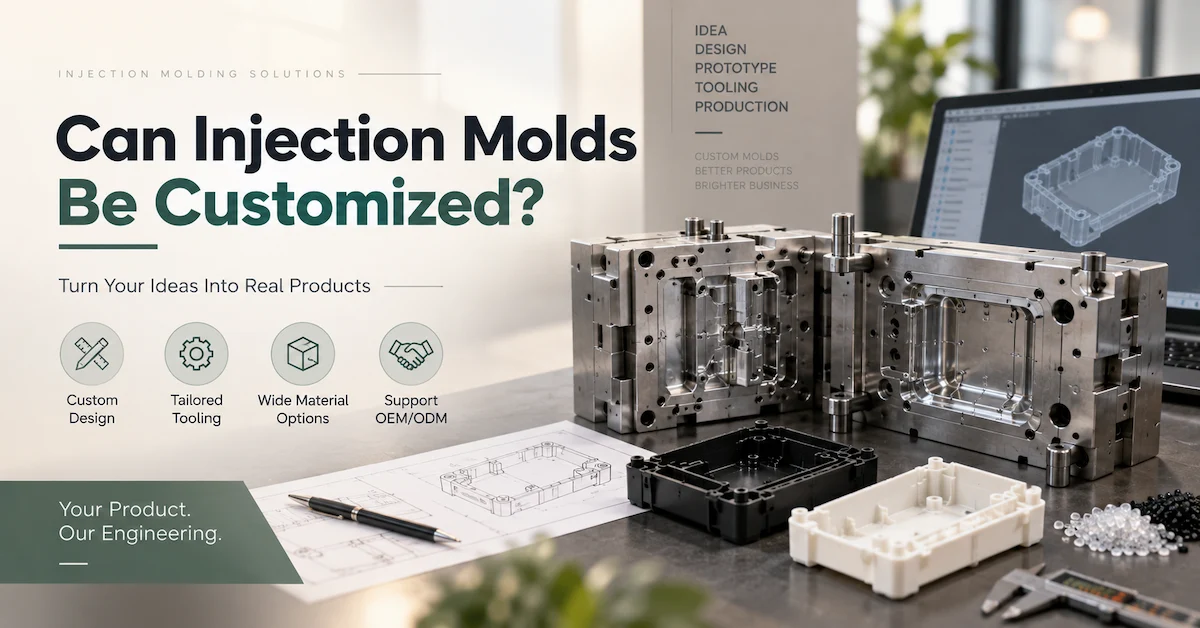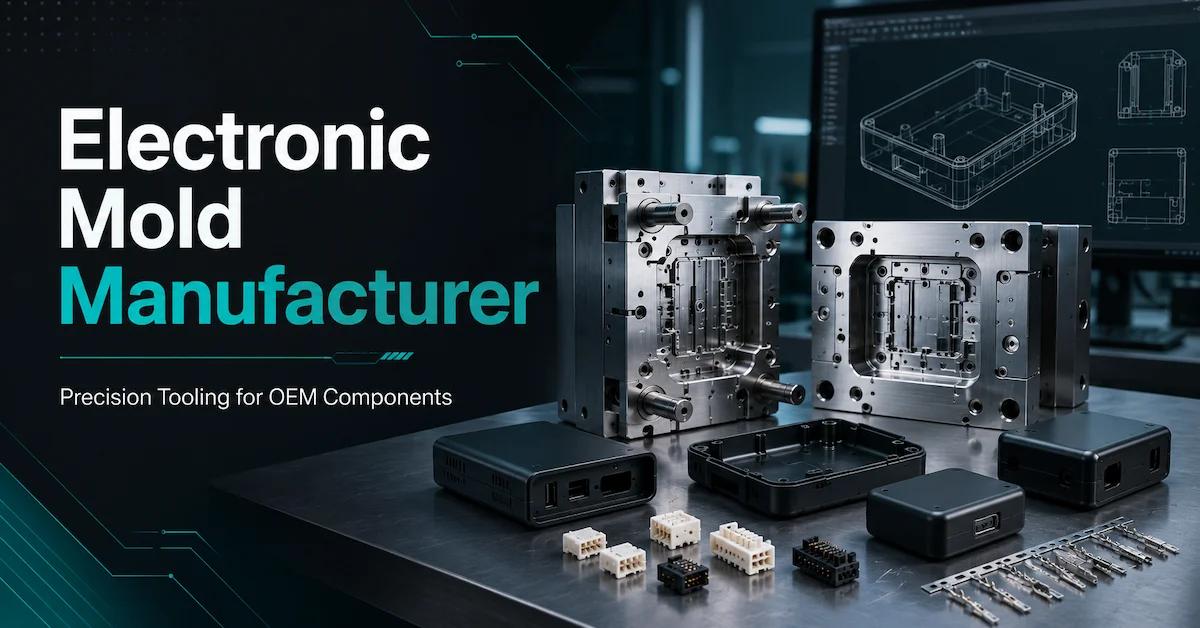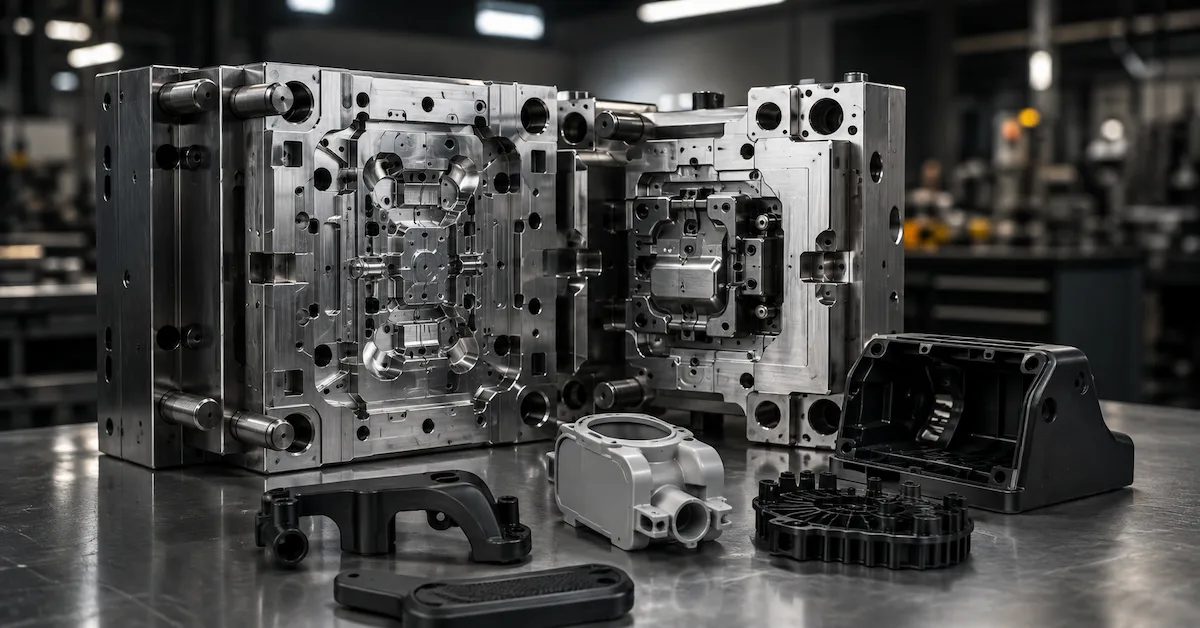
What Is a Custom Injection Molding Manufacturer?
A custom injection molding manufacturer provides engineered plastic part production based on a customer's specific design requirements instead of manufacturing standard catalog products.
Unlike companies that only provide basic molding services, a capable custom injection molding partner usually supports the complete manufacturing process:
- Product design review
- DFM analysis
- Injection mold development
- Material selection
- Prototype validation
- Mold trial
- Mass production
- Quality inspection
- Packaging and delivery
For OEM buyers, the value of a custom injection molding manufacturer is not only producing plastic parts.
The real value is helping transform a product concept into a stable, repeatable production process.
A reliable supplier should understand the relationship between:
Product Design → Mold Structure → Material Behavior → Injection Process → Final Part Quality
This connection determines whether a project reaches production smoothly or experiences repeated modifications.
DXMolding provides custom plastic injection mold solutions and plastic molding production services for OEM projects requiring engineering support and manufacturing consistency.
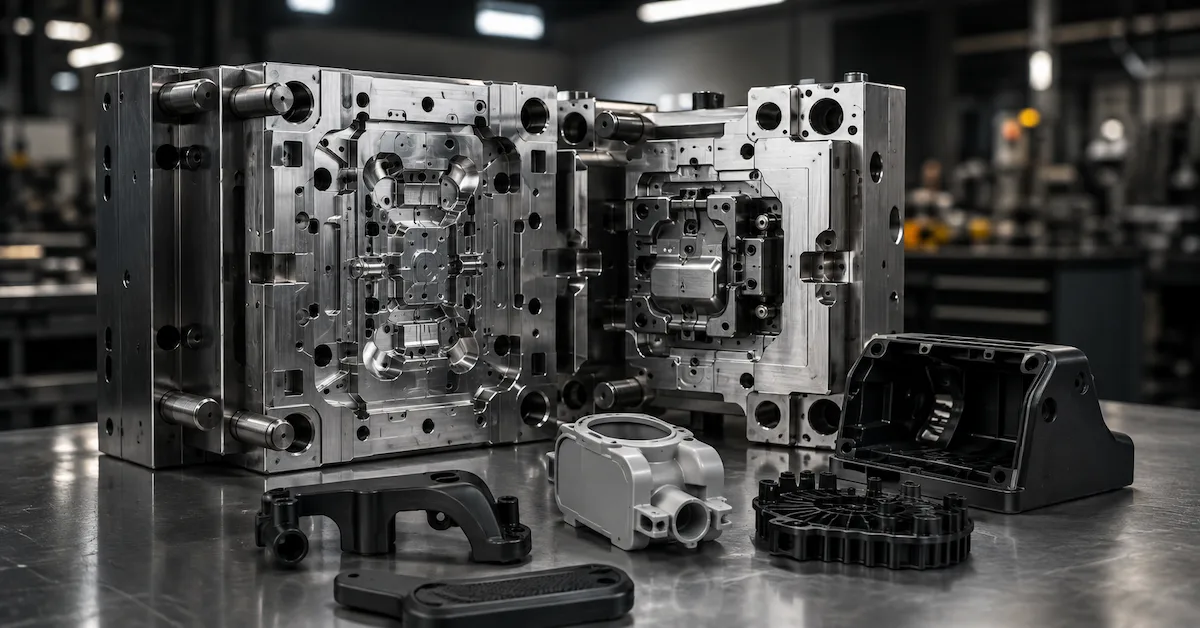
When Do Companies Need Custom Injection Molding?
Custom injection molding is usually selected when a company needs plastic components designed around a specific application.
Common situations include:
New Product Development
Companies launching new products often require:
- Prototype evaluation
- Mold design support
- Material recommendations
- Production feasibility review
Existing Product Improvement
Some companies replace existing suppliers because they need:
- Better consistency
- Lower production cost
- Improved appearance
- Faster delivery
- More reliable quality control
High-Volume Production
Injection molding becomes especially valuable when companies need thousands or millions of identical parts.
Typical applications include:
- Automotive components
- Electronics housings
- Consumer products
- Industrial equipment parts
- Medical-related plastic components
- Appliance parts
OEM and Private Label Manufacturing
Many brands do not own molding facilities.
They rely on a custom injection molding manufacturer to handle:
- Tooling
- Production
- Inspection
- Packaging
This allows brands to focus on product development and market expansion.
Custom Injection Molding Manufacturer vs Standard Molding Supplier
Not every injection molding company provides the same level of support.
| Capability | Basic Molding Supplier | Custom Injection Molding Manufacturer |
|---|---|---|
| Standard production | Yes | Yes |
| Custom mold development | Limited | Yes |
| DFM analysis | Sometimes | Usually included |
| Engineering support | Limited | Strong |
| Material recommendation | Limited | Available |
| Complex tooling | Limited | Available |
| Process optimization | Limited | Included |
| OEM project management | Limited | Strong |
| Product improvement suggestions | Limited | Available |
For companies developing new products, engineering capability often matters more than machine quantity.
What Should a Custom Injection Molding Manufacturer Provide?
A professional supplier should support the project from early engineering through production.
Product Design Review
Before mold development begins, engineers should review:
- Part geometry
- Wall thickness
- Draft angles
- Ribs and bosses
- Undercuts
- Assembly requirements
- Cosmetic surfaces
Early design review can prevent expensive tooling changes later.
DFM Analysis
Design for Manufacturing analysis helps identify potential production issues.
A good DFM review may evaluate:
- Mold opening direction
- Parting line location
- Gate position
- Cooling strategy
- Ejection method
- Material flow
The goal is not only to make the part manufacturable.
The goal is to make the part easier to produce consistently.
Injection Mold Development
The mold is the foundation of injection molding production.
A custom injection molding manufacturer should understand different tooling solutions, including:
- Two plate molds
- Three plate molds
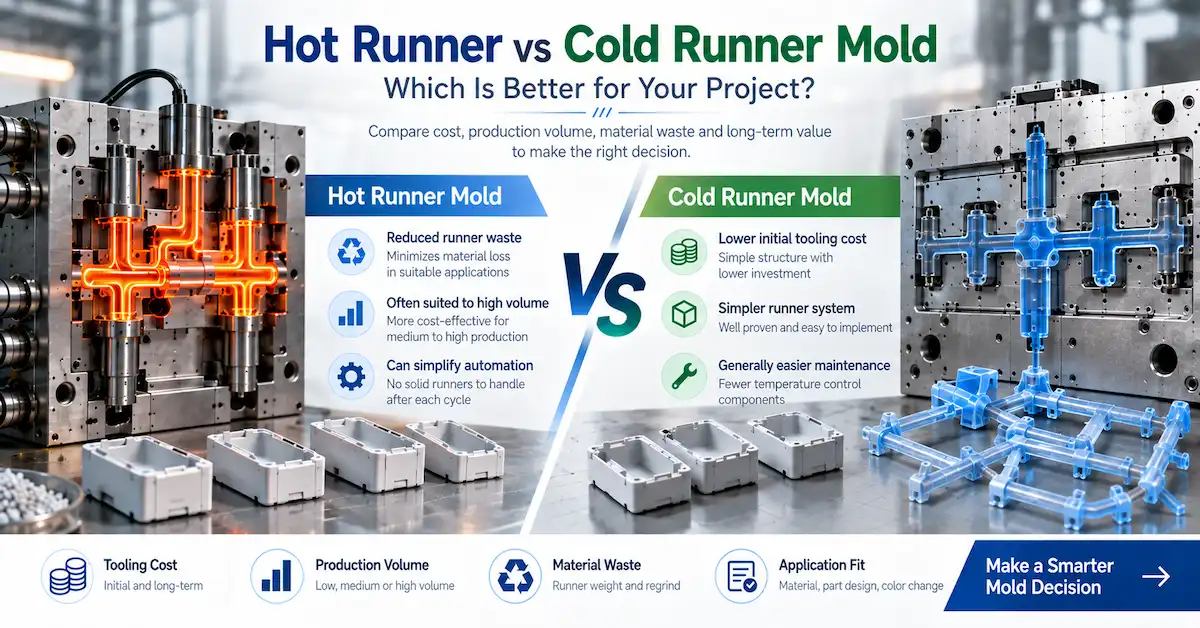
- Hot runner molds
- Multi-cavity molds
- Insert molds
- Complex tooling with slides and lifters
The correct mold structure depends on:
- Production volume
- Part complexity
- Material
- Surface requirements
- Cost objectives
The most expensive mold is not always the best solution.
The best solution is the one that supports stable production.
Material Selection Support
Plastic selection affects:
- Strength
- Temperature resistance
- Appearance
- Chemical resistance
- Shrinkage
- Processing conditions
Common injection molding materials include:
| Material | Common Applications |
|---|---|
| ABS | Housings,consumer products |
| PC | Transparent and impact-resistant parts |
| PP | Automotive and household products |
| PA | Engineering components |
| POM | Precision mechanical parts |
| TPE | Flexible components |
| PC/ABS | Electronics and automotive applications |
A capable supplier should discuss material behavior instead of simply asking:
“What plastic do you need?”
The better question is:
“What performance does the part need?”
Custom Injection Molding Process
A professional manufacturing workflow usually includes several stages.
Step 1: Project Review
The supplier reviews:
- CAD files
- Drawings
- Material requirements
- Quantity expectations
- Surface finish
- Assembly requirements
Step 2: Engineering Analysis
The team evaluates:
- Mold feasibility
- Production risks
- Tooling structure
- Cost optimization
Step 3: Mold Design
Engineers develop:
- Core and cavity structure
- Runner system
- Gate location
- Cooling channels
- Ejection system
Step 4: Mold Manufacturing
Typical processes include:
- CNC machining
- EDM
- Grinding
- Polishing
- Assembly
Step 5: Mold Trial
The first trial checks:
- Filling performance
- Appearance
- Dimensions
- Ejection
- Mold operation
Step 6: Production Approval
After samples meet requirements, the project moves into mass production.
How to Choose a Custom Injection Molding Manufacturer?
Selecting a supplier should focus on manufacturing capability rather than marketing claims.
1. Evaluate Engineering Experience
Ask:
- Can they review your design?
- Can they explain potential risks?
- Can they recommend improvements?
- Can they explain mold decisions?
A strong supplier behaves like a manufacturing partner, not only a production vendor.
2.Check Mold Manufacturing Capability
Important questions include:
- Are molds manufactured internally?
- What machining equipment is available?
- How are mold dimensions inspected?
- How are mold trials managed?
A supplier that understands tooling can usually solve production problems faster.
3. Review Quality Control System
Quality should cover the entire process.
A practical quality system may include:
Incoming Material Control
Confirm:
- Resin type
- Material specification
- Supplier documentation
Mold Inspection
Check:
- Critical dimensions
- Mold components
- Assembly accuracy
Production Inspection
Monitor:
- Part dimensions
- Appearance
- Function
- Consistency
Final Inspection
Verify:
- Quantity
- Packaging
- Customer requirements
4. Understand Production Capacity
Capacity should match your project.
Ask about:
- Injection machine range
- Production schedule
- Workforce
- Quality inspection capability
- Backup production plans
A supplier suitable for small prototypes may not be suitable for millions of parts.
5. Check Communication Quality
Good communication reduces production risk.
During quotation, observe whether the supplier:
- Asks technical questions
- Explains assumptions
- Provides clear timelines
- Reports risks early
Poor communication during quotation often becomes a bigger problem after production starts.
Custom Injection Molding Cost Factors
Many buyers ask:
“How much does custom injection molding cost?”
The answer depends on several variables.
| Cost Factor | Impact |
|---|---|
| Mold complexity | Changes tooling investment |
| Part size | Affects machine and material usage |
| Material | Influences resin cost |
| Surface finish | Changes mold processing |
| Tolerance requirements | Affects machining accuracy |
| Cavity number | Influences production efficiency |
| Annual volume | Determines tooling strategy |
| Automation requirements | Changes production setup |
The correct comparison is not:
“Which supplier has the lowest quote?”
It is:
“Which supplier provides the lowest total manufacturing risk?”
Tooling Cost vs Part Cost
OEM buyers should separate two costs:
Initial Investment
Includes:
- Mold design
- Mold manufacturing
- Engineering
- Trial production
Long-Term Production Cost
Includes:
- Material
- Cycle time
- Labor
- Scrap
- Maintenance
- Quality control
A cheaper mold can create higher production costs if it causes:
- Longer cycles
- More defects
- More manual work
- Frequent maintenance
Common Mistakes When Selecting an Injection Molding Supplier
Choosing Only Based on Price
The cheapest supplier may exclude:
- Engineering support
- Mold correction
- Inspection requirements
- Documentation
Ignoring Mold Ownership
Before ordering tooling,clarify:
- Who owns the mold?
- Where is it stored?
- Can it be transferred?
- Who pays maintenance?
Providing Incomplete Information
A supplier cannot accurately quote without understanding:
- Material
- Quantity
- Drawings
- Surface requirements
- Application
Skipping Trial Validation
A mold is not proven because plastic comes out.
The parts must meet:
- Dimensional requirements
- Appearance requirements
- Assembly requirements
Not Considering Future Production
A mold should be designed according to expected production life.
A prototype tool and a million-cycle production tool are completely different investments.
Applications of Custom Injection Molding
Automotive Industry
Applications include:
- Interior parts
- Exterior components
- Functional brackets
- Sensor housings
Electronics Industry
Applications include:
- Device housings
- Connector components
- Protective covers
Consumer Products
Applications include:
- Household products
- Appliance components
- Personal products
Industrial Equipment
Applications include:
- Machine covers
- Structural components
- Custom enclosures
Medical and Laboratory Products
Applications include:
- Plastic components
- Disposable parts
- Laboratory equipment housings
Each industry requires different considerations regarding:
- Material
- Precision
- Documentation
- Quality standards
Why Work With a Custom Injection Molding Manufacturer Instead of Multiple Suppliers?
Managing separate suppliers for:
- Mold design
- Tool manufacturing
- Injection molding
- Inspection
can create communication gaps.
A more integrated supplier can help connect:
Tooling Knowledge + Production Experience + Quality Control
This reduces the risk of problems caused by supplier handoffs.
DXMolding supports OEM customers through integrated mold development and injection molding production.
Questions to Ask Before Choosing a Supplier
Before approving a project, ask:
- Do you manufacture molds internally?
- Can you provide DFM feedback?
- What mold structures do you recommend?
- Which materials do you commonly process?
- How do you control dimensions?
- How many mold trials are included?
- Who owns the tooling?
- Can you support mass production?
- How are quality issues handled?
- What documentation is provided?
These questions help separate experienced manufacturers from simple production vendors.
FAQ About Custom Injection Molding Manufacturers
What does a custom injection molding manufacturer do?
A custom injection molding manufacturer designs and produces plastic parts according to customer requirements, including tooling development, mold trials, production molding, and quality control.
How do I choose a custom injection molding manufacturer?
Evaluate engineering capability, tooling experience, production capacity, quality control, communication, and experience with similar applications.
How much does custom injection molding cost?
Cost depends on mold complexity, material, part design, cavity number, production volume, tolerance requirements, and quality expectations.
Do I need a mold before contacting an injection molding manufacturer?
No. Many manufacturers can support mold design and tooling development from your product drawings or CAD files.
Can a custom injection molding manufacturer improve my product design?
Yes.Experienced suppliers can provide DFM suggestions to improve manufacturability, reduce risks, and optimize tooling costs.
What materials can be used for custom injection molding?
Common materials include ABS, PP, PC, PA, POM, TPE, and PC/ABS. The best choice depends on product requirements.
How long does custom injection molding take?
Lead time depends on mold complexity, design approval, machining requirements, testing, and production volume.
Should I choose a factory or trading company?
A direct factory can provide closer engineering communication, while a sourcing company may offer broader supplier coordination. The important factor is transparency.
Can DXMolding provide both molds and molded parts?
Yes. DXMolding supports custom mold development and plastic molding production for OEM projects requiring tooling and manufacturing support.
Conclusion
Choosing the right custom injection molding manufacturer is about building a reliable production system, not simply purchasing plastic parts.
A capable partner should help you with:
- Product design review
- DFM analysis
- Mold development
- Material selection
- Trial validation
- Quality control
- Mass production
The best supplier understands your product goals and helps reduce manufacturing uncertainty before production begins.
DXMolding provides custom injection molding solutions for OEM customers requiring engineering support, precision tooling, and stable production.
For a project evaluation, prepare your:
- 3D CAD files
- 2D drawings
- Material requirements
- Annual volume
- Surface requirements
- Critical dimensions
and contact DXMolding to discuss your custom injection molding requirements.