When Do You Need a Custom Tooling Supplier?
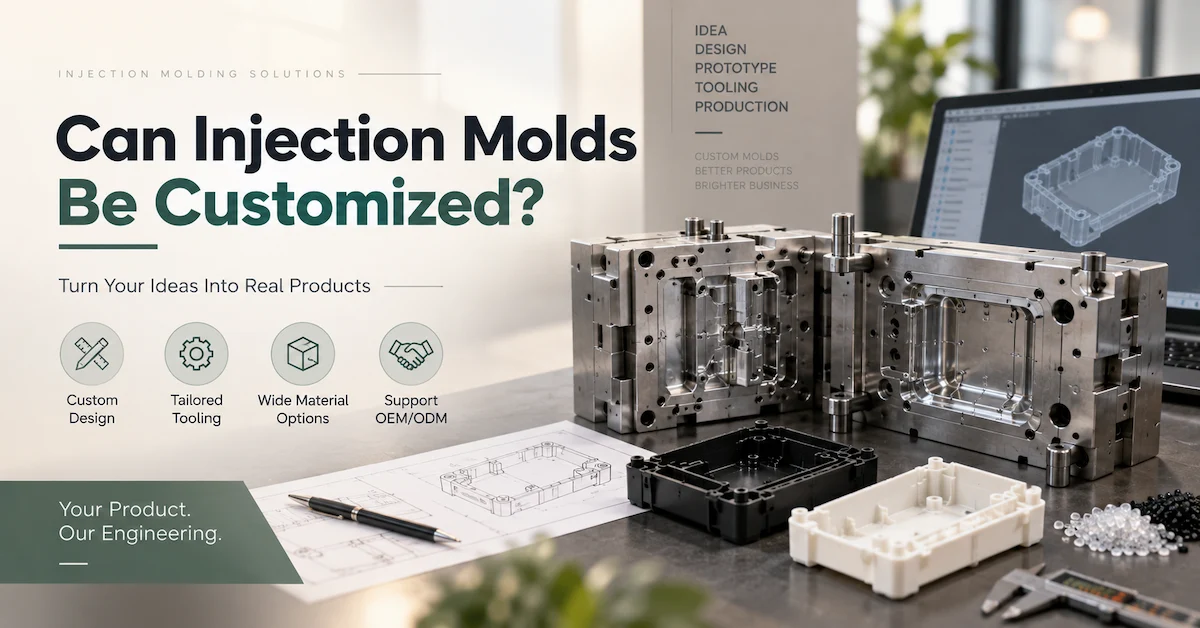
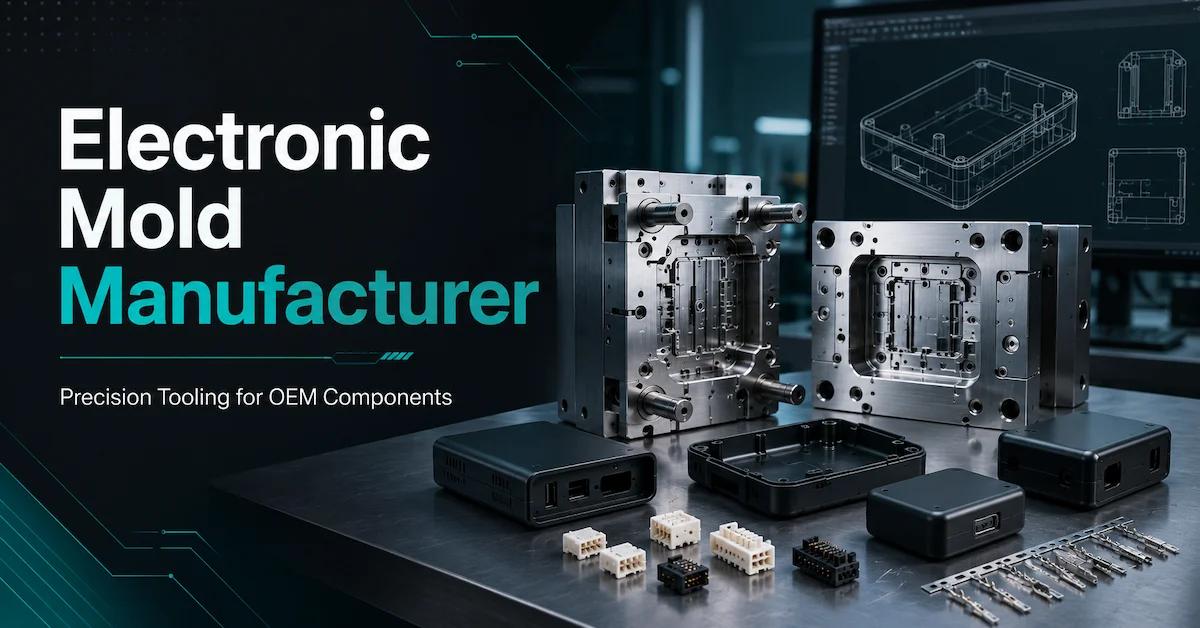
Standard mold structures work well for many straightforward molded parts, but some products require tooling engineered specifically around their geometry, resin, appearance, tolerance, production volume or assembly requirements.
That is when a custom tooling supplier becomes important.
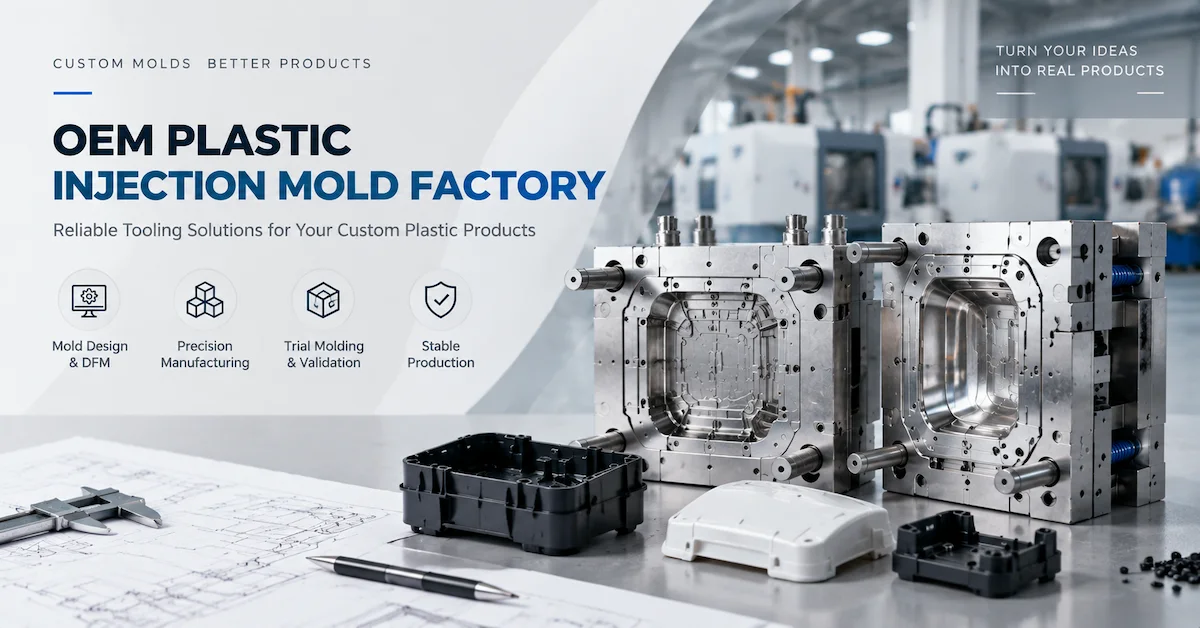
Rather than starting from a fixed catalog tool, custom injection tooling is developed around the actual product. The supplier reviews the part, identifies manufacturing risks, develops the mold structure, machines the required components, assembles the tool, validates it through trial molding and refines it before production.
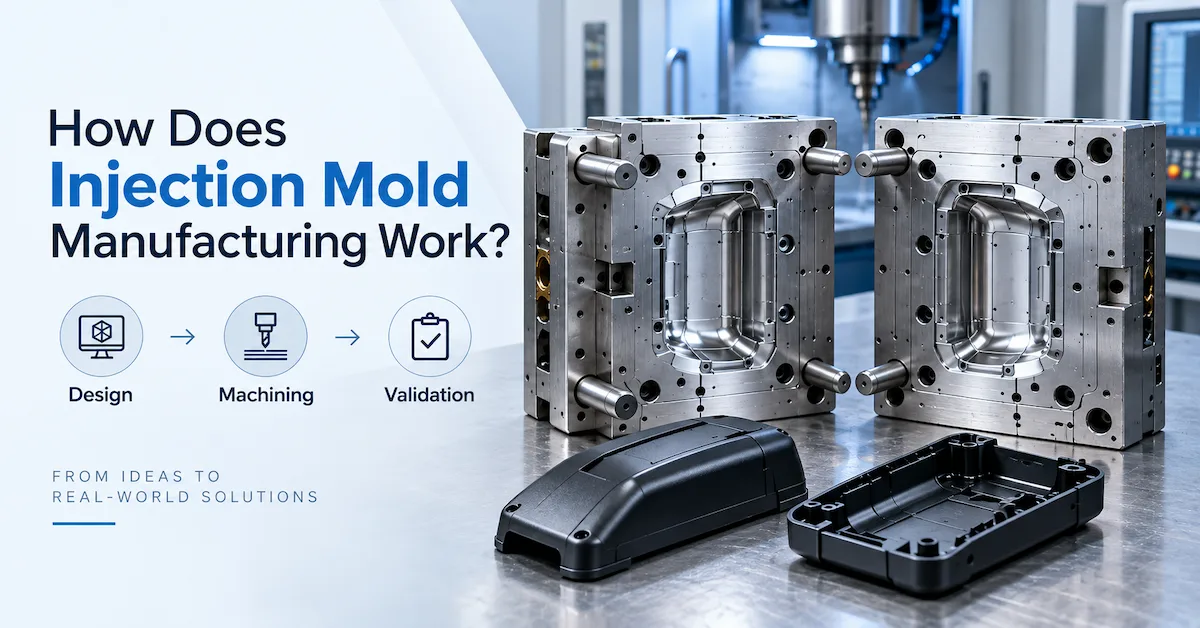
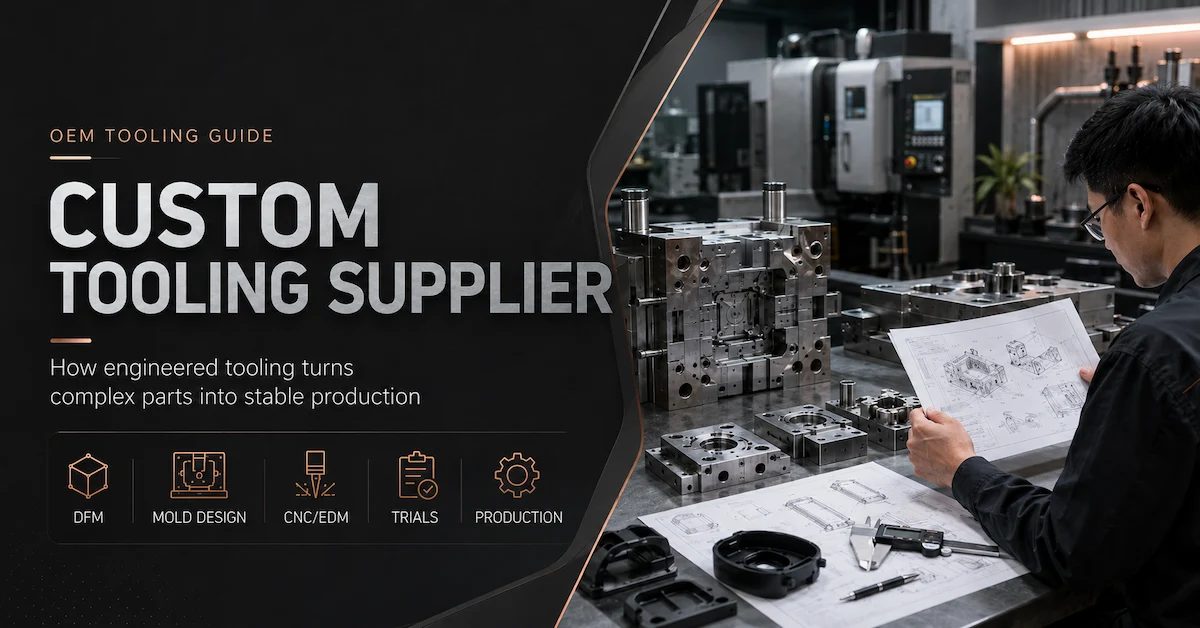
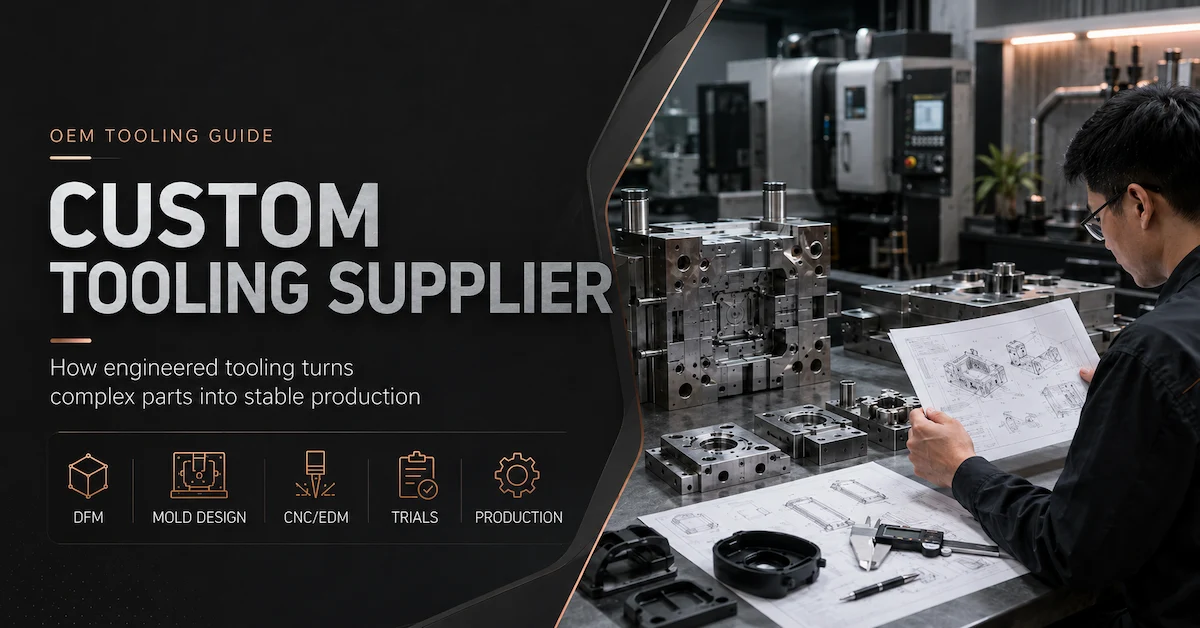
DongXin's current manufacturing workflow follows this general route from project-file review and DFM through mold design, CNC/EDM machining, trial molding, sample approval and mass production.
For OEM buyers, custom tooling becomes especially valuable when the product contains features that standard tooling assumptions cannot address efficiently or reliably.
What Does “Custom Tooling” Mean in Injection Molding?
In injection molding, custom tooling usually refers to a mold developed specifically for one product or product family.
The tooling can be engineered around:
- Product geometry
- Plastic or silicone material
- Annual production volume
- Surface requirements
- Critical tolerances
- Assembly interfaces
- Parting-line restrictions
- Gate requirements
- Ejection requirements
- Cooling requirements
- Automation or production needs
DongXin currently provides custom plastic molds, liquid silicone injection molds and solid silicone compression tooling, with mold engineering, CNC/EDM machining and trial support forming part of its service scope.
The key difference is that custom tooling is not selected first and then forced onto the product.
The product requirements determine the tooling strategy.
When Standard Mold Solutions Are Not Enough
Certain product features increase the need for project-specific tooling engineering.
Complex Undercuts
An undercut can prevent a molded part from being released directly from the cavity.
Depending on the geometry, the tooling may require:
- Sliders
- Lifters
- Side cores
- Collapsible mechanisms
- Removable inserts
- Alternative parting strategies
DongXin's engineering-review process specifically considers undercuts, side-core structures, draft angles and other manufacturability risks before production.
The goal is not to add the most complicated mold mechanism.
It is to find the simplest structure that can reliably mold and eject the required part.
Tight Assembly Relationships
A molded enclosure, connector, mechanical housing or mating component may contain dimensions that directly affect:
- Fit
- Alignment
- Movement
- Sealing
- Assembly force
- Final product function
These dimensions should be identified before mold manufacturing because they influence tooling, shrinkage assumptions, inspection and later mold correction.
ISO 20457:2026 provides a current international framework covering geometrical and dimensional tolerances and acceptance conditions for plastic molded parts.
The practical lesson for buyers is not to apply the tightest possible tolerance everywhere.
It is to define which dimensions actually control product performance.
Cosmetic Surfaces
For visible consumer, electronic or appliance components, custom tooling may also need to account for:
- Gate marks
- Parting lines
- Ejector marks
- Texture
- Polish
- Weld-line location
- Sink marks
The mold must therefore be designed around the appearance requirement as well as basic filling and ejection.
Difficult Filling or Warpage Risk
Large parts, thin walls, uneven thickness, long flow paths or sensitive dimensional areas can require additional engineering before machining begins.
Autodesk's Moldflow tools support analysis of manufacturability, filling, packing, cooling, weld lines, air traps, runner layouts and warpage behavior.
Simulation does not need to be used on every mold.
A competent custom tooling supplier should instead understand when the geometry creates enough risk to justify deeper analysis.
Types of Custom Tooling DongXin Can Support
Different products require different tooling strategies.
The relevant category should be selected according to material and manufacturing process rather than treating every project as a standard plastic mold.
Custom Plastic Injection Molds
A custom plastic injection mold is developed specifically around the molded plastic component.
DongXin's current plastic-tooling scope includes custom mold design, CNC and EDM machining, mold trials and optimization, with tooling used for new products, replacement molds and production programs.
Typical custom elements may include:
- Product-specific cavities
- Inserts
- Sliders
- Lifters
- Gate systems
- Cooling channels
- Ejection systems
- Multi-cavity layouts
These elements should be selected according to part geometry and production needs rather than added simply because they are technically possible.
Liquid Silicone Injection Tooling
Liquid silicone rubber products use a different process from conventional thermoplastic injection molding.
DongXin currently provides liquid silicone injection molds for applications such as soft-touch parts, sealing components, wearable parts and other custom silicone products.
Projects may require engineering consideration of:
- Silicone part geometry
- Mold structure
- Filling behavior
- Flash control
- Demolding
- Sample validation
- Process conditions
This means buyers sourcing LSR products should evaluate a supplier's silicone tooling experience separately from general plastic mold capability.
Solid Silicone Compression Tooling
Some solid silicone parts are manufactured through compression molding rather than liquid silicone injection molding.
DongXin's current service scope includes compression mold structures and solid silicone parts such as gaskets, pads, covers and seals.
The process, mold structure and material behavior differ from plastic injection molding, making application-specific tooling knowledge important.
Replacement and Modified Tooling
Custom tooling is not limited to completely new products.
A buyer may also need:
- Replacement tooling
- Mold improvement
- New inserts
- Product revisions
- Tool modifications
- Production transfer tooling
DongXin lists replacement tooling, mold improvement and production programs among applications for its custom plastic mold services.
For these projects, existing samples, drawings and previous tooling problems can become valuable engineering inputs.
Why Custom Tooling Can Simplify Complex Production
The value of custom tooling is not simply that the mold is “customized.”
The real value comes from designing the tooling around the manufacturing objective.
Fewer Compromises in Part Geometry
Trying to fit a complex product into a generic tooling concept can create unnecessary compromises.
Custom engineering allows the supplier to evaluate the relationship between:
Product Geometry → Mold Structure → Molding Process
before machining begins.
Better Control of Critical Features
A custom mold can position:
- Gates
- Parting lines
- Ejectors
- Inserts
- Side actions
- Cooling
around the actual functional and cosmetic requirements of the product.
Tooling Can Match Production Volume
A prototype project and a long-term production program do not necessarily require the same tooling strategy.
The expected quantity can affect decisions such as:
- Cavity count
- Mold construction
- Tool steel selection
- Replaceable wear areas
- Runner strategy
- Maintenance planning
DongXin asks customers to provide target quantity during project review so tooling, sampling and production options can be evaluated before kickoff.
The Custom Tooling Development Process
One of the strongest ideas worth preserving from the reference article is that a custom tool should follow a structured engineering-development process rather than move directly from drawing to manufacturing. The reference article uses feasibility review, material/tool selection, design, first article, trial validation and repeat supply as its core sequence.
For injection molds, DongXin's corresponding workflow is:
Step 1: Project Requirements and File Review
A custom tooling supplier first needs to understand what is being manufactured.
DongXin accepts:
- 2D drawings
- 3D CAD / STEP / STL files
- Physical samples
- Product ideas or sketches
- Material requirements
- Target quantities
- Finish requirements
- Color requirements
- Tolerance notes
for initial project review.
The more clearly the buyer defines the product requirement, the easier it becomes to identify tooling risks before manufacturing.
Step 2: DFM and Manufacturing Risk Assessment
The engineering team reviews whether the part can be molded as designed.
Important checks may include:
- Draft angles
- Wall thickness
- Undercuts
- Parting lines
- Mold release
- Sink-mark risk
- Warpage risk
- Assembly conditions
DongXin places DFM and manufacturing-risk assessment before quotation confirmation and mold manufacturing in its published workflow.
This sequencing matters because a design issue found before tooling is easier to discuss than the same issue discovered after steel has already been machined.
Step 3: Tooling Plan and Quotation
Once the technical direction is understood, buyer and supplier can align:
- Tooling approach
- Production route
- Cost
- Lead time
- Project scope
DongXin's workflow explicitly places quotation and production-plan confirmation before mold design, machining and assembly.
For buyers, this is the stage to ensure the quotation describes the same tool they believe they are purchasing.
Step 4: Mold Design and Precision Manufacturing
After approval, tooling moves into manufacturing.
DongXin's published workflow includes:
Mold Design → CNC → EDM → Fitting → Mold Assembly.
CNC machining is used within DongXin's service scope for cores, cavities, inserts and other precision mold components.
EDM can then support complex details or areas that are difficult to produce efficiently through conventional cutting alone.
Step 5: Trial Molding and Sample Validation
A finished mold still needs to prove that it can produce the intended part.
DongXin's workflow includes T0/T1 sampling, measurement and refinement before approval.
Trial evaluation can focus on:
- Filling
- Appearance
- Ejection
- Dimensional results
- Assembly
- Mold operation
- Corrective actions
The objective is not simply to obtain the first molded sample.
It is to determine whether the tool is ready to move toward controlled production.
Step 6: Production and Delivery
After sample approval, buyers who need finished molded parts can continue into plastic molding rather than transferring the mold to another supplier.
DongXin describes its workflow as progressing from approved trial samples to mass production, inspection, packaging and delivery.
This can be useful when the buyer wants the tooling supplier to remain responsible for both the mold and subsequent molding process.
What Should You Send a Custom Tooling Supplier?
Custom tooling quotations become more meaningful when the supplier receives useful engineering inputs.
Where available, provide:
| Project Input | Why It Matters |
|---|---|
| 3D CAD / STEP | Defines complete geometry |
| 2D drawing | Identifies controlled dimensions |
| Resin or silicone material | Influences processing and tooling decisions |
| Annual volume | Helps define tooling strategy |
| Surface requirement | Affects cosmetic tooling decisions |
| Color | Supports material/process review |
| Assembly information | Identifies mating and functional features |
| Application | Provides operating context |
| Production location | Helps determine export or in-house tooling needs |
| Target schedule | Supports project planning |
DongXin accepts both complete technical packages and early-stage ideas, although more detailed project inputs allow a more precise feasibility review.
If a specification is not yet known, mark it as an open engineering item instead of inventing a value.
How to Evaluate a Custom Tooling Supplier
A custom tooling supplier should be evaluated differently from a catalog-product vendor.
The buyer is purchasing both a physical tool and the engineering decisions behind it.
Engineering Capability
Ask whether the supplier can explain:
- DFM findings
- Mold structure
- Gate strategy
- Ejection
- Cooling
- Side actions
- Material considerations
Manufacturing Capability
Review whether the supplier controls or properly manages:
- Mold design
- CNC machining
- EDM
- Fitting
- Assembly
- Trial molding
DongXin publicly lists mold design, CNC machining, EDM, injection molding and quality inspection among its core capabilities.
Validation Capability
Ask how the supplier moves from:
T0 → Problem Review → Modification → T1 → Approval
and what evidence is used to approve the tool.
Production Support
If you require molded products rather than only an export mold, determine whether the supplier can continue from tooling into batch production.
DongXin provides plastic molding specifically for customers that need finished parts in addition to tooling.
Custom Tooling Supplier Selection Checklist
| Evaluation Area | Buyer Question |
| Product review | Does the supplier understand the application? |
| DFM | Are risks identified before machining? |
| Mold design | Is the tooling engineered around the part? |
| Material | Is resin/silicone behavior considered? |
| CNC / EDM | Are critical mold components controlled? |
| Trial molding | Is tooling validated with actual samples? |
| Inspection | Are critical dimensions checked? |
| Revision control | Are design changes documented? |
| Production | Can the supplier support molded parts if needed? |
| After-sales | Can tooling be maintained or modified later? |
The purpose of the checklist is not to select the supplier with the largest equipment list.
It is to determine whether the supplier can support your specific part from engineering through production.
Applications for Custom Injection Tooling
DongXin currently serves product teams in automotive, medical, electronics, consumer products, industrial components and silicone-part applications.
The tooling priorities can differ significantly between these applications.
Automotive Components
Projects may prioritize:
- Functional fit
- Stable dimensions
- Assembly
- Repeat production
Electronics and Enclosures
Common concerns can include:
- Cosmetic surfaces
- Boss and rib design
- Connector interfaces
- Assembly alignment
Medical-Related Components
Buyers may require stronger control of:
- Material requirements
- Dimensions
- Inspection
- Documentation
Specific regulatory or certification requirements should always be defined by the customer and verified separately rather than assumed from the product category.
Consumer Products
Projects may put more emphasis on:
- Appearance
- Texture
- Parting lines
- Gate marks
- Product feel
Industrial Components
Tooling decisions may prioritize:
- Functional geometry
- Durability
- Assembly
- Repeatability
This is why a good custom tooling supplier should begin with the application rather than proposing the same mold concept to every customer.
Custom Tooling vs Standard Tooling: Which Is Better?
Neither is universally better.
Standard approaches can be appropriate when the product geometry and manufacturing requirements are simple.
Custom tooling becomes more valuable when the product requires:
- Product-specific cavities
- Complex release mechanisms
- Tight functional interfaces
- Controlled cosmetic surfaces
- Special materials
- Multi-cavity production
- Silicone processes
- Long-term OEM production
The correct question is therefore not:
“Should we always use custom tooling?”
It is:
“Which tooling decisions actually need to be customized to achieve stable production for this part?”
FAQ About Custom Tooling Suppliers
What is a custom tooling supplier?
A custom tooling supplier designs and manufactures tooling around a customer's specific product requirements rather than supplying only standard catalog tools. In injection molding, this can include custom plastic injection molds, silicone molds, inserts, sliders, cooling systems and other product-specific mold structures.
When should I use custom tooling instead of a standard mold solution?
Custom tooling becomes more important when a part has unusual geometry, undercuts, critical assembly dimensions, cosmetic requirements, special material behavior, production-volume requirements or process-specific needs that cannot be addressed well by a basic mold structure.
What files should I send for a custom tooling quotation?
Where possible, send 3D CAD/STEP files, 2D drawings, intended material, quantity, surface requirements, critical tolerances, assembly information and target schedule. Physical samples or early product concepts can also support an initial feasibility review.
Can a custom tooling supplier help optimize my product before mold manufacturing?
Yes, if engineering and DFM are part of the supplier's scope. DongXin's workflow includes DFM and manufacturing-risk assessment before mold design and machining.
Does every custom injection mold need Moldflow analysis?
No. Simulation is most useful when the project has meaningful filling, cooling, runner-balance, air-trap, weld-line or warpage risks. Autodesk's Moldflow platform supports analysis of these injection-molding behaviors.
Can DongXin provide both custom tooling and molded parts?
Yes. DongXin's published services cover custom plastic molds as well as plastic molding, with projects moving from engineering review and tooling through trial approval and production.
Can custom tooling be modified after the first trial?
Tooling commonly goes through refinement after trial results identify dimensional, cosmetic or process issues. DongXin's published workflow includes T0/T1 sampling, measurement and refinement before approval.
How do I choose between an export mold and tooling plus production?
Choose according to where the mold will ultimately run. Buyers with their own injection molding capacity may prefer an export mold, while buyers that need finished plastic parts may benefit from keeping tooling, sampling and production with one manufacturing team.
Conclusion
Working with a custom tooling supplier becomes valuable when the product requires more than a basic mold concept.
Complex geometry, undercuts, material behavior, cosmetic surfaces, critical dimensions, production volume and silicone processes can all require tooling engineered specifically around the product.
For OEM buyers, the strongest custom tooling partner should be able to connect:
Product Requirements → DFM → Tool Design → CNC/EDM → Assembly → Trial Molding → Inspection → Production
DongXin currently supports this type of workflow across custom plastic injection molds, plastic molding, liquid silicone tooling, solid silicone compression molds and OEM/ODM product-development projects.
If you are developing a product that requires non-standard mold engineering, you can send your drawings, samples or product requirements to DongXin for a tooling feasibility and manufacturing review.