What Should You Expect From an Injection Molding Factory in China?
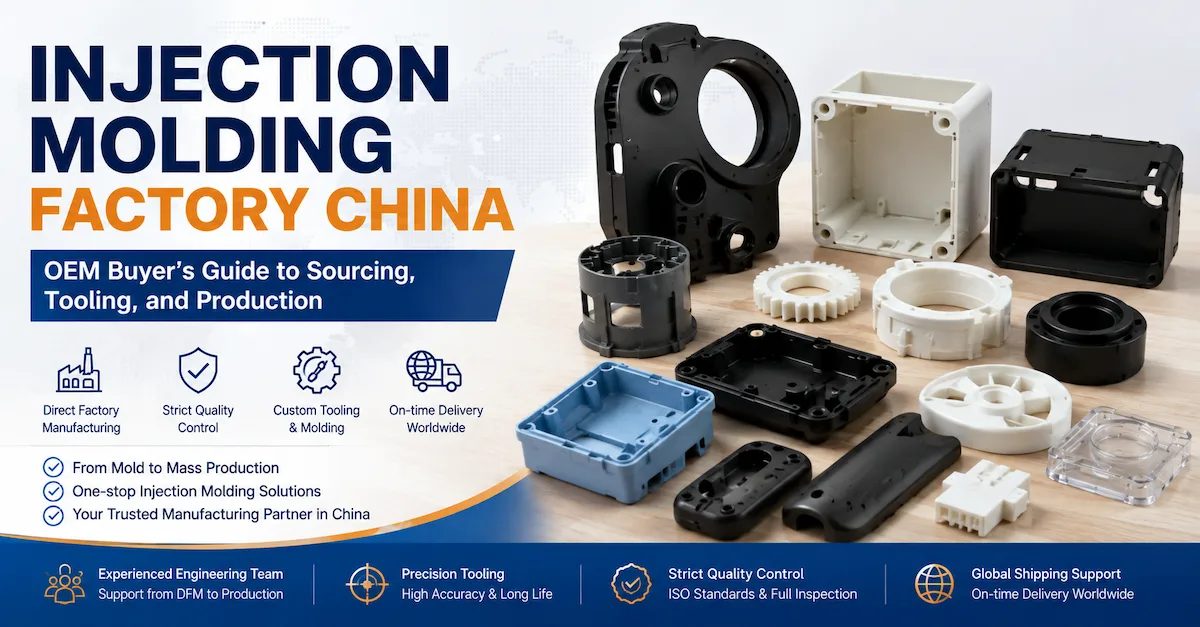
An injection molding factory in China should be able to do more than run an injection molding machine.
For an OEM project, the factory may need to coordinate:
- Product drawing review
- DFM analysis
- Injection mold design
- CNC and EDM machining
- Mold assembly
- Trial molding
- Sample correction
- Plastic injection molding
- Dimensional inspection
- Packing and shipment
The buyer is not really purchasing “a mold” or “plastic parts” separately.
You are purchasing a manufacturing process that needs to remain controlled from the first CAD review through repeat production.
That distinction matters.
A low tooling quotation has little value if the mold requires repeated correction, the production resin was misunderstood, or approved samples cannot be reproduced consistently later.
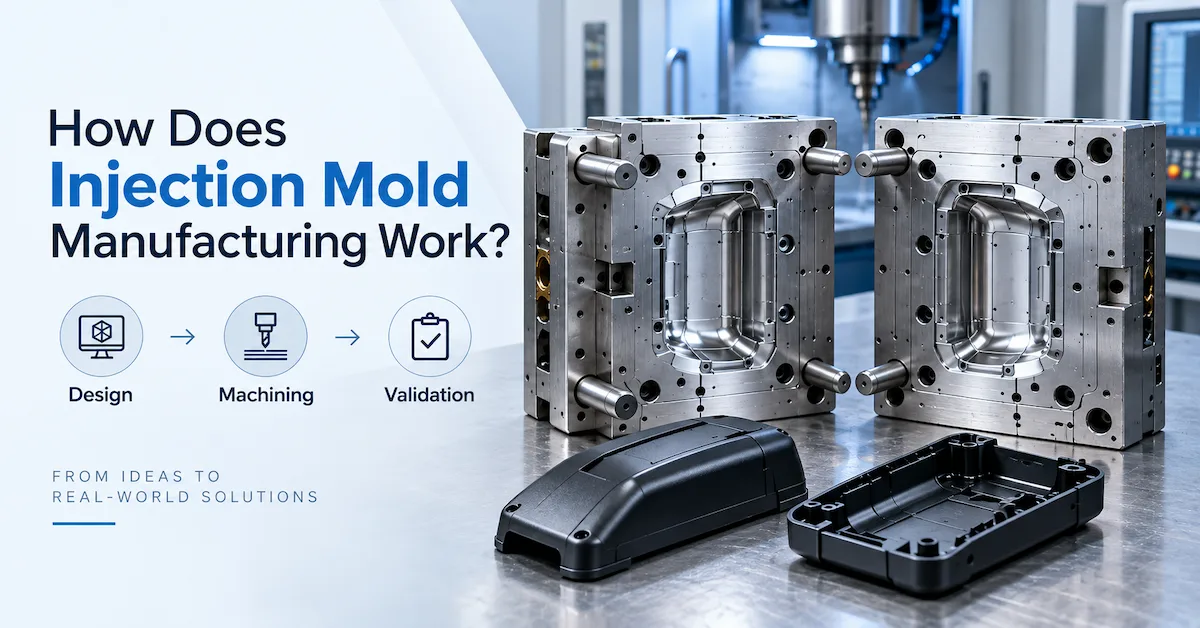
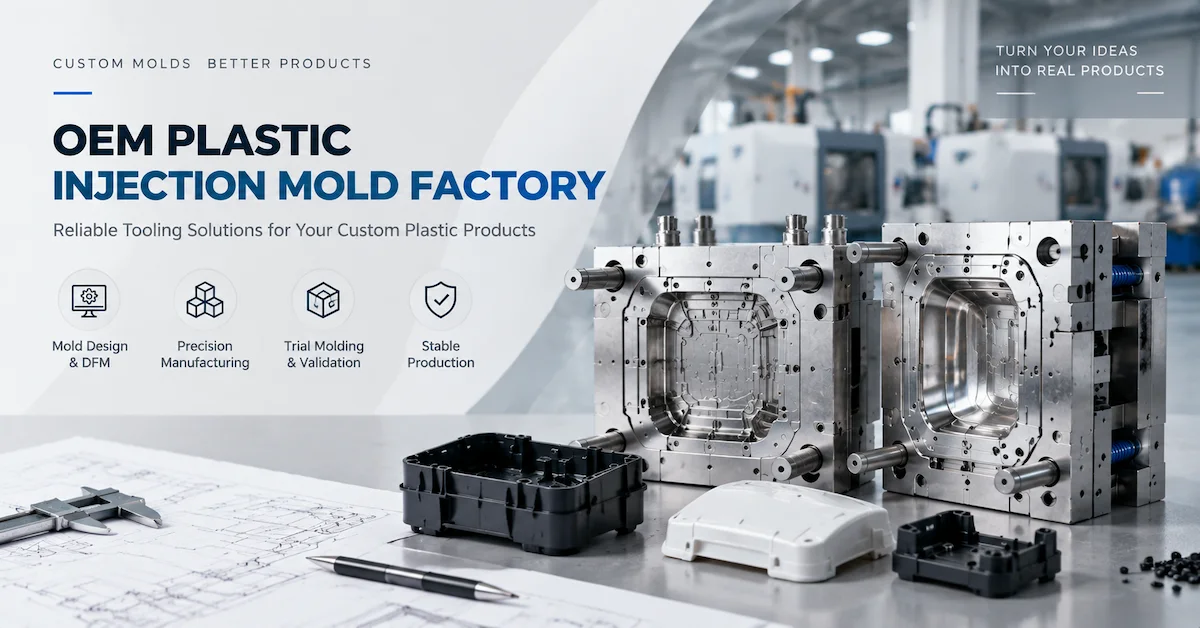
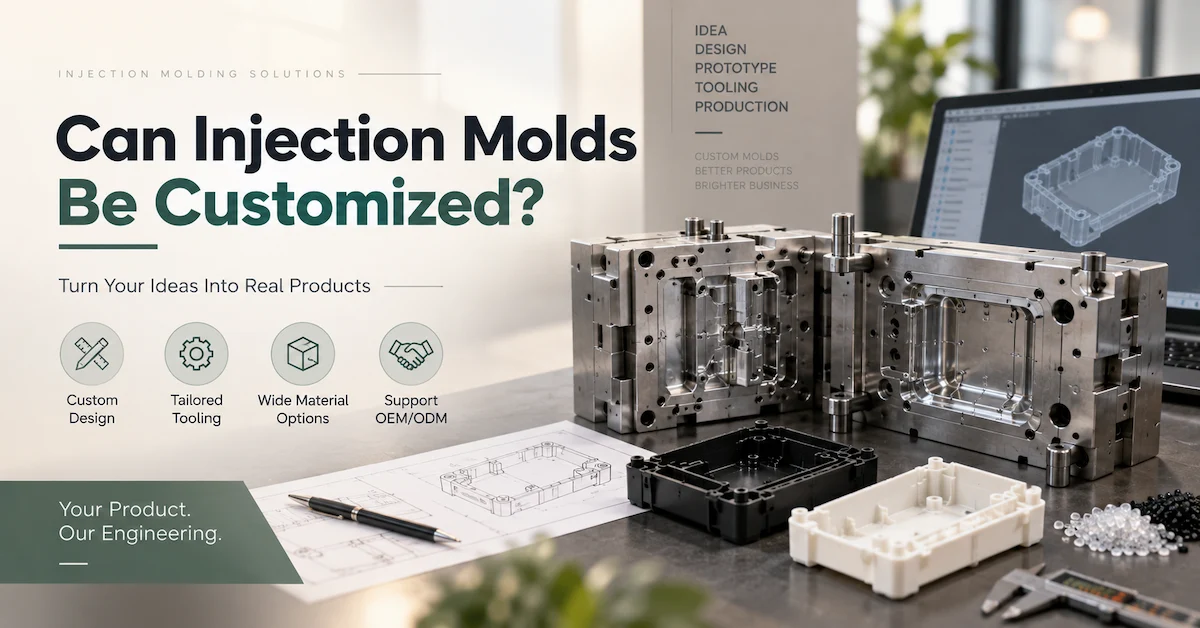
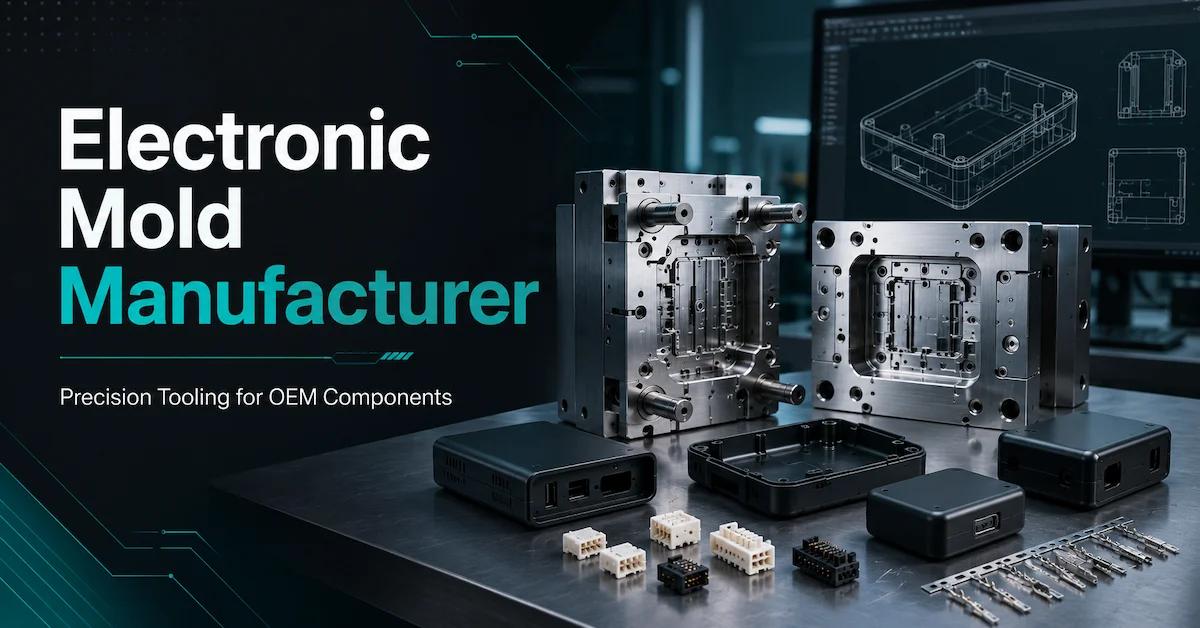
DongXin supports both custom plastic injection mold development and plastic molding production, which allows tooling and production requirements to be reviewed within the same project.
Why Do OEM Buyers Look for Injection Molding Factories in China?
China remains a common sourcing destination for custom plastic tooling because buyers can often find tooling engineering, machining, mold building, injection molding, component sourcing, and export support within the same manufacturing ecosystem.
That can be useful for projects involving:
- Automotive plastic parts
- Electronics housings
- Consumer products
- Industrial components
- Custom plastic enclosures
- Precision molded parts
- Silicone and plastic assemblies
The practical advantage is not simply “lower price.”
For many buyers, the value comes from being able to coordinate:
Tool Design → Mold Manufacturing → Trial → Modification → Production
without moving the tool between several unrelated suppliers.
That said, buying from China also introduces sourcing questions that must be answered before paying a deposit.
China Injection Molding Factory vs Trading Company
One of the first questions buyers should ask is:
Am I dealing with the factory that will actually build the mold and mold the parts?
A trading company is not automatically a poor choice. Some provide valuable sourcing and project-management support.
The issue is transparency.
| Item | Direct Injection Molding Factory | Trading / Sourcing Company |
|---|---|---|
| Mold engineering | Usually managed internally or directly | May be outsourced |
| Factory access | Direct | May depend on partner |
| Technical communication | Shorter communication path | Additional communication layer |
| Tooling modification | Directly coordinated | Often passed to another supplier |
| Production control | Factory controlled | Depends on partner factory |
| Pricing structure | Manufacturing-based | May include sourcing margin |
| Multi-supplier sourcing | More limited | Can be an advantage |
| Best suited for | Engineering-intensive OEM tooling | Buyers needing broader sourcing support |
The buyer should therefore verify the actual manufacturing relationship rather than relying only on the company name shown on a website.
How Can You Verify a China Injection Molding Factory?
You do not necessarily need to fly to China before every project.
A structured remote audit can reveal a great deal.
Ask the supplier to show evidence of the following.
Mold Design Capability
Request examples of how engineers review:
- Parting lines
- Gate locations
- Draft
- Ribs
- Bosses
- Undercuts
- Cooling
- Ejection
A factory that moves directly from STEP file to quotation without discussing these points may not yet understand the project.
Tooling Manufacturing Process
Ask how the mold is manufactured.
Depending on the tooling design, the process may include:
- CNC machining
- EDM
- Grinding
- Drilling
- Fitting
- Polishing
- Mold assembly
The buyer does not need a factory with every machine imaginable.
You need a supplier that can clearly explain which process will be used for your mold and why.
Mold Trial Capability
Ask where T0 and later mold trials will take place.
If the mold is manufactured at one facility but trialed somewhere else, understand:
- Who controls the trial
- Who adjusts molding parameters
- Who decides whether steel modification is needed
- Who owns responsibility for final acceptance
For a more detailed audit approach, see DongXin's injection mold factory audit guide.
Do Not Compare China Mold Quotes by Price Alone
This is one of the most common sourcing mistakes.
Three suppliers may appear to quote the same plastic mold while actually proposing three different tools.
Suppose you receive:
- Supplier A: USD X
- Supplier B: USD Y
- Supplier C: USD Z
Before deciding which quote is expensive, compare the assumptions.
What a Mold Quotation Should Clarify
| Quotation Item | Why It Matters |
|---|---|
| Cavity number | Changes output and mold cost |
| Mold structure | Two plate, three plate, hot runner, etc. |
| Gate type | Affects molding and appearance |
| Mold steel | Influences tooling strategy |
| Mold base | Should match project requirements |
| Resin | Required for shrinkage and process planning |
| Slides/lifters | Adds tooling complexity |
| Surface finish | Influences polishing or texturing |
| Trial scope | Defines sample validation |
| Critical dimensions | Affects machining and QC |
| Production quantity | Influences mold construction |
| Mold destination | Important for export tooling |
| Spare parts | Important for long-term maintenance |
If these items are missing, the cheapest quote may simply contain fewer requirements.
Start With DFM Before Approving the Mold
A serious China injection molding project should include a manufacturability review before steel is cut.
DFM is where many expensive problems are easier to solve.
Wall Thickness
Uneven wall thickness can contribute to:
- Sink marks
- Shrinkage differences
- Cooling imbalance
- Warpage
Draft
Insufficient draft may cause:
- Difficult ejection
- Drag marks
- Part deformation
Ribs and Bosses
Heavy rib or boss sections can create local material buildup and visible sink on the opposite surface.
Undercuts
An undercut may require:
- Slider
- Lifter
- Insert
- Product redesign
Every extra mold action can influence tooling cost and maintenance.
Gate Position
The gate can influence:
- Flow path
- Weld-line location
- Cosmetic appearance
- Packing
- Warpage
This is why DongXin's engineering support is most useful before tooling release rather than after the first mold trial.
How Mold Structure Changes Your China Sourcing Cost
A buyer searching for an injection molding factory China should understand that mold architecture can change the economics of the project significantly.
Two Plate Mold
Often suitable for projects where relatively straightforward gating can meet production needs.
Possible advantages:
- Simpler architecture
- Easier maintenance
- Competitive tooling investment
Three Plate Mold
Can provide greater cold-runner gate flexibility, including pinpoint-gate applications.
Potential tradeoffs:
- More mold movement
- More components
- Increased maintenance
- Additional machine-opening requirements
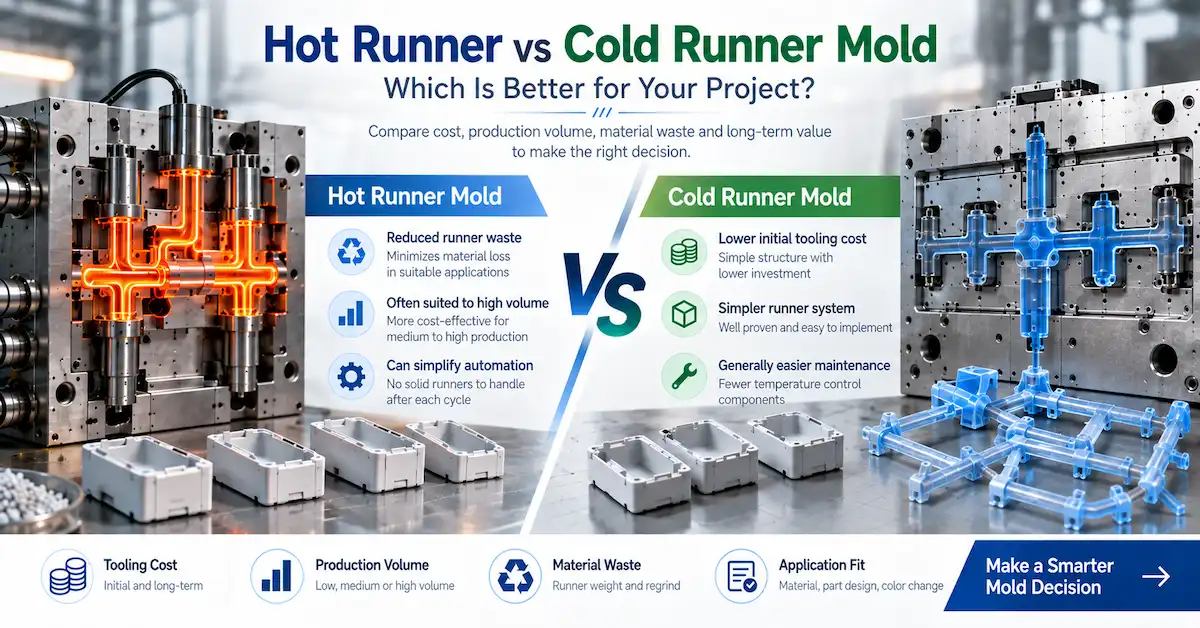
Hot Runner Mold
A hot runner keeps the resin molten inside the feed system.
It may be worth evaluating when:
- Production quantity is high
- Resin cost is significant
- Runner waste is substantial
- Multi-cavity production is planned
Multi-Cavity Mold
Multi-cavity tooling can produce several identical parts during one cycle.
However, increasing cavity count also increases the importance of:
- Runner balance
- Cooling
- Machine capacity
- Cavity-to-cavity consistency
The best mold is not always the most complex one.
It is the structure that gives the buyer the right production economics without unnecessary maintenance risk.
Factory + Mold Maker + Molder: Why Integration Matters
A common sourcing problem occurs when:
- Company A designs the mold.
- Company B machines the mold.
- Company C assembles the mold.
- Company D trials the mold.
- Company E produces the parts.
This arrangement can work.
But when a problem appears, responsibility can become unclear.
For example, dimensional instability might be caused by:
- Mold dimension
- Cooling
- Gate design
- Resin
- Packing
- Mold temperature
- Machine parameters
If tooling and molding teams do not coordinate, one party may blame the other.
For an engineering-intensive OEM project, working with a supplier that understands both injection mold manufacturing and injection molding production can reduce this handoff risk.
What Should Happen During T0, T1, and Mold Approval?
A mold trial should not be treated as a photo opportunity.
The purpose is to learn what the tool actually does under molding conditions.
T0: First Tool Trial
Typical checks include:
- Can the cavity fill?
- Is the mold opening correctly?
- Does the part eject?
- Is there flash?
- Are there short shots?
- Where do weld lines appear?
- Are sink or warpage visible?
T0 is usually a learning stage.
Expecting every new mold to produce a perfect approved part immediately is not a realistic sourcing standard.
Correction Stage
Based on trial findings, the team may adjust:
- Mold fitting
- Venting
- Gate
- Local steel
- Cooling
- Ejection
- Process parameters
Later Trial
The next samples should be compared against agreed requirements.
This is where disciplined documentation matters.
Instead of saying:
“Sample looks better.”
the team should record:
- Issue
- Cause
- Correction
- New result
- Remaining action
Define Critical Dimensions Before the Mold Trial
Not every dimension deserves the same attention.
The buyer should identify dimensions that affect:
- Assembly
- Sealing
- Alignment
- Connector position
- Fasteners
- Functional movement
This prevents inspection effort from being spread equally across critical and non-critical features.
For precision projects, the 2D drawing should clearly identify the agreed dimensional requirements.
Do not rely on the 3D CAD file alone.
How Should a China Injection Molding Factory Control Quality?
Quality should not begin when finished parts reach final inspection.
It should be built into the project earlier.
A practical quality path can include:
Incoming Material Confirmation
Confirm the production resin and relevant material requirements.
Mold Component Inspection
Critical tooling features may need checking during mold manufacturing.
Trial Sample Inspection
Measure agreed critical dimensions.
Assembly Testing
If the part fits another component, test the actual mating relationship where possible.
Production Monitoring
Once production begins, stable molding conditions matter.
Part quality can be influenced by:
- Resin condition
- Melt temperature
- Mold temperature
- Injection speed
- Packing
- Cooling
- Machine setup
A good production process therefore needs repeatability, not just one acceptable golden sample.
Ask What Happens When a Part Fails Inspection
This is a better supplier question than simply asking:
“Do you have QC?”
Ask:
- Who reviews the defect?
- Is the mold checked first?
- Are process parameters reviewed?
- Is material variation considered?
- How is the corrective action recorded?
- How are replacement parts handled?
You are testing the factory's problem-solving process, not whether it owns inspection equipment.
Mold Ownership Must Be Clear Before Payment
For custom tooling, mold ownership is a commercial issue that should be agreed before the project begins.
The purchase order or tooling agreement should clarify:
- Who owns the mold?
- Can the mold be transferred?
- Where will it be stored?
- Who performs maintenance?
- Who pays for damage caused by normal wear or misuse?
- Are drawings included?
- Are interchangeable inserts included?
- Are spare parts included?
Do not assume mold ownership because you paid a tooling fee.
Put it in writing.
Protecting Product Information and IP
OEM buyers often share:
- CAD files
- Product concepts
- Drawings
- Material specifications
- Assembly information
- Forecast quantities
Before sending commercially sensitive information, consider using an NDA or other appropriate contractual protection.
You should also understand:
- Who receives the drawings
- Whether tooling work is subcontracted
- How project files are stored
- Whether your mold can be used for another customer's production
For high-value projects, IP questions should be discussed during supplier qualification, not after the mold has been built.
What About Communication With a China Factory?
A technically capable factory can still become difficult to work with if project communication is weak.
During quotation, observe whether the supplier:
- Answers engineering questions directly
- Identifies missing information
- Explains assumptions
- Marks uncertain items clearly
- Provides drawings or DFM comments
- Keeps revision history
Poor communication during RFQ usually does not become better after the supplier receives the tooling deposit.
Good Communication Is Specific
Weak message:
“Mold is being processed.”
Better message:
“Core rough machining is complete. EDM is scheduled next.The current drawing revision is Rev. C, and T0 remains planned after assembly.”
Specific communication gives purchasing teams something they can manage.
Factory Lead Time: Ask for Milestones, Not One Date
Instead of asking only:
“How many days?”
request the project stages.
For example:
DFM approval → Mold design → Steel preparation → Machining → Assembly → T0 → Correction → Sample approval
The actual schedule depends on:
- Tool complexity
- Customer drawing approval
- Mold steel
- Purchased components
- Hot runner requirements
- Trial findings
- Engineering changes
A realistic schedule should therefore include assumptions.
Be cautious when a supplier promises an unusually aggressive date without reviewing the product.
Production in China vs Exporting the Mold
OEM buyers usually have two basic models.
Option 1: Build the Mold and Produce Parts in China
This may suit buyers who want:
- Finished components
- Production managed by the mold supplier
- Less internal molding infrastructure
The project then includes:
- Tooling
- Injection molding
- QC
- Packing
- Logistics
Option 2: Build the Mold in China and Export It
This may suit manufacturers that already operate injection molding machines in another country.
In this case, confirm:
- Mold dimensions
- Machine compatibility
- Locating ring
- Ejection
- Water fittings
- Electrical requirements
- Hot runner controller compatibility
- Spare components
- Documentation
An export mold should be designed for the machine that will actually run it.
Should You Visit the Factory?
For large tooling programs or strategic suppliers, an onsite visit can add useful information.
You can observe:
- Mold shop organization
- Production flow
- Tool storage
- Trial molding
- Inspection
- Project management
But a visit does not replace technical evaluation.
A clean workshop alone does not prove:
- Good DFM
- Correct mold design
- Reliable cooling
- Stable molding
- Strong problem solving
Use the visit as one part of supplier qualification, not the entire qualification process.
What Information Should You Send for an Accurate RFQ?
A good RFQ reduces back-and-forth communication and improves quotation comparability.
Prepare:
| RFQ Information | Why It Matters |
|---|---|
| 3D CAD / STEP | Defines product geometry |
| 2D drawing | Defines critical tolerances |
| Resin grade | Affects shrinkage and process |
| Annual quantity | Helps determine mold strategy |
| Expected order quantity | Supports production pricing |
| Surface finish | Affects tooling |
| Cosmetic surfaces | Guides gate and ejection |
| Assembly requirement | Identifies critical dimensions |
| Color | Important for molding planning |
| Mold destination | China production or export tool |
| Packaging requirement | Affects finished-part quotation |
| Special testing | Defines quality scope |
If some information is not yet decided, say so.
A supplier should distinguish confirmed requirements from assumptions.
What Should You Ask Before Paying a Mold Deposit?
Use this checklist before selecting an injection molding factory in China:
- Who will manufacture the mold?
- Who will run the molding trials?
- What mold structure is being quoted?
- Which resin is assumed?
- What steel and cavity count are proposed?
- Which dimensions are critical?
- How will samples be inspected?
- Who owns the mold?
- Can the mold be transferred?
- What happens after T0?
- What is included in modification?
- What documents are delivered?
- What happens if production parts drift from approved samples?
- Who handles packaging and shipment?
- Who is the engineering contact after the order?
These questions make supplier comparison much more useful than asking only for a lower price.
Common China Injection Molding Sourcing Red Flags
Be cautious when a supplier:
- Quotes before confirming resin
- Does not request a drawing
- Does not discuss critical dimensions
- Refuses to explain mold structure
- Cannot show a clear DFM process
- Promises perfect T0 samples
- Cannot explain who owns the mold
- Offers no trial or correction process
- Gives only one total price with no tooling assumptions
- Cannot explain whether manufacturing is internal or subcontracted
- Avoids questions about mold transfer
- Pressures for deposit before technical details are agreed
Not every one of these points proves a supplier is unsuitable.
But each one deserves another question.
Why the Cheapest China Injection Molding Quote Can Become Expensive
Consider the total project cost.
A low quote can lose its advantage if the buyer later pays for:
- Repeated mold modifications
- Unexpected tool components
- Excess scrap
- Long cycle times
- Manual degating
- Sorting
- Rework
- Mold transfer
- Replacement inserts
- Delayed production
This is why professional sourcing teams should compare:
Tooling Investment + Part Price + Quality Risk + Maintenance + Logistics + Communication Cost
rather than mold price alone.
How DongXin Fits an OEM Injection Molding Project
DongXin is positioned around custom plastic and silicone mold development and molded-part manufacturing for OEM/ODM projects.
For a plastic injection molding program, the relevant workflow can include:
Product Review → DFM → Mold Design → Tool Manufacturing → Trial → Sample Review → Production
You can review DongXin's:
For an RFQ, sending actual project information is much more useful than asking for a generic mold price.
FAQ About Injection Molding Factories in China
How do I find a reliable injection molding factory in China?
Start by checking whether the supplier can explain DFM, mold design, tooling manufacturing, trial molding, dimensional inspection, production control, mold ownership, and project communication. Request technical evidence instead of relying only on website claims.
Is injection molding in China cheaper?
It can be commercially competitive for some projects, but the correct comparison is total cost rather than the initial mold or part quote. Tooling quality, cycle time, scrap, maintenance, revisions, logistics, and production stability can all affect final cost.
Should I buy directly from a Chinese injection molding factory?
Direct factory sourcing can provide shorter technical communication and clearer tooling control. A trading company may still be useful when a buyer needs broader sourcing support. The key is knowing who actually designs the mold and manufactures the parts.
What files should I send to a China injection molding factory?
Send a 3D CAD file, 2D drawing, resin requirement, annual volume, surface finish, cosmetic requirements, critical dimensions, assembly information, mold destination, and expected production quantity where available.
Can a Chinese factory build the mold and also manufacture the plastic parts?
Yes, some suppliers provide both tooling and molding. DongXin supports custom injection mold manufacturing and plastic molding, allowing mold trials and production requirements to be managed within one project workflow.
Who owns an injection mold made in China?
Ownership depends on the commercial agreement. Do not assume that paying a tooling charge automatically defines ownership, transfer rights, storage, maintenance, or access to tooling drawings. These terms should be written into the purchase agreement.
How can I audit a Chinese injection molding factory remotely?
Request a video factory tour, tooling-process explanation, sample DFM, project workflow, trial reports, inspection examples, equipment information, and clarification of subcontracted processes. A structured remote audit can screen suppliers before an onsite visit.
How many mold trials should I expect?
There is no fixed number for every project. Trial count depends on product complexity, mold structure, material, customer changes, dimensional results, appearance requirements, and issues discovered during testing.
What is the difference between buying a mold in China and producing parts in China?
If you buy an export mold, it must be compatible with the injection molding machine at its destination. If the parts are produced in China, the supplier also manages molding parameters, QC, packing, and part shipment.
How do I compare injection molding quotations from China?
Normalize the assumptions first. Compare cavity count, mold structure, steel, runner system, resin, tolerances, trial scope, part price, packaging, tooling ownership, documentation, and production conditions before comparing total price.
Conclusion
Finding the right injection molding factory in China is less about finding the lowest quotation and more about reducing uncertainty before production begins.
The strongest sourcing process connects:
CAD → DFM → Tooling Specification → Mold Manufacturing → Trial → Dimensional Approval → Injection Molding → Quality Control → Delivery
Before placing an order, make sure you understand:
- Who actually manufactures the tool
- What mold architecture is being quoted
- Which resin and production assumptions are used
- How critical dimensions will be checked
- What happens after the first mold trial
- Who owns the mold
- How engineering changes are handled
- Whether the supplier can support long-term production
DongXin supports custom injection mold development and molded plastic part production for OEM projects.
If you are currently comparing China injection molding suppliers, contact DongXin with your 3D CAD, 2D drawing, resin grade, annual quantity, critical dimensions, surface requirements, and mold destination. That gives the engineering team enough information to review the project and prepare a more meaningful tooling and production proposal.