How Should OEM Buyers Evaluate a Mold Manufacturing Company?
Selecting a mold manufacturing company is not simply about finding a supplier that can machine steel.
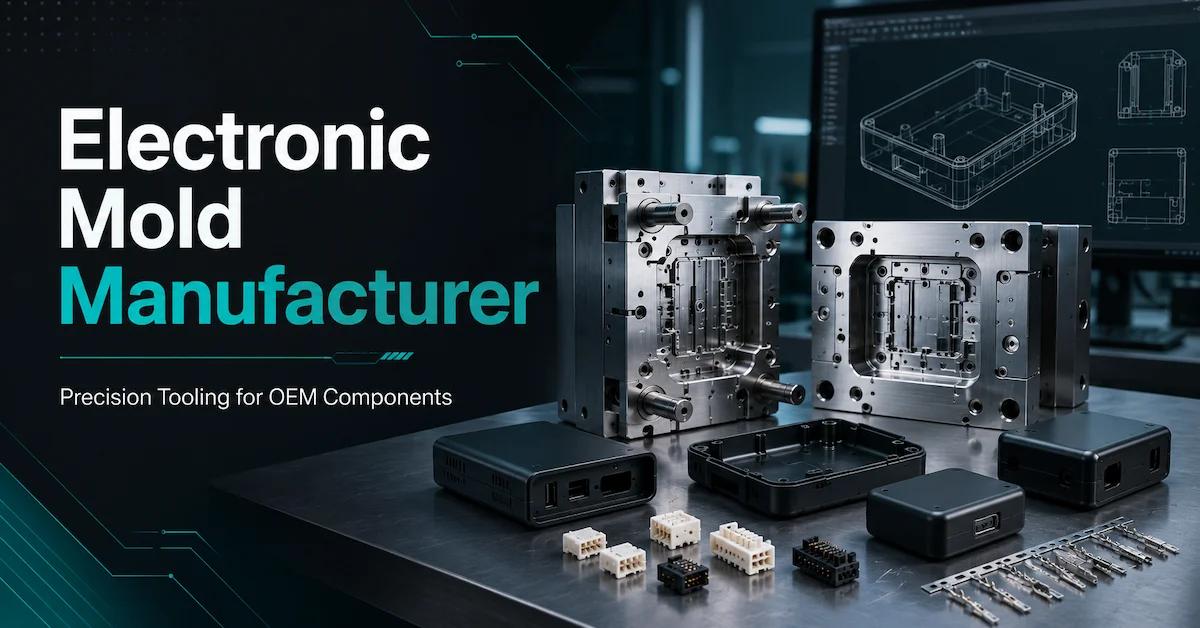
For OEM buyers, the right manufacturing partner must combine engineering knowledge, mold-design experience, precision machining, quality control, trial validation, and project communication to transform product requirements into reliable production tooling.
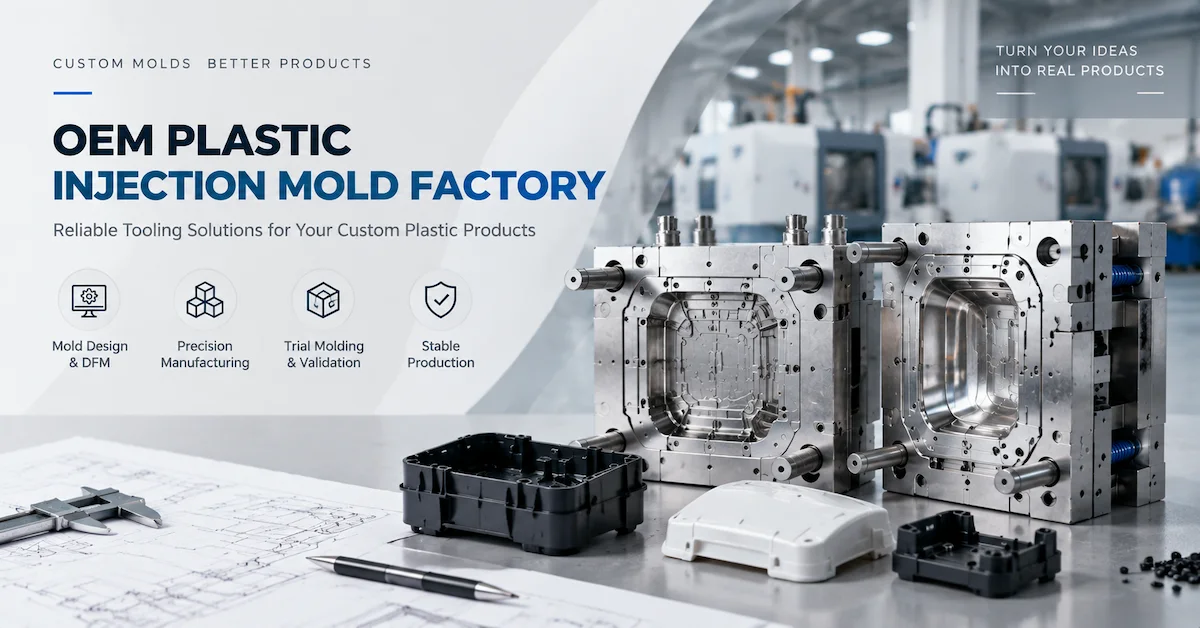
A capable mold manufacturing company should be able to support the complete tooling process:
- Product design review
- DFM analysis
- Mold structure development
- Tool steel selection
- CNC machining
- EDM processing
- Mold assembly
- Trial molding
- Inspection
- Mold optimization
- Production support
The most important question for buyers is not:
“Can this company make a mold?”
It is:
“Can this company control the complete process required to manufacture a mold that performs consistently in production?”
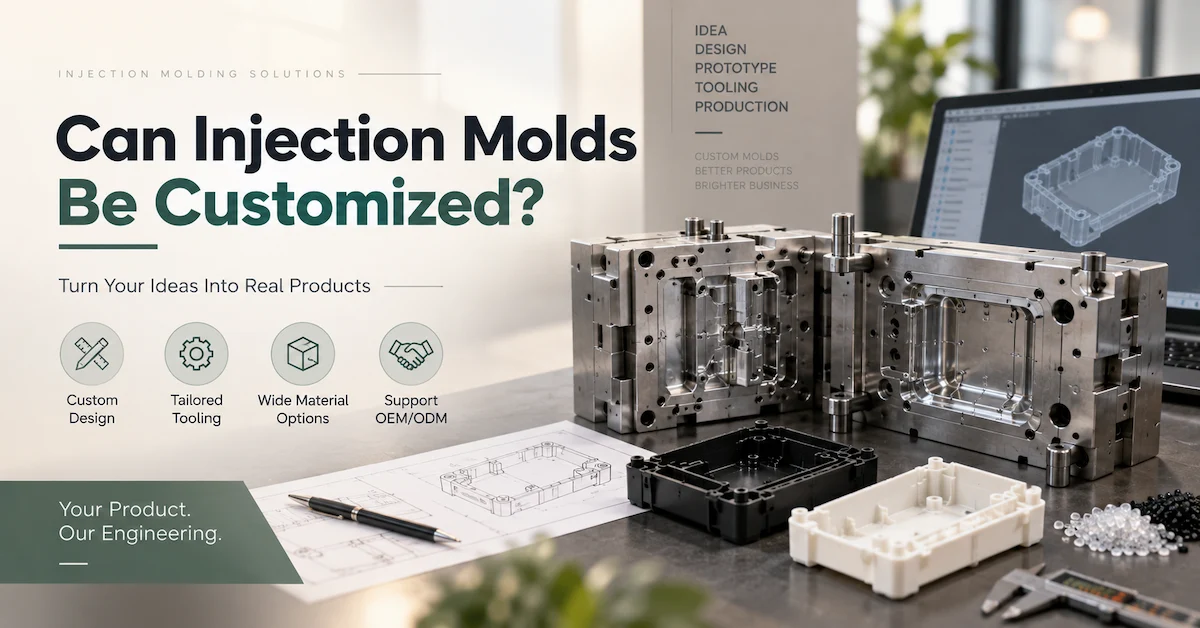
DongXin provides custom mold manufacturing services, supporting projects from engineering review and tooling development through trial molding and production support.
For OEM customers, this integrated approach helps reduce communication gaps between product design, mold development and manufacturing.
What Does a Mold Manufacturing Company Actually Do?
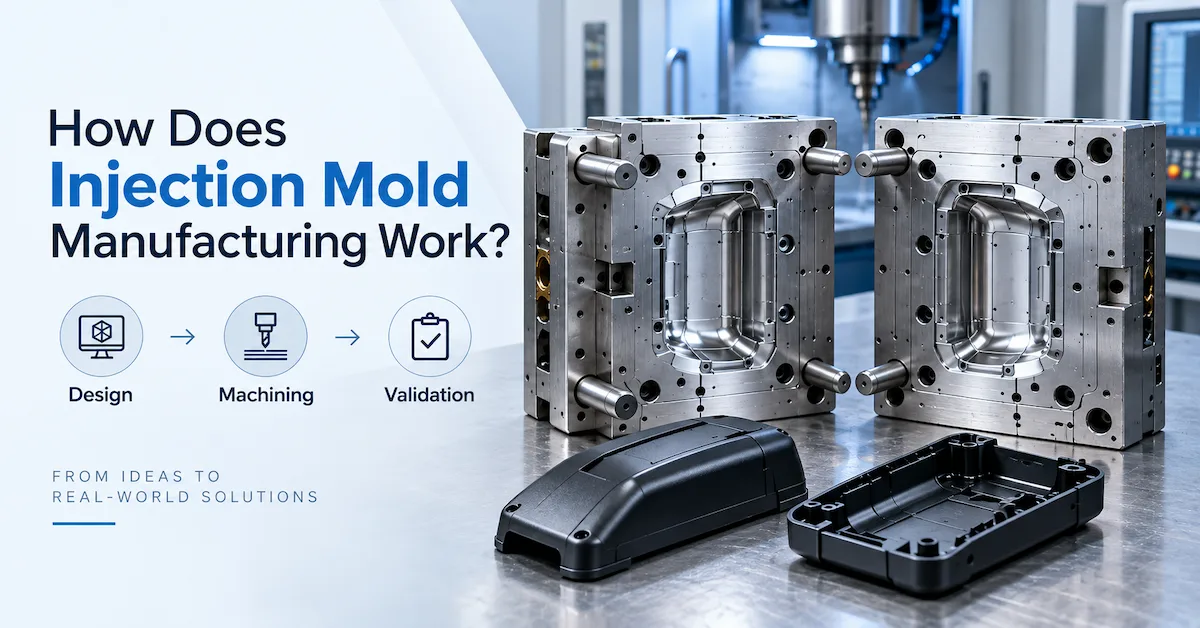
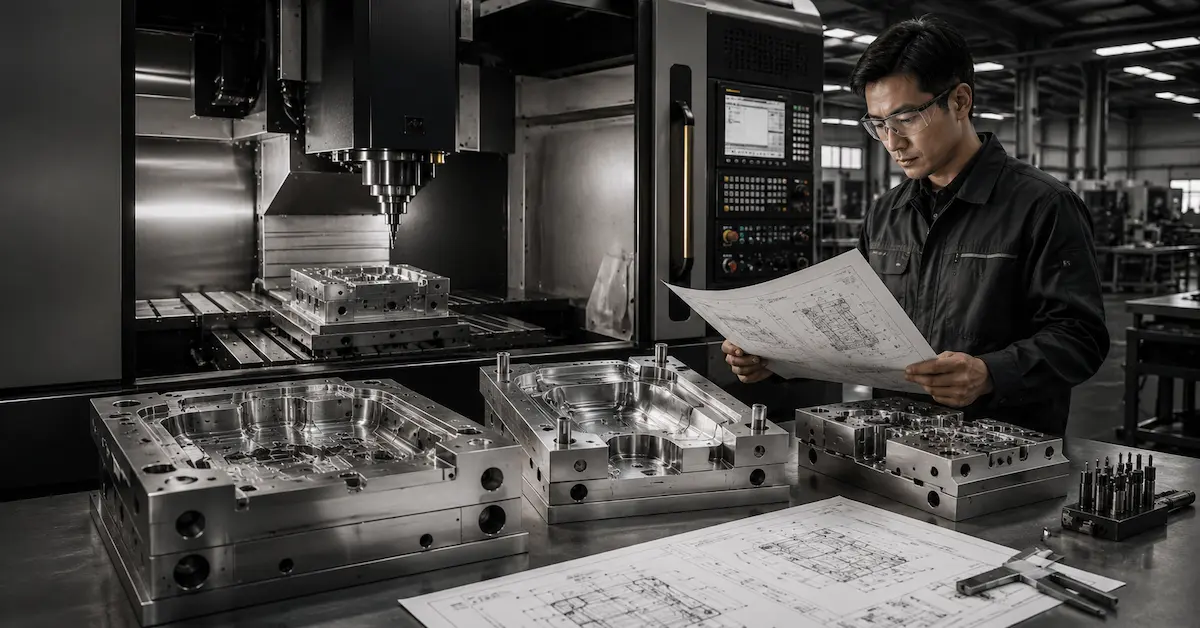
A professional mold manufacturing company manages multiple technical stages before a mold becomes production-ready.
The process usually includes:
| Manufacturing Stage | Main Purpose |
|---|---|
| Product review | Understand part requirements |
| DFM analysis | Identify manufacturing risks |
| Mold design | Define tooling structure |
| Material selection | Match steel and production needs |
| Machining | Create mold components |
| Assembly | Ensure mechanical accuracy |
| Trial molding | Validate tooling performance |
| Inspection | Confirm dimensional requirements |
| Modification | Optimize mold performance |
| Production support | Maintain long-term output |
Unlike a simple machining supplier, a mold manufacturing company must understand how individual components work together as a complete tooling system.
A mold includes many interconnected elements:
- Core and cavity
- Mold base
- Inserts
- Sliders
- Lifters
- Ejector systems
- Cooling channels
- Runner system
- Gate structure
- Venting design
Each decision can affect:
- Part quality
- Cycle time
- Tool life
- Maintenance requirements
- Production stability
Mold Manufacturing Company vs Mold Supplier: What Is the Difference?
The terms “mold supplier,” “mold manufacturer,” and “mold manufacturing company” are often used interchangeably, but buyers should understand the difference.
| Term | Main Focus |
| Mold supplier | Purchasing relationship and sourcing |
| Mold manufacturer | Technical ability to design and build molds |
| Mold manufacturing company | Complete manufacturing capability and process control |
| Injection molding factory | Production of finished plastic parts |
For buyers searching for a mold manufacturing company, the main concern is usually:
Does this company have the engineering and manufacturing capability to control tooling quality?
A supplier may coordinate a project.
A manufacturing company should be able to explain how the mold is actually designed, machined, assembled, tested and improved.
If your priority is supplier qualification and purchasing risk, see our guide on reliable injection mold suppliers.
1. Engineering Capability Is the Foundation of Mold Manufacturing
The quality of a mold is often determined before machining begins.
A strong mold manufacturing company should have engineers who understand:
- Product structure
- Plastic material behavior
- Injection molding requirements
- Manufacturing limitations
- Assembly conditions
- Cosmetic expectations
- Functional requirements
Before designing the mold, engineers should review:
- Wall thickness
- Draft angle
- Rib and boss design
- Undercuts
- Parting line
- Gate location
- Ejection method
- Cooling strategy
- Potential sink marks
- Warpage risks
DongXin's DFM support focuses on identifying manufacturing risks before tooling begins, including design optimization related to draft, thickness, undercuts, assembly interference, sink marks and warpage.
Why Engineering Matters Before Tooling
Many mold problems are not caused by machining mistakes.
They are caused by decisions made too early:
- Incorrect gate location
- Difficult part release
- Excessive tooling complexity
- Poor cooling layout
- Unnecessary tight tolerances
- Difficult maintenance structure
A reliable mold manufacturing company helps customers solve these issues before they become expensive tooling changes.
2. Mold Design Capability Determines Long-Term Tool Performance
A mold is not only a collection of machined metal parts.
It is a mechanical system designed to operate repeatedly under injection pressure, temperature changes and production cycles.
A professional mold design process should consider:
Mold Structure
Including:
- Two-plate or three-plate mold
- Insert design
- Slider structure
- Lifter structure
- Replaceable wear components
Filling System
Including:
- Gate location
- Runner design
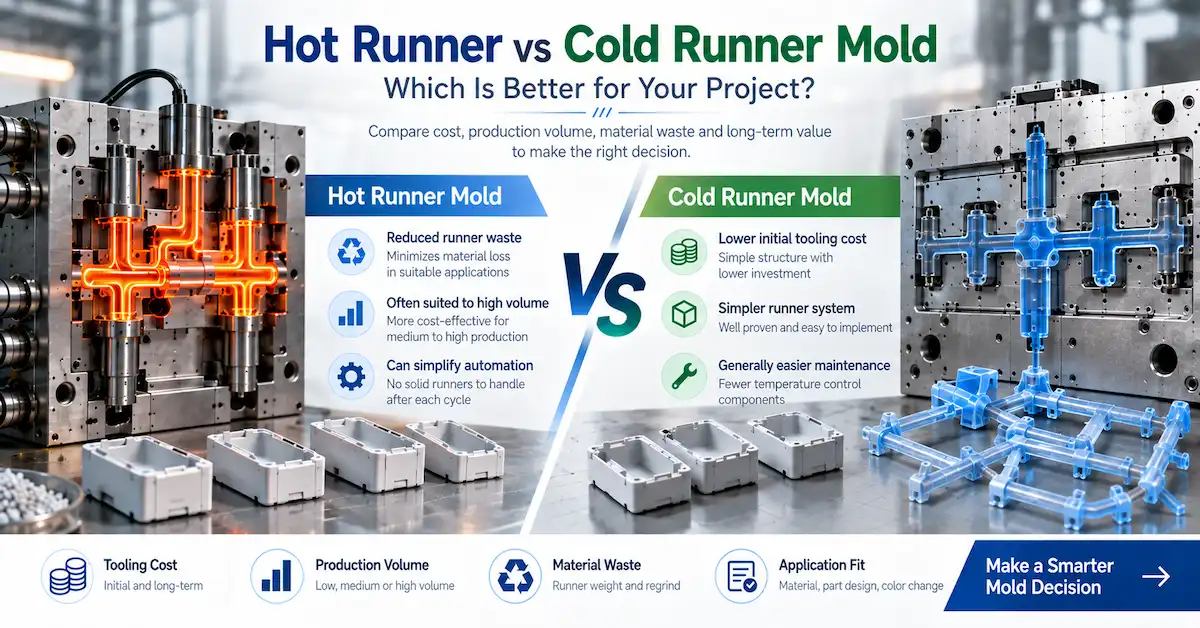
- Hot runner or cold runner selection
- Filling balance
Cooling System
Including:
- Cooling-channel layout
- Temperature balance
- Cycle-time requirements
Ejection System
Including:
- Ejector pins
- Sleeves
- Stripper plates
- Part-release reliability
For plastic injection mold manufacturing, these design decisions should be based on:
- Resin type
- Production quantity
- Part geometry
- Required lifespan
- Maintenance strategy
A mold manufacturing company that uses the same design approach for every project may not provide the optimization required for different applications.
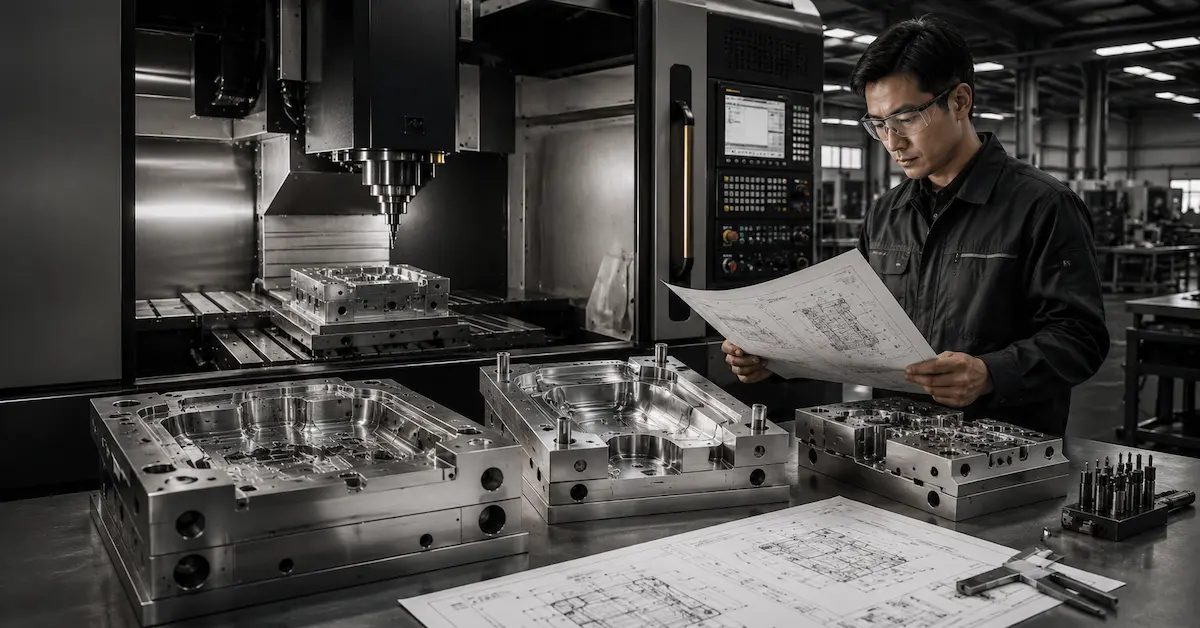
3. Precision Machining Capability Supports Mold Accuracy
After mold design approval, machining accuracy becomes critical.
A complete mold manufacturing process may involve:
- CNC machining
- EDM
- Wire EDM
- Grinding
- Polishing
- Drilling
- Surface finishing
CNC Machining
CNC machining is commonly used for:
- Mold plates
- Core components
- Cavity components
- Inserts
- Structural parts
EDM Processing
EDM is important for complex mold features that are difficult to create through conventional machining.
Examples include:
- Deep narrow areas
- Fine details
- Sharp internal corners
- Complex cavity features
However, equipment alone does not determine quality.
Buyers should also evaluate:
- Process control
- Tool calibration
- Operator experience
- Inspection frequency
- Drawing revision control
A machine list shows available resources.
A controlled manufacturing process shows capability.
4. Quality Control Shows Whether a Mold Manufacturing Company Can Deliver Consistency
A mold manufacturing company should not define quality only by the final appearance of the mold.
For OEM projects, quality control should cover the entire manufacturing process:
Material → Machining → Assembly → Trial → Inspection → Approval
A reliable quality system should verify whether every important stage meets the agreed requirements.
Key Quality Control Stages
| Quality Stage | What Should Be Checked |
|---|---|
| Material inspection | Mold steel grade and incoming components |
| Machining inspection | Critical dimensions and geometry |
| Assembly inspection | Mold fitting and movement |
| Trial inspection | Mold performance and molded samples |
| Final inspection | Approved dimensions and appearance |
| Documentation | Records and revision history |
A professional mold manufacturing company should be able to explain:
- What is inspected?
- When is it inspected?
- Who approves the result?
- What happens if a problem is found?
This is more valuable than a simple statement such as:
“We have strict quality control.”
DongXin's quality process includes incoming material inspection, mold inspection, first article validation, in-process quality control, final inspection and documentation support. (dxmolding.com)
Quality Documents OEM Buyers May Request
Depending on project requirements, buyers may request:
- Mold inspection records
- Dimensional reports
- First Article Inspection
- Trial reports
- Material information
- Modification records
- Final approval documents
For quality-management systems, ISO 9001 provides an internationally recognized framework for quality management systems, including controlled processes, monitoring and continual improvement.
However, certification alone should not replace supplier evaluation.
Buyers should verify how quality requirements are actually implemented during real projects.
5. Trial Molding Capability Determines Whether the Mold Is Production Ready
A mold manufacturing company does not complete a project when the mold leaves machining.
The real validation begins during mold trials.
Trial molding helps identify whether the tooling can produce parts that meet the customer's requirements.
Typical trial evaluation includes:
- Filling performance
- Short shots
- Flash
- Sink marks
- Weld lines
- Air traps
- Ejection performance
- Gate condition
- Warpage
- Appearance
- Critical dimensions
- Assembly fit
A Reliable Trial Process Should Include
A professional trial process normally records:
| Trial Information | Purpose |
| Mold revision | Confirm correct tooling version |
| Material used | Verify molding condition |
| Machine parameters | Understand process conditions |
| Defect analysis | Identify problems |
| Modification plan | Define corrective actions |
| Next trial target | Confirm improvement direction |
DongXin's support process includes T0/T1/T2 trial stages, dimensional inspection, appearance review, modification planning and molding parameter records for tooling validation. (dxmolding.com)
Why Trial Experience Matters
Two companies may both manufacture molds.
But the more experienced mold manufacturing company usually understands how to:
- Identify the real cause of defects
- Separate mold issues from molding issues
- Adjust tooling efficiently
- Avoid unnecessary modifications
- Prepare the mold for stable production
A good trial is not simply producing samples.
It is a structured engineering process.
6. Mold Material Selection Reflects Manufacturing Experience
Mold steel selection should match the actual production requirement.
A professional mold manufacturing company should consider:
- Expected production volume
- Plastic resin
- Abrasiveness of additives
- Corrosion risk
- Surface finish
- Dimensional stability
- Maintenance requirements
Common tooling materials may include:
- P20
- 718H
- NAK80
- S136
- H13
However, there is no universal “best” mold steel.
The correct choice depends on the application.
For example:
A cosmetic consumer product may prioritize:
- Surface quality
- Polishing performance
- Appearance
A high-volume engineering component may prioritize:
- Wear resistance
- Stability
- Maintenance life
The supplier should explain:
Why is this material suitable for this specific mold?
Not simply:
This is our standard material.
7. Check Whether the Company Controls Mold Assembly and Fitting
Precision machining creates individual components.
Mold assembly turns those components into a working production tool.
During assembly, technicians need to verify:
- Core and cavity matching
- Insert fitting
- Slider movement
- Lifter operation
- Ejector system
- Shut-off surfaces
- Parting surfaces
- Cooling connections
A mold can contain accurately machined parts and still fail if the assembly relationship is incorrect.
Questions to Ask During Supplier Evaluation
Ask:
- Who performs final mold fitting?
- How are moving components tested?
- Are wear areas replaceable?
- How are shut-off surfaces checked?
- Are assembly adjustments recorded?
Toolmaking experience is especially important for:
- Complex sliders
- Multi-cavity molds
- Tight-tolerance parts
- Cosmetic products
- Functional assemblies
8. Project Management Is a Hidden Factor in Mold Manufacturing Success
Many tooling delays are not caused by machining capability.
They happen because communication and project control are weak.
A professional mold manufacturing company should manage:
- Technical questions
- Drawing revisions
- Approval points
- Schedule updates
- Trial feedback
- Modification decisions
- Customer communication
A Good Project Management Process Includes
| Project Element | Expected Control |
| Drawing revision | Latest approved version |
| Technical questions | Clear responsibility |
| Milestones | Defined timeline |
| Changes | Documented impact |
| Trials | Recorded results |
| Approval | Clear acceptance criteria |
For international OEM projects, communication quality directly affects:
- Development speed
- Launch timing
- Cost control
- Risk management
A factory with excellent machining but poor communication can still create unnecessary project risk.
9. Evaluate the Factory's Long-Term Support Capability
A mold is a long-term manufacturing asset.
After approval, buyers may still need:
- Mold maintenance
- Spare parts
- Insert replacement
- Repair
- Mold modification
- Product updates
- Production transfer support
A reliable mold manufacturing company should understand the complete mold lifecycle.
Important Questions Before Cooperation
Ask:
- How are molds stored?
- Are maintenance records available?
- Can spare parts be produced later?
- Are mold drawings maintained?
- Can design changes be supported?
- Can the mold be transferred if required?
For OEM customers, the relationship often continues beyond the first tooling order.
The best supplier is not only capable of making the mold.
It can support the mold throughout its working life.
10. How to Audit a Mold Manufacturing Company Before Cooperation
Before placing a tooling order, OEM buyers can perform a structured supplier review.
Engineering Audit
Check:
- Engineering team
- DFM process
- Mold design capability
- Technical communication
Manufacturing Audit
Check:
- CNC machining
- EDM capability
- Assembly area
- Inspection equipment
- Trial capability
Quality Audit
Check:
- Inspection process
- Documentation
- Non-conformance handling
- Final approval process
Management Audit
Check:
- Project tracking
- Revision control
- Communication process
- Delivery management
A supplier audit should focus on process evidence, not only factory appearance.
Mold Manufacturing Company Evaluation Checklist
| Evaluation Area | Key Question |
| Engineering | Can they identify risks before tooling? |
| Design | Is mold structure reviewed professionally? |
| Machining | Are critical processes controlled? |
| Assembly | Do technicians have fitting experience? |
| Trial | Are results measured and improved? |
| Quality | Are inspections documented? |
| Communication | Are issues managed transparently? |
| Support | Can they maintain the mold later? |
This checklist helps buyers compare suppliers based on capability rather than marketing claims.
When Should OEM Buyers Choose an Integrated Mold Manufacturing Company?
Some companies only need a tooling partner.
Others need:
Product Design → DFM → Mold Manufacturing → Trial → Injection Molding → Inspection → Delivery
An integrated partner may reduce communication gaps because the same engineering team understands both tooling and production.
DongXin supports projects involving plastic injection molds, plastic molding and OEM/ODM manufacturing programs.
This approach can be valuable when:
- The buyer does not own molding equipment
- Product development is still changing
- Tooling and production optimization need close coordination
- One supplier should manage quality responsibility
However, buyers who already have production facilities may prefer purchasing only export molds.
The correct choice depends on the project structure.
What Should Buyers Prepare Before Contacting a Mold Manufacturing Company?
Providing complete information helps suppliers evaluate the project accurately.
Recommended RFQ information includes:
- 3D CAD files
- 2D drawings
- Plastic material
- Expected quantity
- Product application
- Surface requirements
- Color requirements
- Critical dimensions
- Assembly requirements
- Production schedule
- Quality requirements
DongXin's project review process requests product drawings, samples, specifications or early concepts before engineering evaluation and tooling planning. (dxmolding.com)
The more complete the project information, the more accurate the tooling proposal will be.
FAQ About Choosing a Mold Manufacturing Company
What does a mold manufacturing company do?
A mold manufacturing company designs and produces tooling used for plastic part production. Its responsibilities may include DFM, mold design, machining, assembly, trial molding, inspection and tooling support.
How do I choose a reliable mold manufacturing company?
Evaluate engineering capability, mold-design experience, machining control, quality systems, trial process, communication, project management and after-sales support.
What is the difference between a mold manufacturer and a mold manufacturing company?
A mold manufacturer focuses on making molds, while a mold manufacturing company usually emphasizes broader manufacturing capability, process control and long-term project support.
Should I choose the cheapest mold manufacturing company?
Not necessarily. Lower tooling prices may represent different steel grades, fewer trials, simpler structures, reduced inspection or different project scope.
What questions should I ask before ordering a mold?
Ask about DFM, tooling structure, steel selection, trial process, inspection methods, modification responsibility, ownership and future maintenance.
How long does mold manufacturing usually take?
Lead time depends on mold complexity, material availability, design approval speed, machining requirements and trial results. A reliable supplier should provide a project schedule rather than only a final delivery date.
Why is DFM important when selecting a mold manufacturing company?
DFM identifies manufacturing risks before tooling begins, helping prevent expensive changes related to geometry, filling, ejection, cooling and assembly.
Should a mold manufacturing company also provide injection molding?
It depends on the project. Some buyers only need tooling, while others prefer an integrated partner that can support both mold production and plastic part manufacturing.
Conclusion
Choosing the right mold manufacturing company is about more than finding a company that can machine a mold.
For OEM buyers, the ideal partner should demonstrate:
- Strong engineering capability
- Professional mold design
- Controlled machining processes
- Experienced assembly teams
- Reliable trial validation
- Documented quality control
- Clear project communication
- Long-term tooling support
The best mold manufacturing company is the one that can connect product requirements with manufacturing reality.
Before starting a tooling project, buyers should evaluate not only:
“Can this company make my mold?”
but also:
“Can this company help me achieve stable production with predictable quality and controlled risk?”
DongXin provides custom mold manufacturing, plastic injection molding and OEM/ODM project support from engineering review to production assistance.
If you are developing a new plastic tooling project, you can contact DongXin to discuss drawings, materials, production requirements and manufacturing solutions.