What Is a Multi Cavity Mold?
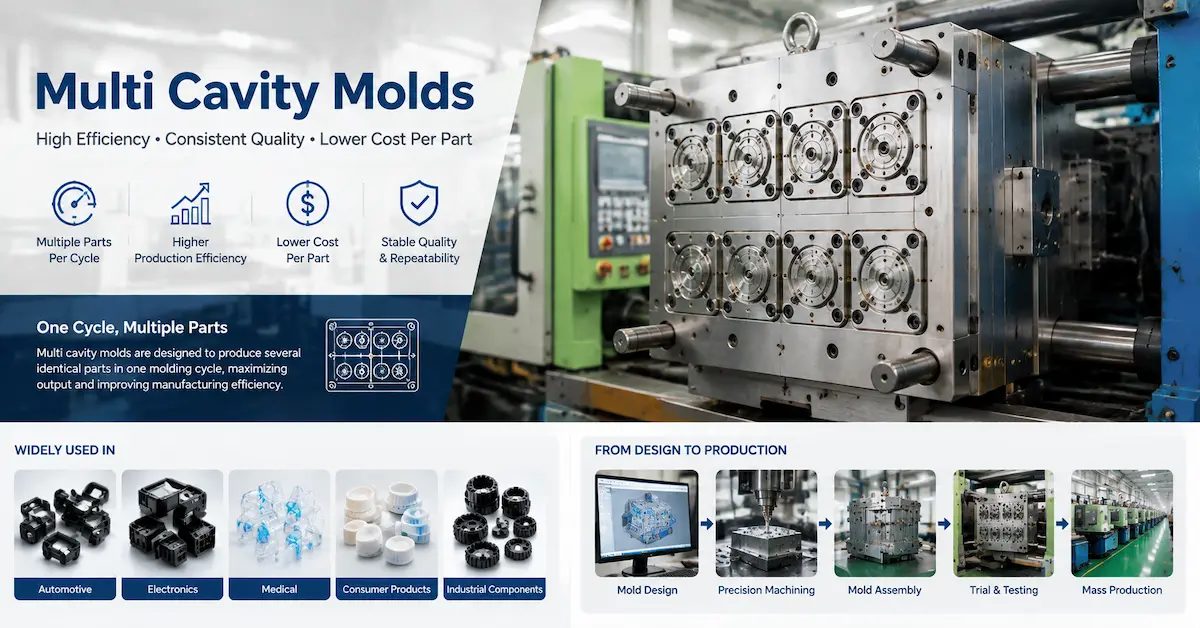
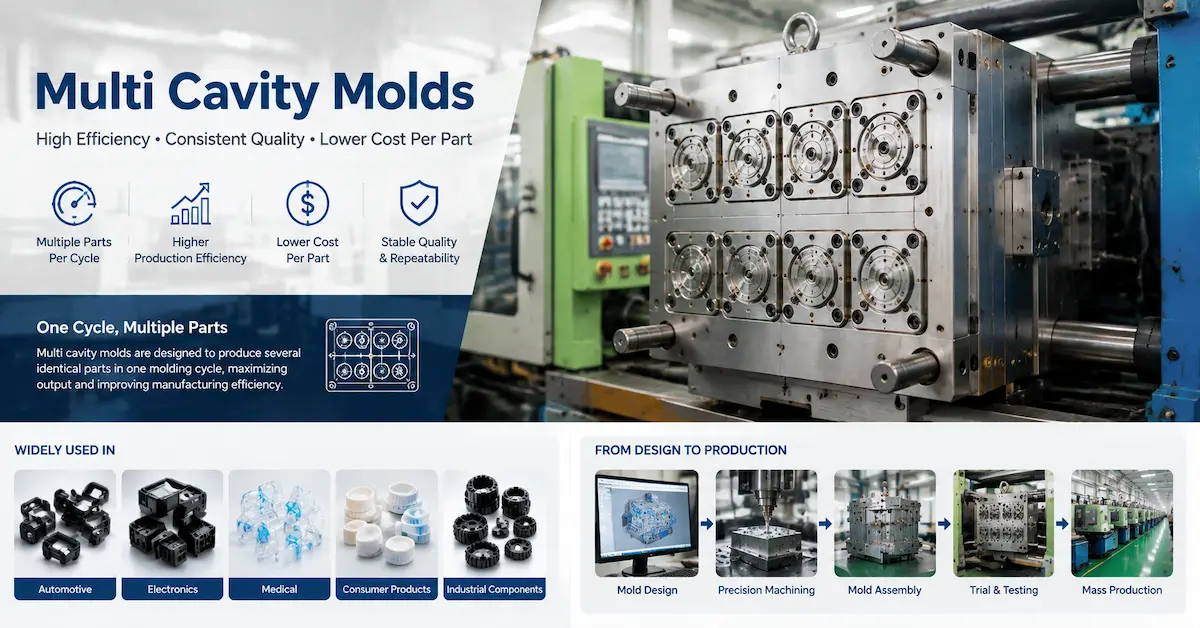
A multi cavity mold is an injection mold designed with multiple cavities that produce several identical plastic parts during one molding cycle.
Unlike a single cavity mold that produces only one part per cycle, a multi cavity mold allows manufacturers to manufacture multiple components simultaneously, improving production efficiency and reducing the cost per part.
A professional multi cavity mold manufacturer focuses on optimizing:
- Cavity layout
- Mold balance
- Cooling performance
- Material flow
- Ejection system
- Dimensional consistency
For OEM companies producing large quantities of identical plastic parts, multi cavity tooling is often an effective solution for improving productivity and maintaining stable quality.
DXMolding provides customized plastic injection mold solutions for customers requiring reliable tooling development and production support.
How Does a Multi Cavity Mold Work?
A multi cavity mold contains multiple identical cavity sections inside one mold structure.
During injection molding:
- Plastic resin is heated and melted.
- Molten material enters the mold through the runner system.
- The material flows into multiple cavities.
- The parts cool and solidify.
- The ejection system removes multiple finished parts simultaneously.
The main challenge is not simply adding more cavities.
A successful multi cavity mold requires balanced filling so that every cavity receives similar:
- Pressure
- Temperature
- Material flow
- Cooling conditions
Poor cavity balance can cause:
- Different part dimensions
- Uneven filling
- Quality variation
- Increased rejection rates
This is why multi cavity mold design requires experienced engineering knowledge.
Single Cavity Mold vs Multi Cavity Mold
Choosing between single cavity and multi cavity tooling depends on production volume, part complexity, investment budget, and quality requirements.
| Factor | Single Cavity Mold | Multi Cavity Mold |
|---|---|---|
| Parts per cycle | One part | Multiple identical parts |
| Initial tooling cost | Lower | Higher |
| Production efficiency | Lower | Higher |
| Cost per part | Higher at large volumes | Lower at high volumes |
| Mold complexity | Simpler | More complex |
| Suitable production | Prototype and low volume | Medium and high volume production |
For low-volume projects, a single cavity mold may provide flexibility.
For millions of repeated components, a multi cavity mold can significantly improve manufacturing efficiency.
Advantages of Multi Cavity Injection Molds
Higher Production Efficiency
The biggest advantage of multi cavity tooling is producing more parts in each molding cycle.
For example:
A 1-cavity mold produces:
1 cycle = 1 part
A 16-cavity mold produces:
1 cycle = 16 identical parts
This allows manufacturers to increase output without proportionally increasing machine running time.
Lower Cost Per Part
Although multi cavity molds require higher initial investment, they can reduce long-term production costs.
Cost advantages include:
- Reduced machine operating cost per part
- Lower labor cost
- Higher production output
- Improved manufacturing efficiency
For high-volume OEM projects, the total cost advantage can become significant.
Consistent Part Quality
A properly designed multi cavity mold can produce identical parts with stable:
- Dimensions
- Surface finish
- Assembly performance
This is especially important for industries where thousands or millions of identical components are required.
Better Production Scalability
Multi cavity tooling allows companies to prepare for future production growth.
Instead of adding more molding machines later, manufacturers can increase output through optimized tooling.
Multi Cavity Mold Design Considerations
Creating a reliable multi cavity mold requires careful engineering decisions.
Cavity Layout Design
Cavity arrangement directly affects:
- Material flow
- Mold balance
- Cooling performance
- Mold size
Common layouts include:
- Symmetrical layouts
- Circular layouts
- Balanced runner arrangements
The goal is ensuring each cavity receives equal filling conditions.
Runner System Design
The runner system distributes molten plastic from the injection point to each cavity.
A poor runner design may create:
- Uneven filling
- Different packing pressure
- Longer cycle time
- Part variation
Professional mold engineers evaluate:
- Runner size
- Runner length
- Gate location
- Pressure balance
For high-volume tooling, hot runner systems may also be considered depending on:
- Material
- Part geometry
- Production volume
- Cost requirements
Cooling System Optimization
Cooling is one of the most important factors in multi cavity mold performance.
Multiple cavities require balanced heat removal.
An optimized cooling system helps control:
- Cycle time
- Shrinkage
- Warpage
- Dimensional stability
Important considerations include:
- Cooling channel location
- Water flow balance
- Mold temperature control
- Hot spot prevention
Mold Material Selection
Multi cavity molds usually experience higher production cycles than standard tooling.
Therefore, mold steel selection should consider:
- Expected production volume
- Wear resistance
- Corrosion resistance
- Surface requirements
Common materials include:
P20 Steel
Suitable for:
- Medium-volume production
- General plastic components
718H Steel
Suitable for:
- Better polishing requirements
- Higher-quality plastic parts
S136 Steel
Suitable for:
- Long-life molds
- High surface requirements
The correct material depends on the actual application rather than choosing the most expensive option.
Types of Multi Cavity Injection Molds
Two Plate Multi Cavity Mold
A two plate structure is one of the most common mold designs.
Advantages:
- Simple structure
- Easier maintenance
- Lower tooling complexity
Suitable for:
- General plastic parts
- Consumer components
- Industrial products
Three Plate Multi Cavity Mold
Three plate molds provide additional flexibility for gate placement.
Advantages:
- Automatic gate separation
- Better injection positioning
- Suitable for complex parts
Common applications:
- Precision components
- Appearance-sensitive products
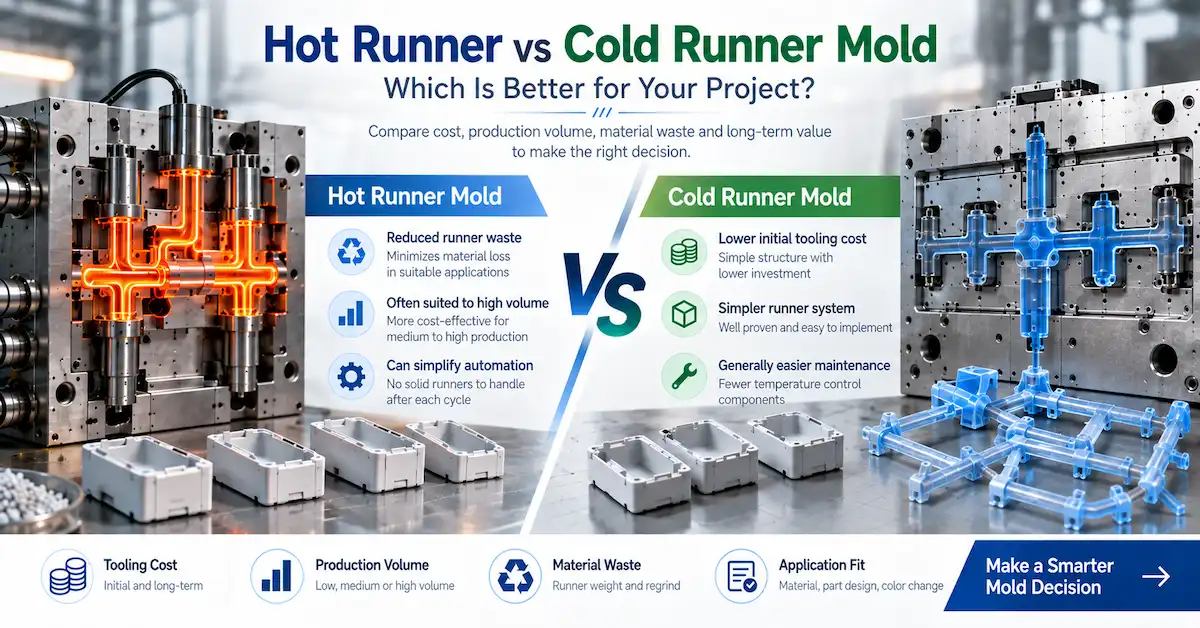
Hot Runner Multi Cavity Mold
Hot runner systems keep plastic material heated inside the runner system.
Benefits:
- Reduced material waste
- Faster production cycles
- Better automation compatibility
However, hot runner tooling requires:
- More engineering
- Higher maintenance requirements
- More complex temperature control
Applications of Multi Cavity Molds
Multi cavity molds are widely used in industries requiring large quantities of identical plastic components.
Automotive Components
Applications include:
- Interior clips
- Plastic brackets
- Sensor housings
- Functional components
Automotive suppliers often require:
- High repeatability
- Stable dimensions
- Long production life
Electronics Industry
Applications include:
- Device housings
- Connector components
- Plastic covers
- Electrical components
Precision and consistency are critical because parts often need accurate assembly with other components.
Medical Products
Applications may include:
- Disposable medical components
- Plastic housings
- Laboratory products
Medical projects require careful consideration of:
- Material requirements
- Clean production environment
- Quality documentation
Consumer Products
Applications include:
- Household components
- Packaging parts
- Small plastic accessories
High-volume consumer products often benefit from multi cavity production efficiency.
Factors Affecting Multi Cavity Mold Cost
The cost of a multi cavity mold depends on several factors.
Number of Cavities
More cavities usually mean:
- More machining work
- Larger mold structure
- More complex balancing requirements
However, more cavities may reduce long-term part costs.
Part Complexity
Complex parts may require:
- Slides
- Lifters
- Inserts
- Advanced cooling
- Precision machining
Mold Material
Higher-grade steels generally increase tooling investment but may provide:
- Longer tool life
- Better wear resistance
- More stable production
Production Requirements
Factors include:
- Annual volume
- Required cycle time
- Automation level
- Quality requirements
The best tooling solution balances initial investment and long-term production value.
Common Challenges in Multi Cavity Mold Manufacturing
Uneven Cavity Filling
If cavities do not fill equally, parts may show:
- Different dimensions
- Surface defects
- Weight variation
Solution:
Optimize:
- Runner balance
- Gate design
- Injection parameters
Mold Deflection
Large multi cavity molds experience greater mechanical stress.
Proper mold structure design helps maintain:
- Alignment
- Precision
- Long-term durability
Maintenance Complexity
More cavities mean more components to inspect.
Maintenance planning should include:
- Cleaning
- Wear inspection
- Component replacement
- Preventive maintenance
How to Choose a Multi Cavity Mold Manufacturer?
Selecting the right supplier is critical for high-volume projects.
Engineering Capability
A capable manufacturer should provide:
- DFM analysis
- Mold flow evaluation
- Cavity layout optimization
- Tooling recommendations
Mold Manufacturing Capability
Evaluate:
- CNC machining
- EDM processing
- Precision assembly
- Mold testing
DXMolding provides custom tooling development with engineering support from mold design through production preparation.
Quality Control Process
A reliable supplier should have procedures for:
- Mold inspection
- Trial sample evaluation
- Dimensional verification
- Production validation
Production Support
The ideal partner should support:
- Mold modification
- Process optimization
- Long-term production
A multi cavity mold is not only a tooling product; it is a long-term manufacturing asset.
FAQ About Multi Cavity Mold Manufacturing
What is a multi cavity mold used for?
A multi cavity mold is used to produce multiple identical plastic parts in one injection molding cycle, making it suitable for medium and high-volume manufacturing.
Is a multi cavity mold better than a single cavity mold?
It depends on production requirements. Multi cavity molds are usually better for high-volume production because they reduce cost per part, while single cavity molds may be better for prototypes or low-volume projects.
Does a multi cavity mold cost more?
Yes. Multi cavity molds usually require higher initial investment because they involve more complex design, machining, and validation.
How many cavities can an injection mold have?
The number of cavities depends on part size, machine capability, production requirements, material behavior, and tooling design.
What industries use multi cavity molds?
Common industries include automotive, electronics, medical, consumer products, and industrial manufacturing.
How does cavity balance affect part quality?
Balanced cavity filling helps ensure consistent dimensions, weight, appearance, and performance across all molded parts.
Can multi cavity molds be used for precision components?
Yes. With proper mold design, machining, and process control, multi cavity molds can produce precision plastic components.
How do I select a multi cavity mold manufacturer?
Evaluate engineering capability, tooling experience, machining processes, quality control, and production support.
Conclusion
A multi cavity mold manufacturer helps OEM companies achieve efficient and scalable plastic production through optimized tooling design and reliable manufacturing processes.
The success of multi cavity molding depends on:
- Balanced cavity layout
- Proper runner design
- Effective cooling
- Suitable mold materials
- Precision machining
- Stable injection processes
- Quality validation
For companies producing large quantities of identical plastic parts, investing in the right multi cavity mold solution can improve productivity, reduce cost per part, and support long-term manufacturing growth.
DXMolding provides custom injection mold solutions, plastic molding services, and OEM manufacturing support for customers requiring reliable tooling and production capabilities.
Contact DXMolding to discuss your multi cavity mold project requirements and engineering needs.