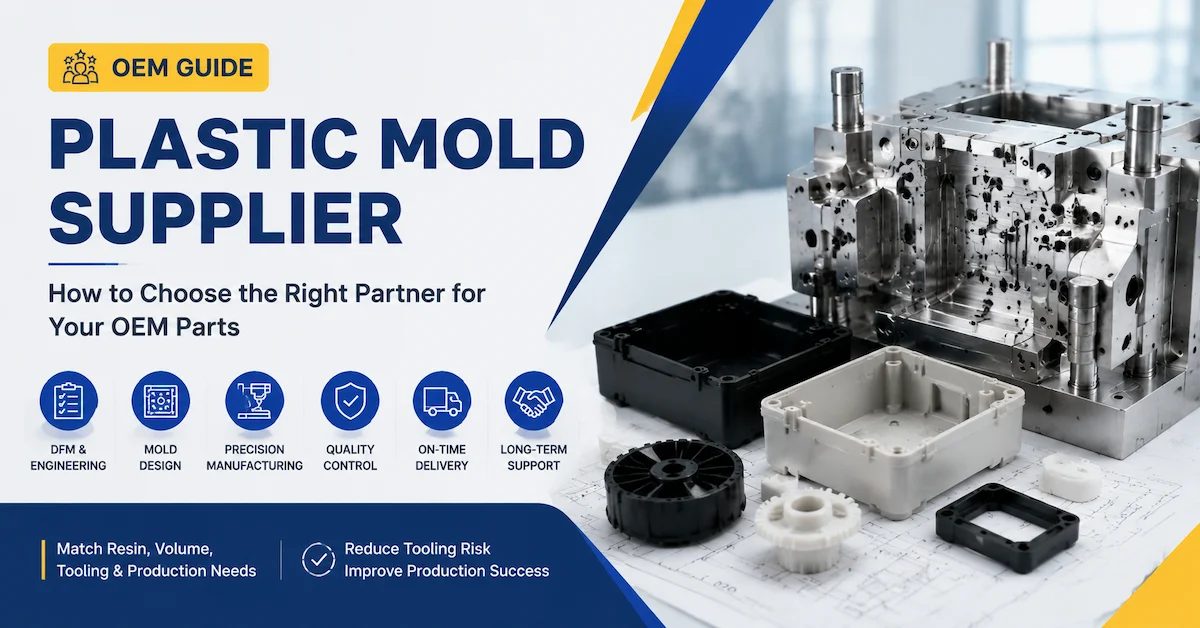
Choosing a Plastic Mold Supplier Starts With Your Part, Not the Supplier List
A reliable plastic mold supplier should be selected according to the actual molding program: the plastic resin, part geometry, annual volume, dimensional requirements, surface expectations, mold ownership model, and whether the buyer needs an export mold or complete molded-part production.
This is why two suppliers can both be competent but still be very different fits for the same OEM project.
A supplier experienced with simple consumer housings may not be the best match for a multi-slide engineering-plastic component. Likewise, a factory optimized for export tooling may offer a different project model from a supplier that manages the complete process from DFM and mold manufacturing through plastic molding and batch delivery.
For buyers, the practical objective is therefore not to find the “best plastic mold supplier” in general. It is to find the supplier whose engineering and production capabilities match the specific risks of the part being manufactured.
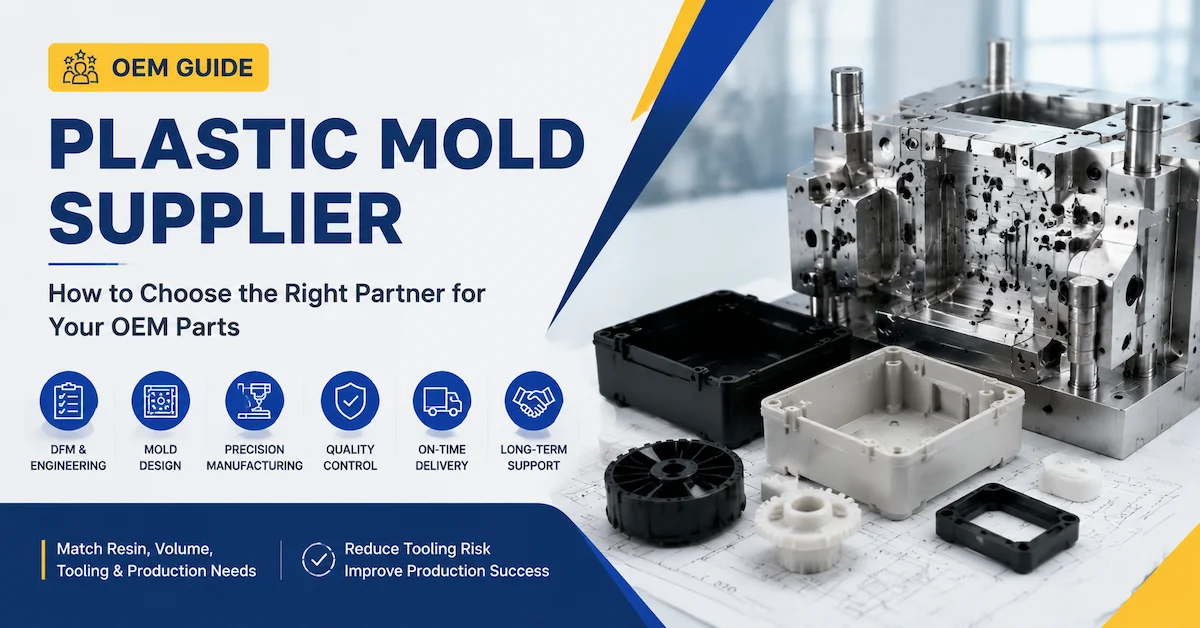
What Does a Plastic Mold Supplier Actually Supply?
The term “plastic mold supplier” can describe several different business models.
Some companies mainly manufacture the physical injection mold and ship it to the customer's molding facility. Others provide tooling plus mold trials. Integrated manufacturers may support the full route from engineering review to mold building, sample validation, injection molding, inspection and delivery.
A typical custom tooling project may involve:
- Product drawing review
- DFM analysis
- Plastic material review
- Mold structure design
- Core and cavity machining
- CNC and EDM processing
- Mold fitting and assembly
- Cooling and ejection design
- Trial molding
- Dimensional inspection
- Tool modification
- Sample approval
- Mass-production support
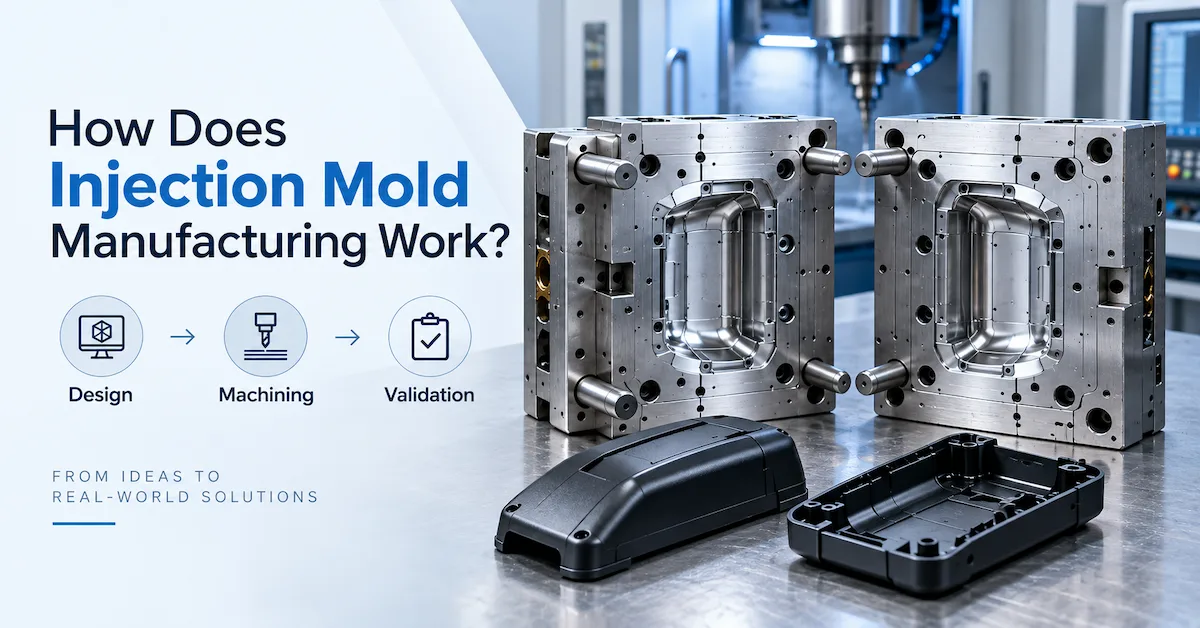
DongXin's current custom molding services cover product and file review, DFM, custom plastic molds, CNC/EDM machining, trial molding and subsequent production support.
Before requesting quotations, buyers should first decide which of these responsibilities belong to the supplier.
Match the Plastic Mold Supplier to the Resin You Will Use
Plastic material is not something that should be selected after the mold has already been designed.
The resin affects mold shrinkage, filling behavior, processing conditions, gate decisions, surface requirements and, in some applications, the tooling material and wear strategy.
DongXin's engineering-support information currently lists materials such as ABS, PC, PP and PA66 among the plastics considered during application and material review.
ABS and General Consumer Parts
ABS is frequently considered for enclosures, housings and consumer-product structures where appearance, processability and dimensional requirements must be balanced.
A plastic mold supplier working with cosmetic ABS parts should understand:
- Gate-mark positioning
- Weld-line location
- Surface texture
- Sink around ribs and bosses
- Parting-line visibility
- Ejection marks
- Assembly fit
The supplier should not evaluate only whether the cavity can be filled. It should also consider what the customer will actually see and measure on the finished product.
PP and Flexible or Chemical-Exposure Applications
PP projects may have different shrinkage and dimensional behavior from ABS or PC projects.
For products using living-hinge structures, thin flexible sections or large molded geometries, the mold and part design should be reviewed together rather than treating resin selection as a purchasing detail.
PC and Engineering Requirements
For parts using PC or other engineering plastics, buyers may care more about:
- Dimensional stability
- Appearance
- Functional strength
- Processing window
- Internal stress
- Mold temperature control
- Gate strategy
The exact requirement depends on the resin grade and application, so a responsible supplier should work from the customer's actual material specification rather than assuming that all materials within a resin family behave identically.
Filled Engineering Plastics
Glass-filled or otherwise reinforced materials can introduce additional considerations such as wear, fiber orientation, shrinkage behavior and warpage.
This is one reason buyers should tell the supplier the exact intended resin or at least the resin family before the mold specification is finalized.
Part Geometry Should Drive DFM Before Steel Is Cut
The next question is whether the supplier evaluates the plastic part as an engineered component rather than simply importing a STEP file into mold-design software.
A useful DFM review can examine:
- Draft angle
- Wall thickness
- Rib design
- Boss geometry
- Fillets
- Undercuts
- Side actions
- Parting lines
- Gate position
- Ejection
- Sink-mark risk
- Weld lines
- Warpage
- Assembly interference
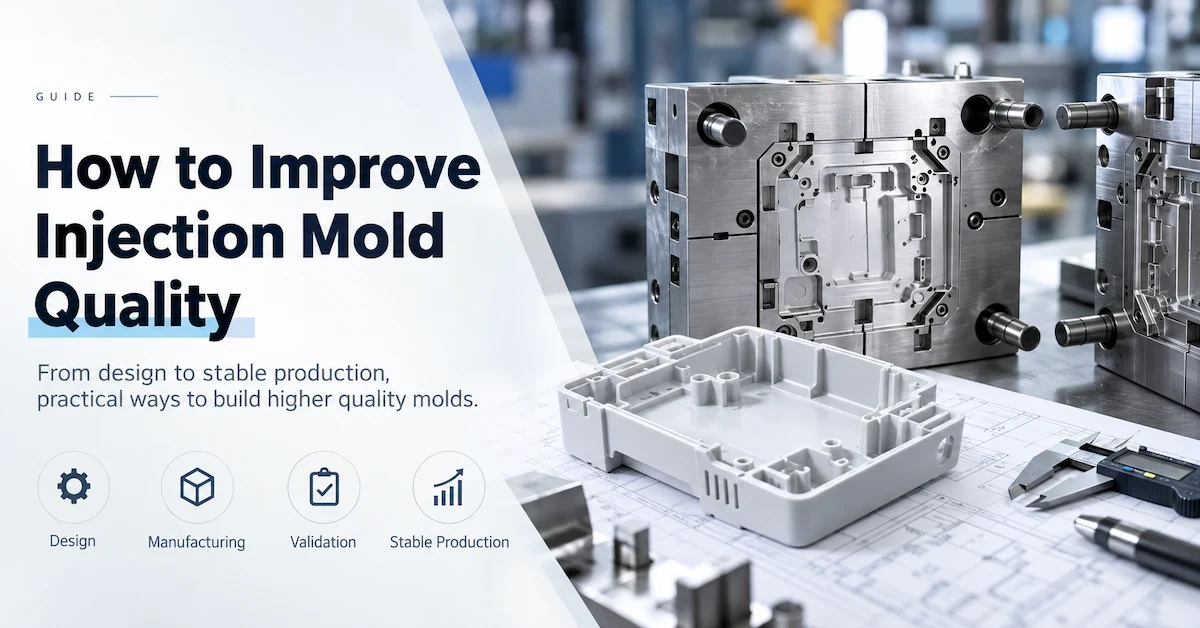
DongXin's DFM and production support currently includes review of draft angles, wall thickness, undercuts, side-core structures, assembly interference, sink marks and warpage risks before tooling progresses.
Why DFM Matters to the Buyer
The purpose of DFM is not to create another report for the project folder.
It is to answer questions such as:
- Can the part release from the mold?
- Where will the parting line appear?
- Can the gate be placed away from a cosmetic surface?
- Will a thick boss create sink on the opposite wall?
- Does an undercut require a slider or lifter?
- Is the geometry unnecessarily increasing mold complexity?
- Are some tolerances tighter than the function requires?
Finding these issues before machining usually gives the buyer more options than discovering them during T1 sampling.
Match Mold Architecture to Production Volume
One of the most common sourcing mistakes is treating every plastic mold as if it should use the same tooling strategy.
The appropriate structure should depend partly on the required output.
| Production Requirement | Typical Tooling Priority | Buyer Focus |
|---|---|---|
| Prototype / validation | Speed and design verification | Fast changes, basic functionality |
| Low-volume production | Controlled tooling investment | Flexibility and repeatability |
| Medium-volume OEM | Balance of tooling and cycle efficiency | Stability, maintenance, QC |
| Higher-volume production | Durability and production efficiency | Cavities, cooling, cycle, maintenance |
This table is intentionally qualitative rather than assigning universal shot-life numbers. Mold life depends on tool steel, part geometry, resin, maintenance, molding conditions and the definition of acceptable wear.
A credible plastic mold supplier should therefore ask about expected production volume before recommending:
- Mold steel
- Number of cavities
- Runner system
- Cooling layout
- Wear components
- Spare inserts
- Maintenance planning
If a supplier recommends the same mold specification regardless of annual volume, ask how that recommendation was determined.
Single-Cavity or Multi-Cavity Mold?
Increasing cavity count can raise output per molding cycle, but more cavities also increase tooling complexity.
The decision can affect:
- Mold size
- Runner balance
- Filling balance
- Cooling
- Clamp requirements
- Mold cost
- Production capacity
- Maintenance
A four-cavity tool is not automatically better than a two-cavity tool.
The better option depends on expected demand, molding-machine capacity, part geometry, cycle target and project economics.
For this reason, cavity strategy should be discussed as part of the production plan rather than selected only to increase nominal output.
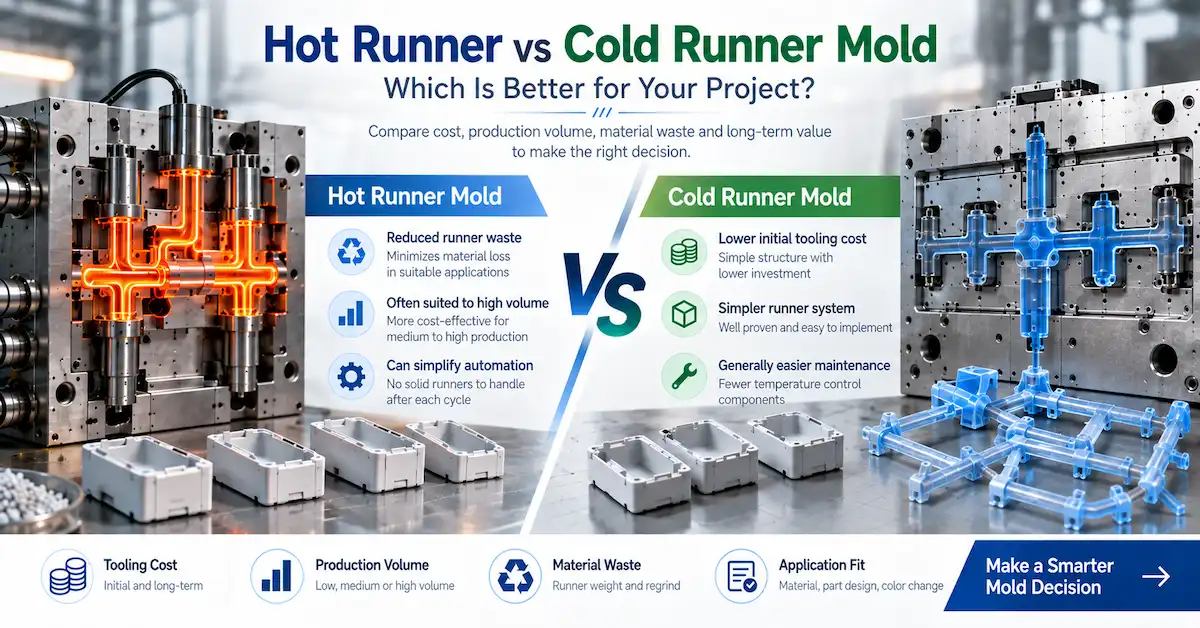
Hot Runner or Cold Runner?
Runner selection is another area where buyers often receive different quotations from different suppliers.
A cold-runner system can be appropriate for many applications, while a hot-runner system may offer advantages for certain high-volume or material-sensitive projects.
The evaluation should consider:
- Resin
- Part size
- Number of cavities
- Material waste
- Cycle requirements
- Gate requirement
- Maintenance
- Tooling budget
Instead of asking, “Is a hot runner better?”, ask:
Which runner system gives the best total result for this specific part and expected production volume?
Cooling Design Can Affect More Than Cycle Time
Cooling is often treated as an invisible mold feature, but it can directly influence manufacturing consistency.
Poor temperature balance can contribute to:
- Uneven shrinkage
- Longer cycles
- Dimensional variation
- Warpage
- Process instability
Autodesk states that Moldflow injection molding simulation can provide insight into cooling-channel efficiency, warpage, material selection and cycle-time behavior.
For complex parts, the buyer can ask the plastic mold supplier:
- How is cooling arranged around thick sections?
- Are core and cavity temperatures expected to be balanced?
- Are difficult areas receiving sufficient cooling?
- Has warpage risk been evaluated?
- Is simulation necessary for this project?
The important point is not whether every mold requires Moldflow. It is whether the supplier recognizes when the geometry creates enough risk to justify deeper engineering analysis.
Gate, Parting Line and Ejection Should Be Reviewed From the Finished Part
A technically functional mold can still produce an unacceptable product if visible tooling features appear in the wrong locations.
Gate Position
The gate influences how material enters the cavity.
Depending on the part, buyers may need to consider:
- Cosmetic gate marks
- Filling distance
- Weld lines
- Packing
- Ejection
- Post-processing
Parting Line
A parting line may become especially important on:
- Cosmetic housings
- Sealing surfaces
- Assembly interfaces
- Visible consumer products
Its location should therefore be confirmed during mold planning rather than discovered after sampling.
Ejection
Ejector pins, sleeves, lifters and sliders should be planned around both demolding and product requirements.
A supplier should consider whether ejector marks will:
- Interfere with appearance
- Affect assembly
- Distort thin walls
- Mark sealing or functional areas
This is where product understanding becomes as important as mold machining.
Define Tolerances Before Comparing Plastic Mold Suppliers
Statements such as “high precision” or “tight tolerance” are too vague for supplier qualification.
The buyer should identify the dimensions that actually control:
- Assembly
- Sealing
- Alignment
- Mechanical function
- Fit
- Appearance
ISO 20457 specifies possible manufacturing tolerances for plastic molded parts and provides a framework for dimensional and geometrical tolerancing.
That does not mean every project should apply one universal tolerance value.
Plastic-part tolerances are influenced by part geometry, material behavior, tooling, molding conditions and measurement strategy.
The practical sourcing question is:
Can the supplier consistently manufacture and verify the dimensions that matter to this product?
Ask How Critical Dimensions Will Be Verified
Depending on the part, inspection may include:
- Calipers
- Height gauges
- Fixtures
- Optical systems
- CMM measurement
- Assembly checking
- Functional testing
DongXin's current support workflow includes dimensional checking, first-article validation and production-quality review, with mold-trial documentation also described for T0/T1/T2 stages.
Decide Whether You Need an Export Mold or Mold Plus Production
This decision changes how you should evaluate a plastic mold supplier.
Option 1: Export Mold
This route may suit buyers that:
- Own injection molding machines
- Already have an approved molding partner
- Need tooling transferred to another country
- Want centralized production control
For export molds, confirm details such as:
- Mold base requirements
- Target molding machine
- Cooling connections
- Hot-runner requirements
- Electrical connections
- Spare parts
- Mold drawings
- Mold packaging
- Rust protection
- Tool ownership
Option 2: Tooling Plus Molded Parts
This route may suit buyers that:
- Do not operate a molding factory
- Want one supplier responsible for mold and parts
- Need production after sample approval
- Expect engineering changes during development
- Prefer fewer supplier handoffs
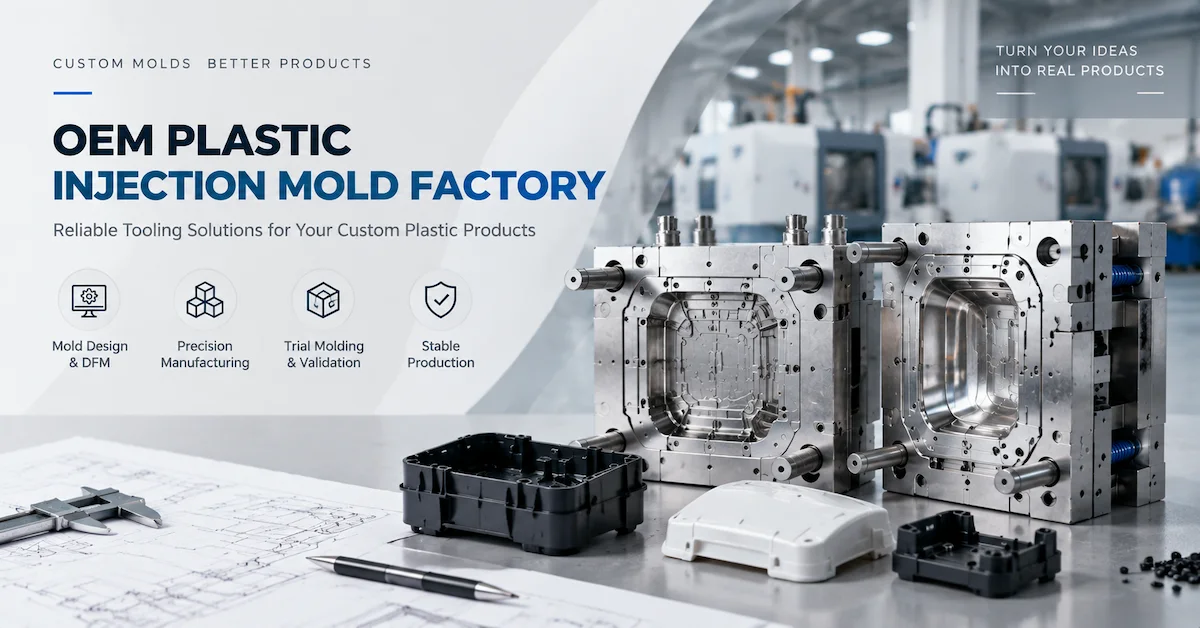
DongXin provides both plastic injection mold programs and subsequent plastic-part production, while its service workflow progresses from engineering review through tooling, trial molding and mass production.
Neither model is universally better.
The buyer should choose according to where the mold will ultimately run.
Compare Quotations by Scope, Not Just Mold Price
If three plastic mold suppliers quote three different prices, first check whether they are actually quoting the same thing.
Use a normalized comparison:
| Quotation Item | What to Confirm |
|---|---|
| Plastic resin | Exact grade or agreed material family |
| Mold steel | Grade and treatment |
| Cavities | Number of cavities |
| Runner | Hot or cold runner |
| Mold base | Standard and supplier |
| Side actions | Sliders/lifters included |
| Cooling | Proposed strategy |
| Surface | Polish or texture |
| Trials | Trial scope |
| Samples | Quantity supplied |
| Inspection | Reports included |
| Changes | Modification responsibility |
| Spare parts | Included items |
| Ownership | Tool/data rights |
| Production | Mold only or molding included |
A lower tooling price may simply represent a different technical scope.
For a broader supplier due-diligence checklist covering mold ownership, quotation assumptions, trials and long-term support, see our injection mold supplier evaluation guide.
What Should You Send a Plastic Mold Supplier for an RFQ?
A supplier can prepare a better proposal when the buyer provides a structured project package.
Where available, send:
- 3D STEP or CAD model
- 2D drawing
- Plastic material or intended resin
- Estimated annual volume
- Initial production quantity
- Critical dimensions
- Surface-finish requirement
- Color requirement
- Assembly information
- Functional requirements
- Operating environment
- Target schedule
- Expected production location
- Inspection requirements
DongXin's service workflow similarly asks customers for drawings or samples, material requirements, target quantities, finish, color and tolerance information during project review.
If some information is unknown, mark it as open rather than inventing a specification.
The supplier should help identify which unknowns must be resolved before tooling begins.
Common Supplier-Project Mismatches to Avoid
Choosing a Tooling Supplier Without Considering Production
A supplier may be able to manufacture an acceptable mold but may not be the right partner if the project also requires stable batch molding, assembly or long-term production support.
Define the downstream production model early.
Selecting Mold Steel Before Confirming Resin and Volume
Tooling material should not be selected independently from the resin, expected use and maintenance strategy.
Ask why a specific steel is being proposed.
Treating Every Dimension as Critical
Tight tolerances everywhere can unnecessarily complicate tooling, inspection and molding.
Identify which dimensions actually affect function.
Approving the Mold From Appearance Alone
A visually acceptable part may still fail dimensional, assembly or functional requirements.
Use agreed acceptance criteria.
Failing to Define Change Responsibility
Product development often continues during tooling.
Clarify:
- Who approves changes?
- What is considered a customer design change?
- What is considered a tooling correction?
- How are changes quoted?
- How is revision history controlled?
These questions reduce commercial disputes later.
Why Engineering Continuity Matters in OEM Plastic Projects
For OEM product teams, mold building is only one stage of the manufacturing process.
The complete chain is closer to:
Product Design → DFM → Material Review → Mold Design → Machining → Trial → Inspection → Adjustment → Production
When different companies control each step, project handoffs become important.
An integrated supplier can sometimes reduce these handoffs because the same engineering team sees what happens during both mold development and molding.
DongXin, founded in Shenzhen in 2007, currently positions its business around custom plastic injection molds, molded plastic parts, silicone tooling and OEM/ODM project support.
For buyers, the relevant question is not simply whether one-stop manufacturing sounds convenient.
It is whether the supplier can maintain technical continuity from the drawing to the approved molded part.
FAQ About Choosing a Plastic Mold Supplier
What is the difference between a plastic mold supplier and a plastic injection molding supplier?
A plastic mold supplier may focus primarily on designing and manufacturing the mold. A plastic injection molding supplier may also operate molding equipment and manufacture production parts. Some manufacturers provide both services.
What information should I provide before requesting a plastic mold quotation?
Provide a 3D model, 2D drawing, resin requirement, estimated volume, critical tolerances, finish, color, assembly requirements and expected production location whenever possible.
Should resin be selected before the mold is designed?
Preferably, the material or at least the intended resin family should be known early because material behavior can influence shrinkage, filling, tooling strategy and molding conditions.
How do I compare two plastic mold suppliers with different prices?
Normalize the quotations first. Compare mold steel, cavities, runner system, side actions, cooling, trial scope, inspection, spare parts, modifications, ownership and production responsibility before comparing total price.
Does every plastic mold need mold flow analysis?
No. Simulation is more useful when filling, cooling, gate location, weld lines or warpage creates meaningful risk. The supplier should explain whether the part complexity justifies analysis.
What should I check during T1 mold sampling?
Review appearance, filling, gate condition, flash, sink marks, weld lines, warpage, ejection, critical dimensions, assembly and functional requirements against the approved drawing and inspection plan.
Is a multi-cavity mold always better for higher production?
Not automatically. More cavities can increase output but also increase mold size, cost and balancing complexity. Cavity count should match demand, part geometry, cycle requirements and molding-machine capacity.
Should I buy only the mold or use the same supplier for injection molding?
Choose according to your production model. Buyers with their own molding capability may prefer an export mold. Buyers seeking a single engineering and production responsibility may prefer tooling plus molding.
Conclusion
Choosing the right plastic mold supplier is primarily a matching exercise.
The supplier's capabilities must fit the plastic material, part geometry, production volume, tolerance requirements, mold architecture, inspection method and final production route.
Before issuing a tooling order, confirm:
- Resin and product application
- DFM risks
- Mold structure
- Cavity strategy
- Runner and gate design
- Cooling
- Ejection
- Tool steel
- Critical tolerances
- Trial and inspection requirements
- Mold ownership
- Production responsibility
The most useful supplier is not simply the one that can machine a cavity at the lowest price. It is the one that can explain why the proposed mold is appropriate for the product and how it will support stable production afterward.
If you are developing a new plastic part, DongXin can review drawings, samples, material requirements, volumes and tooling needs before the project begins. You can send your project requirements for a manufacturability and tooling review.