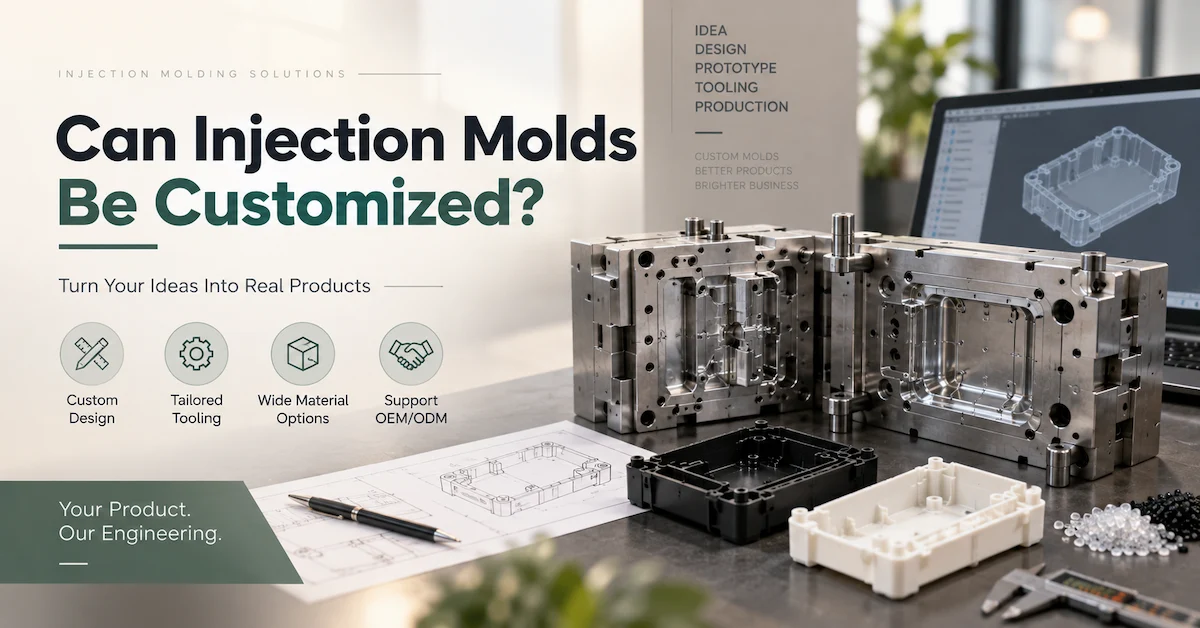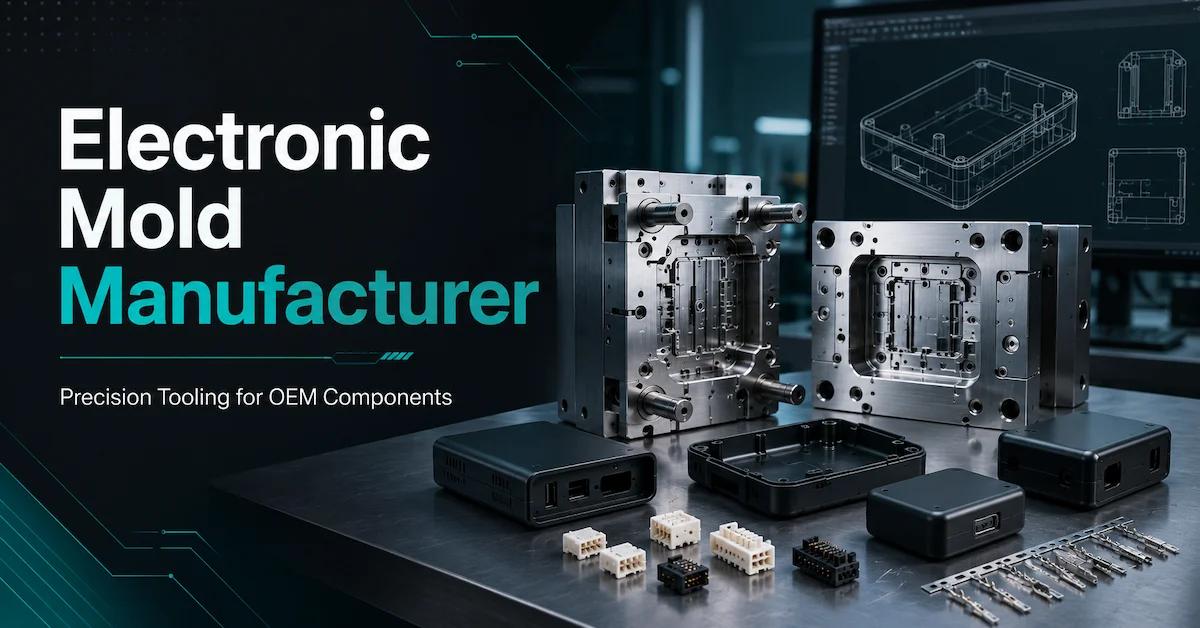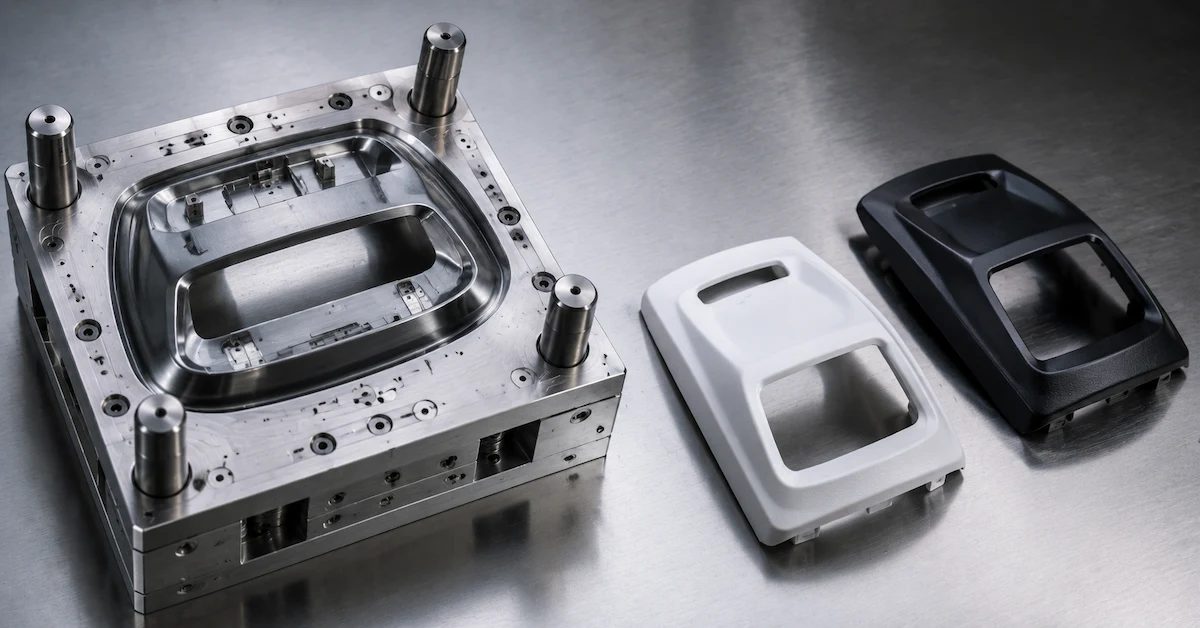
What Is a Professional Mold Manufacturer?
A professional mold manufacturer specializes in designing, developing, and producing molds used for manufacturing plastic, silicone, and other molded components.
Unlike simple machining suppliers, professional mold manufacturers provide complete tooling solutions that connect:
Product Concept → Mold Design → Manufacturing → Trial Testing → Mass Production
A reliable mold partner helps customers solve challenges related to:
- Product manufacturability
- Material selection
- Mold structure
- Production efficiency
- Quality consistency
- Long-term tooling performance
For OEM companies, choosing the right mold manufacturer is an important step because the quality of the mold directly affects:
- Part accuracy
- Production cost
- Cycle time
- Product quality
- Manufacturing stability
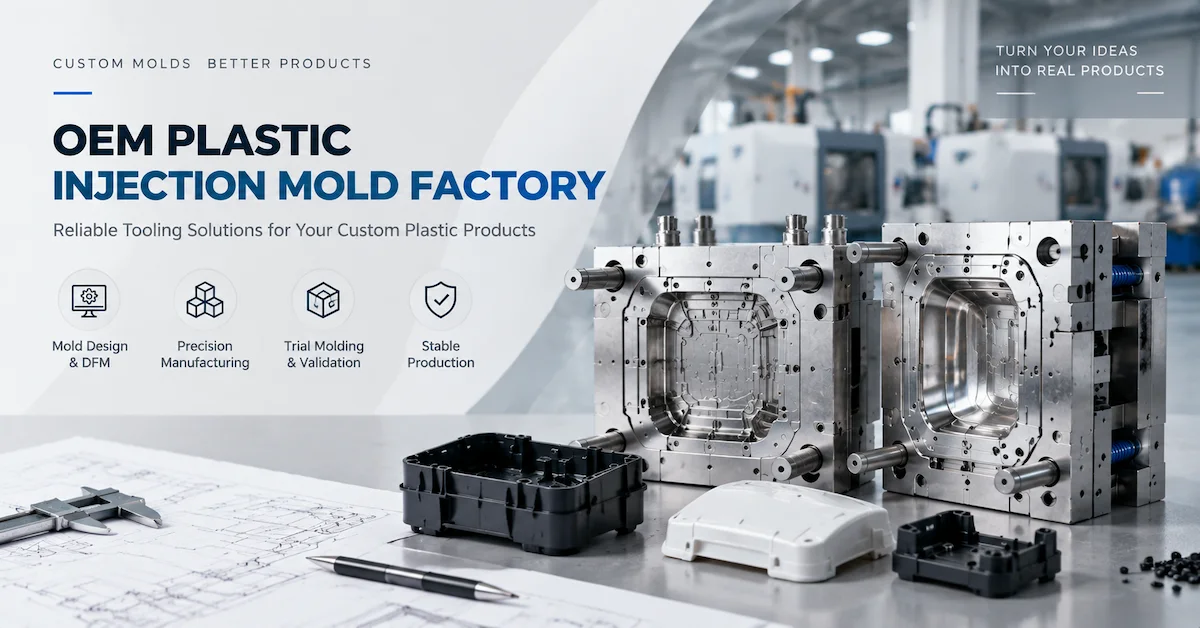
DXMolding provides custom injection mold solutions, supporting customers with mold design, precision machining, trial molding, and production services.
Why OEM Companies Need a Professional Mold Manufacturer
Many companies start with a product idea, prototype, or 3D model.
However, converting a design into a production-ready component requires more than manufacturing equipment.
A professional mold manufacturer provides engineering knowledge in areas such as:
- Design for Manufacturing (DFM)
- Injection molding requirements
- Material behavior
- Mold structure optimization
- Production planning
Without professional tooling support, companies may face:
- Difficult mold release
- Poor surface quality
- Part deformation
- High modification costs
- Production delays
A skilled supplier helps identify these risks before mold manufacturing begins.
From Product Design to Mold Development
The mold manufacturing process starts long before machining.
A professional supplier evaluates the product from a manufacturing perspective.
Product Design Review
During the initial review stage, engineers analyze:
- 3D CAD files
- Product drawings
- Material requirements
- Functional requirements
- Production volume
The purpose is to understand:
- What the part needs to achieve
- How it will be molded
- What tooling structure is required
DFM Analysis Before Mold Manufacturing
Design for Manufacturing (DFM) is one of the most important steps in professional mold development.
Engineers review:
- Wall thickness
- Draft angles
- Ribs and bosses
- Undercuts
- Parting lines
- Gate location
- Cooling requirements
- Ejection methods
DXMolding provides DFM engineering support to help customers identify potential manufacturing issues before tooling production.
A good DFM process can reduce:
- Mold modification
- Trial cycles
- Production risks
- Development costs
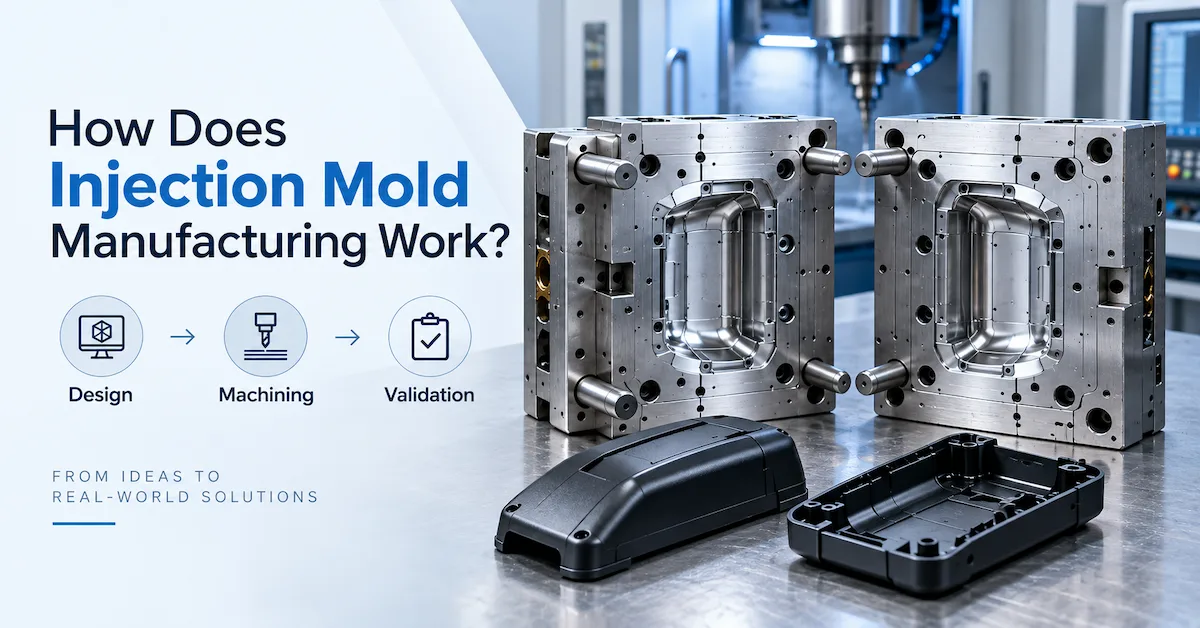
Professional Mold Manufacturing Process
A complete mold manufacturing workflow usually includes several key stages.
Mold Design and Engineering
After product review and DFM approval, engineers develop the mold structure.
The design process considers:
- Mold type
- Cavity number
- Runner system
- Cooling layout
- Ejection system
- Mold material
The objective is to create a mold that can produce stable parts over the expected production lifecycle.
CNC Machining and Precision Manufacturing
CNC machining is widely used for producing:
- Mold bases
- Cavities
- Core components
- Inserts
Precision machining affects:
- Dimensional accuracy
- Surface quality
- Mold performance
A professional mold manufacturer should control:
- Machining accuracy
- Process parameters
- Component inspection
EDM Processing for Complex Mold Features
EDM machining supports areas that are difficult to produce through traditional cutting methods.
Common applications include:
- Deep cavities
- Fine details
- Complex corners
- Precision inserts
The combination of CNC and EDM allows manufacturers to create complex mold structures with high accuracy.
Mold Assembly and Fitting
After machining, mold components are assembled and tested.
Technicians verify:
- Core and cavity matching
- Slider movement
- Ejection performance
- Mold opening and closing
- Component alignment
Proper fitting ensures the mold operates reliably during production.
Types of Molds Produced by Professional Manufacturers
Different products require different mold solutions.
Plastic Injection Molds
Plastic injection molds are widely used for:
- Automotive parts
- Electronic housings
- Consumer products
- Industrial components
Advantages include:
- High production efficiency
- Repeatable quality
- Suitable for mass production
DXMolding develops plastic injection molds for OEM customers requiring customized tooling solutions.
Liquid Silicone Injection Molds
Liquid silicone molds are used for products requiring:
- Soft-touch properties
- Flexibility
- Heat resistance
- Sealing performance
Applications include:
- Medical components
- Consumer products
- Silicone seals
- Wearable products
Solid Silicone Compression Molds
Compression molds are suitable for:
- Silicone pads
- Gaskets
- Covers
- Industrial silicone components
The tooling design depends on:
- Product shape
- Silicone material
- Production requirements
Mold Materials and Tool Life Considerations
Material selection directly affects mold performance.
A professional mold manufacturer selects materials based on:
- Production quantity
- Product requirements
- Surface quality
- Expected tool lifespan
Common mold materials include:
P20 Steel
Suitable for:
- Prototype tooling
- Medium-volume production
Benefits:
- Good machinability
- Cost efficiency
718H Steel
Common for:
- Plastic injection molds
- Cosmetic parts
Benefits:
- Good polishing performance
- Stable processing
S136 Steel
Used for:
- High-quality surface requirements
- Long-life molds
Benefits:
- Corrosion resistance
- High durability
The correct material depends on application requirements rather than choosing the most expensive option.
Mold Trial and Production Validation
A professional mold manufacturer does not consider a mold complete immediately after machining.
Trial molding is required to verify performance.
The validation process includes:
Initial Mold Trial
Checking:
- Mold operation
- Filling condition
- Part appearance
Sample Inspection
Evaluating:
- Dimensions
- Surface quality
- Assembly
- Function
Mold Optimization
Adjustments may include:
- Gate modification
- Cooling improvement
- Mold correction
- Process optimization
DXMolding supports mold testing, sample evaluation, and production preparation before final approval.
Quality Control in Professional Mold Manufacturing
Quality control should cover the complete manufacturing process.
Material Inspection
Checking:
- Mold steel
- Components
- Purchased parts
Manufacturing Inspection
Checking:
- Machining accuracy
- Component dimensions
- Surface quality
Assembly Inspection
Checking:
- Mold movement
- Precision fitting
- Functional operation
Final Validation
Checking:
- Trial samples
- Customer requirements
- Production stability
A professional mold manufacturer should provide clear quality processes rather than only focusing on equipment.
How to Choose a Professional Mold Manufacturer?
Selecting a supplier requires evaluating more than price.
Engineering Capability
Check whether the supplier can provide:
- DFM suggestions
- Mold design optimization
- Technical solutions
Manufacturing Capability
Evaluate:
- CNC capability
- EDM processing
- Mold assembly
- Inspection equipment
Industry Experience
Review whether the supplier understands:
- Your product application
- Material requirements
- Production expectations
Production Support
A long-term partner should support:
- Mold maintenance
- Modification
- Production improvement
The best supplier is the one that helps reduce manufacturing risks throughout the product lifecycle.
Applications Supported by Professional Mold Manufacturers
Professional mold manufacturers serve many industries, including:
Automotive Industry
Applications:
- Interior parts
- Exterior components
- Functional plastic parts
Medical Industry
Applications:
- Medical housings
- Silicone components
- Precision plastic parts
Electronics Industry
Applications:
- Device housings
- Connectors
- Protective covers
Consumer Products
Applications:
- Household products
- Personal accessories
- Custom plastic components
FAQ About Professional Mold Manufacturers
What does a professional mold manufacturer do?
A professional mold manufacturer designs and produces molds used for plastic, silicone, and other molded products while supporting engineering, testing, and production.
What information should I provide for a mold quotation?
Customers should provide:
- 3D CAD files
- Product drawings
- Material requirements
- Production quantity
- Surface requirements
How long does mold manufacturing take?
The timeline depends on product complexity, mold structure, material selection, design approval, and trial results.
Why is DFM important in mold manufacturing?
DFM helps identify production problems before tooling begins, reducing modification costs and development risks.
Can a mold manufacturer also produce finished parts?
Yes. Many professional suppliers provide both mold manufacturing and injection molding services.
What is the difference between a mold maker and a professional mold manufacturer?
A professional manufacturer provides complete engineering, manufacturing, validation, and production support rather than only machining mold components.
How can I evaluate a mold supplier?
Evaluate engineering capability, manufacturing processes, quality control, communication, and previous project experience.
What industries need professional mold manufacturers?
Automotive, medical, electronics, consumer products, and industrial manufacturing companies commonly require professional mold solutions.
Conclusion
A professional mold manufacturer plays an important role in transforming product concepts into reliable production solutions.
The right partner should provide:
- Product engineering support
- DFM analysis
- Mold design
- Precision machining
- Trial validation
- Quality control
- Long-term manufacturing support
For OEM companies, a mold supplier is not only a tooling provider but also a manufacturing partner responsible for helping achieve stable production.
DXMolding provides custom injection molds, silicone tooling, plastic molding, and OEM manufacturing support for customers worldwide.
If you are developing a new molded product, you can contact DXMolding to discuss your tooling requirements and production plans.