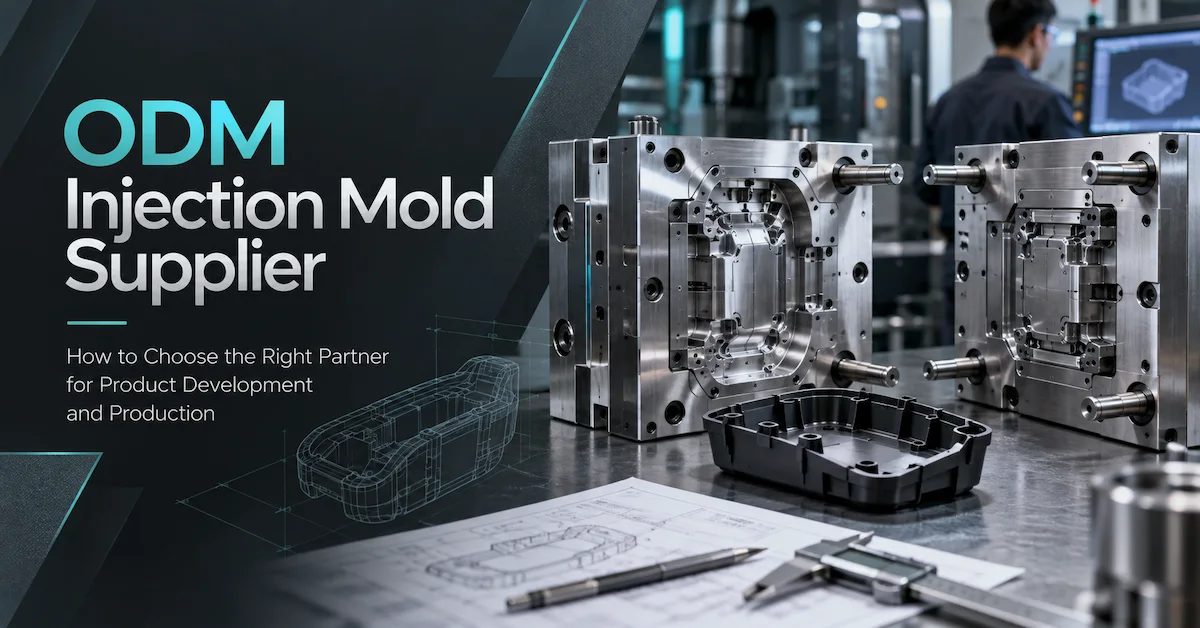
How Should Buyers Evaluate an ODM Injection Mold Supplier?
Choosing an ODM injection mold supplier is different from ordering a mold from a completed drawing.
In a conventional tooling project, the buyer may already have final CAD files, confirmed materials, tolerances, surface requirements, and production specifications. In an ODM project, some of these decisions may still require engineering development before tooling begins.
The supplier may therefore participate in:
-
Product structure optimization
-
Mechanical design
-
Material selection
-
DFM analysis
-
Prototype development
-
Mold engineering
-
Trial molding
-
Engineering modification
-
Production planning
-
Quality validation
For B2B buyers, the key question is not simply whether a supplier can manufacture a mold.
It is whether the supplier can convert an evolving product requirement into a manufacturable, controlled, and production-ready solution.
DX Molding provides custom molding and OEM/ODM development services covering engineering review, custom tooling, injection molding, CNC machining, and production support.
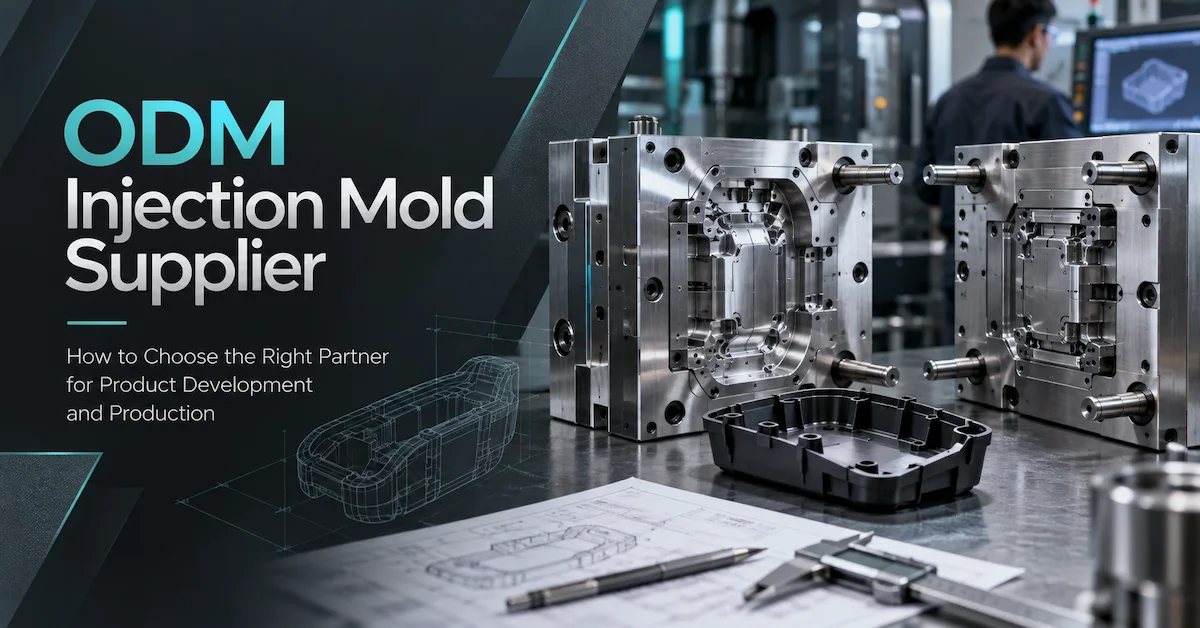
What Is an ODM Injection Mold Supplier?
An ODM injection mold supplier combines tooling manufacturing with selected product-development and engineering support.
The exact scope depends on the maturity of the customer's product.
A Mature Project May Only Require
-
DFM review
-
Mold design
-
Tool manufacturing
-
Trial molding
-
Inspection
-
Mold delivery
An Early-Stage ODM Project May Also Require
-
Mechanical structure development
-
Geometry optimization
-
Material recommendations
-
Prototype support
-
Assembly review
-
Manufacturability improvements
-
Production planning
ODM does not mean the supplier should make every product decision independently.
A well-managed project defines clearly which decisions belong to the buyer, which belong to the supplier, and which require joint approval.
ODM vs OEM Injection Mold Projects
OEM and ODM are often used interchangeably, but the more useful distinction is the supplier's involvement before tooling.
| Project Area | Typical OEM Project | Typical ODM Project |
|---|---|---|
| Product concept | Defined | May still be developing |
| 3D geometry | Mostly finalized | May require optimization |
| Mechanical structure | Buyer-controlled | Supplier may participate |
| Material | Usually specified | May require evaluation |
| Prototype | Often available | May need development |
| DFM | Manufacturing review | Manufacturing + design feedback |
| Mold design | Supplier | Supplier |
| Engineering changes | Buyer approval | Joint control is important |
| Production planning | After tooling | Often considered earlier |
Neither approach is universally better.
The correct model depends on how mature the product is before mold development begins.
If the design is already production-ready, a conventional OEM tooling project may be more efficient. Buyers can also review DX Molding's OEM plastic injection mold factory guide.
When Does an ODM Injection Mold Supplier Add the Most Value?
ODM support is most useful when the buyer understands the product objective but still needs engineering support to reach production.
Product and Hardware Startups
Startups may already have:
-
Concept drawings
-
Industrial design
-
Early CAD
-
Functional prototypes
-
Product requirements
However, the product may not yet be ready for injection molding.
Common issues include:
-
Insufficient draft
-
Uneven wall thickness
-
Difficult undercuts
-
Weak bosses
-
Poor rib design
-
Assembly interference
-
Difficult gate locations
-
Ejection problems
ODM engineering can help convert the concept into manufacturable geometry before tooling investment begins.
Brands Developing New Plastic Products
Brands may understand market positioning and product function but lack internal mold engineering resources.
An ODM supplier can help connect:
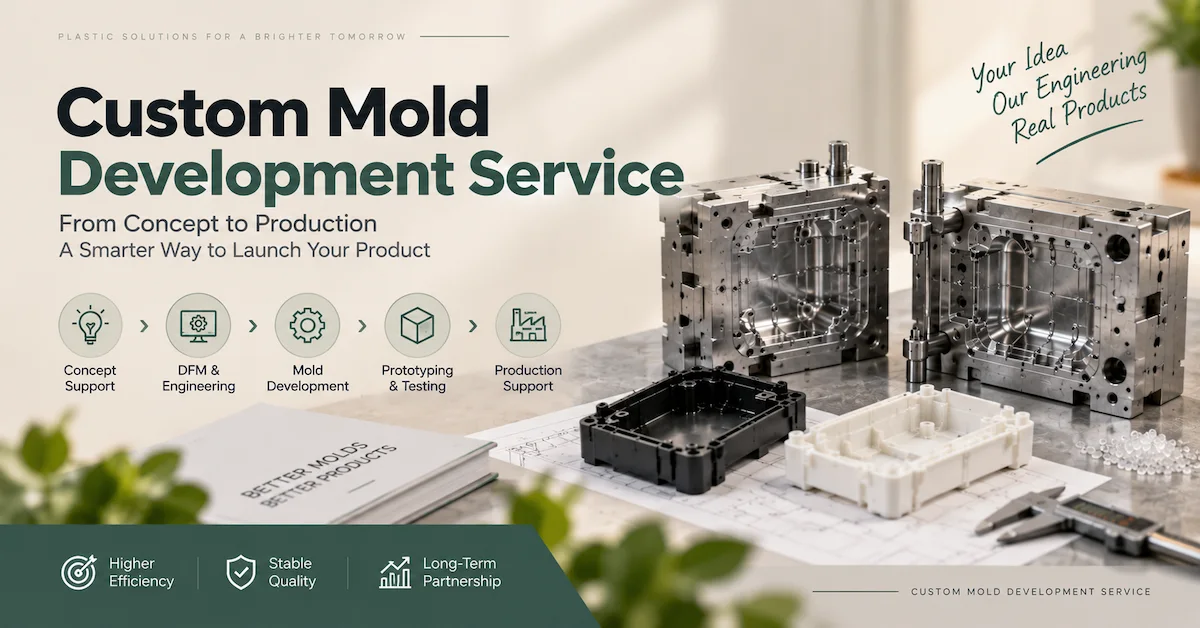
Product Requirement → Mechanical Design → DFM → Tooling → Validation → Production
Importers Developing Customized Product Lines
Importers may want more than a standard catalog product.
Typical requirements include:
-
Customized housing
-
New structure
-
Private features
-
Brand-specific appearance
-
Custom colors
-
Surface textures
-
Packaging integration
Industrial Companies Without Internal Tooling Engineers
Some industrial buyers have strong application knowledge but limited experience with injection mold construction.
They may need support translating functional requirements into moldable geometry and production specifications.
When Is Full ODM Support Not Necessary?
Full ODM development may not be required when the buyer already has:
-
Released 3D CAD
-
Controlled 2D drawings
-
Approved resin specification
-
Final assembly interfaces
-
Defined critical tolerances
-
Surface specifications
-
Internal mold standards
-
Established validation procedures
In these cases, excessive product redesign can slow down the project.
The first supplier-selection question should therefore be:
How mature is the product design today?
What Should Be Reviewed Before Mold Manufacturing?
Cutting mold steel before the product is sufficiently defined creates unnecessary cost and modification risk.
A capable ODM supplier should identify unresolved engineering issues before tooling approval.
Product Function
The supplier needs to understand what the molded component must do.
Typical functions include:
-
Structural support
-
Housing protection
-
Snap-fit assembly
-
Alignment
-
Sealing
-
Cosmetic appearance
-
Electrical insulation
-
Repeated mechanical movement
A critical assembly dimension requires different control from a non-functional cosmetic feature.
Product Geometry
Important DFM areas include:
-
Draft angles
-
Wall thickness
-
Ribs
-
Bosses
-
Undercuts
-
Fillets
-
Deep features
-
Snap fits
-
Parting lines
-
Ejection areas
DX Molding's engineering support process includes DFM review for draft, wall thickness, undercuts, assembly interference, sink-mark risk, and warpage risk.
Material Selection
Material selection influences both product performance and mold design.
Important factors include:
-
Shrinkage
-
Flow behavior
-
Heat resistance
-
Mechanical strength
-
Chemical exposure
-
Surface requirements
-
Warpage tendency
-
Processing window
-
Production cost
The right question is not simply:
Which plastic is cheapest?
It is:
Which material meets the functional requirement while remaining practical and stable to manufacture?
Assembly Requirements
The supplier should understand how the molded component interacts with surrounding parts.
Relevant features may include:
-
Screw bosses
-
Snap fits
-
Clips
-
Sealing surfaces
-
Connectors
-
Inserts
-
Welding surfaces
-
Adhesive areas
A part can pass individual dimensional inspection and still fail during final assembly if the complete interface is not considered.
Define ODM Design Responsibility Before Tooling
One of the biggest ODM project risks is unclear responsibility.
Statements such as “optimize the product for us” are not precise enough.
Before product development begins, define who controls:
-
Product appearance
-
Mechanical structure
-
Material
-
Critical dimensions
-
Tolerances
-
DFM changes
-
Wall thickness changes
-
Rib and boss changes
-
Cosmetic compromises
-
Prototype revisions
-
Mold structure
-
Engineering changes
-
Trial approval
-
Production release
Example Responsibility Matrix
| Decision | Buyer | Supplier | Joint Approval |
|---|---|---|---|
| Product function | ✓ | ||
| Market requirements | ✓ | ||
| DFM recommendations | ✓ | ||
| Material alternatives | ✓ | ✓ | |
| Product geometry changes | ✓ | ||
| Mold design | ✓ | ✓ | |
| Cosmetic approval | ✓ | ||
| Critical dimensions | ✓ | ✓ | |
| Trial corrections | ✓ | ✓ | |
| Production release | ✓ |
The exact responsibility model can vary.
The important principle is simple:
A supplier recommendation is not the same as buyer approval.
What Should an ODM Injection Mold Development Process Include?
A controlled ODM project should have clear decision points rather than moving directly from quotation to mold machining.
Stage 1: Project Requirement Review
The supplier should first collect available information such as:
-
3D CAD
-
2D drawings
-
Physical samples
-
Product concepts
-
Application requirements
-
Expected quantity
-
Material requirements
-
Surface finish
-
Critical tolerances
-
Target launch schedule
Unknown information should remain clearly identified instead of being replaced with assumptions.
Stage 2: Product and Mechanical Engineering Review
Before formal mold design begins, determine whether the current product structure is suitable for injection molding.
Typical questions include:
-
Can the product be molded as one part?
-
Are all undercuts necessary?
-
Can assembly be simplified?
-
Is wall thickness reasonably uniform?
-
Will cosmetic surfaces conflict with gate locations?
-
Can the product be ejected safely?
-
Is the proposed material suitable for the application?
Stage 3: DFM and Manufacturing Risk Assessment
DFM should identify risks before they become tooling modifications.
A useful review can include:
-
Draft angle
-
Wall thickness
-
Ribs and bosses
-
Sink-mark risk
-
Warpage
-
Undercuts
-
Parting line
-
Gate strategy
-
Ejection
-
Cooling
-
Assembly interference
For more complex projects, mold flow analysis may also support decisions related to filling, weld lines, air traps, packing, and warpage.
Stage 4: Design Freeze
A formal design freeze should identify the exact product revision approved for mold development.
After design freeze, new changes should enter an engineering change process.
This avoids confusion such as:
-
Tooling based on an outdated CAD file
-
Unrecorded geometry changes
-
Conflicting drawings
-
Unclear cost responsibility
-
Repeated mold modification
Stage 5: Mold Engineering
Once product geometry is controlled, mold engineering can focus on:
-
Cavity quantity
-
Parting-line strategy
-
Core and cavity design
-
Inserts
-
Slides
-
Lifters
-
Ejection
-
Gate location
-
Runner design
-
Cooling channels
-
Tool steel
-
Mold base
-
Wear components
-
Spare parts
Buyers preparing for a tooling project can also review the injection mold design company guide.
Stage 6: Mold Manufacturing
Typical tooling processes may include:
-
CNC machining
-
EDM
-
Precision finishing
-
Grinding
-
Polishing
-
Fitting
-
Mold assembly
Buyers should monitor milestones rather than waiting until the first sample to discover project delays.
Stage 7: Trial Molding and Validation
Trial molding is not simply a process for producing several samples.
Each trial should have defined objectives.
Typical checks include:
-
Mold operation
-
Filling condition
-
Ejection
-
Flash
-
Short shots
-
Sink marks
-
Warpage
-
Surface appearance
-
Critical dimensions
-
Assembly fit
-
Process stability
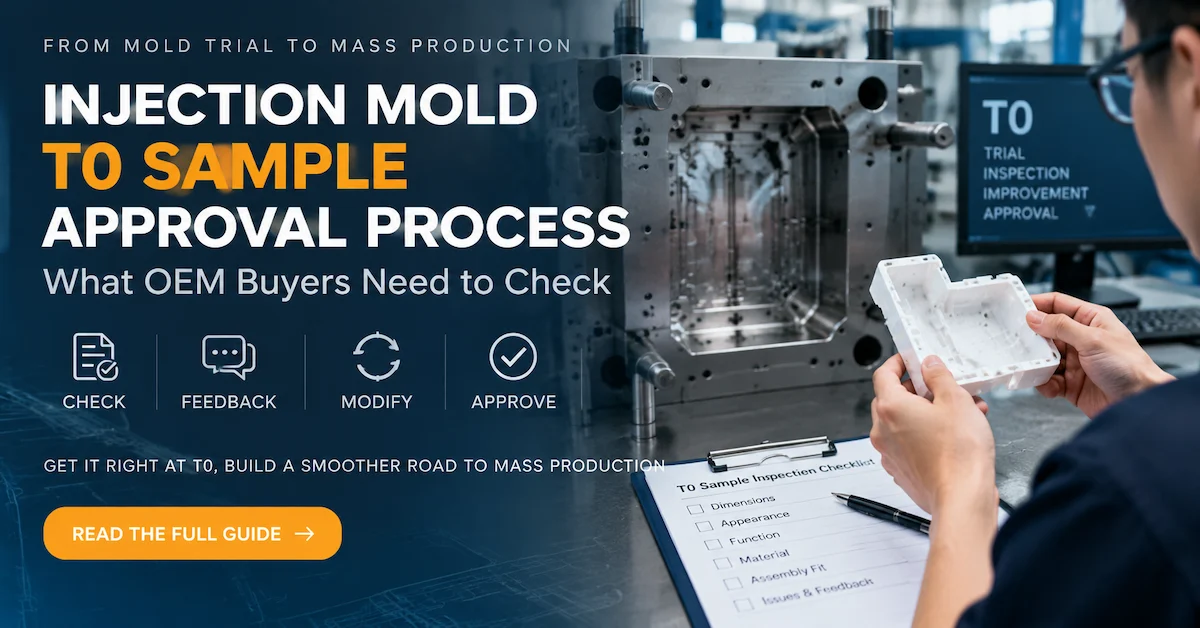
DX Molding's technical support process includes T0/T1/T2 trial support, dimensional inspection, CMM measurement where required, modification follow-up, and process optimization.
Stage 8: Production Release or Mold Transfer
After approval, the project may move into:
-
Injection molding production
-
Mold export
-
Mold transfer
-
Repeat production
-
Future engineering revisions
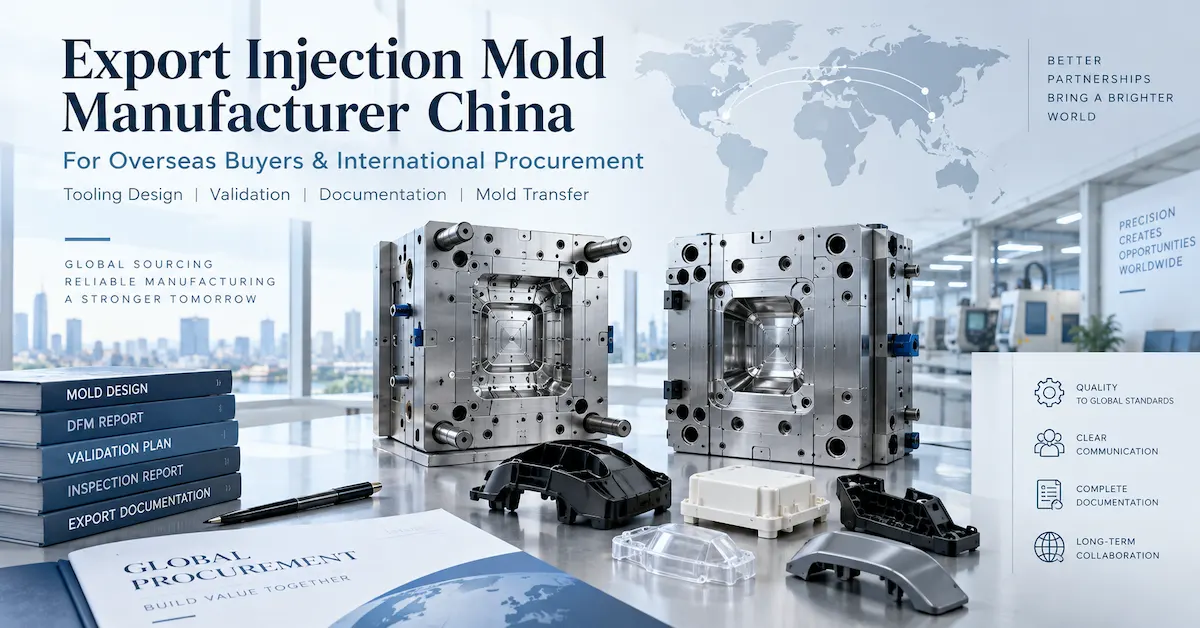
If the final mold will run at another factory, transfer requirements should be discussed before tooling begins.
For these projects, the injection tooling supplier transfer guide provides additional considerations.
What Engineering Capabilities Should Buyers Evaluate?
Price alone does not show whether an ODM supplier can manage a development project.
Product Development Capability
Check whether the supplier understands the difference between:
-
Industrial design
-
Mechanical design
-
DFM
-
Mold design
-
Process engineering
These disciplines are related but serve different purposes.
DFM Capability
A good DFM report should explain the engineering reason behind recommendations.
For example:
Weak recommendation:
Increase draft.
More useful recommendation:
Increase draft on this textured side wall to reduce release resistance and lower the risk of surface scuffing during ejection.
The second explanation gives the buyer information needed to make a product decision.
Mold Structure Capability
Review experience with:
-
Single-cavity molds
-
Multi-cavity molds
-
Slides
-
Lifters
-
Inserts
-
Ejection systems
-
Cooling systems
-
Hot runners
-
Cold runners
-
Cosmetic parts
-
Complex structures
DX Molding's plastic injection mold services cover custom tooling for different plastic-part requirements.
Tool Manufacturing Capability
Do not evaluate a mold supplier only from an equipment list.
Also consider how the supplier controls:
-
Machining sequence
-
EDM work
-
Fitting
-
Steel-safe areas
-
Precision features
-
Polishing
-
Mold assembly
-
Inspection
Validation Capability
Ask what each mold trial must prove.
A trial should define:
-
Resin
-
Sample quantity
-
Process conditions
-
Dimensions
-
Appearance
-
Assembly
-
Open issues
-
Modification requirements
Injection Molding Capability
If the same supplier will manufacture production parts, evaluate molding operations separately from tooling.
DX Molding provides custom plastic injection molding for projects that continue from mold development into molded-part production.
Single-Cavity or Multi-Cavity Mold?
More cavities do not automatically mean a better mold.
Multi-cavity tooling can increase output, but it can also increase:
-
Initial tooling cost
-
Mold size
-
Runner complexity
-
Filling-balance requirements
-
Cooling complexity
-
Validation effort
-
Maintenance requirements
The cavity decision should consider:
-
Annual volume
-
Product size
-
Resin
-
Required cycle time
-
Program lifetime
-
Production machine
-
Expected demand growth
-
Investment budget
A lower-cavity mold may sometimes provide a better balance of investment and production risk.
Hot Runner or Cold Runner?
Runner selection should also be based on project economics and production requirements.
Cold Runner May Be Appropriate When
-
Tooling simplicity is important
-
Initial investment needs to be controlled
-
Runner material can be managed effectively
-
Production volume does not justify additional complexity
Hot Runner May Be Appropriate When
-
Runner waste is significant
-
Production volume is high
-
Cycle efficiency is important
-
Part and resin conditions support the system
A hot runner can reduce certain material losses, but it also increases mold-system complexity and maintenance requirements.
An ODM supplier should explain the trade-off rather than automatically recommending the more expensive option.
How Should Mold Steel and Tool Life Be Selected?
Tool steel should match the production program.
Important factors include:
-
Resin type
-
Fillers
-
Corrosion risk
-
Surface requirements
-
Annual volume
-
Expected program life
-
Part geometry
-
Wear areas
-
Maintenance strategy
-
Production location
DX Molding's support information references commonly used mold steels including P20, NAK80, S136, and 718H.
Instead of simply asking for the highest possible shot count, buyers should ask:
What mold construction is appropriate for the expected production volume and operating conditions?
What Affects ODM Injection Mold Cost?
ODM mold quotations can contain more variables than conventional build-to-print projects.
Product Development
Mechanical optimization, prototype development, and design revisions require engineering resources.
Product Complexity
Features such as:
-
Slides
-
Lifters
-
Inserts
-
Deep ribs
-
Complex shut-offs
-
Undercuts
can increase tooling complexity.
Mold Size
Larger molds require more material, machining, handling, and molding-machine capacity.
Cavity Quantity
Additional cavities can improve output but increase mold manufacturing and validation requirements.
Runner System
Hot-runner and cold-runner systems have different tooling, maintenance, and production economics.
Tool Steel and Components
The selected construction should correspond to expected production requirements.
Surface Requirements
High-gloss surfaces, textures, controlled cosmetic zones, and detailed polishing can increase manufacturing effort.
Tolerance and Inspection
Tighter critical dimensions may require additional:
-
Precision machining
-
Inspection
-
Fixtures
-
CMM measurement
-
Trial adjustments
Late Design Changes
Design changes after mold manufacturing begins can become one of the largest sources of unexpected tooling cost.
This is why the lowest tooling quotation does not always deliver the lowest total project cost.
Mold Ownership and Intellectual Property Should Be Defined Early
ODM projects require particular attention to ownership.
Before issuing a purchase order, clarify:
-
Who owns the mold?
-
Who owns the original product design?
-
Who owns supplier-created mechanical files?
-
Which CAD files will be delivered?
-
Can the mold be transferred?
-
Can the design be used for another customer?
-
Who approves engineering changes?
-
How are files stored?
-
What happens when production ends?
Important terms should be documented rather than assumed.
Tooling Only or Tooling Plus Production?
Different buyers require different supply models.
| Supply Model | Suitable Buyer | Main Priority |
|---|---|---|
| Tooling only | Buyer has molding capacity | Transfer compatibility |
| Tooling + trial | Production occurs elsewhere | Validation and handover |
| Tooling + molding | Buyer wants one supplier | Production continuity |
| Full ODM + production | Product still needs development | Engineering coordination |
DX Molding's custom manufacturing services support projects that continue from engineering review into mold manufacturing and production.
What Documentation Should Be Requested?
Good documentation supports future production, maintenance, transfer, and engineering changes.
Depending on the project, buyers may request:
-
Controlled product drawings
-
Mold drawings
-
DFM reports
-
Material information
-
Mold BOM
-
Spare-parts list
-
Trial records
-
Inspection reports
-
CMM reports
-
Molding parameters
-
Modification records
-
Approved sample revision
-
Maintenance information
Documentation becomes especially important when the mold may be transferred to another factory.
What Information Should Be Sent for an ODM Mold Quotation?
A quotation becomes more useful when the supplier understands both technical requirements and project context.
| Information | Why It Matters |
|---|---|
| 3D CAD | Defines current geometry |
| 2D drawing | Identifies dimensions and tolerances |
| Sample or prototype | Shows physical design intent |
| Application | Supports material and design decisions |
| Material | Influences tooling and processing |
| Critical dimensions | Defines inspection priorities |
| Surface requirements | Affects gate, ejection, polishing, and texture |
| Assembly information | Reveals interface risks |
| Initial quantity | Supports initial production planning |
| Annual volume | Influences cavity and tooling strategy |
| Launch target | Supports scheduling |
| Mold destination | Affects transfer requirements |
| Open design issues | Defines required ODM support |
Incomplete design information does not prevent an initial discussion.
However, unresolved issues should be identified clearly before tooling begins.
How Can Buyers Reduce ODM Injection Mold Project Risk?
The most effective risk controls happen before mold manufacturing.
Use a Controlled CAD Revision
Every tooling decision should refer to a specific design revision.
Identify Critical-to-Function Dimensions
Not every dimension requires the same level of control.
Prioritize dimensions that influence:
-
Assembly
-
Sealing
-
Alignment
-
Movement
-
Safety
-
Product function
Complete DFM Before Tool Release
DFM changes are generally easier to implement before steel is cut.
Define Sample Acceptance Criteria
Specify:
-
Appearance expectations
-
Critical dimensions
-
Assembly requirements
-
Functional requirements
-
Material
-
Testing conditions
Establish Engineering Change Control
After design freeze, every significant modification should record:
-
Change requested
-
Reason
-
Cost impact
-
Schedule impact
-
Approval
-
Revision number
Plan Mold Transfer Before Mold Design
If the mold will eventually run elsewhere, confirm:
-
Mold dimensions
-
Machine compatibility
-
Clamping requirements
-
Cooling connections
-
Electrical interfaces
-
Hot-runner controls
-
Spare parts
-
Documentation
How DX Molding Supports ODM Injection Mold Projects
DX Molding supports custom plastic and silicone manufacturing projects from engineering review through tooling and production.
Its OEM/ODM and custom manufacturing services include:
-
Product and mechanical development support
-
DFM
-
Custom plastic molds
-
Injection molding
-
CNC machining
-
Production support
Its engineering and technical support also covers areas such as:
-
DFM analysis
-
Material review
-
Mold-flow-related evaluation
-
Mold structure planning
-
Cooling and ejection
-
CNC and EDM
-
T0/T1/T2 trials
-
Dimensional inspection
-
CMM inspection where required
-
Process optimization
-
Quality control
-
Mold maintenance
-
Mold modification
-
Mold transfer support
More information about the company's overall manufacturing scope is available on the DX Molding About Us page.
ODM Injection Mold Supplier Evaluation Checklist
Before selecting a supplier, verify the following:
-
Does the supplier understand the product application?
-
Is the current design mature enough for tooling?
-
Who controls mechanical development?
-
Is DFM included?
-
How are material alternatives evaluated?
-
Who approves geometry changes?
-
Is there a design-freeze process?
-
How is mold design reviewed?
-
How are engineering changes managed?
-
What must each mold trial prove?
-
How are critical dimensions inspected?
-
Who owns the mold?
-
Can the mold be transferred?
-
What documents are delivered?
-
Can the supplier support production?
-
How are future product revisions handled?
If these questions are unclear before tooling begins, they can create delays and disputes later.
Frequently Asked Questions
What Is an ODM Injection Mold Supplier?
An ODM injection mold supplier combines custom tooling with selected product-development and engineering support. Depending on the project, this may include mechanical optimization, DFM, mold design, trials, inspection, and production preparation.
What Is the Difference Between OEM and ODM Injection Mold Projects?
An OEM project normally starts with a more mature buyer-controlled design. An ODM project may require greater supplier participation in product structure, material selection, manufacturability, or mechanical development.
Do I Need Finished CAD Before Contacting an ODM Mold Supplier?
No. Concepts, sketches, samples, prototypes, and incomplete CAD can support an initial evaluation. However, the product design should be sufficiently controlled before final mold manufacturing begins.
Can an ODM Supplier Modify My Product Design?
The supplier can recommend engineering changes, but product changes should follow an agreed approval process. Buyer and supplier responsibilities should be defined before development.
Does ODM Include Mold Manufacturing?
It can. A typical ODM injection molding project may continue from product-development support through DFM, mold design, mold manufacturing, trial molding, and production.
Who Owns an ODM Injection Mold?
Ownership depends on the commercial agreement. Buyers should define mold ownership, storage, transfer rights, documentation, and design ownership before placing the tooling order.
How Can I Reduce Mold Modifications?
Complete DFM early, control CAD revisions, define critical requirements, establish a design freeze, and use a documented engineering-change process.
Should I Use the Same Supplier for Tooling and Injection Molding?
It depends on your manufacturing strategy. Using one supplier can simplify communication and process validation, while tooling-only projects may be better when the buyer already has a qualified molding facility.
What Information Is Needed for an ODM Mold Quotation?
Useful information includes 3D CAD, 2D drawings, samples, application, material, critical tolerances, surface finish, assembly requirements, annual volume, launch schedule, and intended mold destination.
How Can I Start an ODM Project With DX Molding?
Prepare your available drawings, CAD files, samples, material information, production quantities, critical requirements, application details, and unresolved engineering questions. Then contact DX Molding for project and tooling evaluation.
Conclusion
Choosing the right ODM injection mold supplier depends on engineering capability, clear design responsibility, DFM quality, tooling validation, ownership terms, and production readiness—not mold price alone.
Before requesting a final quotation, define your product maturity, material, critical requirements, annual volume, mold destination, and approval process. For a project review, send DX Molding your 3D CAD, 2D drawings, material requirements, expected volume, critical tolerances, surface requirements, and application details through the contact page.