How Should OEM Buyers Evaluate Complex Mold Structure?
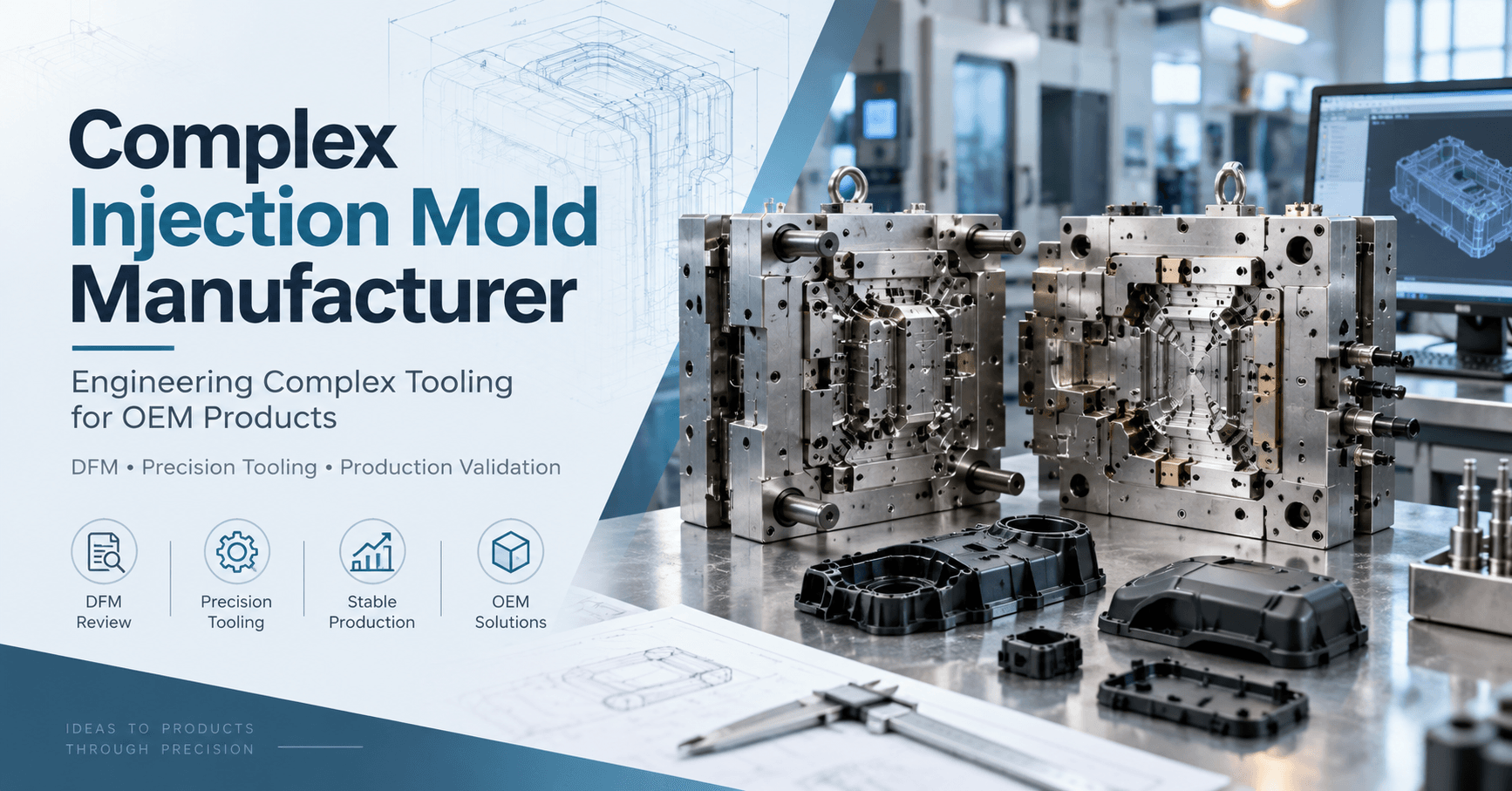
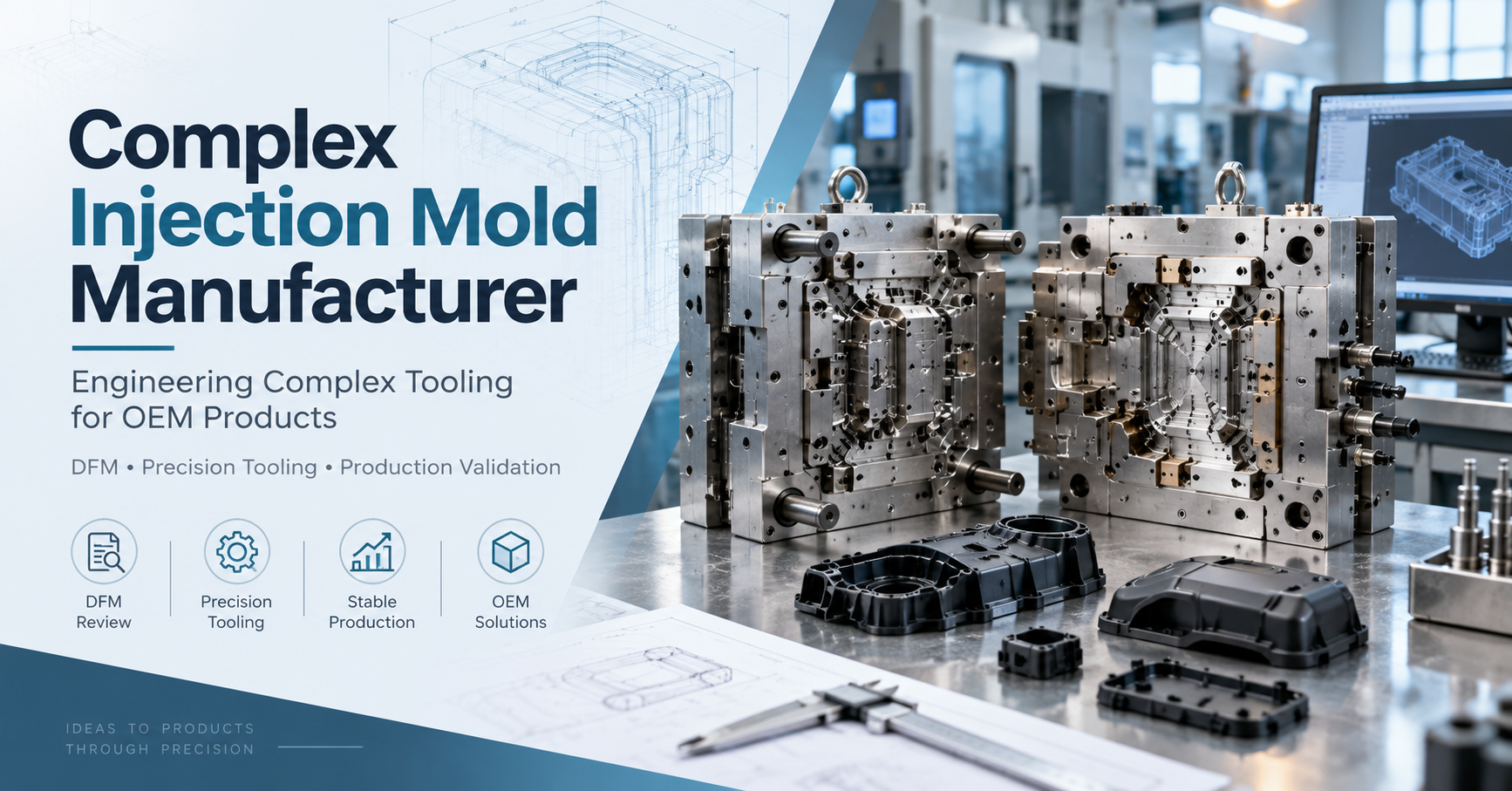
Complex injection tooling is usually created because the product itself requires features that cannot be produced with a simple two-plate mold.
Before approving a complex tool, buyers should understand why each feature exists and whether the proposed structure is the most practical solution.
A professional complex injection mold manufacturer should explain the relationship between:
- Product geometry
- Mold movement
- Production volume
- Maintenance requirements
- Final part quality
The goal is not to create the most complicated mold.
The goal is to create the simplest mold structure that can reliably produce the required part.
Review Slides and Lifters Based on Product Function
Slides and lifters are common solutions when plastic parts contain undercuts, side openings or internal locking features.
However, every additional moving component introduces:
- Additional machining requirements
- More fitting work
- More maintenance points
- More potential wear areas
- More complex troubleshooting
Before accepting a slide or lifter design, OEM buyers should ask:
Why is this mechanism required?
A side hole, snap feature or internal hook may require movement, but sometimes product redesign can simplify the mold.
For example:
A side locking feature may require a slide.
A redesigned snap direction may eliminate the slide.
The correct choice depends on product function, not only tooling preference.
How will the mechanism be maintained?
For long-term production, ask:
- Which parts wear first?
- Are replacement components available?
- Can maintenance personnel access the mechanism easily?
- Are spare inserts recommended?
A complex injection mold manufacturer should consider future maintenance during initial design.
Select Mold Steel According to Production Requirements
Tool steel selection directly affects mold cost, surface quality, maintenance and expected production performance.
DX Molding lists steel options including P20, H13 and S136 within its injection mold capabilities. (dxmolding.com)
However, there is no universal “best” steel for every OEM project.
The selection should consider:
- Expected production quantity
- Plastic material
- Required surface finish
- Wear conditions
- Corrosion requirements
- Maintenance strategy
For example:
A prototype or low-volume product may not require the same tooling investment as a component expected to run continuously for years.
A high-volume product using abrasive resin may require a different tooling approach from a simple consumer plastic component.
The correct question is not:
“Which steel is the most expensive?”
The better question is:
“Which steel provides the required production performance at the lowest total ownership cost?”
Compare Complex Mold Configurations Before Choosing One
Complex tooling decisions should be based on product requirements and production goals.
The following table compares common approaches.
| Mold Strategy | Potential Advantage | Main Consideration |
|---|---|---|
| Fixed cavity design | Simpler maintenance and lower complexity | Limited flexibility for certain features |
| Insert-based tooling | Easier replacement and localized modification | Requires precise insert matching |
| Slide mechanism | Enables side holes and undercuts | Adds moving components |
| Lifter system | Supports angled release features | Requires additional maintenance planning |
| Multi-cavity tooling | Higher production output | Requires cavity balance and inspection control |
| Hot runner system | May reduce runner waste | Adds control components and maintenance requirements |
The best solution depends on:
- Part design
- Annual volume
- Material
- Quality requirements
- Production location
DX Molding provides custom plastic injection mold solutions including different tooling structures based on project requirements.
Control Gates, Cooling and Ejection Before Production
For complex molds, small design decisions can have a large influence on production.
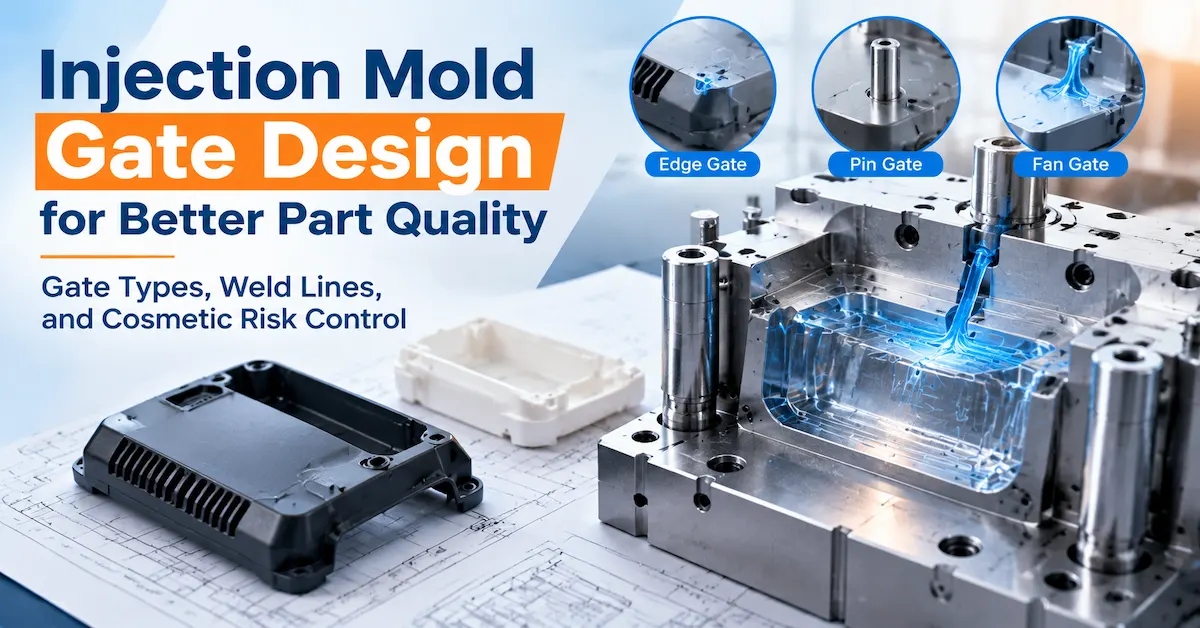
Gate Location
Gate location affects:
- Filling behavior
- Weld lines
- Appearance
- Packing
- Material flow
A gate that is convenient for mold construction may not be suitable for the final product appearance.
For cosmetic OEM products, buyers should review:
- Where the gate mark appears
- Whether trimming is required
- Whether weld lines affect appearance
- Whether the gate location influences product strength
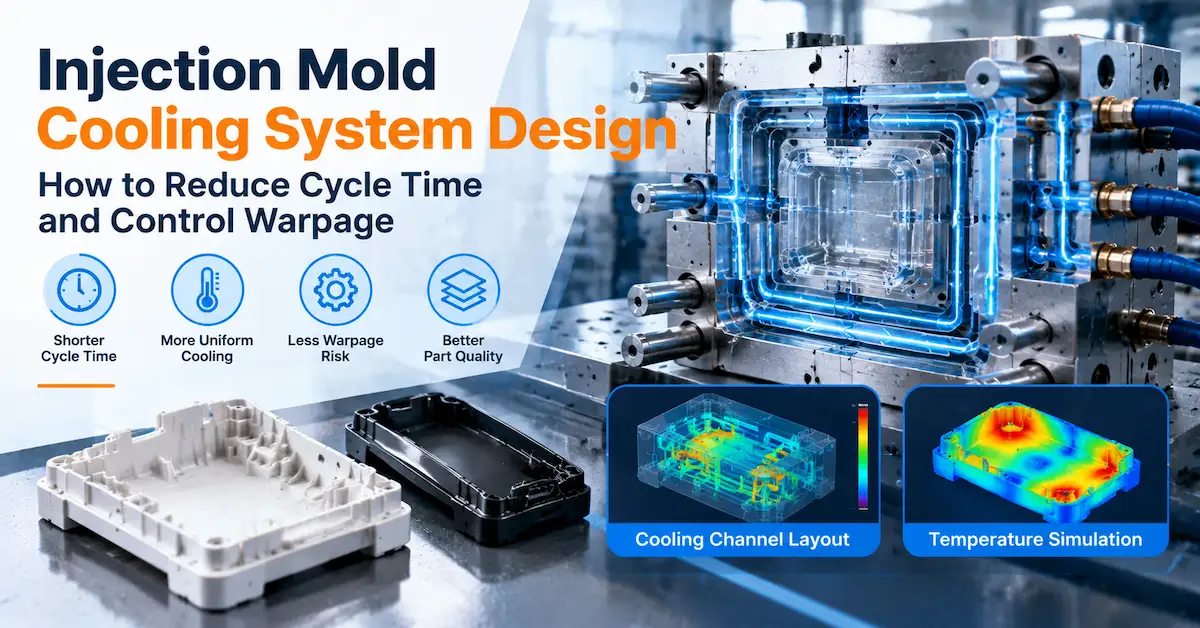
Cooling Design
Cooling affects:
- Cycle time
- Dimensional stability
- Warpage
- Production consistency
Complex components often contain:
- Thick bosses
- Deep ribs
- Large flat surfaces
- Multiple inserts
These areas require careful cooling consideration.
A supplier should explain:
- Cooling channel arrangement
- Heat concentration areas
- Maintenance access
- Expected production impact
DX Molding’s engineering support includes manufacturability review, mold design support, trial evaluation and production-related assistance.
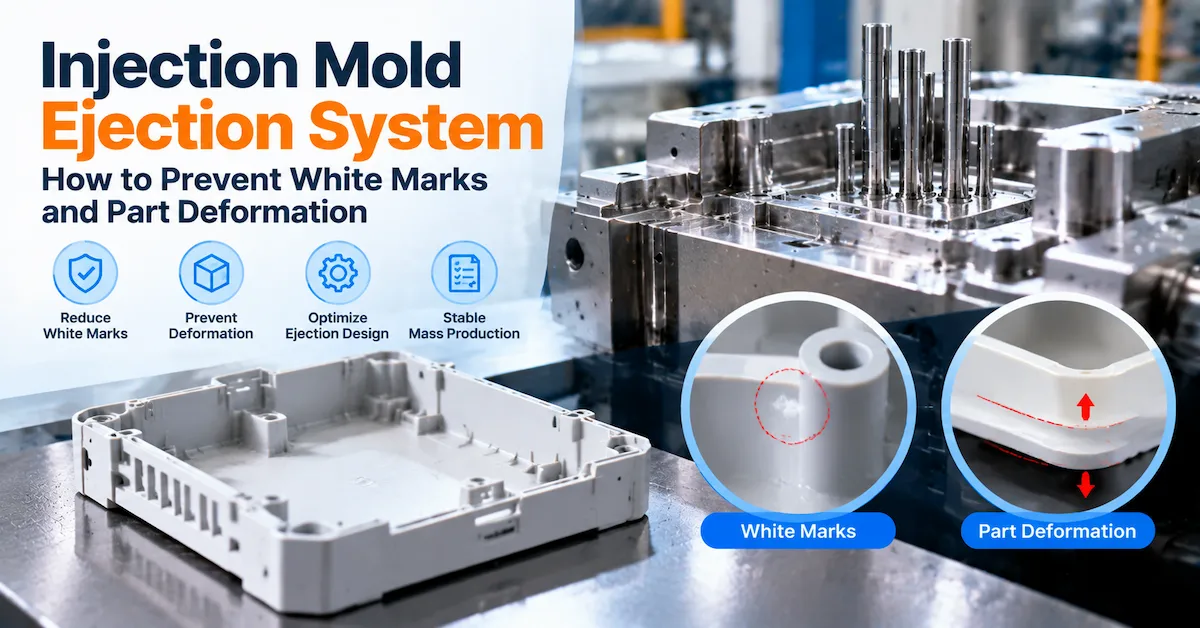
Ejection System
The ejection system should remove the part without:
- Deformation
- Visible damage
- Stress marks
- Assembly problems
For complex plastic components, ejection should be reviewed together with cosmetic requirements.
An ejector mark hidden inside a product may be acceptable.
The same mark on a visible consumer surface may not be acceptable.
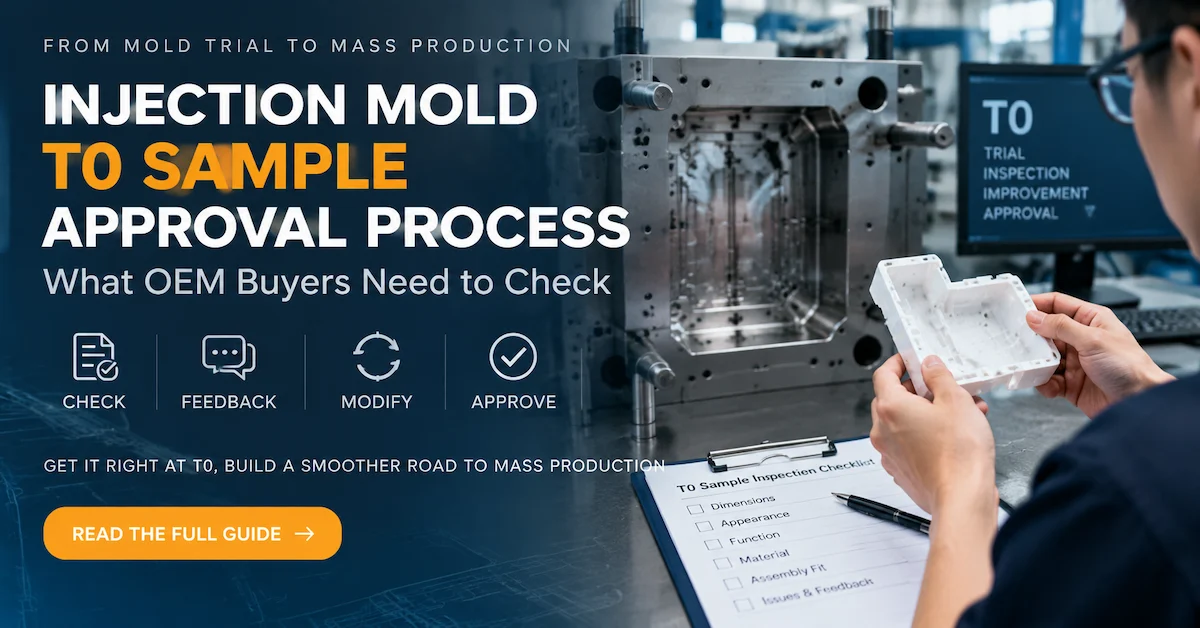
How Should OEM Buyers Validate Complex Mold Samples?
A complex mold should not be approved only because the first sample looks acceptable.
The validation process should connect the molded part with the original product requirement.
Dimensional Validation
Review:
- Critical dimensions
- Assembly interfaces
- Functional features
- Feature positions
The inspection method should match the actual requirement.
A dimension controlling assembly should receive more attention than a non-functional cosmetic dimension.
Assembly Validation
Use actual mating components whenever possible.
Examples:
- PCB boards
- Connectors
- Covers
- Fasteners
- Internal brackets
A molded part may pass dimensional inspection but fail assembly if the relationship between components was not validated.
Appearance Validation
For customer-facing products, review:
- Texture
- Color
- Gloss
- Gate marks
- Weld lines
- Parting lines
Define acceptance standards before production approval.
DX Molding’s support services include trial reporting, dimensional inspection, process records and modification follow-up.
Separate Mold Accuracy From Production Repeatability
A precisely machined mold does not automatically guarantee every molded part will remain identical.
Production consistency also depends on:
- Plastic material behavior
- Processing conditions
- Cooling
- Machine stability
- Operator control
- Maintenance
This is why a complex injection mold manufacturer should consider both tooling accuracy and production control.
For example:
A cavity may be machined accurately.
However, if cooling is uneven or processing conditions change significantly, the molded dimensions may still vary.
The complete manufacturing system creates the final result.
Evaluate Complex Mold Cost Through Total Project Value
Complex molds usually require higher initial investment because they involve more engineering, components and validation.
However, the lowest initial price is not always the lowest total cost.
When comparing suppliers, review:
| Cost Item | Buyer Question |
|---|---|
| Mold design | Is engineering included? |
| Mold structure | Are all mechanisms necessary? |
| Steel | Does the material match production needs? |
| Components | Are wear parts and inserts included? |
| Trials | How many validation stages are included? |
| Inspection | Are required reports provided? |
| Modification | How are changes handled? |
| Documentation | Are drawings and records included? |
A lower quotation may exclude important items.
A higher quotation may include additional engineering that reduces future risk.
The correct comparison is:
Total project cost + production reliability + maintenance risk
not only:
Initial mold price
Plan OEM and ODM Responsibilities Before Tooling
Complex products often involve more than mold manufacturing.
For OEM projects:
The buyer usually provides product requirements and approved design files.
For ODM projects:
The supplier may participate in:
- Product structure
- Engineering optimization
- Prototype development
- Manufacturing decisions
DX Molding supports OEM/ODM product development and manufacturing services through its custom development solutions.
Before starting, define responsibility for:
- Product design
- Material selection
- Mold design approval
- Engineering changes
- Prototype approval
- Production release
Clear responsibility prevents confusion during later revisions.
What Should You Send a Complex Injection Mold Manufacturer?
Before requesting a quotation, prepare:
- 3D CAD files
- 2D drawings
- Material requirements
- Production forecast
- Critical dimensions
- Assembly requirements
- Cosmetic requirements
- Known engineering challenges
Also explain:
- Which features are difficult
- Which dimensions are critical
- Which requirements are still changing
- Whether you need tooling only or molded parts
A supplier can provide better recommendations when the actual manufacturing objective is clear.
Send DX Molding your complex mold project information for a project-based review.
Frequently Asked Questions
1. What Makes an Injection Mold Complex?
A complex injection mold usually involves multiple engineering challenges rather than one single feature.
Common complexity factors include:
- Side actions such as slides and lifters.
- Tight functional tolerances.
- Multiple assembly interfaces.
- Difficult cosmetic requirements.
- Multi-cavity production requirements.
- Complex cooling or ejection systems.
- Special materials or high-wear areas.
The complexity level should always be evaluated according to the product requirements and production goals.
2. Does a Complex Injection Mold Always Cost More?
Generally, additional mechanisms, precision requirements and validation steps increase engineering and manufacturing effort.
However, a well-designed complex mold can reduce long-term production problems.
The goal is not to minimize the initial tooling price at any cost.
The goal is to achieve the required production performance with appropriate investment.
3. How Can OEM Buyers Reduce Complex Mold Risks?
OEM buyers can reduce risk by:
- Preparing complete product information.
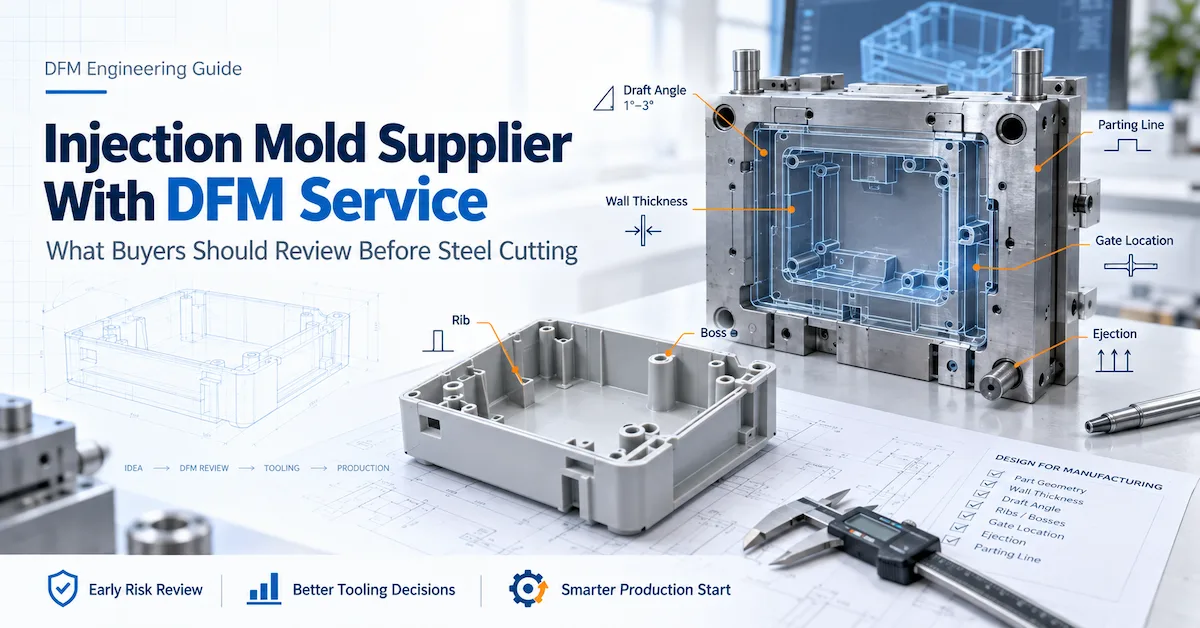
- Completing DFM before tooling approval.
- Defining critical dimensions.
- Reviewing mold structure early.
- Approving samples based on function and appearance.
- Maintaining controlled engineering revisions.
Early communication usually reduces expensive changes later.
4. Should Every Undercut Use a Slide or Lifter?
Not necessarily.
Some undercuts require moving mechanisms because the product function depends on them.
Other features may be redesigned to simplify the mold.
The correct choice depends on:
- Product function.
- Production quantity.
- Cost target.
- Maintenance requirements.
A professional supplier should explain the available options instead of automatically adding complexity.
5. Can DX Molding Manufacture Complex Injection Molds?
DX Molding provides custom injection mold design and manufacturing services for OEM projects.
The actual tooling approach depends on:
- Product geometry.
- Material.
- Production volume.
- Quality requirements.
- Mold destination.
Each project should be reviewed individually before confirming the tooling solution.
6. What Information Should I Provide Before Requesting a Complex Mold Quote?
Provide:
- 3D CAD files.
- 2D drawings.
- Material information.
- Expected production quantity.
- Critical dimensions.
- Assembly requirements.
- Surface requirements.
- Known engineering concerns.
The more complete the information, the more accurately the supplier can evaluate tooling complexity.
7. How Should Complex Mold Samples Be Approved?
Sample approval should include:
- Dimensional checks.
- Assembly testing.
- Cosmetic review.
- Mold-operation confirmation.
- Production-condition records.
A visually acceptable sample does not automatically prove that the mold is ready for long-term production.
8. How Do I Compare Two Complex Injection Mold Manufacturers?
Compare more than price.
Review:
- Engineering capability.
- DFM process.
- Mold structure proposal.
- Manufacturing equipment.
- Trial support.
- Inspection capability.
- Documentation.
- Long-term production support.
The best supplier is usually the one that clearly explains the engineering decisions behind the quotation.
9. Can Complex Injection Molds Be Modified After Production Starts?
Many molds can be modified, but the feasibility depends on the affected area and current tooling condition.
Before approving changes, request:
- Engineering evaluation.
- Cost impact.
- Schedule impact.
- Validation requirements.
A controlled modification process helps prevent confusion.
10. What Should I Look for in a Complex Injection Mold Manufacturer?
Look for a supplier that can:
- Understand the product requirement.
- Identify manufacturing risks.
- Explain tooling options.
- Provide clear documentation.
- Support trial validation.
- Maintain communication during production.
A complex project requires engineering cooperation, not only machining capability.
Conclusion
Choosing a complex injection mold manufacturer requires evaluating more than whether a supplier can produce a complicated mold structure.
The most important consideration is whether the supplier can connect product requirements with practical tooling decisions:
Product design → DFM review → Mold structure → Manufacturing → Trial validation → Repeat production
For OEM buyers, successful complex tooling depends on early communication, clear specifications and controlled engineering decisions. Features such as slides, lifters, inserts, precision areas and advanced runner systems should exist because they solve a product requirement—not simply because they make the mold appear more advanced.
A reliable tooling partner should help reduce uncertainty before manufacturing begins, support validation after the first samples are produced and create a repeatable process for long-term production.
DX Molding supports custom plastic injection mold development, tooling manufacturing and OEM/ODM manufacturing programs. Send DX Molding your CAD files, product requirements and production goals to begin a project-specific evaluation for complex injection tooling.