What Should a High Volume Injection Mold Manufacturer Deliver?
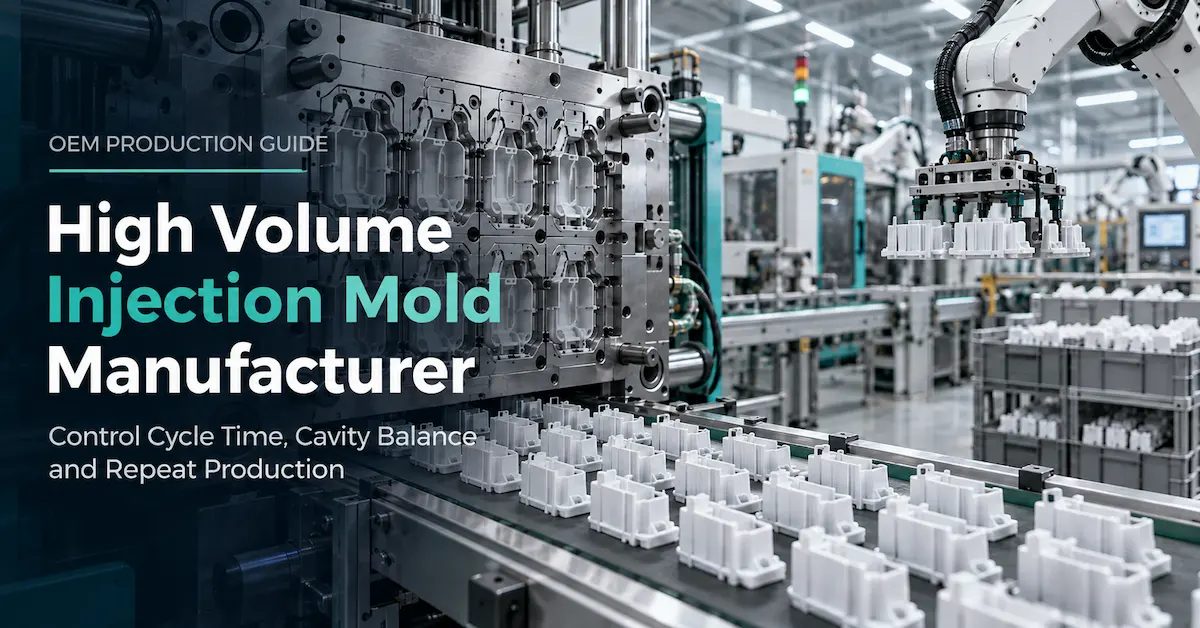
A high volume injection mold manufacturer should design the tooling around repeat production, not simply build a mold with more cavities. For an OEM buyer, the real target is consistent accepted parts over the intended production program: stable dimensions, controlled appearance, predictable cycle time, maintainable tooling and a clear response when components begin to wear.
A mold that produces acceptable samples during one short trial may still be unsuitable for sustained production if cooling is uneven, cavities do not behave consistently, inserts wear too quickly or maintenance requires excessive downtime.
That is why high-volume sourcing should begin with a production question:
How will this mold continue producing acceptable parts after the initial sample approval?
DX Molding supports custom plastic injection molds, molded plastic parts and OEM/ODM development. For a production program, buyers should connect tooling design, sampling, quality records and later manufacturing requirements from the beginning rather than treating mold purchase and part production as unrelated steps.
Which Buyers Need High Volume Injection Tooling?
High-volume tooling is most relevant when a product has stable geometry, repeat demand and a production forecast large enough to justify additional investment in tooling efficiency.
Typical buyers can include:
- Appliance manufacturers.
- Consumer product brands.
- Electronics companies.
- Industrial-equipment manufacturers.
- Component suppliers.
- Contract injection molders.
- OEMs launching repeated international production programs.
A high-volume solution may make sense when a buyer expects repeated orders over a long period and needs lower production cost per accepted part.
It may not be the right first step when:
- The product design is still changing.
- Demand is highly uncertain.
- The resin is not finalized.
- Critical dimensions are still under development.
- The product has not completed functional validation.
- The buyer needs only prototype or bridge production.
Before asking a high volume injection mold manufacturer for maximum cavity count, first confirm whether the product itself is ready for a long-term production tool.
DX Molding’s custom manufacturing services can be used to review product development, DFM, mold design and production requirements before tooling is released.
Start With Annual Demand, Not the Maximum Number of Cavities
A common sourcing mistake is assuming that more cavities automatically mean lower production cost.
Cavity count should be evaluated against:
- Annual demand.
- Order batch size.
- Part size and weight.
- Resin.
- Required injection machine.
- Runner system.
- Cooling requirements.
- Expected cycle time.
- Inspection workload.
- Tool maintenance.
- Production flexibility.
Consider a hypothetical product requiring 600,000 accepted parts per year.
A 4-cavity mold and an 8-cavity mold may both satisfy the forecast depending on cycle time, available machine hours, maintenance and production scheduling. Doubling cavity count does not automatically halve total manufacturing cost because the larger tool may require more complex runners, a larger machine, additional cooling and more expensive maintenance.
The correct question is not:
“How many cavities can you build?”
It is:
“What cavity configuration meets our annual demand with acceptable production and maintenance risk?”
DX Molding’s multi-cavity mold guide explains why cavity layout, runner balance and machine capacity should be evaluated together.
Build a High-Volume RFQ Around Production Data
A serious high-volume request for quotation should provide more than CAD files and a target mold price.
The following table is a buyer specification checklist, not a universal DX Molding production specification.
| Requirement Area | Buyer Input or Supplier Proposal | Why It Matters |
|---|---|---|
| Product files | Current 3D CAD and controlled 2D drawing | Defines approved geometry |
| Resin | Exact material grade and additives | Influences filling, wear and cycle |
| Annual demand | Realistic yearly forecast | Supports cavity and capacity planning |
| Batch size | Typical order quantity | Helps evaluate production flexibility |
| Critical dimensions | Functional tolerances and datums | Defines inspection priorities |
| Cosmetic surfaces | Visible areas and acceptable marks | Influences gate and ejection strategy |
| Cavity count | Supplier proposal based on demand | Determines output and complexity |
| Runner system | Cold runner or hot runner proposal | Influences material use and maintenance |
| Machine | Intended production equipment | Confirms mold and shot compatibility |
| Cycle target | Proposed cycle with assumptions | Supports capacity and costing |
| Tool life | Required production objective | Influences steel and component strategy |
| Maintenance | Wear parts and service intervals | Supports long-term uptime |
| Trial approval | Dimensional and production criteria | Defines release into mass production |
If annual demand is uncertain, provide several scenarios instead of one optimistic number.
For example:
- Launch demand: 100,000 parts.
- Expected annual demand: 500,000 parts.
- Possible peak demand: 900,000 parts.
That gives the high volume injection mold manufacturer a better basis for comparing tooling strategies.
You can send DX Molding your drawings and volume forecast for a project-specific tooling discussion.
Choose Mold Materials Around Production Life and Maintenance
DX Molding’s plastic injection mold capabilities include custom tooling using materials such as P20, H13 and S136, along with single- and multi-cavity configurations and hot- or cold-runner systems.
The correct mold material still depends on the project.
For high-volume tooling, ask:
- What steel is proposed for the cavity and core?
- Are high-wear areas built as replaceable inserts?
- Does the resin contain fillers that may increase wear?
- Which pins and moving components should be stocked as spares?
- What maintenance assumptions support the proposed mold-life target?
- Which parts are expected to be replaced during the program?
A quoted “one million shots” should not be treated as a universal performance guarantee without defining resin, operating conditions, maintenance and wear-component replacement.
A better approach is to create a tooling-maintenance strategy that identifies expected wear areas before production begins.
Control Runner Balance Across Every Cavity
Multi-cavity production works only when the cavities receive sufficiently controlled material flow and process conditions.
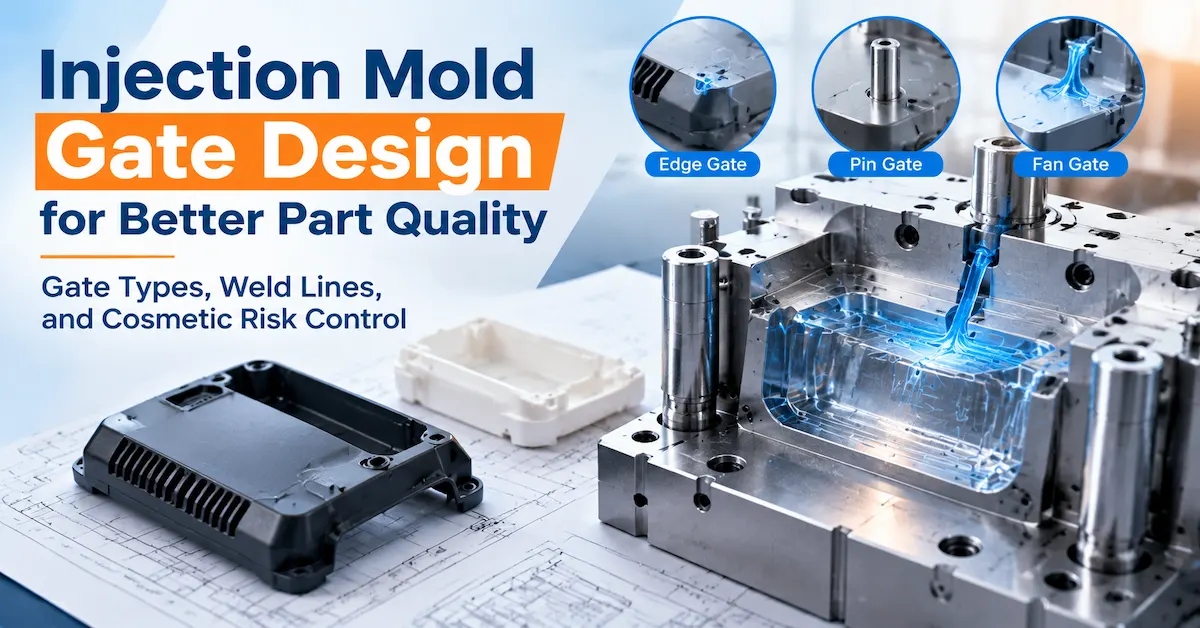
If one cavity fills differently from another, the result can be:
- Different dimensions.
- Different part weights.
- Flash in selected cavities.
- Short shots.
- Different cosmetic appearance.
- Unequal packing.
- Different rejection rates.
For high-volume production, ask the mold designer how the runner arrangement supports cavity balance.
Cold Runner Systems
Cold-runner tooling may be appropriate for many products, but runner material, gate removal and handling should be included in the production calculation.
Hot Runner Systems
A hot runner may reduce cold-runner material in suitable applications, but it introduces additional heaters, controls, nozzles and maintenance requirements.
DX Molding’s hot runner mold guide explains the need to compare material, cavity layout, gate design and maintenance rather than assuming a hot runner is automatically superior.
A high volume injection mold manufacturer should explain why the selected runner system fits the product and forecast rather than simply offering the more expensive configuration.
Treat Cooling as a Production-Cost Decision
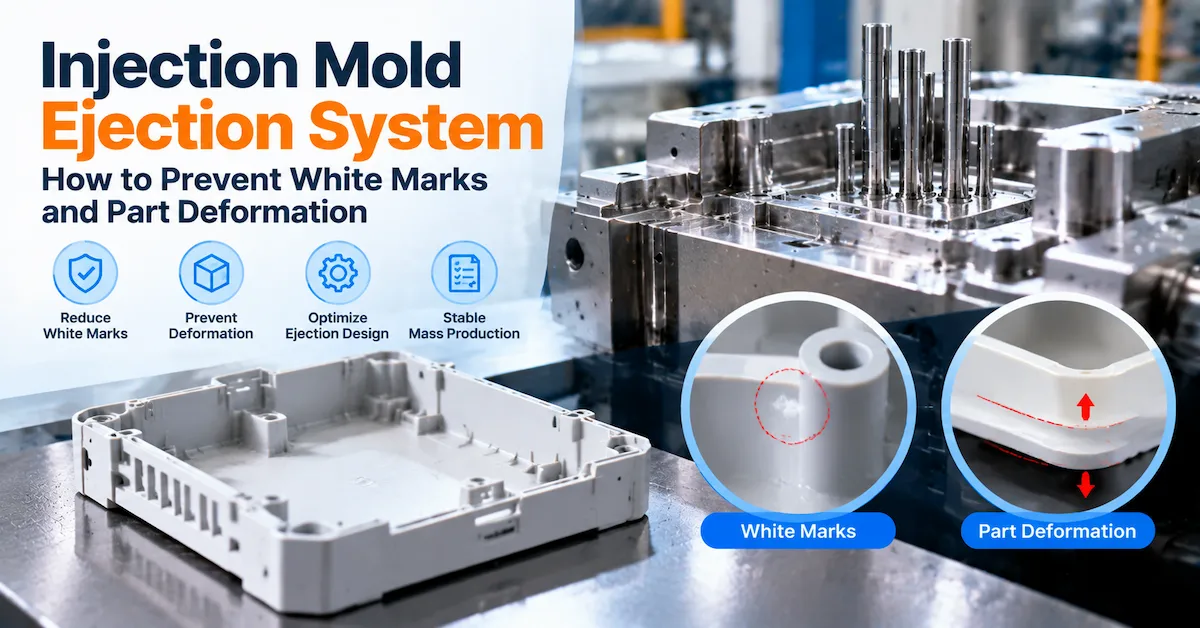
Cycle time is often heavily influenced by how long the molded part must remain in the tool before it can be removed without unacceptable deformation.
That makes cooling design a major high-volume production decision.
Ask the supplier to review:
- Cooling around the cavity.
- Cooling around the core.
- Local thick sections.
- Deep bosses and ribs.
- Slides and inserts.
- Temperature-sensitive cosmetic areas.
- Access for cleaning cooling channels.
- Differences between cavities.
A production tool with poor cooling balance may require a longer cycle or create dimensional variation.
For buyers, this means that cooling should be reviewed before steel cutting—not only after the first trial produces a slower cycle than expected.
DX Molding’s engineering support includes mold design, manufacturability review, trial support and process-related evaluation. Confirm the specific cooling-analysis scope required for your project.
Compare High-Volume Tooling Strategies Before Approval
These are tooling strategies rather than standard DX Molding models.
| Tooling Strategy | Potential Advantage | Main Risk to Review | Best Discussion Scenario |
|---|---|---|---|
| Single-cavity production mold | Simpler qualification and maintenance | Lower output | Stable moderate demand |
| Multi-cavity cold-runner mold | Increased output | Runner material and cavity balance | Higher demand with suitable resin |
| Multi-cavity hot-runner mold | Higher output with reduced cold-runner material in suitable projects | More components and maintenance | Long repeat-production programs |
| Replaceable cavity inserts | Easier localized maintenance | Insert alignment and added tooling cost | Wear-prone or long-life programs |
| Multiple identical molds | Production redundancy and scheduling flexibility | Higher initial tooling investment | Very high demand or supply-continuity requirements |
For very large programs, buyers should also discuss whether one complex mold or several identical molds provide the better supply-risk profile.
One 16-cavity mold may appear efficient, but two 8-cavity molds could offer scheduling or redundancy advantages in some projects.
There is no universal winner.
The decision should reflect actual annual volume, machine availability, tooling cost, maintenance and business-continuity requirements.
Validate Every Cavity Before Mass Production
A multi-cavity mold should not be approved because one part from one cavity looks correct.
Each active cavity should be identifiable.
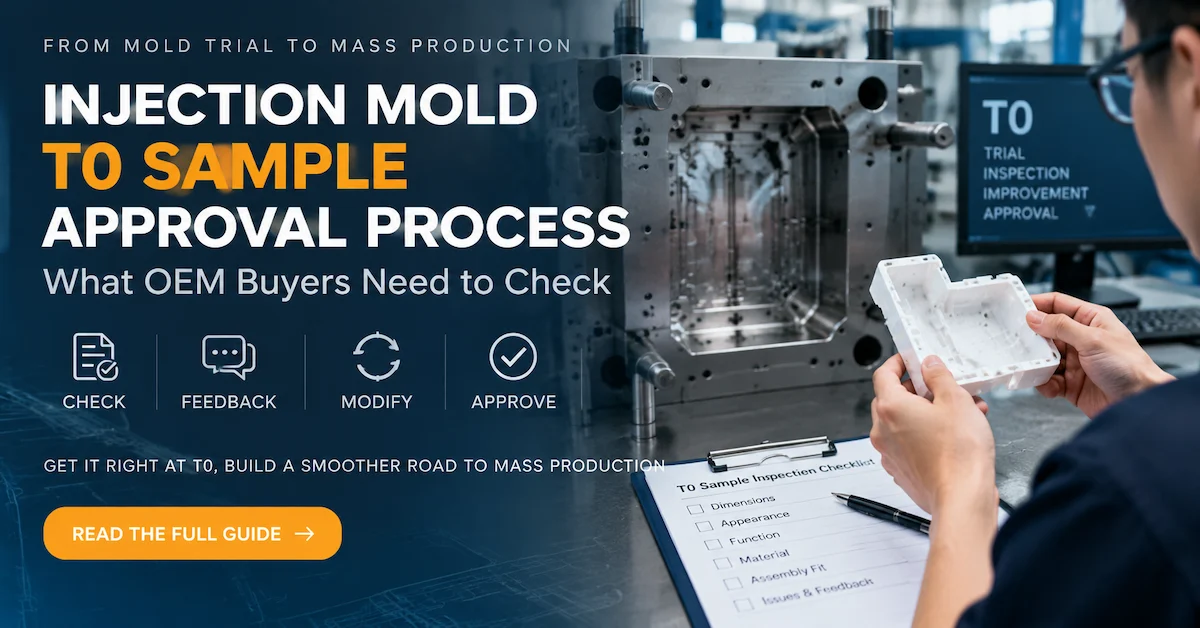
During trial validation, record:
- Cavity number.
- Drawing revision.
- Resin.
- Machine.
- Process conditions.
- Critical dimensions.
- Part weight where relevant.
- Cosmetic observations.
- Assembly results.
DX Molding’s quality and trial support includes dimensional inspection, trial reporting and production-support activities. Buyers should define which documents are required for the actual program.
For a 16-cavity tool, inspection planning becomes particularly important.
Do you inspect every cavity during approval?
Which dimensions require cavity-by-cavity measurement?
Which features require only periodic production checks?
These questions should be agreed before mass production rather than after the first quality dispute.
Separate Cycle-Time Targets From Demonstrated Cycle Time
A quotation may contain a target cycle time before the physical tool exists.
Treat that number as an engineering estimate until it is demonstrated during an agreed trial.
Ask what assumptions support the estimate:
- Resin.
- Mold temperature.
- Melt temperature.
- Cooling time.
- Part-removal method.
- Machine.
- Automation.
- Quality requirements.
Consider a hypothetical example.
If a production program requires 2,000,000 molding cycles, reducing the cycle from 30 seconds to 27 seconds saves:
2,000,000 × 3 seconds ÷ 3,600 = approximately 1,667 machine hours.
This is only a simplified planning example. It excludes downtime, setup and rejected parts.
It illustrates why even a small cycle-time difference can become commercially significant in long production programs.
However, reducing cycle time is valuable only if the parts still meet the agreed quality requirements.
A high volume injection mold manufacturer should therefore optimize cycle time together with dimensional stability and production repeatability.
Evaluate Capacity as a System, Not a Factory Number
A statement such as “our factory can produce millions of parts” does not tell you whether your specific project has enough capacity.
Ask for the production assumptions behind your program:
- Number of molds.
- Number of cavities.
- Cycle time.
- Machine allocation.
- Working shifts.
- Planned maintenance.
- Changeover requirements.
- Quality sampling.
- Expected scrap allowance.
- Production buffer.
If your forecast increases significantly, ask whether additional tools or machines may be required.
DX Molding’s plastic molding services provide a basis for discussing molded-part production in addition to tooling.
For a large OEM order, the production plan should still be confirmed specifically for the project.
Plan Preventive Maintenance Before the First Production Run
High-volume molds eventually require maintenance.
Waiting for a failure before discussing maintenance creates unnecessary production risk.
Prepare a maintenance list covering:
- Ejector pins.
- Slides.
- Lifters.
- Gate inserts.
- Hot-runner components.
- Springs.
- Seals.
- Cooling channels.
- Wear plates.
- Cavity surfaces.
- Replaceable inserts.
Ask which items should be stocked as spares.
Maintenance records can also help identify gradual changes before they create excessive scrap or unexpected downtime.
For export tooling, agree who owns the drawings and replacement-part information required by the destination factory.
For molds remaining at DX Molding, define the expected maintenance and approval process as part of the ongoing manufacturing program.
Compare Cost Per Accepted Part, Not Only Mold Price
High-volume tooling often requires a larger upfront investment because the buyer is attempting to reduce repeated production cost.
That does not mean the highest mold price is automatically the best solution.
Compare:
- Tooling investment.
- Number of cavities.
- Molded-part cost.
- Runner waste.
- Machine requirements.
- Cycle time.
- Maintenance cost.
- Spare components.
- Inspection effort.
- Expected scrap.
- Production downtime risk.
A useful calculation is:
Total program cost ÷ accepted production quantity = effective cost per accepted part.
For example, a lower-priced mold that requires longer cycles, produces more runner waste or requires frequent maintenance may become more expensive over a long production program.
Conversely, an expensive high-cavity mold may not be justified if actual demand never reaches the forecast.
The buyer should therefore request several volume scenarios when comparing tooling proposals.
Define OEM, ODM and Engineering-Change Rules
High-volume manufacturing increases the cost of uncontrolled changes.
A minor drawing revision can affect:
- Multiple cavities.
- Replacement inserts.
- Existing inventory.
- Inspection fixtures.
- Packaging.
- Process validation.
- Production schedule.
For OEM projects, establish one controlled product revision before production release.
For ODM or development projects, clearly define who approves the product design, material, mold configuration, samples and later engineering changes.
DX Molding’s OEM/ODM and manufacturing services can support projects from product and mold development through manufacturing.
The important purchasing rule is:
Do not allow an email comment, sample photograph or temporary trial adjustment to silently become the new production specification.
Use controlled revisions and documented approval.
Send DX Molding a High-Volume Production Brief
A useful high-volume inquiry should contain:
- 3D CAD files.
- 2D drawings.
- Resin grade.
- Critical dimensions.
- Cosmetic requirements.
- Annual volume.
- Launch quantity.
- Typical reorder quantity.
- Expected program life.
- Preferred mold destination.
- Production machine information where available.
- Target cycle expectation if one exists.
- Required inspection documentation.
Also tell the engineering team what matters most.
Is your priority:
- reducing cost per part?
- increasing output?
- reducing runner waste?
- improving cavity consistency?
- extending tool life?
- reducing maintenance downtime?
- creating backup production capacity?
That information helps the supplier evaluate the commercial objective behind the mold.
Send DX Molding your drawings and annual volume forecast to begin a project-specific tooling and production review.
Frequently Asked Questions
1. What Is a High Volume Injection Mold Manufacturer?
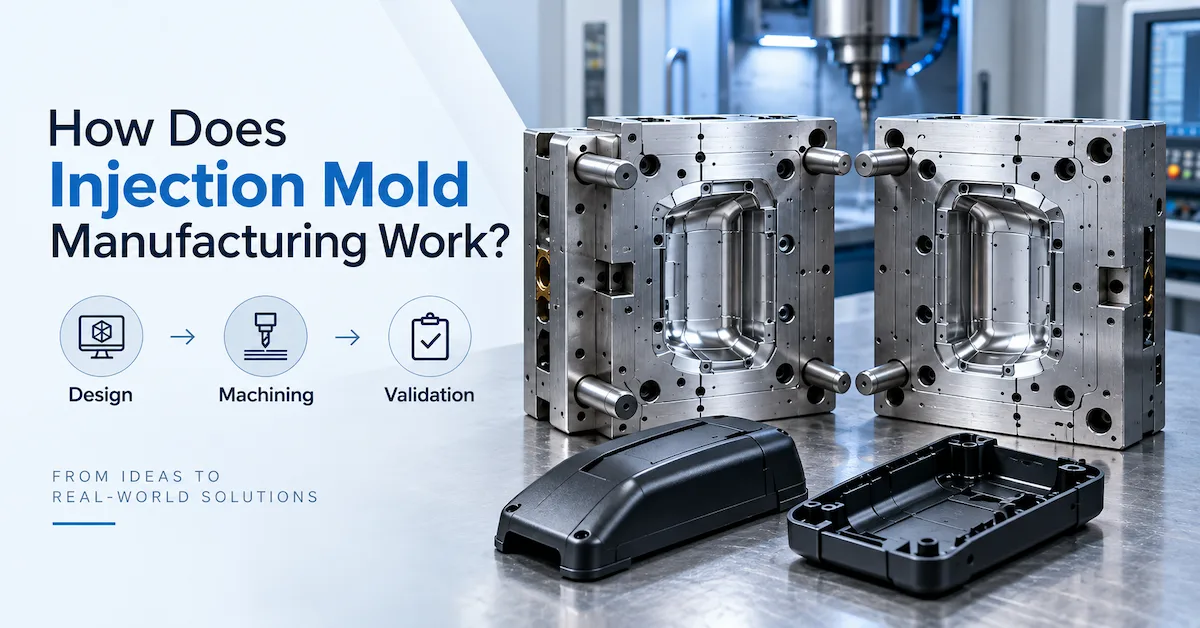
A high volume injection mold manufacturer develops tooling intended for repeated production over a substantial manufacturing program. The work can involve multi-cavity molds, production-focused cooling, runner systems, replaceable components, quality validation and maintenance planning.
2. How Many Cavities Should a High-Volume Mold Have?
There is no universal answer. Cavity count should be based on annual demand, cycle time, machine capacity, part size, resin, tooling investment and maintenance requirements. More cavities do not automatically produce the lowest total cost.
3. Is a Hot Runner Necessary for High Volume Injection Molding?
No. Hot runners can provide production and material advantages for suitable projects, but they also add cost, controls and maintenance. Compare the complete economics and technical requirements before choosing the runner system.
4. How Should Mold Life Be Defined?
Define the expected shot count together with resin, tooling materials, maintenance responsibilities and wear-component replacement. A general mold-life figure should not be treated as an unconditional guarantee for every production environment.
5. Can DX Molding Build Multi-Cavity Injection Molds?
DX Molding lists single- and multi-cavity configurations among its custom plastic injection mold capabilities. The appropriate cavity number and production arrangement should still be confirmed from the specific product, material and forecast. View plastic injection mold capabilities.
6. How Do Buyers Validate Cavity-to-Cavity Consistency?
Identify every active cavity and inspect agreed critical characteristics from each cavity during mold qualification. Define sampling, datums and acceptance criteria before the production run. Continue appropriate cavity-level monitoring during mass production.
7. How Important Is Cycle Time for High-Volume Production?
Cycle time can strongly affect machine hours and unit economics over a large production program. However, the target cycle must still produce acceptable dimensions, appearance and function. Demonstrated production performance matters more than an unsupported quotation estimate.
8. Should We Build One Large Multi-Cavity Mold or Multiple Molds?
The decision depends on volume, machine availability, production flexibility, risk tolerance and tooling budget. Multiple molds may offer redundancy, while one larger mold may reduce the number of machines required. Compare the total production system.
9. What Information Is Needed for a High-Volume Mold Quote?
Provide CAD files, material, critical dimensions, annual demand, batch quantities, expected program life and production requirements. Include the intended molding location and machine information when available so the supplier can evaluate compatibility.
10. How Can OEM Buyers Reduce High-Volume Production Risk?
Freeze the product definition before tooling, approve cavity and runner strategy, validate every cavity, define maintenance requirements, retain controlled inspection records and document engineering changes. Production continuity should be planned before problems occur.
Conclusion
Choosing a high volume injection mold manufacturer is ultimately a decision about long-term production economics and repeatability—not simply how many cavities can be placed inside a mold.
OEM buyers should evaluate cavity balance, runner strategy, cooling, cycle-time assumptions, tool life, replaceable components, cavity-level inspection and preventive maintenance together. The lowest mold price may not produce the lowest cost per accepted part, while an overly complex tool may not be justified by realistic demand.
A stronger sourcing process connects annual forecast → tooling strategy → production validation → maintenance → repeat orders.
DX Molding supports custom injection mold development and plastic-part manufacturing for OEM projects. Send DX Molding your CAD files, resin, annual forecast and quality requirements to begin a project-specific review for high-volume tooling and repeat production.