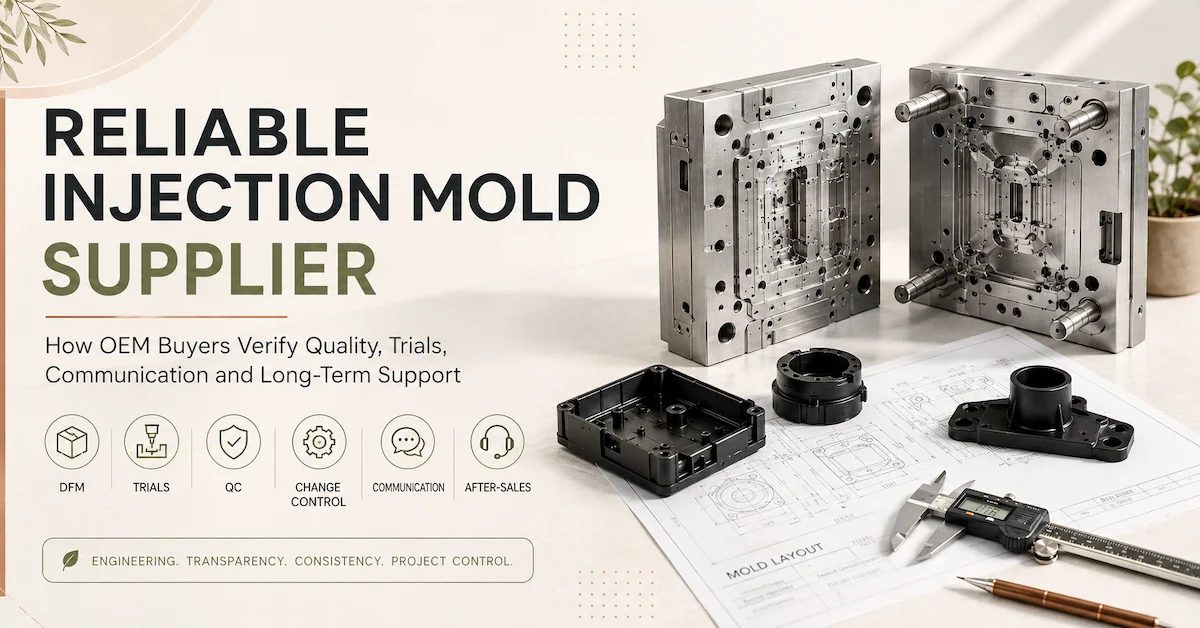
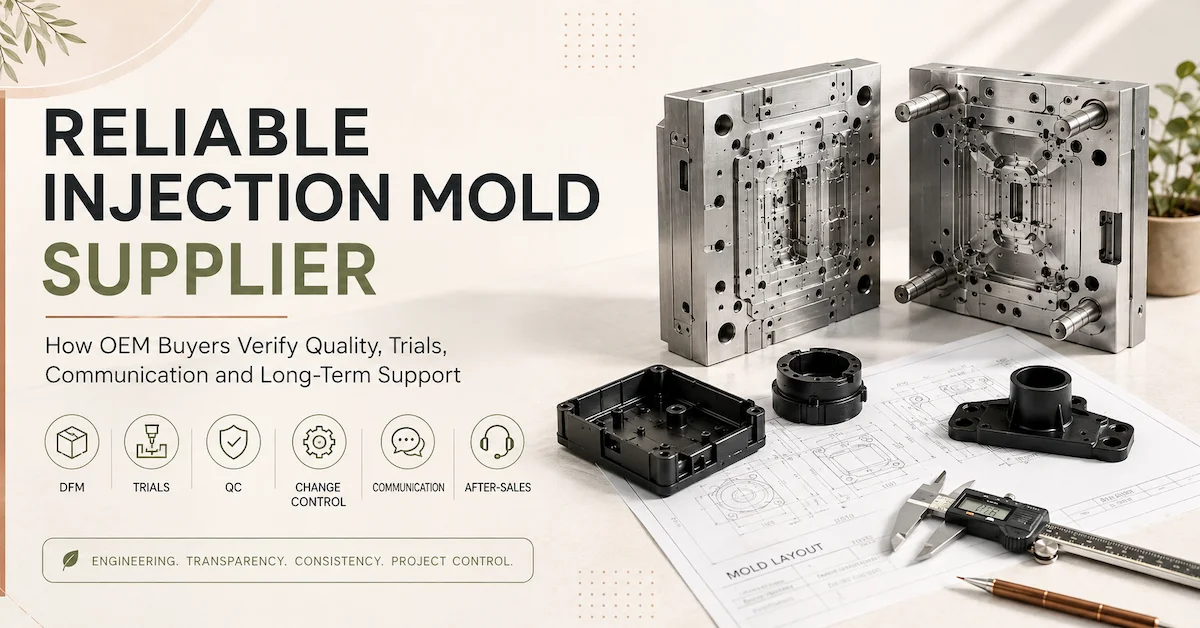
What Makes an Injection Mold Supplier Truly Reliable?
A reliable injection mold supplier is one that can repeatedly turn agreed technical requirements into controlled tooling results—not simply one that responds quickly, offers a competitive quotation, or produces an acceptable first sample.
For OEM buyers, reliability becomes visible at multiple points:
- Does the supplier identify manufacturing risks before machining?
- Are quotation assumptions clearly defined?
- Are mold-design decisions traceable?
- Are trial results measured and documented?
- Are drawing revisions controlled?
- Are problems communicated before they become delays?
- Can the supplier support the mold after approval?
The strongest evidence of reliability is therefore repeatable process control across the entire project, from RFQ to tooling approval and later production.
DongXin's current project workflow covers engineering review, tooling, sampling and production support, while its product offering includes custom plastic injection molds and subsequent plastic molding services.
Reliability Is Different From Capability
A supplier can have strong technical capability without being a reliable long-term partner.
For example, a factory may own:
- CNC machines
- EDM equipment
- Injection molding machines
- Inspection equipment
- Experienced mold technicians
but still create project risk if:
- drawings are poorly controlled,
- schedules are repeatedly missed,
- problems are reported too late,
- trial results are not documented,
- engineering changes are misunderstood,
- or responsibilities are unclear.
This distinction matters because OEM buyers are not purchasing machine capacity alone.
They are purchasing the supplier's ability to control an engineering project over time.
| Supplier Capability | Reliability Question |
|---|---|
| CNC machining | Are released drawings and revisions controlled? |
| Mold design | Are design decisions reviewed before machining? |
| EDM | Are critical features inspected after machining? |
| Mold trial | Are results documented and corrective actions tracked? |
| Injection molding | Can the process repeatedly produce acceptable parts? |
| QC | Are critical dimensions measured against agreed requirements? |
| Project management | Are risks, delays and changes communicated early? |
| After-sales | Can the mold be maintained, modified or transferred later? |
That is why checking whether a supplier “has CNC and EDM” is only the beginning of qualification.
1. A Reliable Supplier Asks Technical Questions Before Giving Final Answers
One of the earliest reliability signals appears during the RFQ stage.
A custom mold cannot be properly evaluated from only:
- a product photo,
- basic dimensions,
- and expected quantity.
The supplier should normally ask for enough information to understand the project risk.
Depending on the part, this may include:
- 3D STEP or CAD file
- 2D drawing
- Resin
- Annual volume
- Initial production quantity
- Critical tolerances
- Surface requirements
- Color
- Assembly conditions
- Functional requirements
- Operating environment
- Target production location
Why Questions Are a Positive Signal
A supplier that asks detailed questions is not necessarily making the process more complicated.
It may be identifying assumptions that would otherwise appear much later.
For example:
If the resin is unknown, shrinkage assumptions may still be open.
If annual volume is unknown, mold steel and cavity strategy may be difficult to optimize.
If the cosmetic surface is not identified, gate and parting-line decisions may later create appearance problems.
DongXin currently asks customers to provide drawings, samples, specifications or early product concepts for engineering review before tooling planning.
Reliability Warning
Be cautious if a supplier gives a definitive tooling specification without first establishing the key technical assumptions behind it.
Fast quotation is valuable.
Unstated assumptions are not.
2. DFM Recommendations Should Explain Risk, Not Just Mark Geometry
Many injection mold suppliers offer DFM.
Reliability depends on the quality of the engineering reasoning behind it.
A useful DFM review may consider:
- Draft angle
- Wall thickness
- Ribs
- Bosses
- Fillets
- Undercuts
- Parting lines
- Gate location
- Ejection
- Cooling
- Sink marks
- Warpage
- Assembly interference
DongXin's DFM and manufacturing support currently includes review of manufacturability risks before mold manufacturing progresses.
Ask for the Reason Behind Each Important Recommendation
A reliable supplier should be able to explain:
Problem → Manufacturing Risk → Proposed Change → Expected Result
For example:
Thick material around a boss may increase sink-mark risk on the opposite cosmetic surface, so the geometry may need adjustment before mold release.
This is more useful than simply writing:
“Please change boss.”
The first explanation allows the customer's engineer to make a design decision.
The second only creates another comment to process.
3. Reliable Quotations Make Assumptions Visible
A low mold price is not evidence of supplier reliability.
A transparent quotation is much more useful.
Before comparing two injection mold suppliers, check whether both quotations define comparable tooling scopes.
Important Quotation Items
| Item | What Should Be Clear |
| Mold steel | Grade or agreed specification |
| Cavities | Single or multi-cavity |
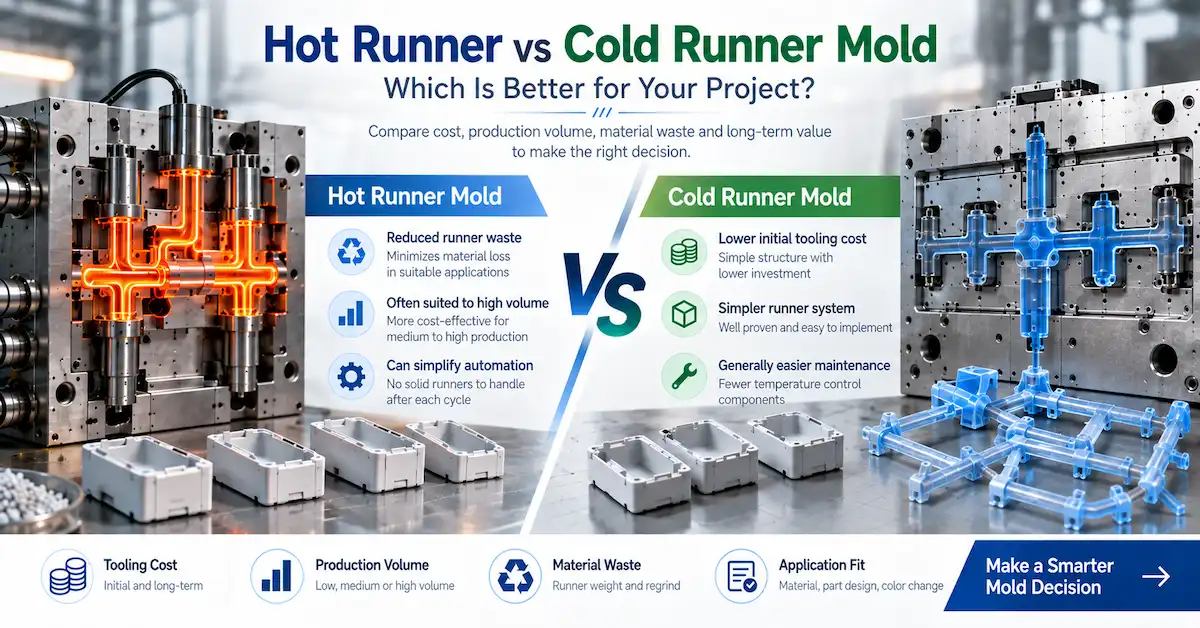
| Runner system | Hot or cold runner |
| Mold base | Standard or specified supplier |
| Side actions | Sliders, lifters or other mechanisms |
| Surface | Polish, texture or special finish |
| Mold trials | Scope included |
| Samples | Quantity and stage |
| Inspection | Reports included |
| Modifications | What corrections are covered |
| Spare parts | Included or optional |
| Mold ownership | Clearly defined |
| Production | Mold only or molding included |
A supplier that states assumptions clearly gives both parties a common technical baseline.
For a more detailed quotation and ownership comparison, see the injection mold supplier evaluation guide.
Why This Matters Later
Many tooling disputes are not caused by machining errors.
They begin because the buyer and supplier believed they had agreed to different scopes.
A reliable supplier reduces this ambiguity before the deposit is paid.
4. Project Reliability Requires Visible Milestones
Tooling lead time should not exist only as one number on a quotation.
A more useful schedule divides the project into controllable stages.
For example:
| Milestone | What Should Be Confirmed |
| Project review | Technical inputs complete |
| DFM | Manufacturing risks reviewed |
| Mold design | Tool structure approved |
| Steel preparation | Tooling materials released |
| CNC / EDM | Machining progress |
| Mold assembly | Components fitted and checked |
| T0 | Initial tool verification |
| T1 | First corrective trial |
| Further trials | Based on actual findings |
| Approval | Parts meet agreed criteria |
A reliable supplier should also be able to explain what happens when one milestone changes.
For example:
If the customer changes a connector geometry after mold design approval:
- Does machining stop?
- Which components are affected?
- Does the schedule change?
- Is an insert modification possible?
- Does the change affect cost?
The reliability test is not whether delays never happen.
Custom manufacturing contains technical uncertainty.
The test is whether schedule impact becomes visible early enough for the buyer to manage it.
5. Reliable Mold Trials Produce Data, Not Just Samples
One of the strongest ways to judge a reliable injection mold supplier is to examine how it handles trial molding.
An initial mold trial can reveal:
- Short shots
- Flash
- Sink marks
- Weld lines
- Air traps
- Ejection problems
- Gate problems
- Warpage
- Cosmetic issues
- Dimensional deviations
- Assembly problems
The supplier should then separate observations from actions.
A Useful Trial Record
A structured trial record may include:
- Mold revision
- Part revision
- Resin used
- Trial stage
- Process conditions
- Observed defects
- Dimensional findings
- Corrective actions
- Responsibility
- Next trial target
DongXin's current support process describes mold trials, dimensional inspection, appearance review, modification planning and molding-parameter records as parts of project validation.
First Sample vs Repeatable Result
One acceptable sample proves that the mold can produce that sample.
Long-term reliability requires a stronger question:
Can the mold and molding process repeatedly produce parts within the agreed acceptance criteria?
This is especially important for:
- assembly dimensions,
- cosmetic surfaces,
- sealing features,
- mating components,
- and other function-critical areas.
6. Quality Evidence Should Be Traceable to Requirements
A supplier saying “we have strict QC” provides little procurement value.
A reliable supplier should be able to connect:
Requirement → Inspection Method → Result → Corrective Action
DongXin's current company information describes quality checkpoints including incoming material inspection, mold inspection, first article validation, in-process control and final inspection.
What Buyers Can Request
Depending on project needs, evidence may include:
- Incoming material records
- Mold inspection records
- First Article Inspection
- Dimensional reports
- CMM data where required
- Trial reports
- Appearance inspection
- Process records
- Final inspection
- Packaging checks
Not every project requires every document.
The right level of documentation should reflect product risk and customer requirements.
Quality Systems and Supplier Reliability
ISO 9001 defines requirements for establishing, maintaining and continually improving a quality management system. ISO also highlights documented information, monitoring, measurement and continual improvement as key elements of the framework.
This does not mean a certification alone proves that a mold supplier is right for your project.
If certification is important, verify:
- the actual certificate,
- its validity,
- the certified entity,
- and its scope.
Then evaluate how the supplier's real project workflow applies those controls.
7. Change Control Is One of the Best Tests of Supplier Reliability
Custom molds often change during product development.
A customer may revise:
- a hole,
- a rib,
- a boss,
- a connector,
- an assembly interface,
- a tolerance,
- a cosmetic feature,
- or a material requirement.
The engineering challenge is not only making the change.
It is ensuring that everyone works from the same approved revision.
Reliable Change Control Should Answer
- What is the latest drawing revision?
- Who approved it?
- Which mold components are affected?
- Have obsolete files been removed from production?
- Does the change affect cost?
- Does it affect lead time?
- Which trial will verify it?
- Is the modification recorded?
ISO 10007 provides guidance on configuration management across the product and service lifecycle, including controlled management of configuration information and changes.
For mold projects, the practical lesson is simple:
A supplier should be able to show which design revision produced which mold revision and which sample.
When that chain becomes unclear, technical errors become much harder to diagnose.
8. Reliable Communication Means Technical Closure, Not Frequent Messages
A supplier can send many emails and still communicate poorly.
For OEM mold projects, useful communication should reduce uncertainty.
Good Project Communication Answers Four Questions
1. What happened?
Example:
T1 parts showed warpage around the mounting area.
2. Why does the team believe it happened?
Example:
Cooling imbalance and local geometry are being reviewed.
3. What action is proposed?
Example:
Evaluate cooling modification and molding conditions before the next trial.
4. What happens next?
Example:
Updated action plan will be reviewed before T2.
This format is much more useful than:
“We are checking and will update soon.”
Evaluate Communication Before the Order
During RFQ and DFM, observe:
- Are technical questions answered directly?
- Does the supplier separate facts from assumptions?
- Are unresolved items clearly listed?
- Does engineering participate when necessary?
- Are meeting decisions summarized?
- Are deadlines attached to open actions?
The communication behavior seen before the tooling order often reveals how the project will be managed later.
9. Reliability Continues After Mold Approval
A mold supplier relationship may continue for years after the initial tooling payment.
During the tool lifecycle, customers may need:
- Mold cleaning
- Preventive maintenance
- Spare components
- Insert replacement
- Mold repair
- Mold modification
- Product revision
- Refurbishment
- Production transfer
- Mold export
This means buyers should ask what happens after sample approval.
DongXin positions its business around mold engineering, tooling, injection molding and ongoing OEM/ODM manufacturing support rather than mold machining alone.
Ask About Mold History
For a long-term tool, the supplier should ideally be able to identify:
- Previous modifications
- Replacement components
- Current drawing revision
- Maintenance actions
- Significant production issues
- Approved sample status
This becomes increasingly valuable as the mold ages or the product design changes.
Reliable Injection Mold Supplier Evidence Matrix
Instead of evaluating suppliers from general impressions, use evidence.
| Reliability Area | Weak Evidence | Stronger Evidence |
| Engineering | “We provide DFM” | Project-specific DFM with reasons and actions |
| Quotation | Total mold price | Defined mold specification and assumptions |
| Schedule | “30 days” | Milestone plan with open issues |
| Trial molding | Photos of samples | Trial report + defects + corrective actions |
| Quality | “Strict QC” | Inspection records tied to requirements |
| Change control | Latest file sent by email | Revision and modification tracking |
| Communication | Frequent messages | Technical issues closed with owners/actions |
| After-sales | “Lifetime service” | Defined repair, maintenance and transfer process |
The purpose is not to make procurement bureaucratic.
It is to replace subjective trust with verifiable project evidence.
How to Test a Supplier Before Committing to a Long-Term Program
You do not need to wait until mass production to evaluate reliability.
Several early interactions provide useful signals.
Step 1: Send a Complete RFQ
Provide the same project information to shortlisted suppliers.
This makes comparison more meaningful.
Step 2: Compare Their Technical Questions
Notice whether the supplier asks about:
- Resin
- Volume
- Critical dimensions
- Cosmetics
- Assembly
- Production conditions
Step 3: Review DFM Quality
Do the comments identify actual risks, or are they generic?
Step 4: Normalize the Quotations
Make sure mold steel, cavities, runner, trials, inspection and ownership are comparable.
Step 5: Request a Project Workflow
Ask how the project moves from design approval to T0/T1 and final approval.
Step 6: Review an Example Report
Where appropriate and confidentiality allows, ask the supplier to show the format used for:
- DFM
- mold trials,
- dimensional inspection,
- or project progress.
This verifies systems without requiring access to another customer's confidential product information.
Reliable Supplier vs Cheapest Supplier
Price matters.
For procurement teams, however, initial tooling price represents only one part of project cost.
A supplier problem can create additional cost through:
- repeated mold modifications,
- delayed product launch,
- unexpected design changes,
- extra sampling,
- shipping replacement components,
- production interruption,
- quality sorting,
- or transferring the mold to another factory.
This does not mean the highest quotation is automatically safer.
It means cost should be evaluated alongside technical scope and project risk.
For buyers still matching mold design to resin, volume and manufacturing requirements, the plastic mold supplier guide provides a more detailed tooling-selection framework.
What Should a Reliable Injection Mold Supplier Receive From the Buyer?
Supplier reliability is easier to evaluate when customer requirements are also clear.
Where available, prepare:
- 3D CAD / STEP files
- Controlled 2D drawings
- Intended plastic resin
- Critical dimensions
- Surface requirements
- Assembly information
- Estimated annual volume
- Target production quantity
- Expected mold location
- Inspection requirements
- Target project schedule
- Revision history when designs change
If a requirement is still undecided, label it as an open item.
Do not create a false specification simply to make the RFQ look complete.
A good supplier should help separate:
confirmed requirements from engineering assumptions.
When Does a One-Stop Mold and Molding Supplier Reduce Risk?
Some buyers only need a finished export mold.
Others need the complete chain:
DFM → Tooling → Trial Molding → Approval → Production → Inspection → Delivery
For the second group, using the same engineering organization for tooling and plastic injection molding can reduce some handoffs between mold design and production troubleshooting. DongXin currently offers custom tooling and molded-part production within its OEM/ODM manufacturing scope.
This model can be particularly useful when:
- the customer has no molding facility,
- design changes are expected,
- mold optimization and process optimization need to happen together,
- or the project requires long-term molded-part supply.
For export tooling, however, buyers should place more emphasis on:
- mold compatibility,
- documentation,
- interfaces,
- spare parts,
- packaging,
- and transfer support.
FAQ About Reliable Injection Mold Suppliers
How can I tell if an injection mold supplier is reliable?
Look for verifiable project controls rather than general promises. Review DFM quality, quotation assumptions, design approvals, milestone planning, mold-trial records, inspection evidence, change control, technical communication and after-sales support.
Is factory size a good indicator of supplier reliability?
Not by itself. A larger factory may provide more equipment or capacity, but reliability also depends on engineering discipline, scheduling, quality control, revision management and communication.
Should I choose the injection mold supplier with the lowest quotation?
Not before normalizing the technical scope. Compare mold steel, cavities, runner system, side actions, trials, inspection, modifications, spare parts and ownership before comparing the final price.
What documents can show that a mold supplier has good quality control?
Depending on the project, useful documents can include DFM reports, trial reports, first-article inspection, dimensional reports, material records, engineering-change records and final inspection results.
How important is communication when choosing a reliable injection mold supplier?
It is critical for custom tooling. Reliable communication should clearly state the problem, likely cause, proposed action, responsible person and next milestone instead of only providing general status updates.
Why is drawing revision control important in injection mold projects?
Because molds frequently change during development. If machining, inspection and trial teams work from different drawing revisions, the supplier can manufacture or approve the wrong configuration.
What should happen if T1 samples fail dimensional requirements?
The supplier should identify the affected dimensions, investigate the cause, propose corrective actions, document modifications and verify the changes during the next trial rather than treating the issue as an informal adjustment.
Can one supplier handle both mold manufacturing and plastic injection molding?
Yes. Some suppliers provide tooling only, while integrated manufacturers can support mold design, trials, injection molding and production. The appropriate model depends on where the mold will run and who should remain responsible for production.
Conclusion
A reliable injection mold supplier is not defined by one good quotation, one factory visit or one successful sample.
Reliability appears when the same supplier can repeatedly manage:
- Engineering decisions
- Tooling specifications
- Project milestones
- Mold trials
- Inspection requirements
- Drawing revisions
- Corrective actions
- Technical communication
- Long-term mold support
For OEM buyers, the most useful question is therefore not:
“Can this supplier make a mold?”
It is:
“Can this supplier control my mold project from the first technical review through approval and future production changes?”
Shenzhen DongXin Technology Co., Ltd. was founded in 2007 and currently provides custom plastic injection molds, plastic molding, silicone tooling and OEM/ODM manufacturing support from its Shenzhen operation.
If you are evaluating a new tooling project, you can send your drawings and manufacturing requirements for an engineering and mold-project review.