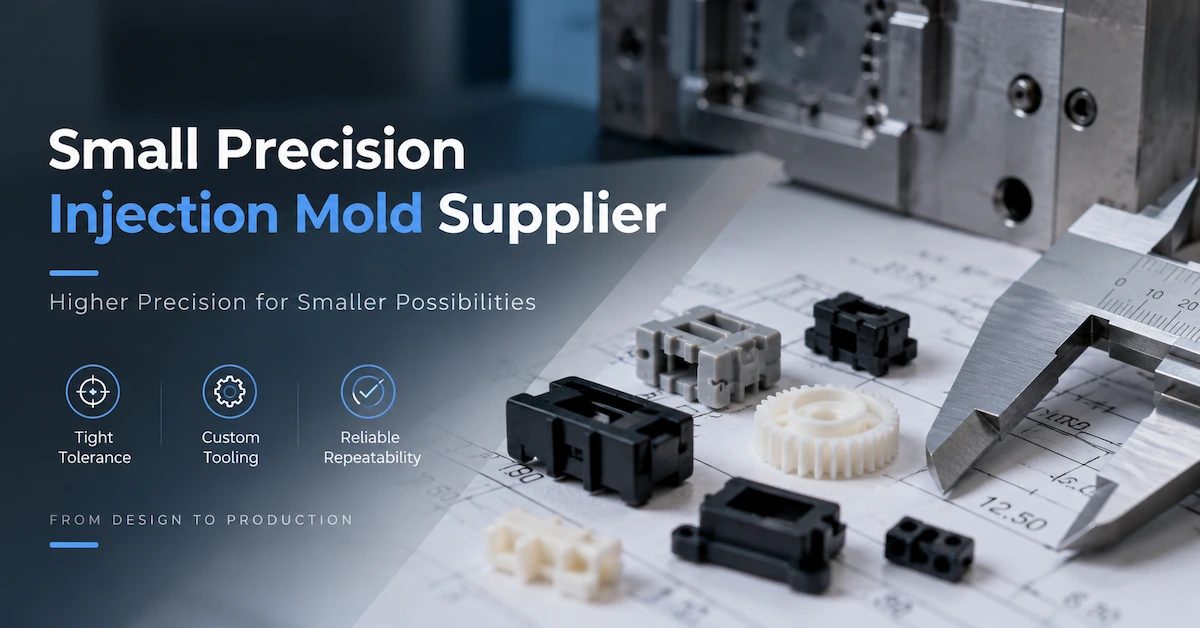
What Makes a Small Precision Injection Mold Supplier Different?
A small precision injection mold supplier should not be judged only by the smallest tolerance written on a capability sheet. For small plastic parts, the more useful question is whether the supplier can identify which dimensions actually control fit, function and assembly—and then build a mold, process and inspection plan around those dimensions.
Small components can create demanding manufacturing problems even when the mold itself is physically compact. A narrow slot, thin rib, small sealing feature, miniature clip or closely spaced connector opening may be more difficult to control than a much larger non-critical surface.
That is why precision sourcing should begin with the part requirement, not a universal number.
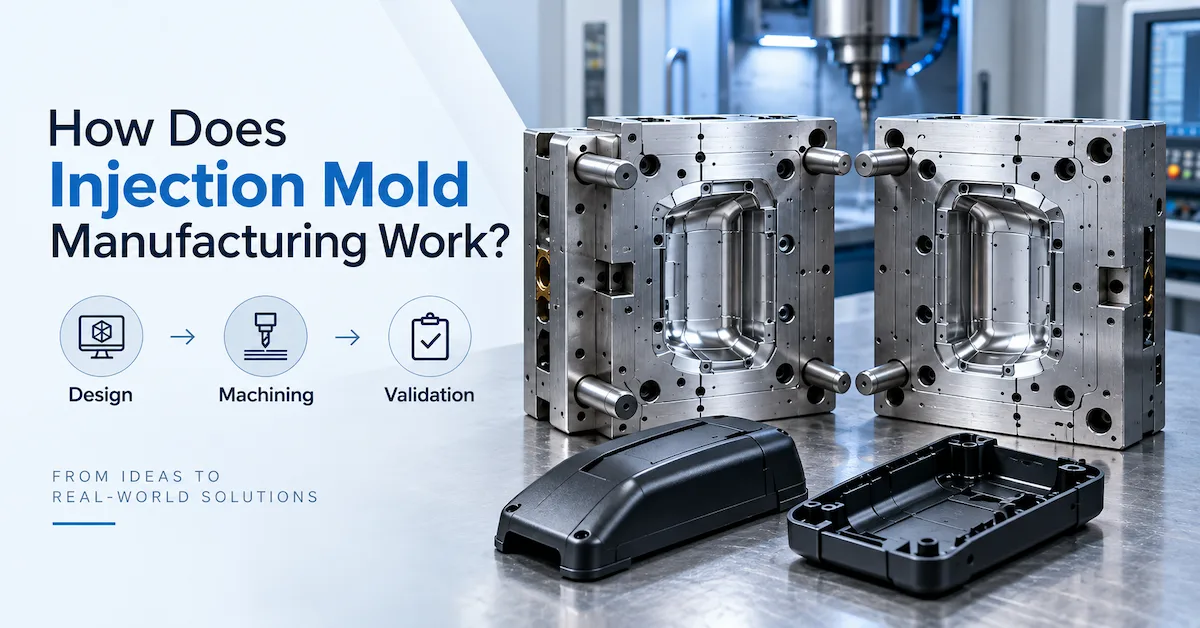
DX Molding, operated by Shenzhen DongXin Technology Co., Ltd., supports custom plastic injection molds, molded plastic components and OEM/ODM development. The company’s project workflow includes design review, mold manufacturing, trials and production support.
For OEM buyers, the practical objective is to create a repeatable relationship between:
drawing requirement → mold feature → molding condition → inspection method → approved part.
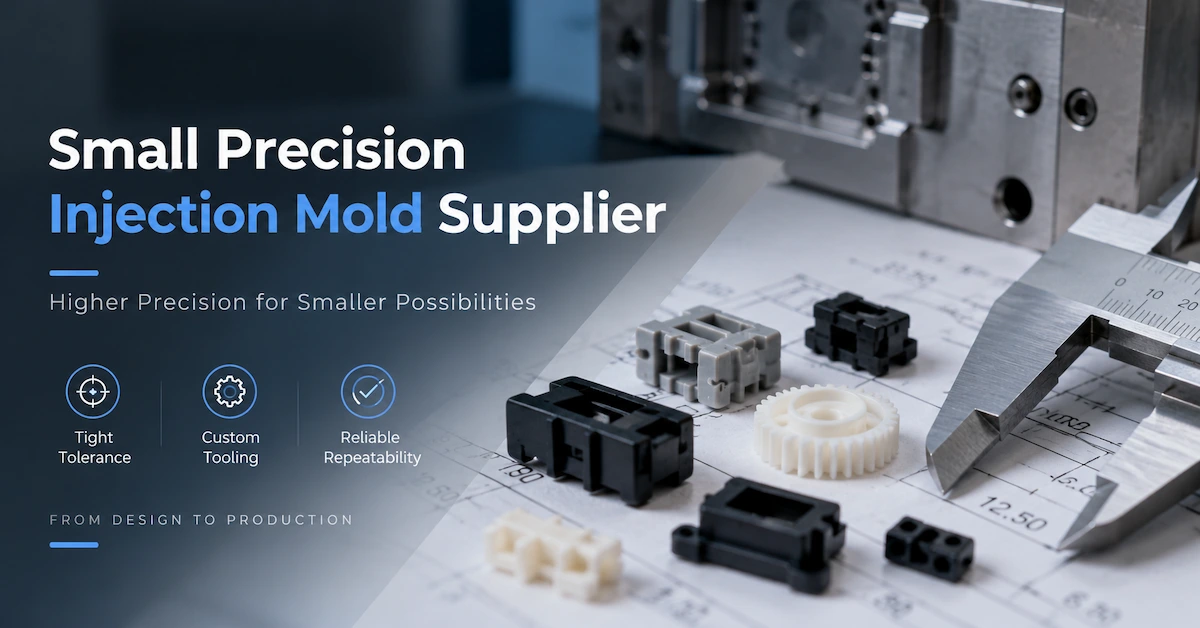
Which Buyers Need Small Precision Injection Tooling?
Small precision tooling is particularly relevant to electronics manufacturers, appliance brands, control-system companies, industrial-equipment suppliers and other OEMs developing compact functional plastic components.
Typical project types can include:
- Small electronic housings.
- Connector-related plastic components.
- Clips and locking features.
- Precision mounting parts.
- Small control components.
- Sensor housings.
- Compact structural parts.
- Plastic components surrounding PCB assemblies.
- Small cosmetic and functional covers.
An OEM with a finished drawing usually needs DFM, tooling and production validation. A product-development team may first need structural review before mold design. A company with its own injection molding factory may need a transferable precision mold, while another buyer may prefer DX Molding to build the mold and supply the molded parts.
A small precision injection mold supplier is less useful when the product definition is still changing every week. If the location of connectors, mating parts or functional interfaces remains unresolved, freezing the mold too early can turn ordinary design changes into expensive tooling modifications.
DX Molding’s custom development and molding services can be used to discuss the appropriate stage before tooling begins.
Start With Functional Dimensions, Not a Blanket Tolerance
One of the most common RFQ mistakes is applying the same tight tolerance across an entire drawing.
That may increase tooling, inspection and production complexity without improving the finished product.
Instead, divide dimensions into functional groups.
For example, a compact electronics component might contain:
Assembly dimensions that determine how two plastic parts fit together.
Interface dimensions that position a switch, PCB, connector or fastener.
Functional dimensions that influence locking, sealing, movement or alignment.
Cosmetic dimensions that affect appearance but do not control operation.
Non-critical geometry where a wider process-appropriate tolerance may be acceptable.
Your small precision injection mold supplier should understand this hierarchy before final mold design.
DX Molding’s precision mold guide also distinguishes mold-manufacturing precision from the dimensions of the final molded component. Resin behavior, shrinkage, cooling and molding conditions all influence the finished result.
The buyer should therefore define what must be controlled, how it will be measured and why it matters.
Build a Precision RFQ Before Requesting a Mold Quote
Use a controlled specification rather than sending only a 3D file and asking for a “high precision mold.”
The following table is a buyer RFQ checklist, not a universal DX Molding specification.
| Requirement Area | What the Buyer Should Define | Why It Matters |
|---|---|---|
| Product files | Current 3D model and revision-controlled 2D drawing | Establishes the approved geometry |
| Critical dimensions | Functional dimensions and tolerances | Focuses engineering and inspection |
| Datum system | Measurement references | Prevents different measurement interpretations |
| Resin | Exact material grade or controlled candidate | Influences shrinkage and molding behavior |
| Small features | Thin ribs, slots, holes, clips or pins | Identifies difficult mold details |
| Assembly | Mating components and required fit | Allows functional validation |
| Surface | Visible surfaces and texture requirements | Guides gate, parting and ejection decisions |
| Quantity | Launch quantity and annual forecast | Supports cavity and tooling decisions |
| Inspection | Required equipment and reporting | Defines acceptance evidence |
| Mold destination | DX Molding or buyer’s factory | Determines handover and machine requirements |
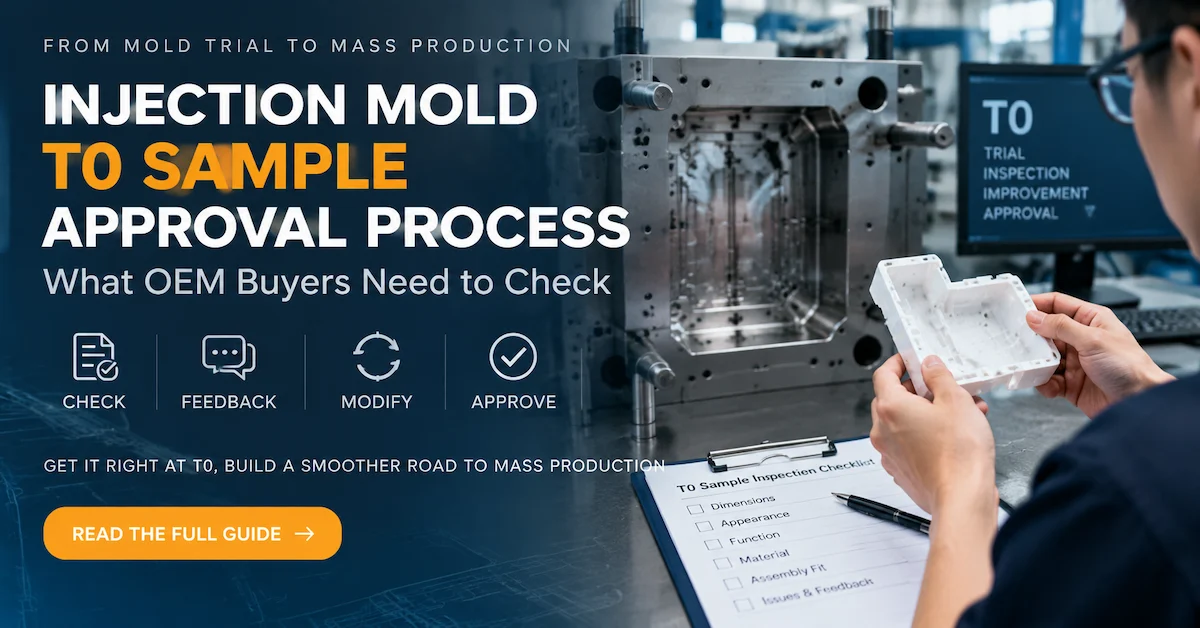
| Trial approval | Dimensional, visual and assembly criteria | Defines production release |
If a requirement is not known, mark it as open for engineering review.
Do not create a tight tolerance simply because the RFQ form contains a blank tolerance field.
Buyers can send CAD files and precision molding requirements to DX Molding for a project-specific review.
Use DFM to Identify Precision Risks Before Tooling Starts
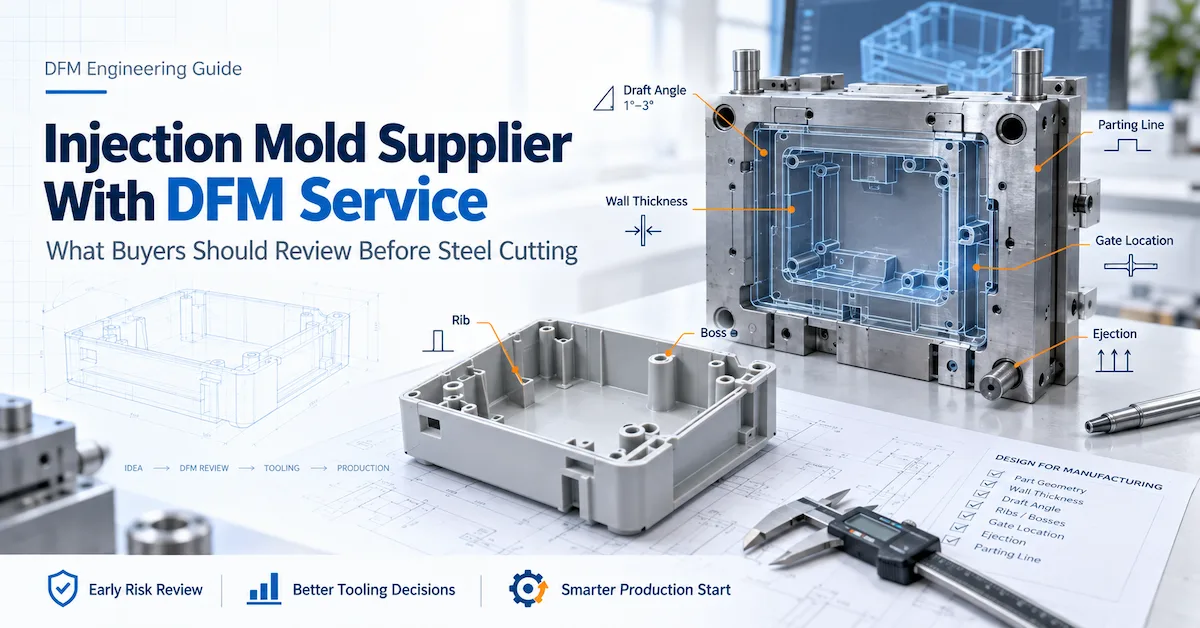
DFM—Design for Manufacturing—is particularly important when a small plastic component combines several functional details in a limited area.
Review Thin Features
Thin ribs, narrow slots and small walls can create filling and manufacturing challenges. Instead of evaluating only the nominal dimension, ask whether the geometry can be machined, filled and inspected consistently.
Check Bosses and Pins
A small boss may control the location of a PCB or fastener. Its position may therefore matter more than an exterior dimension several times larger.
Ask whether the feature should be machined directly into the tool or created with a replaceable insert.
Review Draft on Small Features
A short feature can appear easy to release, but insufficient draft may still create drag, deformation or surface damage.
If texture is involved, review draft and finish together.
Control Undercuts Deliberately
Small clips and locking features may require sliders, lifters or another mold strategy.
A small precision injection mold supplier should explain why the selected mechanism is needed and how wear or replacement will be handled.
DX Molding’s engineering and mold support includes manufacturability review, mold design, trial evaluation and modification support.
Select Tool Steel and Inserts Around the Critical Features
DX Molding lists mold steel options including P20, H13 and S136 within its plastic injection mold capabilities.
The correct choice still depends on the project.
For precision tooling, ask:
- Which steel is used for the cavity and core?
- Which features use separate inserts?
- Are small pins replaceable?
- Which areas are expected to wear?
- Are spare components recommended?
- Is heat treatment required for selected components?
- What maintenance assumptions apply?
A replaceable insert can be valuable when one small precision feature carries disproportionate manufacturing or wear risk.
However, adding inserts everywhere is not automatically better. Each interface introduces its own machining, fitting and maintenance considerations.
A competent small precision injection mold supplier should identify where modular construction adds real value and where a simpler structure is more appropriate.
Review Gates, Vents and Ejection Around Small Features
Small parts can leave little room for gate placement, ejection and venting.
Gate Strategy
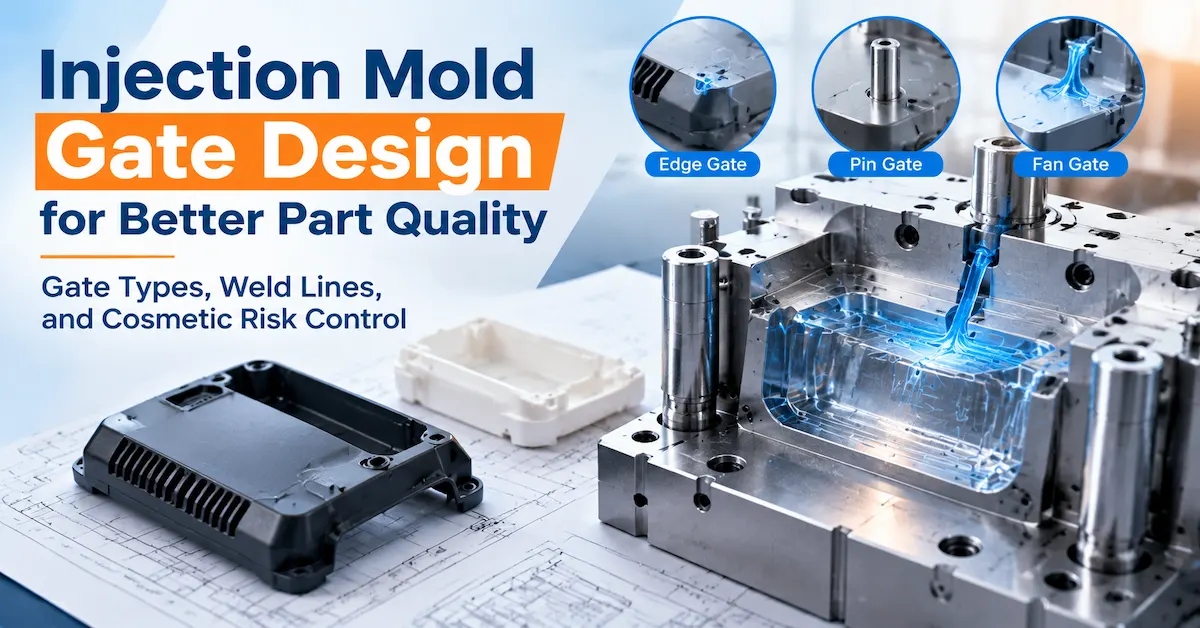
The gate should support filling while avoiding unacceptable marks on critical surfaces.
Ask where material enters, where flow fronts meet and whether the proposed gate affects a functional feature.
Venting
Air trapped around a small rib, slot or end-of-fill area can affect molding stability.
The design review should identify where venting is needed without creating unwanted flash.
Ejection
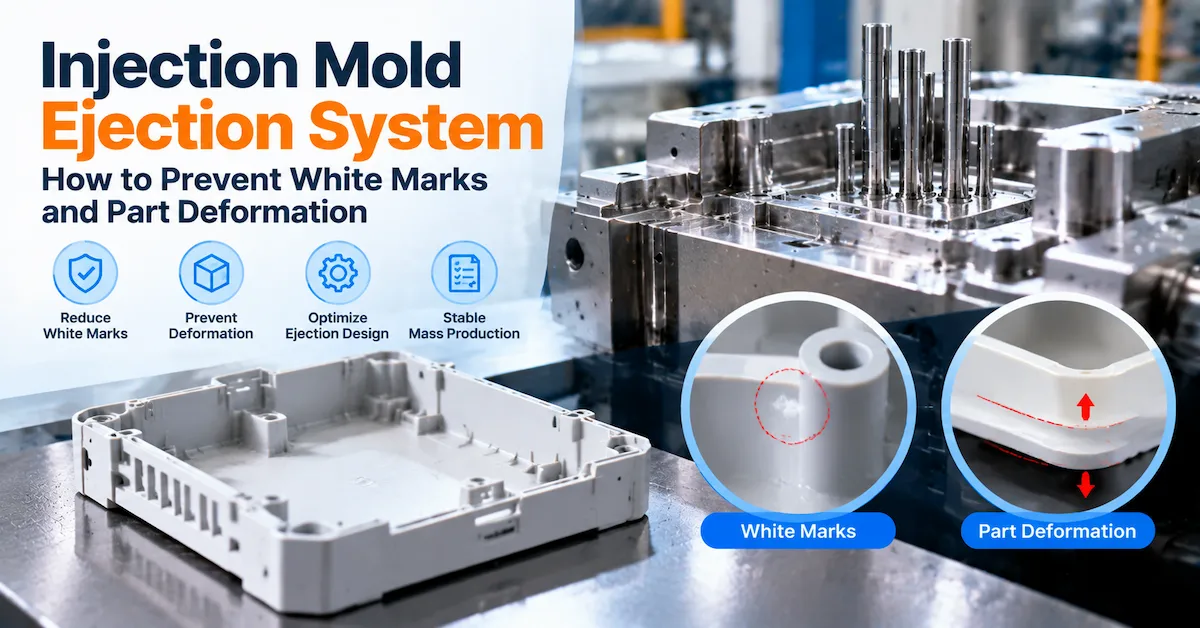
Ejector pins need enough area to remove the part without distortion or visible damage.
For a small component, an ejector mark may occupy a relatively large proportion of the available surface.
Mark acceptable locations before steel cutting.
Parting Line
A parting line crossing a sealing, sliding or assembly feature may create more risk than the same line on a non-functional exterior edge.
That is why gate, vent, ejection and parting decisions should be reviewed against the actual product function, not only mold convenience.
Compare Precision Mold Strategies Before Choosing One
These are project strategies, not standard DX Molding models.
| Tooling Strategy | Potential Advantage | Main Risk to Review | Suitable Discussion |
|---|---|---|---|
| Single-cavity precision mold | Simplifies cavity qualification | Lower output | Development or moderate volume |
| Multi-cavity precision mold | Higher output per cycle | Cavity-to-cavity consistency | Stable higher-volume demand |
| Replaceable precision inserts | Local servicing and replacement | Insert fit and alignment | Small critical or wear-prone features |
| Cold-runner mold | Relatively straightforward system where suitable | Runner handling and material use | Suitable materials and economics |
| Hot-runner mold | May reduce cold-runner waste | Added controls and maintenance | Higher-volume suitable projects |
| Mold with slides/lifters | Enables functional undercuts | Moving-component wear and fitting | Clips, side holes and locking features |
Do not select a multi-cavity mold only because the part is small.
A small component may allow many cavities physically, but cavity count also affects runner balance, inspection, machine selection and maintenance.
DX Molding’s multi-cavity mold guide provides additional guidance on balancing production demand with tooling complexity.
The right question is not “How many cavities can fit?”
It is:
“How many cavities can be produced, inspected and maintained consistently for this program?”
Validate Precision With Measurements and Assembly Tests
A precision mold should be evaluated through molded parts.
DX Molding’s published support scope includes dimensional inspection, trial reporting and process records. Confirm the exact reporting package required for your project through the support process.
For critical dimensions, define:
- Measurement datum.
- Inspection method.
- Sampling frequency.
- Environmental or conditioning requirements where applicable.
- Cavity identification for multi-cavity molds.
- Mating components used for assembly testing.
- Drawing revision.
- Material used in the trial.
If a dimension is difficult to measure reliably, resolve that problem before mass production.
A small precision injection mold supplier should not simply provide a spreadsheet filled with numbers. The measurement method should correspond to the functional requirement.
For example, if two small housing halves must align around a connector, assembly with the controlled mating components may provide information that an isolated dimension cannot show by itself.
Separate Mold Accuracy From Process Repeatability
Precision mold manufacturing matters, but repeatable production also depends on molding conditions.
A tool can contain accurately machined features while molded dimensions still change because of:
- Resin behavior.
- Moisture condition where relevant.
- Melt temperature.
- Mold temperature.
- Packing conditions.
- Cooling.
- Cycle changes.
- Machine variation.
For that reason, the approved sample should be linked to the relevant material and production conditions.
DX Molding’s plastic molding service provides the production side of custom plastic projects in addition to tooling.
When the mold is transferred to another factory, request appropriate handover records so the receiving molder has a reasonable starting point for validation.
Do not treat process settings as universal recipes. A transferred tool still needs confirmation on the destination machine.
Plan Lead Time Around Engineering and Validation
A precision tool should not be scheduled as one undifferentiated block called “mold lead time.”
Separate the project into:
- File review.
- DFM.
- Product revision if required.
- Mold design.
- Design approval.
- Steel and component preparation.
- CNC/EDM machining.
- Fitting and assembly.
- First mold trial.
- Dimensional inspection.
- Engineering correction.
- Re-trial where required.
- Final sample approval.
- Production or mold shipment.
DX Molding’s project workflow follows a similar progression from product review through tooling, validation and production.
A small precision injection mold supplier should identify which buyer decisions can delay the next stage.
A three-day delay in approving a critical design feature can be more important than a three-day difference in the advertised machining schedule.
Compare Precision Tooling Cost by Risk, Not Only Mold Price
A lower tooling price may represent a simpler mold, fewer included trials, less inspection or a different component specification.
Ask each supplier to separate:
- Engineering and DFM.
- Mold design.
- Mold steel.
- Precision inserts.
- Slides or lifters.
- Runner system.
- Mold trials.
- Dimensional reports.
- Engineering changes.
- Spare components.
- Mold drawings.
- Packaging and transfer.
- Molded-part production if required.
Here is a hypothetical example, not DX Molding pricing.
Supplier A quotes a lower mold price but includes one basic dimensional inspection. Supplier B quotes more but includes additional insert construction, identified spare parts and several agreed inspection reports.
Neither offer is automatically better.
The buyer should determine whether the additional scope solves an actual project risk.
Cost also changes when a buyer revises the product after design approval. Separate supplier correction from customer engineering change in the commercial terms so both sides understand responsibility.
Define OEM and ODM Responsibilities Clearly
For a mature OEM project, the buyer generally controls the product definition while the mold supplier develops tooling around the approved design.
For an ODM or early-stage program, DX Molding can also support product and mechanical development through its OEM/ODM services.
Before starting, identify who approves:
- Product geometry.
- Material.
- Critical dimensions.
- DFM changes.
- Mold structure.
- Engineering revisions.
- Trial samples.
- Assembly result.
- Final production release.
Small precision parts often interact closely with electronics, fasteners or mechanical assemblies. A small change in another component can therefore create a significant tooling change.
Written responsibility prevents an early concept from being mistaken for an approved production drawing.
What Should You Send DX Molding for a Precision Mold Review?
Send the current 3D model and 2D drawing, the proposed resin, annual volume, critical dimensions and mating-part information.
Also identify:
- Which dimensions directly control product function.
- Which areas are cosmetic.
- Which small features concern your engineering team.
- Which inspection method you expect.
- Whether the mold will stay at DX Molding or transfer elsewhere.
- Which machine will run the mold if known.
- Your launch quantity and annual forecast.
- Your target development milestone.
Do not simply write “tolerance must be very precise.”
Show which tolerance, on which feature, measured from which datum, and why it matters.
Send DX Molding your precision molding project files so the engineering discussion can begin from measurable requirements.
Frequently Asked Questions
1. What Does a Small Precision Injection Mold Supplier Provide?
The scope can include DFM, mold design, tool manufacturing, trials, dimensional inspection and molded-part production. Buyers should confirm the exact deliverables before comparing quotations because different suppliers may include different engineering and validation work.
2. What Is Considered a Precision Plastic Part?
There is no single dimension or tolerance that makes every component “precision.” In sourcing terms, a precision part usually contains dimensions, interfaces or features whose variation directly affects fit or function. Those requirements should be identified on the drawing and validated in the actual project.
3. Can DX Molding Manufacture Small Precision Injection Molds?
DX Molding provides custom injection mold design, manufacturing and molded-part production. Whether a particular small precision project is suitable should be evaluated from its drawings, material, tolerance requirements, quantity and inspection needs rather than assumed from a general capability statement.
4. Should Every Dimension Use a Tight Tolerance?
Usually not. Identify the dimensions that control assembly, alignment, movement or other functions. Applying unnecessarily tight tolerances to non-critical geometry can increase tooling and inspection complexity without adding product value.
5. Is a Single-Cavity Mold More Accurate Than a Multi-Cavity Mold?
Not automatically. A single cavity may simplify qualification, while a multi-cavity mold can provide higher output. Multi-cavity projects require additional attention to cavity balance and cavity-to-cavity consistency. Select the configuration according to volume and quality requirements.
6. Why Are Replaceable Inserts Used in Precision Molds?
They can help manage selected small features, wear areas or difficult-to-machine geometry. They may also simplify localized maintenance. Their usefulness depends on the actual mold design; adding inserts without a defined engineering reason can create unnecessary interfaces.
7. How Should Small Plastic Parts Be Inspected?
Inspection should follow the drawing and functional requirements. Define datums, measurement method, sampling and cavity identification where applicable. For assembly-critical features, use appropriate mating components or fixtures in addition to isolated dimensional checks.
8. Does Mold Machining Tolerance Equal Final Part Tolerance?
No. Mold machining is one contributor to the final result. Plastic shrinkage, part geometry, cooling and processing conditions also influence molded dimensions. Finished-part tolerances should therefore be confirmed through project-specific trials and measurements.
9. How Much Does a Small Precision Injection Mold Cost?
Cost depends on part geometry, critical features, cavity count, steel, inserts, runner system, required inspection, trials and documentation. A supplier needs the actual drawing and project requirements before giving a meaningful tooling quotation.
10. How Can I Get a More Accurate Precision Mold Quote?
Provide complete CAD files, material, quantities, critical dimensions, functional interfaces, inspection requirements and mold destination. Clearly distinguish confirmed specifications from items open to engineering review. This allows suppliers to quote the real project instead of guessing hidden requirements.
Conclusion
Choosing a small precision injection mold supplier should begin with the dimensions and features that actually determine whether your product works. The most useful supplier is not the one that simply advertises the smallest tolerance, but the one that can connect critical geometry to mold design, manufacturing, molding conditions and a practical inspection method.
For OEM buyers, the strongest approach is to define functional dimensions, complete DFM before steel cutting, review gates and ejection around small features, select tooling according to production volume, and validate the finished component through controlled measurement and assembly.
DX Molding supports custom injection mold development and plastic-part production from design review through tooling and trial validation. Send DX Molding your CAD files, critical dimensions, material and expected quantities to begin a project-specific precision molding review.